Reviewed · PRIVATE
10 Days Private Tour in Romania from Bucharest
Romania hits hard when you see it in one smooth loop, from Bucharest to medieval strongholds and the painted monasteries of Bukovina. This is a 10-day private tour built for people who want the big set pieces, plus the small details that explain what you are looking at, with a licensed English guide/driver keeping the story clear.
What I like most is the combination of a private car for all the road time and a local guide who can connect the dots between eras. I also appreciate how flexible the day plan can be after it starts, because weather and energy levels matter on long drives. The main drawback to consider is simple, the schedule is packed, so you need to be ready for early starts and travel days that can feel like you are constantly moving.
In This Review
- Key points before you go
- Palace of Parliament to Old Town Bucharest, the story starts here
- Curtea de Argeș, Poienari, and the Transfăgărășan, driving with purpose
- Corvin Castle, Densuș Church, and Sarmizegetusa Regia, medieval meets Dacian
- Salt air at Turda, Transylvanian towns, and Surdesti’s wooden church
- Communism’s imprint and Maramureș’s Merry Cemetery
- Barsana, Tihuța Pass, and Ciocănești, Maramureș and Bukovina scenery
- Voroneț, Humor, Sucevița, Moldovița, the painted monasteries route
- Egg museum oddity, Popa’s sculpted folk art, and Bicaz Gorges
- Sighișoara’s living citadel and Biertan’s Saxon fortifications
- Brasov’s Old Town, Bran Castle, and Peleș Castle
- Price and value, what you are paying for
- Should you book this Bucharest to Romania private tour?
- FAQ
- Where does the tour start?
- How long is the tour?
- Is this a private tour or a group tour?
- Do you provide pickup?
- Is an English speaking guide included?
- Is transportation included?
- Are accommodations and meals included?
- Are entrance fees included?
- What is the tour price?
Key points before you go
- Private, door-to-door transport so you are not sharing buses or timing your day around other groups
- Licensed English guide/driver throughout, meaning fewer gaps and better context at each stop
- Major Romanian themes in one route: communism and revolution, Dacian kingdoms, Saxon churches, royal castles, and wooden monasteries
- Sights with built-in variety from Palace of Parliament to salt air at Turda, plus gorge walks in nature
- Some admissions covered by the plan, while a few scenic stops are listed as no-ticket stops
Palace of Parliament to Old Town Bucharest, the story starts here
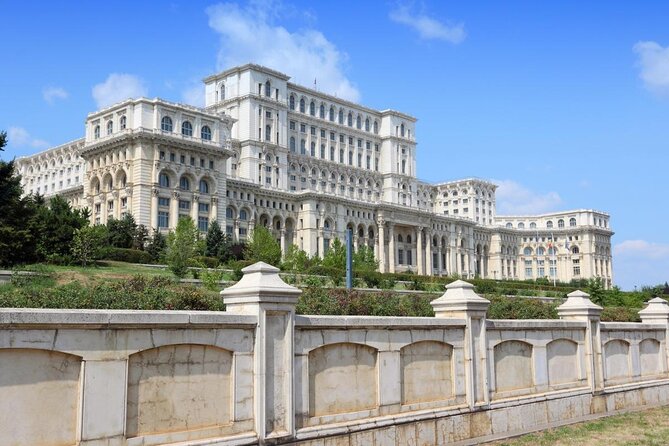
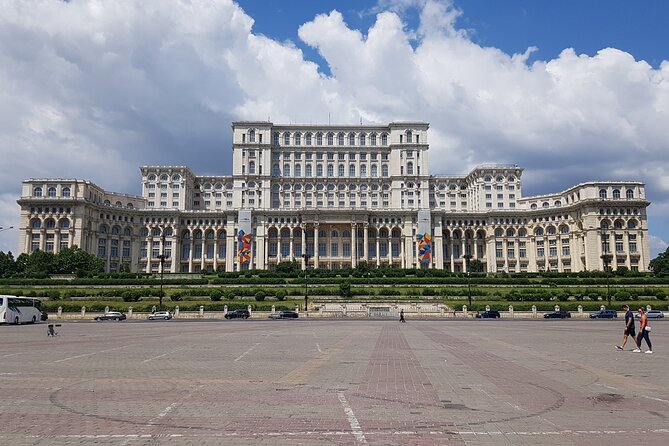
Bucharest can feel like two cities at once: grand state power next to everyday street life. This tour starts with the Palace of Parliament, also known as the People’s House, a controversial monument tied to Romania’s communist era. When you stand in front of it, you get why it became such a symbol of totalitarian excess and why it still raises strong feelings. It’s so large that close-up photos can feel awkward, mostly because your brain is trying to capture something your phone cannot quite hold.
Right after, you shift to people scale at the National Village Museum Dimitrie Gusti. It’s an excellent contrast. You see traditional village life recreated in one place, with a focus on how villagers lived in balance with their surroundings. Then you step into culture mode at the Romanian Athenaeum, a major symbol on Calea Victoriei and part of the European Heritage list.
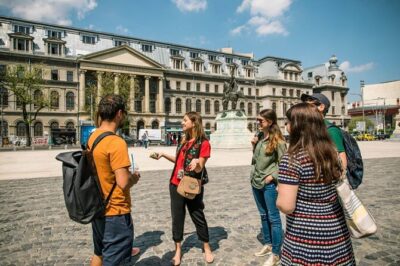
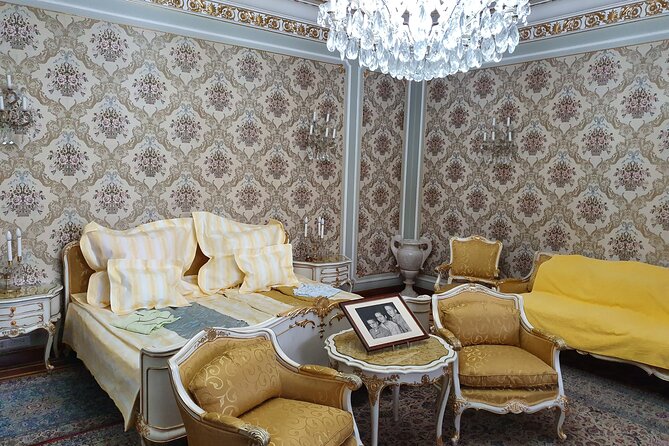
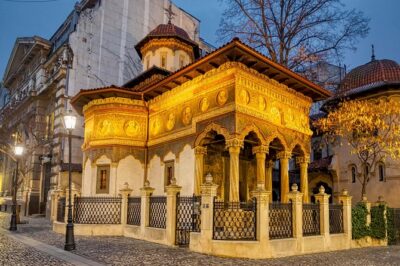
The historical thread continues at Revolution Square, where the end of the Ceaușescu dictatorship began in December 1989. You also get a look toward the Senate Palace area, which helps you place the revolution in real geography, not just in a textbook summary. Finally, you finish the day in the Historic City Centre around Old Town, including Hanul lui Manuc, a fortified inn from the early 1800s that once acted like a hub for merchants. If you like understanding how a city worked, not just what it looks like, this day clicks.
Tip: Bring a light layer for palace and museum interiors, and wear comfortable shoes for Old Town walking.
Curtea de Argeș, Poienari, and the Transfăgărășan, driving with purpose
Day two moves away from the capital and into Wallachia and the Carpathian edge. Curtea de Argeș Monastery is one of those stops that rewards patience. You see ruins linked to the old princely court and the 13th-century royal church complex. It also carries a heavy story, which makes the beautiful stonework land harder.
Then comes Poienari Castle, dramatically perched above the Argeș River. This ruins site is tied to Vlad and the Wallachian fortresses of the era, and it offers a real sense of why castles were built where they could not be easily approached. The fortress changed over centuries and was eventually left in ruins, but the location alone explains its strategic value.
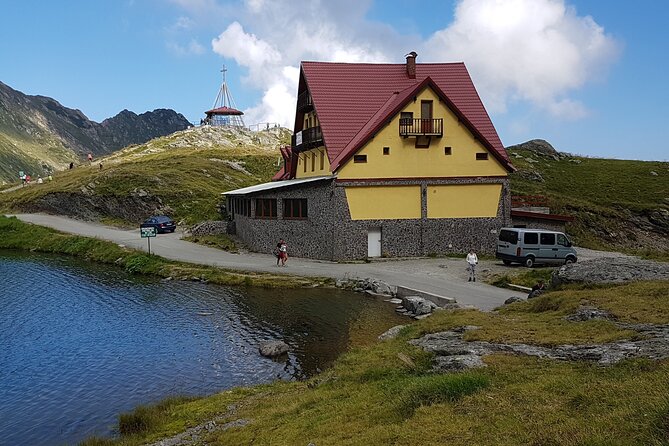
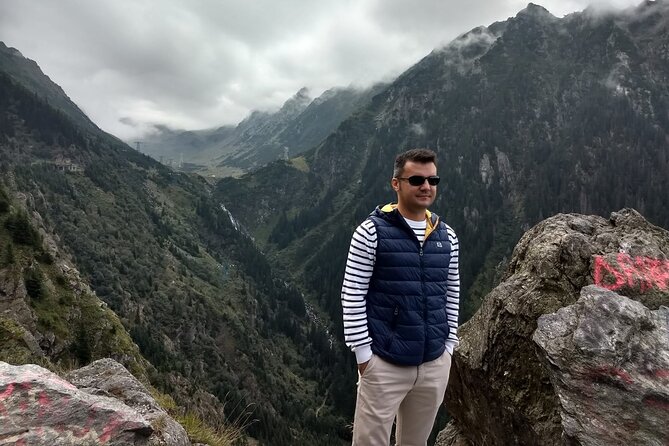
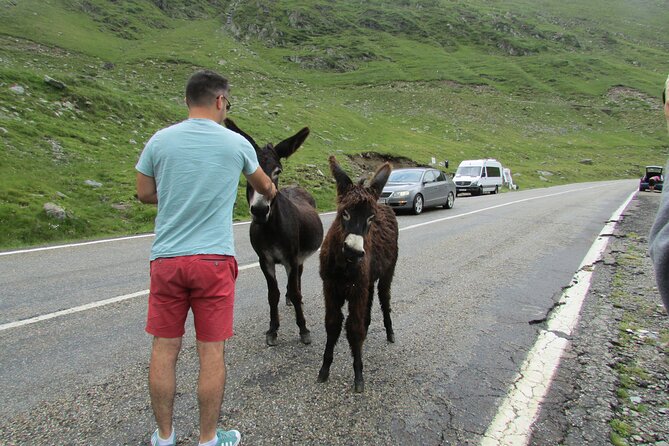
After that, you hit the road star, the Transfăgărășan Highway. This is Romania’s most famous scenic drive, and it only goes full open from June to October. The highest point is 2,042 meters, and you pass through a tunnel that links the sides near Lake Bâlea. Even if you have seen photos, the scale of the mountains is the part you remember, because it changes how everything else in the region feels.
You end day two with a cultural reset in Sibiu, focusing around Piata Mare, the Big Square, plus the historic center and sights like the Evangelical Cathedral. Sibiu is the kind of place where small details in architecture help you understand why Transylvania has always attracted different groups and styles.
Consideration: If you travel outside June to October, the Transfăgărășan may not be fully available. Ask your guide how the plan adjusts to conditions.
Other day trips from Bucharest
- Castles of Transylvania: Private Day Trip from Bucharest★ 4.5 · 248 reviews
- Bucharest: Best of Bucharest Private Tuk-Tuk Tour★ 5.0 · 238 reviews
- Dracula’s Castle, Peles Castle and Brasov – Private Day Trip from Bucharest★ 5.0 · 211 reviews
Corvin Castle, Densuș Church, and Sarmizegetusa Regia, medieval meets Dacian
Day three leans into castles, stone churches, and Dacian power. Corvin Castle, also known as Hunyadi or Huniazilor, is huge and visually dramatic. You get the feel of a Gothic-Renaissance stronghold that became part of Romania’s castle legend. It’s an “of course you have to see this” stop, but what you enjoy most is how much size and detail you can actually absorb when someone is guiding you through what matters.
Next you visit Densuș Church, often described as the oldest stone church in Romania. What makes it more than just an old building is the layered story: it was built in its present form in the 13th century on the site of a 2nd-century Roman temple, with materials tied to the Dacian fortress at Sarmizegetusa. That continuity helps you see the region as one long human timeline, not disconnected eras.
Then you go to Sarmizegetusa Regia, the Dacian capital and major military and religious center before Roman wars. It sits on top of a mountain about 1,200 meters high, with six citadels forming a defensive system. Standing there is a reminder that “history” is also engineering and geography.
Practical note: This day can involve uneven ground and lots of walking. Plan for it and keep water handy.
Salt air at Turda, Transylvanian towns, and Surdesti’s wooden church
Day four gives you a break from fortress intensity by mixing nature, city, and craftsmanship. Salina Turda, the Turda Salt Mine, is a standout. You walk through an underground space where the air is famously saline, and the tour frame highlights how the environment can be helpful for allergies or asthma. Even if you do not think about medical effects, it’s still a unique physical experience, and it changes your sense of what “nature in Romania” can look like.
After that you go toward Cluj Napoca and the botanical garden area. You get architecture and atmosphere, with a focus on Old City Center styles including Baroque, Renaissance, and Gothic, and the oldest buildings dating to the 17th century. The plan also nudges you toward the local restaurant scene, where waiting can be part of the experience.
Then comes Surdesti Wooden Church. This is the kind of place you remember because it feels like real human hands built it, not just stone poured into shape. The church has a tall presence, with towers listed at 54 meters and the structure often cited as reaching around 72 meters, built in 1721. If you enjoy craftsmanship, this stop is worth slowing down for.
Tip: Wooden church interiors can be cool. A light jacket helps.
Communism’s imprint and Maramureș’s Merry Cemetery
Day five is a mood shift in the best way, history with a human face and then a cemetery that refuses to be gloomy. The Merry Cemetery in Sapânța, in Maramureș, is famous for colorful crosses and tombstones decorated with humorous poems about the deceased. It sounds odd until you see it, because the humor feels like part of a cultural attitude toward life and death, not a joke at someone’s expense.
Then the emotional tone changes again at the Memorial of the Victims of Communism and of the Resistance. This museum helps you understand why Romanians fought to escape communist oppression and how fast that pressure could become devastating. It’s heavy, but it adds essential context for the Revolution Square visit earlier in the trip. You start seeing patterns, not isolated events.
Consideration: If you are sensitive to political content, plan a quiet meal afterward. This day can sit in your head for a while.
Barsana, Tihuța Pass, and Ciocănești, Maramureș and Bukovina scenery
Day six pulls you deeper into the Carpathians and toward Bukovina culture. Barsana Monastery is described as one of Romania’s tallest wooden churches at 57 meters. The visit also leans into the sensory part of the place, with a barefoot moment in the grass and a focus on spiritual connection as you step into the courtyard.
Then you go to Tihuța Pass in the Bârgău Mountains, a high mountain crossing connecting Bistrița with Vatra Dornei. This pass is made famous in Dracula lore, where it is referenced as the Borgo Pass. There is also Hotel Castel Dracula at 1,116 meters elevation, built in 1976, which adds a playful layer to the legends.
You finish day six in Ciocănești, known for painted houses with traditional motifs. The village runs along both sides of the Golden Bistrița River, with pine and spruce forests and fertile meadows around it. It’s close to Vatra Dornei, about 22 kilometers away, which helps explain why this area can feel both scenic and accessible.
Tip: If you want photos of the painted houses, go slowly and take your time with angles along the river roads.
These pair well with the day you just read about.
- Bucharest: Dracula’s Castle, Peles Castle, & Brasov Old Town
★ 4.5 · 17,858 reviews - Bucharest: Dracula Castle, Peles Castle & Brasov Old Town
★ 4.6 · 10,891 reviews - Bucharest: Dracula’s Castle, Peleș Castle & Brașov Day Trip
★ 4.4 · 6,100 reviews - Bucharest: Palace of Parliament Tickets and Guide
★ 4.3 · 3,182 reviews - Bucharest: Day Trip to Dracula Castle, Peles Castle & Brașov
★ 4.4 · 3,049 reviews
Voroneț, Humor, Sucevița, Moldovița, the painted monasteries route
Day seven is where Bukovina becomes unforgettable. You visit a sequence of monasteries tied to Stephen the Great and later periods, with frescoes that are the real reason these sites draw visitors year after year.
At Voroneț, you get the famous “Voroneț blue,” and the monastery is nicknamed the Sistine Chapel of the East. The plan includes details that it was built in 1488 in just 3 months and 3 weeks to commemorate the victory at Vaslui. That speed matters when you think about how much painting work had to happen in the same time.
Humor Monastery is described as fortified, built away from danger, with a story of earlier structures destroyed and the need to protect religious treasures. Then you head to Sucevița, another UNESCO-linked painted monastery stop, where biblical scenes and icons make the interior feel like a visual guide to the faith and its history.
Moldovița Monastery adds another layer with murals both inside and outside, and a mix of Byzantine, Gothic, and Moldavian styles. It was founded in 1532 and is presented as one of the oldest monastic settlements in Romania. Together, these four stops give you a clear sense of how art, defense, and spirituality worked together in one region.
Consideration: This is a “see a lot” day. If you love art, you might want to take notes on the color differences and themes so each monastery stays distinct in your memory.
Egg museum oddity, Popa’s sculpted folk art, and Bicaz Gorges
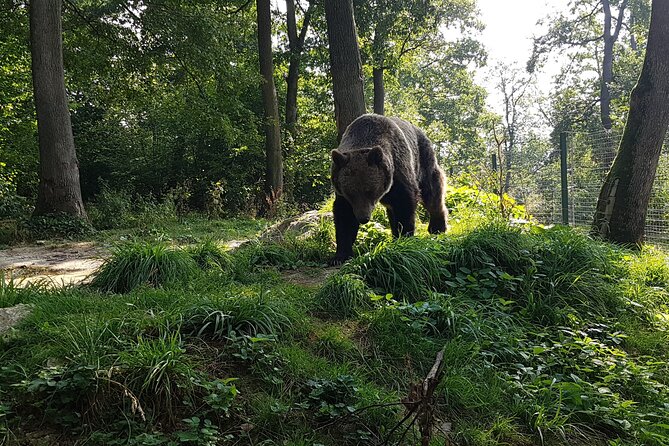
Day eight keeps the tour from turning purely architectural by adding quirky, human-made attractions. The Museum of International Eggs Lucia Condrea is exactly what it sounds like, but it’s not just a novelty. The museum has over 5,500 exhibits presented in 56 display cases across two levels. It is an easy stop to love because the scale is real, and the display plan helps you move without feeling rushed.
Then you visit the Popa Museum, in Târpești, Neamț County. It is based around Nicolae Popa, a local sculptor who was wounded in World War II, imprisoned by communists for resisting the regime, and later built a creative path using his own home as the starting point for his museum. The tour frames him as a valued naive sculptor with a strong link to folklore.
Finally, Bicaz Gorges is the outdoor reset. You get a walk along the river banks through mountain terrain and virgin forest areas. It’s a stretch of nature that balances the earlier museum days, and it gives your eyes room to rest.
Tip: Pack for walking comfort. Your feet will thank you on the gorge section.
Sighișoara’s living citadel and Biertan’s Saxon fortifications
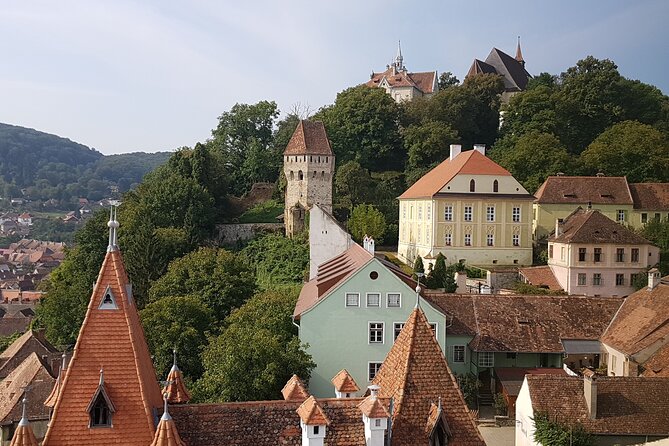
Day nine brings you to two major Transylvanian medieval anchors. Sighișoara Old Town includes the Clock Tower and an Arms museum, and the plan emphasizes that the citadel has stayed inhabited for over 700 years, which is rare in Europe. You also get the Dracula connection here, because Vlad the Impaler is linked to Sighișoara.
The next stop is Biertan Fortified Church, a UNESCO World Heritage site tied to early Transylvanian Saxon settlement. The church sits on a hillock in the center of the town, surrounded by three defensive walls and seven bastions. It’s the kind of site where defensive design is not a footnote, it is part of what makes the church look the way it does.
Consideration: Expect walking on uneven surfaces in medieval towns. Go slow and enjoy the views, not just the ticking of checklists.
Brasov’s Old Town, Bran Castle, and Peleș Castle
Your last day focuses on classic Romania, framed through Brasov and two of the most famous castles in the country.
Brasov Old Town includes a walking tour around Black Church, Old Town square, and medieval city walls. You also get time to relax in Brasov cafés, which is a smart break after days of constant sight movement. Even if you do not plan to sit for long, it helps you decompress.
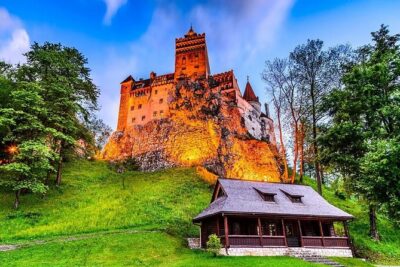
Then you visit Bran Castle, often associated with Dracula. The tour treats it as a mix of myth and history and notes why it is widely believed Bram Stoker’s fictional Dracula matched Bran so closely. Outside the castle, you have a chance to try traditional foods like handmade cheeses, pálinka (plum and pear brandy), and locally produced ham and sausages. This is one of the best ways to end, because the legends feel lighter when paired with food and local flavors.
Finally, Peleș Castle is the royal finale. It is the Romanian royal family’s summer residence, and the guide frames it as one of the most important castles in Europe. Even without a deep architectural checklist, you’ll feel why people keep coming back. This stop tends to leave everyone a bit quiet.
Tip: If you want photos, try to position yourself early before the busiest moments inside.
Price and value, what you are paying for
At $3,472.81 per person for a 10-day private tour, you are not buying a budget route. You are buying reduced friction: a private vehicle just for your group, a licensed English guide/driver throughout the trip, and a plan that includes many admissions as listed per stop. You also get complimentary wireless internet in the car, plus all car expenses like gasoline, parking, and tolls.
What is not included is equally important. Your accommodation, meals, and beverages are not part of the tour price, and entrances are not automatically covered for every single stop. Still, because the itinerary includes a mix of ticketed and no-ticket moments, you can predict the flow and costs more easily than on some “everything is separate” routes.
If you like guided pacing, history context, and not spending your holiday hunting tickets, this price can feel fair. If you want a purely DIY adventure with full control over every drive, then this is probably not the right match.
Should you book this Bucharest to Romania private tour?
I’d book it if you want a guided loop that covers Romania’s main regions without you having to coordinate everything yourself. The route gives you a strong spread: communist-era context in Bucharest, medieval fortresses and Dacian sites, Transylvanian church and citadel stops, and then Bukovina’s painted monasteries plus wooden churches in Maramureș.
I would think twice if you dislike structured days or if you travel in a season when Transfăgărășan access may be limited. Also, if you prefer long unplanned gaps and short days, this schedule is more active than that.
One more reason I like this option: in the past, the guide named Nicolas Experience Tours was praised for taking good care of the group, and for choosing hotels with attention to location. If you want someone steering the details so you can focus on what you see, that matters.
FAQ
Where does the tour start?
It starts in Bucharest, Romania.
How long is the tour?
The tour is 10 days (approx.).
Is this a private tour or a group tour?
It is a private tour, so only your group participates.
Do you provide pickup?
Pickup is offered.
Is an English speaking guide included?
Yes. A private, licensed English speaking guide/driver is available throughout the tour.
Is transportation included?
Yes. You get a private car (tourism or minibus) only for your group, plus car expenses like gasoline, parking, and road tolls. Complimentary wireless internet is available in the car.
Are accommodations and meals included?
No. Accommodation, meals, and beverages are not included.
Are entrance fees included?
Some admission tickets are included as listed for specific stops, while others are marked as free stops. Entrance fees as per the itinerary are not described as uniformly included.
What is the tour price?
The price is $3,472.81 per person.
Just Added: New Tours From Bucharest
- Bear Watching in Transylvania 2-Day Tour
- National Village Museum and Comana Adventure Park
- Half Day Tour in Bucharest
- From Dracula to Ceaușescu- Romanian Terror Stories tour
- Full-Day Private Tour of Brasov City and Peles Castle from Bucharest
- Bucharest: Tour The Wine Road, 2 Boutique Wineries in 1 Day
- Bucharest Ceaușescu House Parliament Palace &Village Museum
- Full-Day Private Tour of Bucharest and Mogosoaia Palace
Private, compared.

Castles of Transylvania: Private Day Trip from Bucharest
Read our review →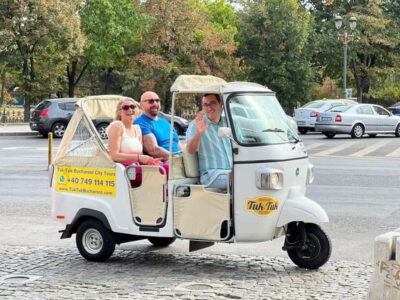
Dracula’s Castle, Peles Castle and Brasov – Private Day Trip from Bucharest
Read our review →
Bucharest Panoramic Sightseeing – Private City Tour
Read our review →
THERME “Take It Easy” Pack: Full Spa Access + Private Transfers
Read our review →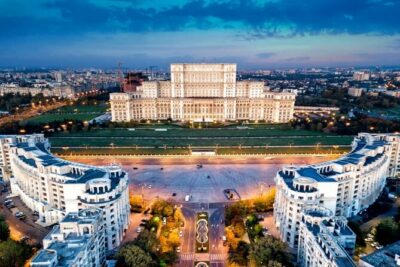
4h Bucharest Private Tour (2h by Car and 2h Walking in Old Town)
Read our review →