Reviewed · PRIVATE
12 Days Private Tour in Romania from Bucharest
Romania works best when someone local sets the pace. This 12-day private trip strings together Bucharest, Transylvania, Maramures, and Bukovina in one smooth route, with just enough history and just enough wild road time to keep it fun.
I like the way the plan stays flexible, even after it starts. And I really like that you travel in a private vehicle with a licensed English-speaking guide-driver, plus wireless internet in the car, so you are not stuck figuring things out on your own.
One consideration: it is a lot of ground in about 12 days. With many sights timed for about an hour or two each, you will want good expectations for a fast-moving route, and you should also double-check which admissions are included versus what you pay separately.
In This Review
- Key highlights worth your attention
- Bucharest first: Palace of Parliament, Athenaeum, Revolution Square, and Old Town
- Wallachia to the Carpathians: Curtea de Arges, Poienari, Transfagarasan, and Sibiu square time
- Hunedoara and Dacian power: Corvin Castle, Densus Church murals, and Sarmizegetusa Regia
- UNESCO fortified churches and gorge walking near Cluj: Biertan, Cheile Turzii, Alba Iulia, plus salt and wood churches
- Maramures traditions and communism memory: Merry Cemetery, Communism memorial, Barsana, and Tihuța Pass
- Bukovina painted monasteries and local art museums, then Bicaz Gorges
- Saxon towns, royal castles, and the Dracula trail, from Sighișoara to Snagov
- Ending days: Prejmer fortified church, Berca mud volcanoes, and Snagov’s Dracula myth
- Price and what you really get for $4,072.47 per person
- Who this Romania private tour suits best
- Should you book this 12-day private Romania tour?
- FAQ
- Is this a private tour?
- Where does the tour start?
- Do they provide pickup?
- Is there a mobile ticket?
- Is my guide English speaking?
- Are accommodations and meals included?
- Are entrance tickets included?
- Is Wi-Fi provided?
- How does cancellation work?
Key highlights worth your attention
- A private guide-driver in one vehicle for the whole circuit, with wireless internet and all car costs handled
- Bucharest with context, from the Palace of Parliament to Revolution Square and the historical Old Town inn scene
- Transfagarasan timing matters, since the highway is fully open June to October
- UNESCO fortified churches stack up, including Biertan and Prejmer, plus wooden church architecture in Maramures
- Bukovina’s painted monasteries get the time they deserve, with Voroneț’s famous Voroneț blue fresco work
- A personal guide experience, known for warmth and treating guests like family, with the guide-driver Razvan (real name Nicolas) leading the way
Bucharest first: Palace of Parliament, Athenaeum, Revolution Square, and Old Town
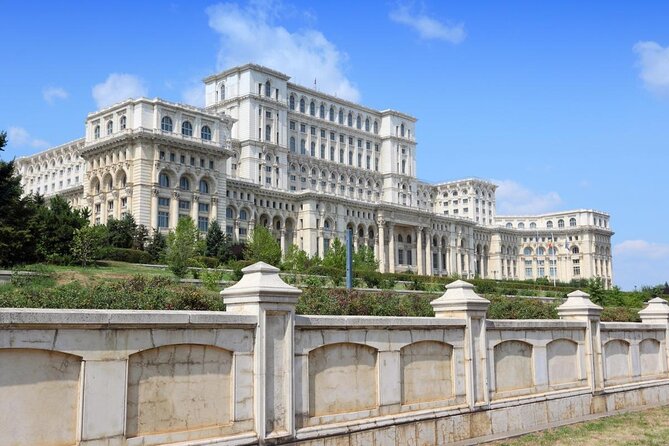
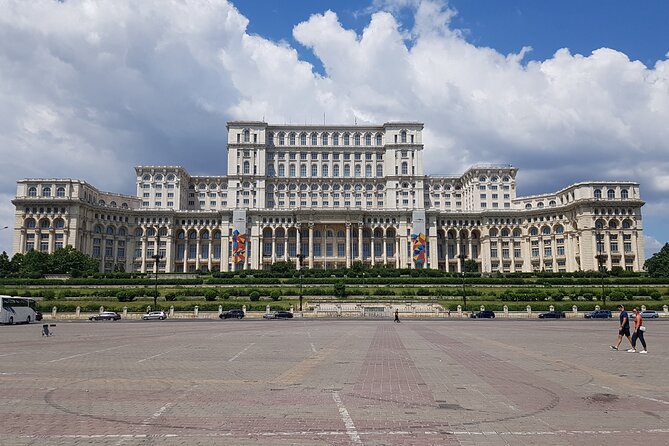
If Bucharest is only a stopover for you, this tour corrects that fast. You start at the Palace of Parliament, also called People’s House, and you go beyond the postcard angle. The building is famous for being controversial, and your guide frames why a totalitarian regime can do damage at national scale, not just at architecture scale.
Next comes a very different kind of Bucharest: the National Village Museum Dimitrie Gusti. Instead of grand halls, you get Romanian village life made visible in one place, with traditional homes and the idea of living in harmony with the surroundings. Then you move to the Romanian Athenaeum, a cultural symbol that helps you understand why people connect music, theatre, and civic pride to this city.
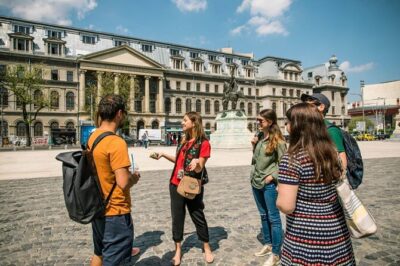
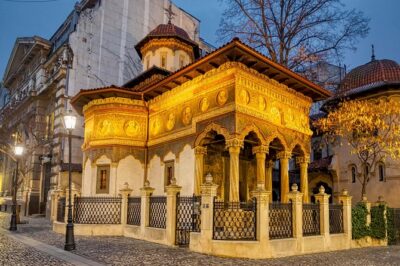
After that, you hit Revolution Square, where the story of December 1989 still hangs in the air. You are near key buildings tied to how the revolution unfolded and why the fall of Nicolae Ceaușescu mattered so much. Finally, you end the day in the Old Town, where you walk past historical layers. A highlight is Hanul lui Manuc, a fortified inn built in the early 1800s around merchant life, not just tourism.
Practical note: this is a city day with multiple distinct vibes, so wear shoes you do not mind walking in and bring a light layer. Bucharest weather can shift quickly.
Wallachia to the Carpathians: Curtea de Arges, Poienari, Transfagarasan, and Sibiu square time
Day two shifts you out of city mode and into Wallachian medieval power and cliffside drama. The Curtea de Arges Monastery gives you royal tomb context and a sense of why this region became important for rulers and religion. You also see the ruined princely court area and the 13th-century Royal Church setting, which makes the monastery feel like part of a bigger story, not an isolated photo stop.
Then you move to the Poienari Castle ruins, high above the Arges River. This is the kind of place where scale sells the story. Poienari is tied to Vlad and the legend of secret escape routes, and even if you treat the myth as myth, the fortress location and defensive logic still land.
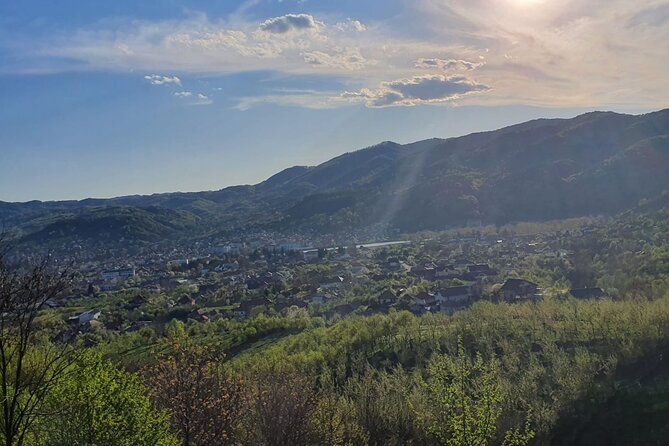
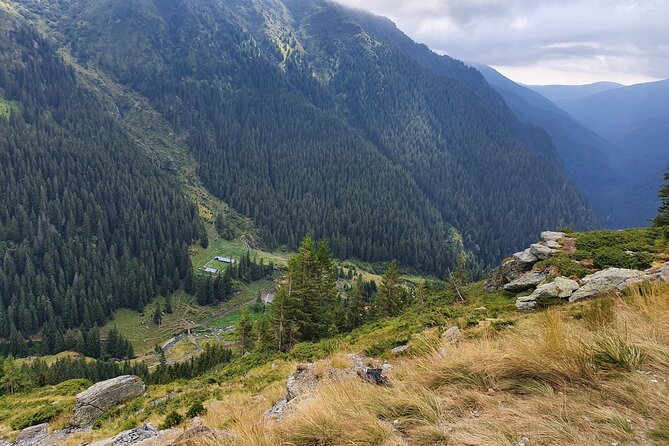
The big machine moment is the Transfagarasan Highway. This road is famous for good reasons: dramatic climbs, mountain views, and the Lake Balea tunnel connection. The key real-world detail is timing. The highway is fully open June to October, so in other months you will want your guide to adapt the route to what is actually accessible.
You finish day two with time around Sibiu’s Piata Mare, where the feel turns Saxon-medieval. Your guide’s framing includes the Evangelical Cathedral and the Old Town core, plus why Sibiu is known for culture recognition in Europe. It is a nice contrast after cliffs and roads, a place to slow down and look at stonework and street proportions.
Other day trips from Bucharest
- Castles of Transylvania: Private Day Trip from Bucharest★ 4.5 · 248 reviews
- Bucharest: Best of Bucharest Private Tuk-Tuk Tour★ 5.0 · 238 reviews
- Dracula’s Castle, Peles Castle and Brasov – Private Day Trip from Bucharest★ 5.0 · 211 reviews
Hunedoara and Dacian power: Corvin Castle, Densus Church murals, and Sarmizegetusa Regia
Day three leans gothic and ancient at the same time. You start with Castelul Corvinilor, also known as Hunyadi or Hunedoara Castle. It is large enough to feel like a different planet of towers and angles, and it is often listed as one of Romania’s standout castles.
From there you switch to a smaller but deeper experience at Densus Church. This is one of the oldest stone churches in Romania, built in the 13th century on older layers, including a Roman temple site and materials from Dacian fortress connections. Inside, you get mural paintings where Jesus is shown wearing Romanian traditional clothes, with named artists tied to the works. That detail matters because it shows cultural continuity, not just decoration.
Then you go to Sarmizegetusa Regia, the Dacian capital and major military and religious center before Roman wars. The fortress sits high in the Orăștie Mountains and is described as a system with multiple citadels. Even when you are not a history person, it helps to stand where power once controlled trade routes and territory.
Practical tip: bring a bottle of water and a snack. These sites do not always feel like long museum sits, but they can still take time and walking.
UNESCO fortified churches and gorge walking near Cluj: Biertan, Cheile Turzii, Alba Iulia, plus salt and wood churches
This stretch is where Transylvania shows its practical defensive side. You start at Biertan Fortified Church, a UNESCO World Heritage site. The setting is part of the point: the church sits on a hillock with three defensive walls and seven bastions, which makes the architecture feel like community survival tech.
Then you head to nature with Cheile Turzii, also called Turda Gorge. Here you get the calmer version of Romania’s dramatic hiking. Routes are flexible, and the easiest approach is a walk through the gorge at the bottom along a stream, shaded by rock walls. It is a great day option if you want movement without needing an all-day trek.
You also spend time at Cetatea Alba Iulia, a star-shaped fortress with Habsburg-era construction under Habsburg rule. The description in the plan includes the start date and the scope of labor, including serfs, plus a cost estimate. You do not need to memorize numbers to enjoy it, but knowing the scale makes the walls and geometric shape feel earned.
After the fortress and gorge comes a surprise that still feels very Transylvanian: the Turda Salt Mine. This is one of the region’s most eye-catching “you have to see it” stops, with the added bonus of saline air described as helpful for people with respiratory issues like allergies or asthma.
Your route then includes Gradina Botanica Alexandru Borza and time near Cluj’s historic center architecture, with Baroque, Renaissance, and Gothic building styles mentioned. You also fit in Surdesti Wooden Church, built in the early 1700s, with tall towers and impressive wooden craftsmanship. The height and age make it feel fragile in theory, but sturdy in reality.
The trade-off with days like this: you get a lot of visual variety, but it is not a laid-back vacation pace. If you like structure, you will love it. If you want long spontaneous hours, you might feel slightly scheduled.
Maramures traditions and communism memory: Merry Cemetery, Communism memorial, Barsana, and Tihuța Pass
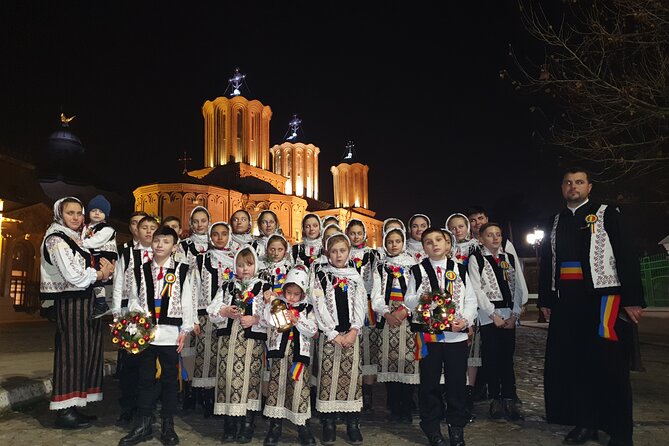
Day six hits emotion and meaning. In Sapanta, you see the Merry Cemetery, where tombstones and crosses carry colorful carvings and humorous poems about the people buried there. It sounds odd until you stand there, because the humor becomes a coping strategy and a window into how local communities handle life and death.
Later you visit the Memorial of the Victims of Communism and of the Resistance. This museum experience is heavier than the churches and fortresses, but it gives context for why the Romanian story after the 1900s is so important. If you only do castles in Romania, you miss a key part of why Romanians value freedom so intensely.
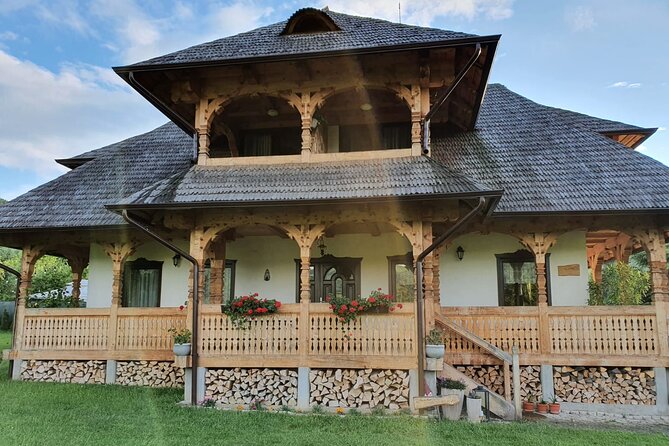
Day seven brings you right back into scenery and tradition. Barsana Monastery is a standout for wooden church architecture and its tall profile, described as one of the tallest wooden churches in Romania at 57 meters. The setting is framed in a spiritual way, including a quiet barefoot walk in grass, which turns the visit from sightseeing into a bodily experience of place.
Next comes Tihuța Pass, high in the Bârgău Mountains, connecting Bistrița with Vatra Dornei. The plan ties the pass to Dracula lore through Bram Stoker, with the note that Stoker likely used a map name rather than personal travel. Whether you’re into Dracula or not, it is a fun way to learn how names travel through literature and geography. The pass is also where the plan mentions Hotel Castel Dracula at about 1,116 meters.
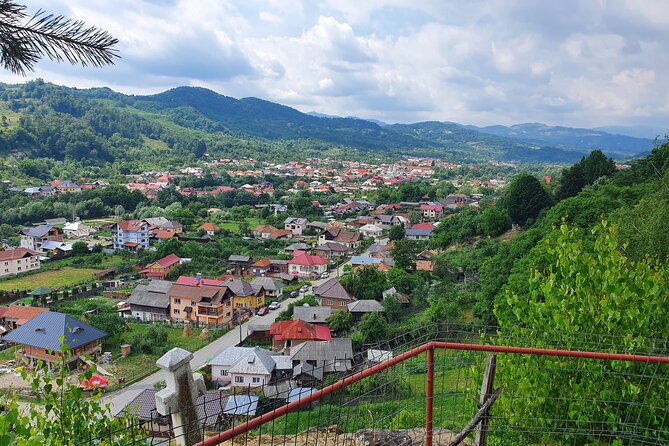
You end day seven in Ciocănești, known for painted houses with traditional motifs. The village is described by its pine forests and meadows near the Golden Bistrița River, and it also fits well after monastery time because you can see folk art on living homes.
Bukovina painted monasteries and local art museums, then Bicaz Gorges
By day eight, you are in the “painted monastery” zone, and you will understand why this region is so famous. You start at Voroneț Monastery, built by Stephen the Great over a short, intense period to commemorate victory at Vaslui. The frescos are famous for an intense shade of blue known as Voroneț blue, and the plan compares it to Sistine Chapel of the East, which is a helpful shorthand even if you have seen it before elsewhere.
Then you go to Humor Monastery, described as fortified and built around 500 years ago, with historical notes that an earlier church nearby was destroyed. Even when you only glance at the walls, the fortified aspect helps you see why monasteries were not just spiritual centers, they were also defensive.
After that you visit Sucevita Monastery with its vivid biblical scenes and icon work on fortress walls. The plan also notes UNESCO recognition, which lines up with what you feel in person: these places are preserved because the art and architecture matter together.
You finish day eight at Moldovița Monastery, built in 1532, described as one of the older monastic settlements. The plan highlights a mix of Byzantine, Gothic, and Moldavian style elements and mural artwork both inside and outside. This is a good way to “see the neighborhood,” because each monastery gives a slightly different visual signature.
Day nine adds local culture beyond churches. You start with the Lucia Condrea Museum in Moldovița, opened in 1993 and described as having over 5,500 exhibits. Then you visit the Popa Museum, a sculptor’s house-turned-museum in Târpești near Târgu Neamț, created by Nicolae Popa after wartime injury, imprisonment, and losing possessions under communism. It is a reminder that art in Romania is not just decorative, it is identity.
Finally, you get nature at Bicaz Gorges, with a walk along a river carved through mountains and described as virgin forest type surroundings. It is one of those end-of-day experiences that helps your brain reset after so much stonework and fresco detail.
These pair well with the day you just read about.
- Bucharest: Dracula’s Castle, Peles Castle, & Brasov Old Town
★ 4.5 · 17,858 reviews - Bucharest: Dracula Castle, Peles Castle & Brasov Old Town
★ 4.6 · 10,891 reviews - Bucharest: Dracula’s Castle, Peleș Castle & Brașov Day Trip
★ 4.4 · 6,100 reviews - Bucharest: Palace of Parliament Tickets and Guide
★ 4.3 · 3,182 reviews - Bucharest: Day Trip to Dracula Castle, Peles Castle & Brașov
★ 4.4 · 3,049 reviews
Saxon towns, royal castles, and the Dracula trail, from Sighișoara to Snagov
Day ten is built around Saxon heritage and fortification style. You start in Sighișoara Old Town with the Clock Tower and the arms museum. The plan emphasizes that Sighișoara is a living medieval fortress area, continuously inhabited for over 700 years, with construction dated to 1280. It also ties the town to Dracula lore through Count Dracula and Vlad the Impaler.
Next you visit Viscri Fortified Church, known for its white fortress-style church structure. The plan lays out a sequence: Szeklers building early on, then German colonists shaping the later phases, then fortifications starting later when threats existed. You also get the practical irony that parts of defenses were repurposed into storage rooms and even a kindergarten after the Ottoman threat eased.
Then you go to Cetatea Rupea, on a 120-meter basalt cliff. The plan includes that it was restored between 2010 and 2013 and now draws visitors regularly, more than 10,000 a month is mentioned. Again, you are not just looking at stones, you are looking at why stones were needed.
Day eleven focuses on Brașov and two big-name castles. You start with a walking tour in Brașov Old Town around the Black Church (Biserica Neagră), the old square, and medieval city walls. You then get free time in cafes, which matters because after days of tours, you need a pause to talk, people-watch, and digest.
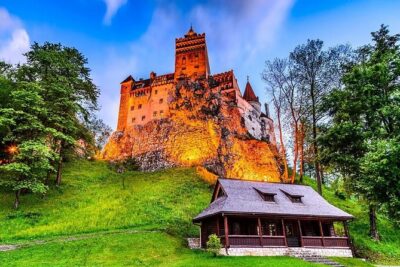
Then it is Bran Castle, framed as myth between myth and history. The plan notes the common belief that Bram Stoker’s descriptions helped shape the fictional Dracula castle, plus the practical perk that the plan includes time to try traditional foods like handmade cheeses, pálinka (plum and pear brandy), and ham and sausages.
After Bran, you go to Peleș Castle, the Romanian royal family’s summer residence, described as one of the most important attractions in Romania and Europe. If you like craftsmanship, you will appreciate how this ending feels like a change from defensive walls to refined living.
Ending days: Prejmer fortified church, Berca mud volcanoes, and Snagov’s Dracula myth
Your final day keeps the story moving, but it changes the type of wow. First you visit the Peasant Fortified Church at Prejmer, also known as Biserica fortificată din Prejmer. The plan describes a Lutheran fortified church with origins tied to Teutonic Knights and then Transylvanian Saxon control, plus a shift from Roman Catholic to Lutheran after the Reformation. It is also part of a UNESCO World Heritage site about fortified villages in Transylvania.
Then you go to Vulcanii Noroiosi, the Berca Mud Volcanoes. This is not a castle day. The plan explains how mud and natural gases erupt from deep underground, pushing salty water and mud up to the surface and forming small volcano-shaped cones that dry out after. It is geology as entertainment, and it is a nice counterweight to the medieval and religious stops.
Finally, you end with Snagov Monastery. Here the plan leans into the enduring Dracula legend, including the idea that Romania jokes about how fiction made Dracula sites famous. You get a visit to the monastery linked to Vlad Tepes tomb lore, which closes the loop on the entire trip’s mix of history and myth.
Price and what you really get for $4,072.47 per person
At $4,072.47 per person for a private, 12-day Romania experience, the price is not trying to compete with bus tours. You are paying for privacy, time-saving logistics, and a licensed English speaking guide-driver available throughout the trip.
The value math is simpler if you look at what is included:
- A private vehicle for you and your group, plus wireless internet in the car
- Flexibility to adjust the daily plan even after the start
- All car expenses like gasoline, parking, and road tolls
- Accommodation, meals, and entrances fee for the guide, plus guide service through the whole trip
What you still need to budget separately: accommodations, meals, beverages, and entrance fees as per the schedule. The schedule itself marks some admissions as included and some as free, but you should still confirm your specific ticket coverage before you go, so there are no surprises at the cash desk.
A practical way to decide if it is worth it for you: if you hate transit stress, want a coherent story from Bucharest to Bukovina, and prefer a guide who can adjust pacing on the fly, this private format tends to feel like a bargain. If you want to self-drive and pick your own stops daily, then this is likely more spend than you need.
Who this Romania private tour suits best
This tour fits best if you want:
- One driver, one guide, one plan that still allows changes
- A strong mix of medieval sites and nature without the confusion of planning each leg
- More context than a standard checklist, especially for places tied to 20th-century history and the communist era
- Comfortable sightseeing pacing with clear time boxes, even if you move quickly
It is also a solid match for first-time Romania visitors who want the “Romania spectrum,” from fortified churches and painted monasteries to mountain roads and small museums.
Should you book this 12-day private Romania tour?
I would book it if you want your Romania trip to feel guided but not rigid. The biggest reason is the combination of private transport plus a guide-driver like Razvan, real name Nicolas, who is described as warm and family-like in the way they host. When you have one person translating the why behind the where, you remember more and you stress less.
I would pause before booking if you know you get tired fast from back-to-back churches, castles, and timed museum visits. Also, if you travel outside the June to October window, ask your guide how they will handle seasonal access on the Transfagarasan Highway.
If your goal is a complete Romania story with real stops, not just photos, this route is a strong choice.
FAQ
Is this a private tour?
Yes. This is a private tour/activity, and only your group participates.
Where does the tour start?
The tour is described as starting in Bucharest, Romania.
Do they provide pickup?
Pickup is offered.
Is there a mobile ticket?
Yes, the tour includes a mobile ticket.
Is my guide English speaking?
A private, licensed English speaking guide/driver is available throughout the tour.
Are accommodations and meals included?
No. Accommodation, meals, and beverages are not included.
Are entrance tickets included?
Entrance fees as per the itinerary are listed as not included. The schedule also shows some sites with admission ticket included or admission ticket free, so you should confirm exactly what is covered for your dates.
Is Wi-Fi provided?
Yes. Complimentary wireless internet access is available in the comfortable car.
How does cancellation work?
Free cancellation is available. You can cancel up to 24 hours in advance of the experience for a full refund.
Just Added: New Tours From Bucharest
- Bear Watching in Transylvania 2-Day Tour
- National Village Museum and Comana Adventure Park
- Half Day Tour in Bucharest
- From Dracula to Ceaușescu- Romanian Terror Stories tour
- Full-Day Private Tour of Brasov City and Peles Castle from Bucharest
- Bucharest: Tour The Wine Road, 2 Boutique Wineries in 1 Day
- Bucharest Ceaușescu House Parliament Palace &Village Museum
- Full-Day Private Tour of Bucharest and Mogosoaia Palace
Private, compared.

Castles of Transylvania: Private Day Trip from Bucharest
Read our review →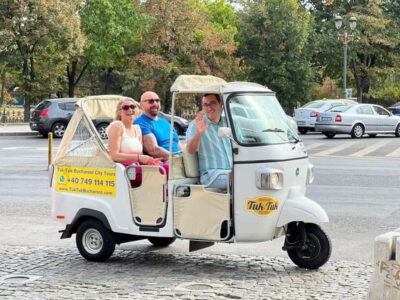
Dracula’s Castle, Peles Castle and Brasov – Private Day Trip from Bucharest
Read our review →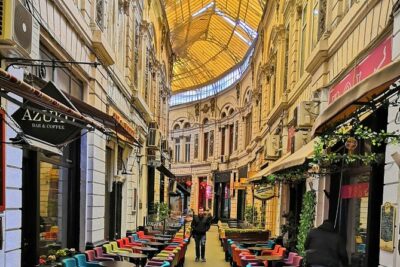
Bucharest Panoramic Sightseeing – Private City Tour
Read our review →
THERME “Take It Easy” Pack: Full Spa Access + Private Transfers
Read our review →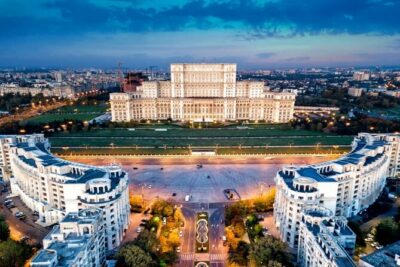
4h Bucharest Private Tour (2h by Car and 2h Walking in Old Town)
Read our review →