
Reviewed · TRANSYLVANIA TOURS
6 Days Transylvania and Bukovina Small Group Tour from Bucharest
Painted monasteries and castle legends, in one week. This 6-day Transylvania and Bukovina small-group tour ties together UNESCO-listed painted churches, medieval towns, and Dracula-area stops with a guide who explains what you’re seeing and why it matters. You also get organized transport and 3 to 4-star lodging, so you spend less time figuring things out and more time looking closely.
I especially love the story-driven guiding. When your guide is fired up about Romania, the route feels like one connected narrative, not a checklist. In my notes, guide George stands out for being proud and animated, and for handling lines smartly when crowds build up.
The main consideration is the practical stuff. Entrance fees are not included, and a dress code applies at places of worship and some museums, with shoulders and knees required (no shorts or sleeveless tops). Plan on budgeting for tickets and packing accordingly.
In This Review
- Key things that make this tour work
- What you’re really buying with a Bucharest to Transylvania and Bukovina route
- Day 1: Cozia Monastery’s Armenian details and Sibiu’s three squares
- Day 2: Sighisoara’s Clock Tower, the schoolchildren’s ladder, and Hungarian cultural landmarks
- Day 3: Moldovita, Sucevita, Voronet, plus Marginea black ceramics
- Day 4: Carpathian views in Bicaz Gorges, Red Lake legends, and Miercurea Ciuc
- Day 5: Brasov fortified center, Schei Gate, Black Church, then Bran Castle
- Day 6: Peles Castle’s room styles and a Bucharest finish with big monuments
- Where the guided format is worth it most
- Price and ticket reality, plus what to budget for
- Practical tips that prevent headaches
- Who this tour is best for (and who should pick another style)
- Should you book this 6-Day Transylvania and Bukovina tour?
- FAQ
- How long is the tour?
- What does the tour cost?
- What is the group size limit?
- Is pickup offered from Bucharest?
- What is included in the price?
- Are entrance fees included?
- Is there a dress code?
- Is a single room available for solo travelers?
- What if the weather is bad?
- What is the cancellation policy?
Key things that make this tour work
- Guide George’s real engagement, with smart help around busy lines
- Max 7 people, so you actually hear explanations and can ask questions
- Painted churches in Bukovina, including Voronet’s famous blue frescoes
- Fortified medieval towns, notably Sibiu and UNESCO Sighisoara
- Castles that match the myths, Bran (Dracula’s Castle) and Peles
- Transport and lodging handled, with 3 to 4-star hotels plus breakfast (5)
What you’re really buying with a Bucharest to Transylvania and Bukovina route
This tour is designed for people who want the highlights of Transylvania and Bukovina, but without the stress of renting a car, chasing schedules, or missing the context behind everything. You travel in an air-conditioned vehicle, with a professional licensed guide who is also the driver. That matters more than it sounds, because the long days between towns can otherwise feel like pure transit.
You also get a true small-group setup, with a maximum of 7 travelers. That tends to change the vibe. You can move at a realistic pace through church interiors, city centers, and castle checkpoints without feeling rushed or lost. And since you’re not on your own, you’re less likely to waste time double-checking where the best viewpoints or entry points are.
The final value piece is the structure. The itinerary strings together Wallachian and Transylvanian themes, then shifts into Bukovina’s painted-church world and finishes with a Romania sampler back in Bucharest. It’s a lot in six days, but it’s also organized so each stop supports the next one.
Day 1: Cozia Monastery’s Armenian details and Sibiu’s three squares
Day 1 starts with Cozia Monastery in the Olt Valley. This is the kind of place that rewards a guide, because the exterior decorations and the interior fresco program connect to specific regional influences. Cozia is a 14th-century Wallachian monument, founded by Mirco Il the Old, with later restoration work in the 17th century by a Cantacuzino. You’ll also get pointed attention to the Armenian decorative elements on the façade and the fresco-rich interiors. It’s a strong “Romania starts here” opening move.
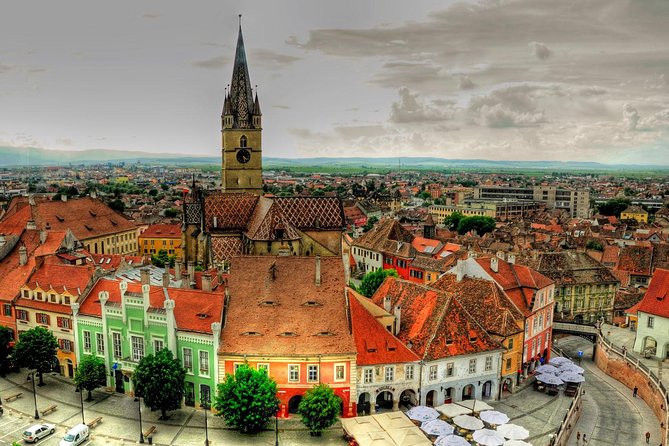
Then you head to Sibiu, one of the best medieval cities in Transylvania for walking without a strict pace. Sibiu is known for centuries of coexistence between Romanians and Saxons, and you’ll see that reflected in different religious monuments, from Catholics to Orthodox and Protestants. The city is also built around its three squares, typically called Big Square, Small Square, and Huet Square, which makes it easy to orient yourself while still feeling like you stepped into a medieval scene.
If you like churches, Sibiu’s large gothic evangelical church is a highlight to aim for. This is a day where I’d keep my phone away for a few minutes at a time and just watch how people move through the squares.
Castles, forests, and the region Dracula made famous
- Transylvania and Dracula Castle Full Day Tour from Bucharest★ 4.5 · 1,589 reviews
- Castles of Transylvania: Private Day Trip from Bucharest★ 4.5 · 248 reviews
- 2-Day Medieval Transylvania with Brasov,Sibiu and Sighisoara Tour from Bucharest★ 4.5 · 145 reviews
Day 2: Sighisoara’s Clock Tower, the schoolchildren’s ladder, and Hungarian cultural landmarks
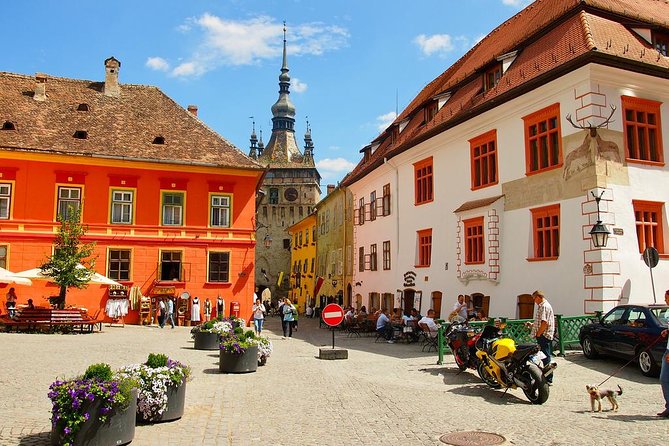
Day 2 begins in Sighisoara, and it’s a city that feels alive. The historic center is UNESCO-listed and, unusually, it’s still inhabited. You’ll see the imposing Clock Tower, plus the church on the hill. The climb is part of the experience, using a wooden staircase known as the schoolchildren’s ladder.
This is also where the myths start to blend with real local history. You’ll spot a statue of Petofi Sandor, a Hungarian national poet, and you’ll also see a Catholic church reserved for the Hungarian community, plus the tower associated with shoemakers. Those details help you understand why national identity and architecture are tightly linked here.
If you’re hungry, there’s a lunch option near Vlad the Impaler’s birthplace area, but it’s not included. That means you can treat it as a choose-your-own-adventure moment rather than a forced meal stop.
After Sighisoara, you move on to Targu Mures for a quick look at baroque style. The Palace of Culture is the standout. The local architectural work is strongly tied to the Hungarian community, so the baroque look feels like it belongs here, not like an imported style.
Finally, you stop in Bistrita for a short walking look at the Lutheran church. It’s 14th-century Gothic at its core, with Renaissance remodeling done later in the 16th century. It’s a compact stop, but a useful one, because it shows how layered these cities can be even when you’re only there briefly.
Day 3: Moldovita, Sucevita, Voronet, plus Marginea black ceramics
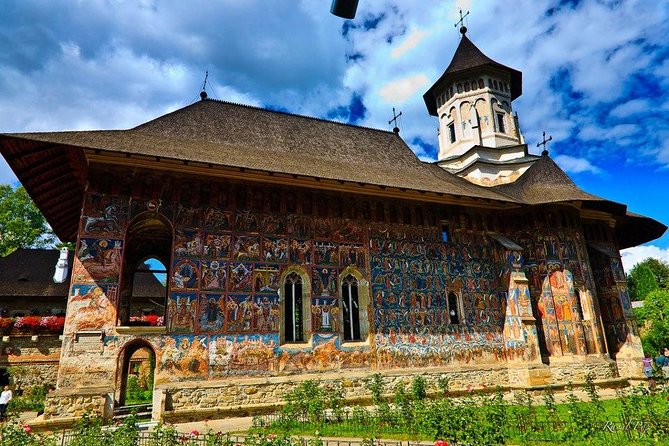
Day 3 is where Bukovina steals the show. You start at Moldovita Monastery, a 16th-century foundation linked to Pietro Rares. The key draw is the frescoes, both inside and out. This is the kind of place where a guide’s pointing makes a difference, because the paintings are not random decoration. They’re part of a whole church visual program, and you’ll get help reading what you’re looking at.
Next comes Sucevita Monastery, founded by the Movila brothers in the 17th century. It’s known for the way Gothic and Byzantine elements blend into a Moldovan architectural style. You’ll also focus on the northern façade frescoes, kept visible thanks to protective walls that were never demolished. That detail matters because conservation choices affect what you can still see today.
Then you shift gears away from monochrome church interiors and into a craft stop at Ceramica neagra in Marginea. This is where you can watch artisans at work on the famous black ceramic. You’ll have a chance to enter the workshop and see different stages of making ceramic pots. You can also buy typical items, including painted eggs decorated with traditional Romanian techniques. Even if you don’t buy anything, this is a refreshing change of pace from churches.
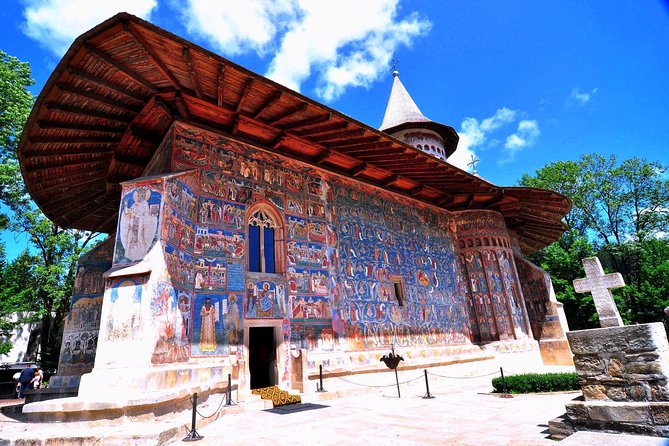
You finish at Voronet Monastery, often called the Sistine Chapel of the Carpathians. It’s founded by Stephen the Great and famous for a distinctive blue color. In practical terms, this last stop of the day is where many people decide if they truly love painted churches or just liked the idea of them. If you do like them, Voronet is the sort of location that makes you stop talking and just look.
Day 4: Carpathian views in Bicaz Gorges, Red Lake legends, and Miercurea Ciuc
Day 4 moves from Bukovina monasteries toward the Carpathian edge of the story. You start with a short stop in Piatra Neamt, a ski resort area that still preserves a citadel connected to Stephen the Great’s time, plus an 18th-century synagogue. It’s a brief visit, but it gives you a feel for the region’s mix of fortress past and cultural layers.
Then it’s on to Bicaz Gorges, one of those drives where you keep leaning toward the window. The road passes by a stream and threads through dramatic cliffs. Along the gorges, there’s a market with typical handicrafts and souvenirs, which can be a good place to pick up small gifts without hunting later.
After the gorges, you visit Red Lake, a barrier lake formed by a landslide. The trunks of trees are still present in the lake, creating an eerie, photo-friendly atmosphere. What makes the stop more than a scenic pause is that you’ll hear the legends connected to how it got its name. You won’t just see water and trees, you’ll get the local story tradition behind them.
You then drive through a scenic road with wide views of the Carpathian chain to reach Miercurea Ciuc, a place nicknamed the Siberia of Romania because of its low temperatures and the surrounding look of the area. It’s a useful landing point because it signals a shift in geography as you head back toward central Romania.
Day 5: Brasov fortified center, Schei Gate, Black Church, then Bran Castle
Day 5 focuses on two iconic Transylvania moments: Brasov and Bran.
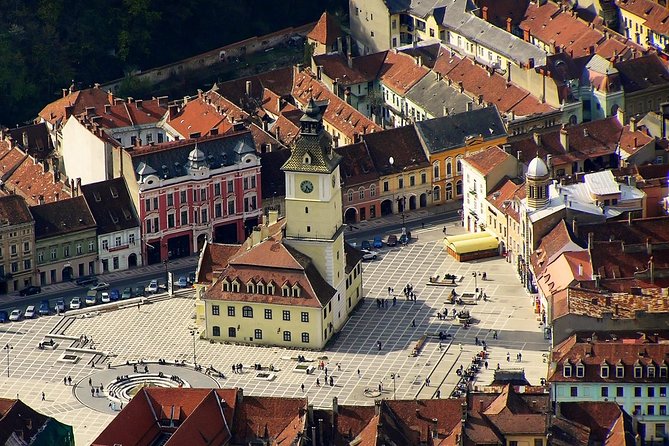
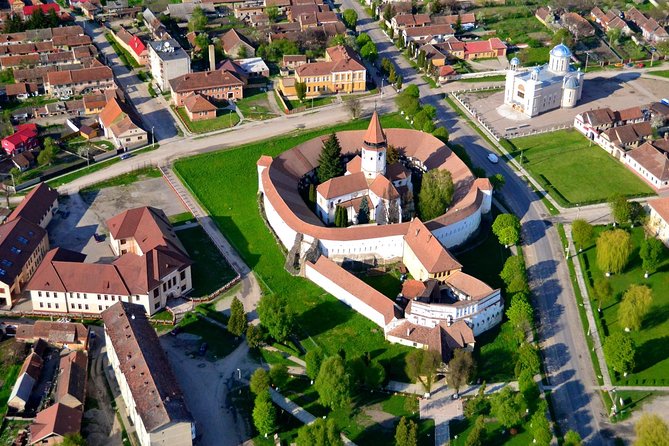
In Brasov, you’ll explore the historical center of a city that was once entirely fortified and still feels structured. Brasov is known for German-influenced architecture, where Gothic, Baroque, and Renaissance elements overlap. You’ll also get a visit tied to the First Romanian School, located in the Schei district. The Schei Gate and Catherine’s Gate are also part of the story, since medieval city entrances were important for both defense and control.
If you want a church stop that people keep talking about, the Black Church is on the agenda. Its admission fee is not included, so treat it as something you’ll budget for if you want to go inside.
Then you continue to Bran for Bran Castle, commonly called Dracula’s Castle. The connection is the key reason many people come, but what you should remember is the location. Bran was positioned on the border between Wallachia and Transylvania, which made it a strategic defensive stronghold. That framing helps you see the castle as a border fort first, and a legend machine second. You’ll also have time to soak in the atmosphere around the site, even if you keep expectations realistic about how much of the Dracula story you’ll find as strictly history.
After the castle, you arrive in Sinaia late evening. This matters because it sets up a smooth start for the final day’s big finale.
These pair well with the day you just read about.
- Bucharest: Dracula’s Castle, Peles Castle, & Brasov Old Town
★ 4.5 · 17,858 reviews - Bucharest: Dracula Castle, Peles Castle & Brasov Old Town
★ 4.6 · 10,891 reviews - Bucharest: Dracula’s Castle, Peleș Castle & Brașov Day Trip
★ 4.4 · 6,100 reviews - Bucharest: Palace of Parliament Tickets and Guide
★ 4.3 · 3,182 reviews - Bucharest: Day Trip to Dracula Castle, Peles Castle & Brașov
★ 4.4 · 3,049 reviews
Day 6: Peles Castle’s room styles and a Bucharest finish with big monuments
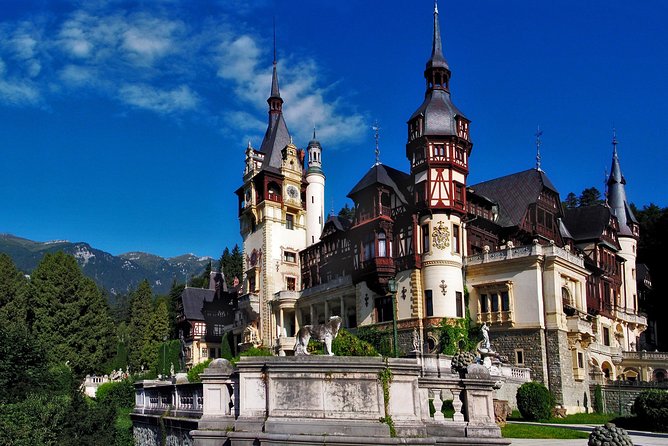
Day 6 starts with Peles Castle, a highlight that’s far more refined than the typical castle-bus stop. Peles is the summer residence of King Charles I, the first king of Romania, with German roots in the Hohenzollern family. The castle is praised for being designed by a Czech architect and for feeling modern for its time, built between the 19th and 20th centuries.
One of the most practical ways to enjoy Peles is to focus on how different rooms change the mood. Each room has a unique style, and you can see the shift in theme as you move through. The Florentine room is specifically mentioned, with an Italian Renaissance feel. Even if you don’t love palaces, Peles is the sort of place where architecture gives you instant payoff.
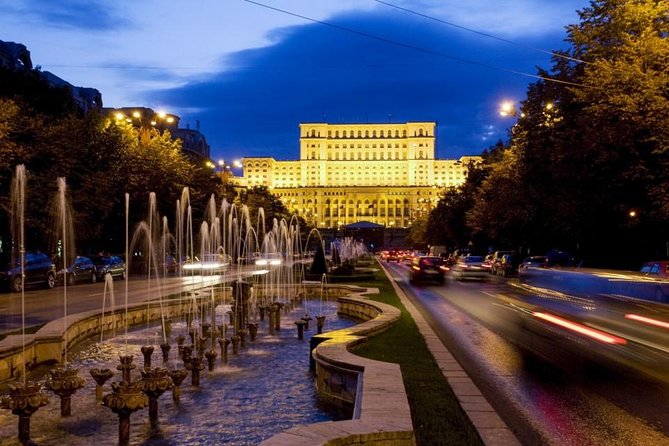
After Peles, you head toward Bucharest and enjoy a panoramic tour. You’ll pass the Triumph Arch, the Romanian Atheneum, Revolution Square, and the Parliament Palace. This is not the same as a deep dive walking tour, but it’s a strong wrap-up. It helps you end the trip with a sense of modern Romania after days focused on fortresses and monasteries.
Then you’re back in Bucharest, with the trip’s mix of medieval, borderland, and royal sites feeling complete.
Where the guided format is worth it most
A self-guided version of Transylvania and Bukovina is doable, but it tends to create two problems. First, you can end up seeing monuments with little context. Second, you lose time working out routes between major sites, especially if you’re trying to catch daylight for fresco churches.
This tour tackles both. Your guide is there for narrative, so the monasteries do not become just pretty buildings. You’ll hear why Cozia has those specific façade details and why the frescoes matter at Moldovita and Sucevita. You’ll also get a clearer understanding of why Sighisoara is still inhabited and how the Hungarian community shows up in churches and street landmarks.
The other big advantage is line and timing handling. In the tour experience, the guide is described as able to get the group ahead of lines when crowds build up. That can be the difference between a smooth interior visit and a long wait that drains your energy.
And because the group is capped at 7, you aren’t one of 30 people crowding a single guide voice. You get more back-and-forth possible, even when the schedule stays tight.
Price and ticket reality, plus what to budget for
The price is $1,163.56 per person for about six days. What’s included is meaningful: a professional licensed guide (also your driver), an air-conditioned vehicle, 3 to 4-star hotel accommodation, and breakfast for five mornings. There’s also pickup offered, and the experience uses a mobile ticket.
What’s not included is also important. Entrance fees are not included, and tips for the driver and guide are not included. Many of your big-ticket moments are in that “ticket not included” zone, including Bran Castle, Peles Castle, and several monasteries.
So how do you judge value? I think this itinerary is best value for people who want many sites packed into one trip without transportation headaches. If you were to arrange all the driving, booking, and guided explanations yourself, you’d likely spend extra time and still risk missing narrative context. You’re paying for organization and interpretation.
One more cost note for solo travelers: there’s a single room supplement of 120 euro, payable locally in cash or by credit card. If you’re traveling alone, this is worth budgeting early so you don’t get surprised when it’s time to confirm your room.
Practical tips that prevent headaches
This tour includes days with churches and selected museums, and the dress code is strict. You need to cover knees and shoulders for both men and women. That means no shorts and no sleeveless tops. If you show up dressed casually, you risk being refused entry.
You’ll also want to plan for the fact that a lot of stops have an entrance ticket separate from the tour price. Bring some money in case you need it for ticket lines or on-the-spot admissions.
Packing-wise, I’d also think about comfort. You’ll be walking in old city centers like Sibiu and Sighisoara, and doing monastery visits where stairs and uneven stone can be part of the experience. If you tend to get sore feet easily, good walking shoes are worth it.
Finally, this itinerary runs with a start time of 8:00 am. Even if you’re not an early bird, treat that as a day-long rhythm. If you’re used to late starts on vacation, you’ll want to shift your expectations from day one.
Who this tour is best for (and who should pick another style)
This is a strong fit for people who:
- Want both Transylvania and Bukovina highlights in one organized trip from Bucharest
- Prefer a small group setting, max 7 travelers
- Like guided context for churches, folklore-linked sites, and medieval towns
- Don’t want to coordinate intercity logistics on their own
It may be less ideal if you:
- Have strict mobility limits, since you’ll do walking in historic centers and visit sites with stairs
- Hate paying extra for entrances, since fees are not included
- Refuse structured schedules, because the day plan includes multiple stops
If you like museums and architecture, the mix of Sibiu churches, UNESCO Sighisoara, Bukovina painted monasteries, and royal-castle style at Peles will feel cohesive. If you’re more into nature, the Bicaz Gorges and Red Lake day gives you that break from urban and church interiors.
Should you book this 6-Day Transylvania and Bukovina tour?
I’d book it if you want maximum Romania flavor in a short span, with a guide who can explain what you’re seeing and handle the practical friction of busy sites. The combination of UNESCO painted churches, UNESCO Sighisoara, and two major castle stops gives you a well-rounded route that’s hard to piece together smoothly on your own.
If you do book, set yourself up for success: read the dress code requirement before you pack, budget for entrance fees, and remember the single supplement if you’re traveling alone. Also, use the small group size as a chance to ask questions. When the guide is George-level enthusiastic, that’s the difference between seeing buildings and really understanding them.
FAQ
How long is the tour?
The itinerary runs for about 6 days.
What does the tour cost?
The price is $1,163.56 per person.
What is the group size limit?
The tour has a maximum of 7 travelers.
Is pickup offered from Bucharest?
Pickup is offered, and the meeting start time is 8:00 am.
What is included in the price?
Included items are a professional licensed tour guide (also your driver), an air-conditioned vehicle, 3 to 4-star hotel accommodation, small group tour, and breakfast for 5 days. A mobile ticket is also used.
Are entrance fees included?
No. Entrance fees are not included.
Is there a dress code?
Yes. For places of worship and selected museums, knees and shoulders must be covered, so no shorts or sleeveless tops.
Is a single room available for solo travelers?
Yes, but there is a single room supplement of 120 euro, payable locally in cash or by credit card.
What if the weather is bad?
This experience requires good weather. If it is canceled due to poor weather, you are offered a different date or a full refund.
What is the cancellation policy?
It is non-refundable and cannot be changed for any reason. If canceled, you will not get your paid amount back.
Just Added: New Tours From Bucharest
- Bear Watching in Transylvania 2-Day Tour
- National Village Museum and Comana Adventure Park
- Half Day Tour in Bucharest
- From Dracula to Ceaușescu- Romanian Terror Stories tour
- Full-Day Private Tour of Brasov City and Peles Castle from Bucharest
- Bucharest: Tour The Wine Road, 2 Boutique Wineries in 1 Day
- Bucharest Ceaușescu House Parliament Palace &Village Museum
- Wines of Wallachia – 8 hours
Transylvania Tours, compared.
Transylvania and Dracula Castle Full Day Tour from Bucharest
Read our review →
Castles of Transylvania: Private Day Trip from Bucharest
Read our review →
2-Day Medieval Transylvania with Brasov,Sibiu and Sighisoara Tour from Bucharest
Read our review →
2-Day Transylvania from Bucharest: Brasov, Bran, Sighisoara
Read our review →
Transylvania: Cultural Full-Day Trip by Minivan
Read our review →
4-Day Private Tour in Transylvania from Bucharest
Read our review →
Private Tour: Transylvanian Castles and Brasov’s Medieval Old Town
Read our review →
Transylvania Castles 4-day tour from Bucharest
Read our review →Browse the lists this tour appears in