Reviewed · PRIVATE
8 Days Private Romania Tour from Bucharest
Romania gets real fast when the roads keep moving. This private 8-day trip links medieval churches, mountain passes, and the kind of castles people argue about.
I love the private setup, especially the fact that you ride in your own car with a licensed English speaking guide/driver. I also like how the route balances big-name highlights with stops that feel local, like the painted churches in Bucovina and the small Maramures churches of wood and faith.
One consideration: you should plan for long drives. If you hate being in a car for hours, this route will test your patience, even with Wi-Fi in the vehicle.
The tour’s main charm is simple: it’s not just sightseeing, it’s context. I like that the guide Nicolas is described as punctual, friendly, and prepared, with the kind of humor that keeps a multi-day plan from feeling rigid.
In This Review
- Key highlights from this Bucharest to Transylvania road trip
- From Bucharest to the Carpathians, expect a road trip with real context
- Curtea de Arges and Poienari Castle: royal ruins and Vlad’s cliff story
- Transfagarasan Highway and Piata Mare: road views plus a Transylvanian old-town pause
- Salina Turda and Surdesti: salt mines, Roman echoes, and timber-tower craft
- Sapanta’s Merry Cemetery and the Memorial Museum: why Romania remembers
- Barsana Monastery, Tihuța Pass, and Ciocănesti: wood, mountains, and painted walls
- Voroneț, Humor, Sucevita, and Moldovita: the painted monastery route in Bucovina
- Bicaz Gorges and Red Lake: a road-with-science day, plus naive sculpture at Popa
- Sighișoara, Viscri, and Brașov’s Council Square: Saxon-town rhythm without rushing
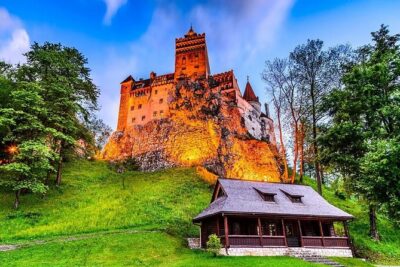
- Bran Castle, Peles Castle, and Sinaia Monastery: myth, monarchy, and monks
- Price and logistics: what you get for the private $2,825.81 per person
- FAQ
- What does private mean on this tour?
- Is pickup offered?
- Are entrance fees included?
- Are meals included?
- How much driving should I expect?
- What language is the guide/driver?
- Can I cancel for a full refund?
- Should you book this 8-day private Romania tour from Bucharest?
Key highlights from this Bucharest to Transylvania road trip
- Nicolas-led private days with punctual timing, clear explanations, and a funny, human touch
- Transfagarasan Highway and other road segments that are as much a highlight as the attractions
- Salt air and Roman-era remnants at Salina Turda, plus rare salt mining machinery
- Maramures wooden church country, where towers, timbers, and craft matter
- Bucovina’s painted monasteries (Voronet, Humor, Sucevita, Moldovita) with the famous Voronet blue
- Castle visits that mix myth and monarchy, from Bran to Peles, plus Sinaia’s monastery
From Bucharest to the Carpathians, expect a road trip with real context
This is a private Romania experience built around driving. The route stitches together Wallachia, Transylvania, Maramures, and Bucovina, and you feel the country change as you move. That’s why it works: you’re not “dropping in” at random dots on a map. You’re traveling through regions with different stories, languages, and architectural styles.
The car element matters more than you might think. You get Wi-Fi in the vehicle, and you travel only with your own group, which makes it easier to keep the day flowing. It’s also built with flexibility in mind, so your guide can adjust the daily rhythm when timing, weather, or interest changes.
The best mindset here is to think of the car as part of the itinerary. You’ll get the geography, the jokes, and the “here’s why this place is like this” explanations, not just a checklist.
Curtea de Arges and Poienari Castle: royal ruins and Vlad’s cliff story
Day 1 starts with Curtea de Arges Monastery, a stop tied to Wallachian royalty. You’re looking at royal tombs, the 13th century royal church, and the ruins connected to the old princely court. Even when you’re just seeing stone and foundations, the place gives you a feeling for why dynasties cared so much about burial sites and sacred architecture.
Then you head to Poienari Castle. It sits high above the Arges River near the Carpathian foothills, and the dramatic position is the point. The fortress began in the early 1200s, fell into ruin, and later was repaired and consolidated as a major stronghold. When the Turks captured the castle in 1462, Vlad is said to have escaped via a secret passage north through the mountains, which turns the ruins into a living legend, not just a viewpoint.
A practical note: this is the sort of stop where good footwear pays off. With cliffside ruins, you’ll want stable shoes and slow steps.
Other day trips from Bucharest
- Castles of Transylvania: Private Day Trip from Bucharest★ 4.5 · 248 reviews
- Bucharest: Best of Bucharest Private Tuk-Tuk Tour★ 5.0 · 238 reviews
- Dracula’s Castle, Peles Castle and Brasov – Private Day Trip from Bucharest★ 5.0 · 211 reviews
Transfagarasan Highway and Piata Mare: road views plus a Transylvanian old-town pause
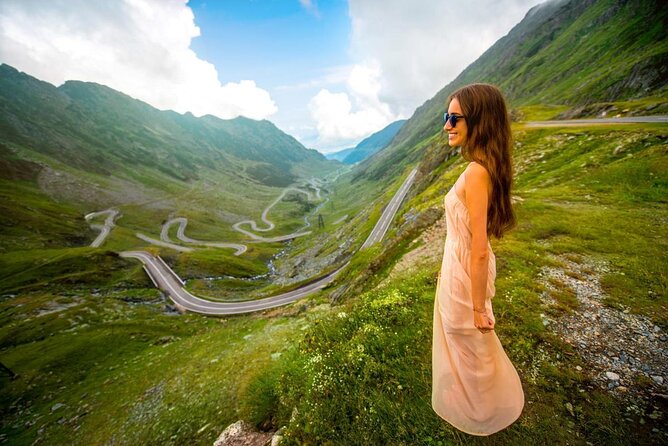
Next comes the Transfagarasan Highway, one of Romania’s headline drives. It runs more than 150 kilometers, and its highest point is at 2042 meters near Lake Balea, where a tunnel links northern and southern sides. It’s typically only fully open from June to October, so if you’re traveling outside that window, you should be prepared for route changes.
The key value of this stop is how it reframes the trip. You’re not only collecting monuments, you’re getting Romania’s scale. The highway segments make the mountains feel close, and you understand why passes and fortresses mattered.
After that, the tour brings you to Big Square, Piata Mare, with the Evangelical Cathedral and the Sibiu Old City Center referenced as the core draw. This is a more relaxed tempo after the long driving day. The square and surrounding historic buildings let you reset your eyes from cliffs and roads to street-level city life.
Salina Turda and Surdesti: salt mines, Roman echoes, and timber-tower craft
Day 2 begins underground at Salina Turda. The salt air is part of the attraction, especially for people with respiratory issues like allergies or asthma, since you’ll be breathing in a purifying saline environment. But it’s also not just a health stop. You’ll see Roman-era remnants connected to long-running salt mining, plus older and rare mining machinery unique in Europe.
The mines include the former Iosif, Terezia, and Rudolf mines, and you can also spot the salt mill hardware, the crivac or gepel, an altar carved into the salt wall, and the “Stairway of the Rich” with intricate woodwork. It’s one of those places where you realize how much engineering went into everyday survival industries.
Then you move to Surdesti Wooden Church, a structure known for its height and craft. The towers are described at an impressive 54 meters, and the church is said to be about 72 meters high, built in 1721. That timeline matters. This isn’t a modern replica. It’s an old technique of timber and joinery made to last.
The main drawback to keep in mind on wooden-church days is light and weather. If it’s windy or cloudy, photos can be trickier, and you’ll want a bit of patience for the right angles.
Sapanta’s Merry Cemetery and the Memorial Museum: why Romania remembers
Maramures Day 3 shifts emotional gears. Sapanta’s Merry Cemetery is famous for its colorful crosses and tombstones, each paired with humorous poems about the deceased. The humor changes the usual cemetery feeling. You’re not only looking at names and dates, you’re seeing a cultural approach to death that treats sadness and wit as part of the same human story.
Then you go to the Memorial of the Victims of Communism and of the Resistance. This is heavier, and it’s meant to explain why people fought to escape communist oppression. It’s a stop that asks you to slow down and read rather than just glance.
Finally, Sapanta-Peri Monastery adds back the spiritual and local texture. The church is described as a wooden church built in 1391, with a note that the early establishment involved lands donated by Dragos Voda’s nephews. The monastery’s story includes the use of a stone church as headquarters for the Romanian Diocese of Maramures for 312 years, with the Archangel Michael as patron.
This day works because it shows two sides of the same country. Light on the cemetery crosses, dark in the memorial exhibits, and faith in the monastery story.
Barsana Monastery, Tihuța Pass, and Ciocănesti: wood, mountains, and painted walls

Day 4 is pure Maramures, starting with Barsana Monastery. It’s described as one of the tallest wooden churches in Romania, with a height of 57 meters. Barsana is one of those places where you feel the setting as much as the building, because the monastery is framed like a focal point of the region’s spiritual identity.
Next is Tihuța Pass, also called Borgo Pass. You’re crossing between Moldavia and Transylvania, with the pass sitting at 1201 meters, surrounded by mountain peaks like Măgura Calului at 1229 meters and Piatra Fântânele at 1067 meters. The road has Austro-Hungarian military-era roots, first built between 1812 and 1817, then paved and asphalted later in 1969.
On the practical side, this is also a road-travel day. The traffic can get crowded and you might be stuck behind trucks at times. The upside is that the road conditions are described as very good, and the route passes through fewer villages, so you can still keep decent cruising speed.
Then the tour takes you to Ciocănesti, described as one of Europe’s color-popular villages, with the “painted like Easter eggs” idea. You’re seeing everyday life through bold color choices, and it’s a fun contrast to the religious architecture and mountain pass driving.
These pair well with the day you just read about.
- Bucharest: Dracula’s Castle, Peles Castle, & Brasov Old Town
★ 4.5 · 17,858 reviews - Bucharest: Dracula Castle, Peles Castle & Brasov Old Town
★ 4.6 · 10,891 reviews - Bucharest: Dracula’s Castle, Peleș Castle & Brașov Day Trip
★ 4.4 · 6,100 reviews - Bucharest: Palace of Parliament Tickets and Guide
★ 4.3 · 3,182 reviews - Bucharest: Day Trip to Dracula Castle, Peles Castle & Brașov
★ 4.4 · 3,049 reviews
Voroneț, Humor, Sucevita, and Moldovita: the painted monastery route in Bucovina
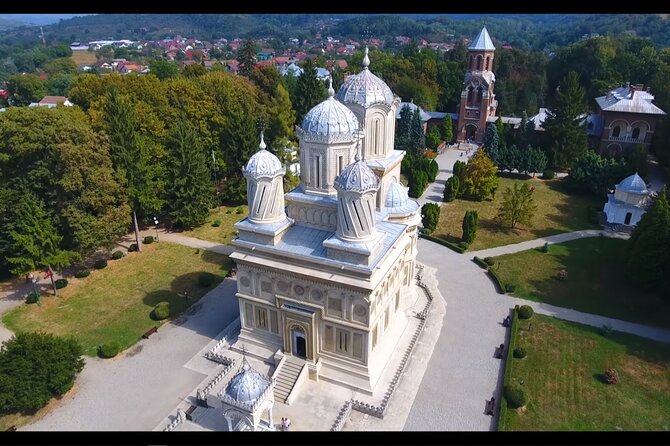
Day 5 is for painted monasteries, the kind of cultural stops that make people stop talking and just start looking up at walls. Voroneț Monastery is described as a medieval monastery tied to Stephen the Great, built in 1488 over 3 months and 3 weeks to commemorate the Battle of Vaslui. It’s often called the “Sistine Chapel of the East” because the frescoes feature the intense shade of blue known as Voroneț blue.
Then you visit Humor Monastery, another fortified church type. This stop emphasizes how churches were built away from the eyes of enemies and sometimes tucked in remote spots. You’re looking at a monastery shaped by protection and endurance, not just beauty.
Sucevita Monastery continues the theme, with biblical scenes and icons painted on both the walls and the sense that the church reads like an open book. It’s also specifically noted as part of UNESCO World Heritage listing for cultural landmarks.
Moldovita Monastery rounds out the set. Built in 1532, it’s described as a fortified church that blends Byzantine, Gothic, and Moldavian style elements. The standout here is the mural artwork, including paintings both inside and outside the church.
The museum stop at the end of this day, the International Museum of Eggs by Lucia Condrea, adds a different kind of visual storytelling. The museum opened in the summer of 1993, and it’s said to hold over 5500 exhibits displayed in 56 cases across two levels. If you like small objects with big cultural meaning, this is a nice breather.
Bicaz Gorges and Red Lake: a road-with-science day, plus naive sculpture at Popa
Day 6 is nature and local art. Bicaz Gorges connects Moldova and Transylvania via a gorge cut by the Bicaz River. The route is described as spectacular, with 8 kilometers of ravines and serpentines. You’ll also hear about wallcreeper, a cliff-dwelling bird that can be hard to spot, but knowing it’s there changes how you look at the cliffs.
The gorge also includes Lacul Roșu, the Red Lake, described as a landslide formation from the 19th century. It sits at an altitude of 980 meters and is associated with local cabins and hotels around it.
Then you get a closer look at the Red Lake itself. The information here is a little scientific and a little debated, with explanations linked to landslide timing and an earthquake dated January 23, 1838, followed by another in February. The lake formation may be discussed as 1837 or 1838 depending on interpretation. Either way, you’re seeing how nature events become local landmarks.
To keep the day from going entirely “outdoors,” the Popa Museum is a strong shift. It was founded in the 1970s by Nicolae Popa in his own house, after he was wounded in World War II and later imprisoned by communists for fighting against the regime. The museum ties personal loss to artistic output, highlighting his work as a naive sculptor and a creator of folklore.
Sighișoara, Viscri, and Brașov’s Council Square: Saxon-town rhythm without rushing
Day 7 brings you into medieval town life. Sighișoara Old Town centers on the Clock Tower and the Arms Museum. The citadel is described as built in 1280 and still inhabited for over 700 years, which is a rare thing in Europe. The tour also notes Vlad the Impaler, placing Sighișoara in the Dracula story web, even while keeping the focus on real medieval street life.
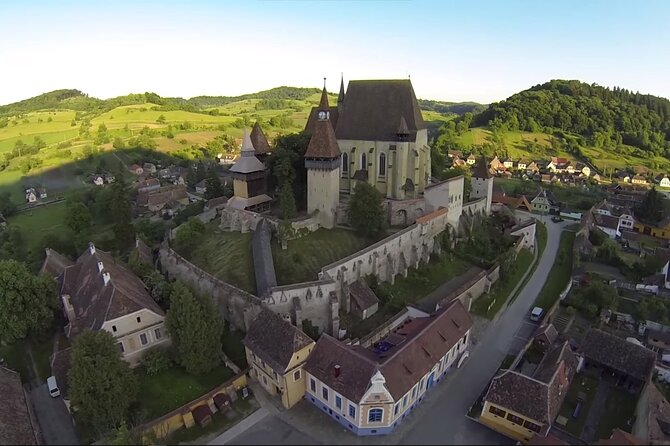
Then comes Village de Viscri. It’s described as having history back to the 12th century, with Prince Charles’ visits mentioned, plus the fortified church and the Mihai Eminescu Trust involvement helping the village reinvent itself. If you like seeing how preservation and community support can reshape daily life, Viscri feels like a quieter counterpart to the big castle stops.
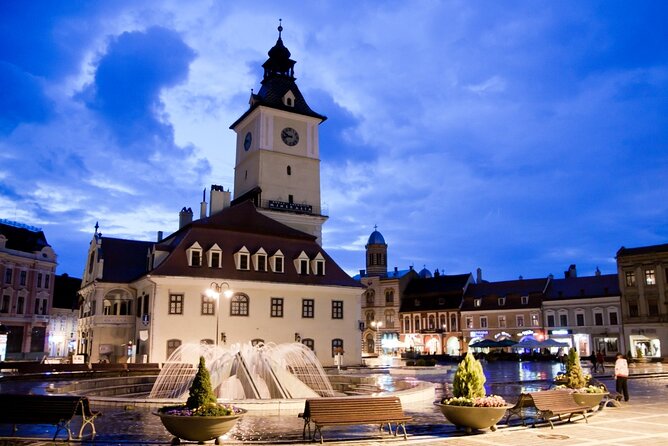
The day finishes with Piața Sfatului, the Council Square in Brașov. It’s framed as a historic market square with a right to hold markets in 1520 and weekly and annual markets dating back to 1364. The square is surrounded by 18th to 19th century houses, many of them historical monuments.
This day is a good reminder that Romania is not only churches and myths. It’s also squares, trade routes, and the way everyday life kept going through centuries.
Bran Castle, Peles Castle, and Sinaia Monastery: myth, monarchy, and monks
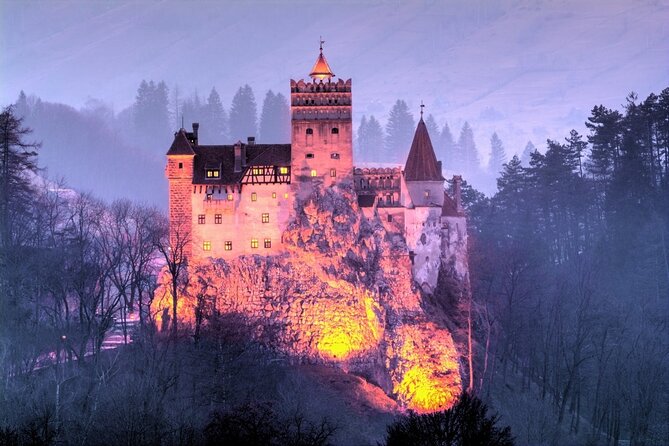
Day 8 starts with Bran Castle, often called Dracula’s Castle. The tour presents the usual mix of myth and history, explaining that the castle is widely believed to match Bram Stoker’s fictional description closely, which is why it’s so connected to Dracula. The value here is that you can see the castle as a storytelling machine, even if you separate legend from documented history.
The tour also includes a taste of traditional foods around the castle area, with handmade cheeses, pálinka (plum and pear brandy), and traditionally produced ham and sausages mentioned.
Then you move to Peles Castle, described as the Romanian royal family’s summer residence. This is the “royalty” stop, with the claim that it’s among the most important tourist attractions in Europe for its beauty. It’s the kind of place that makes you understand why elites built elaborate retreats and why visitors still care.
Finally, Manastirea Sinaia adds calm. The monastery was founded in 1695 by Prince Mihail Cantacuzino and named after Saint Catherine’s Monastery on Mount Sinai in Egypt. It’s described as home to 13 Orthodox monks as of 2005, led by hegumen Macarie Boguș, and it’s part of the Bucharest archdiocese.
That closing combination works well. You end with myth, then artistry and monarchy, then a quieter religious stop.
Price and logistics: what you get for the private $2,825.81 per person
At $2,825.81 per person, this tour is priced like a true private service, not a budget sampler. The value comes from how much is handled for you:
- Private car for only your group, with all car expenses covered (gasoline, parking, tolls)
- A licensed English speaking guide/driver throughout
- Wireless internet access in the car
- Flexibility to adjust the daily itinerary after it starts
- Hotel recommendations to match your budget
Those details matter on a tour that’s built on driving. If you had to plan timing, directions, and who goes where with entrance lines on your own, you’d spend time and stress you do not need.
The biggest cost consideration is what’s not included. Your accommodation, meals, and beverages are not included, and entrance fees are also separate as per the itinerary. That’s not unusual, but it does mean you should budget extra cash and time for ticketing days.
If you’re traveling as a group that can share the private car cost and you want a guide with humor and preparation, the price can feel reasonable. If you’re traveling solo and expecting everything to be included in one number, you’ll likely feel the difference.
FAQ
What does private mean on this tour?
Private means you and your friends or family are the only participants, with a private car and a guide/driver assigned for your group.
Is pickup offered?
Yes, pickup is offered.
Are entrance fees included?
No. Entrance fees are not included and you pay them as per the itinerary.
Are meals included?
No. Accommodation, meals, and beverages are not included.
How much driving should I expect?
The tour description notes there will be a lot of driving, which is part of how the route connects many regions and stops.
What language is the guide/driver?
The guide/driver is a licensed English speaking professional and is available throughout the tour.
Can I cancel for a full refund?
Yes. There is free cancellation up to 24 hours in advance for a full refund.
Should you book this 8-day private Romania tour from Bucharest?
Book it if you want a guided road trip that mixes big, famous highlights with monastery-heavy days, plus emotionally varied stops like the communist memorial and the playful Merry Cemetery. This is also a good fit if you value the comfort of a private car and appreciate the idea of a guide like Nicolas who is punctual, friendly, and ready with information and jokes.
Skip it if you get irritated by long driving days or you want a tightly packed plan with minimal time on the road. Also, if entrance fees and your own meals are a dealbreaker, you may prefer a tour where more is bundled into the main price.
Just Added: New Tours From Bucharest
- Bear Watching in Transylvania 2-Day Tour
- National Village Museum and Comana Adventure Park
- Half Day Tour in Bucharest
- Full-Day Private Tour of Brasov City and Peles Castle from Bucharest
- From Dracula to Ceaușescu- Romanian Terror Stories tour
- Bucharest: Tour The Wine Road, 2 Boutique Wineries in 1 Day
- Bucharest Ceaușescu House Parliament Palace &Village Museum
- Full-Day Private Tour of Bucharest and Mogosoaia Palace
Private, compared.

Castles of Transylvania: Private Day Trip from Bucharest
Read our review →
Dracula’s Castle, Peles Castle and Brasov – Private Day Trip from Bucharest
Read our review →
Bucharest Panoramic Sightseeing – Private City Tour
Read our review →
THERME “Take It Easy” Pack: Full Spa Access + Private Transfers
Read our review →
4h Bucharest Private Tour (2h by Car and 2h Walking in Old Town)
Read our review →