

Reviewed · BUCHAREST
Bucarest Recorrido Peatonal Personalizado
Bucharest gets personal fast. This customized walking tour strings together the big turning points of Romania, from ancient footprints through Dracula-era mentions of Bucuresti, and right up to the fall of Ceausescu. You’ll move at a human pace, with a guide who explains what you are seeing and why it matters.
What I love most is the way Adriana Chirau keeps history readable, not dusty. I also like the practical rhythm, the short stops at major sites, so you are not stuck listening for hours without a break. One thing to consider: you are on foot for about four hours, so wear shoes you can handle on uneven sidewalks.
In This Review
- Key things to know before you go
- The tour’s real superpower: history you can point at
- Value and price: what $28.94 buys you in practice
- Where you start and end: Theatre to Athenaeum
- Stop-by-stop: the route that turns Bucharest into a timeline
- Starting point building talk, plus a museum idea
- Stop 1: Biserica Sfantul Gheorghe Nou (early 18th century)
- Stop 1.5: A key restaurant stop, with a real-life history angle
- Stop 2: Biserica Sfantul Anton – Curtea Veche (stone church, 1500s)
- Stop 3: The Macca Villacrosse Passage (and yes, narghilea fans)
- Stop 4: Church of the Stavropoleos Monastery (early 1700s, end of an era)
- Stop 5: Piata Revolutiei (Revolution Square) and the monarchy versus communism comparison
- Pacing, comfort, and how to get the most out of the walk
- Adriana Chirau: the difference between a good guide and a great one
- Who this tour is best for
- Should you book this Bucharest peatonal with Adriana Chirau?
Key things to know before you go
- Max group size of 6: calmer questions, tighter storytelling, and less waiting.
- Small, meaningful stops: each church and passage connects to a specific era of Bucharest.
- Revolution Square as the pivot point: monarchy versus communism, in one focused comparison.
- Free entry at multiple stops: church and passage time is built in without extra ticket hassle.
- Mobile ticket plus bottled water: easy start, fewer small logistics worries.
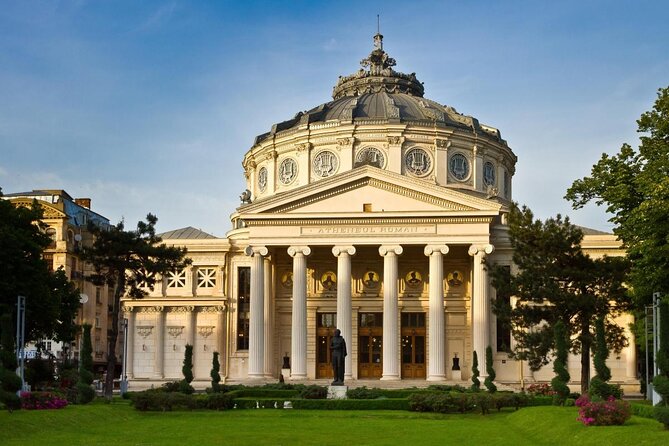
- Start and finish are different neighborhoods: you finish near the Romanian Athenaeum.
The tour’s real superpower: history you can point at
Bucharest can feel like it has layers stacked on layers, and this tour helps you read those layers as you walk. The route is built around moments you can physically locate, then interpret, so the city stops being a blur of streets and becomes a timeline.
I especially like that the tour is framed as “from the ground up.” You start with the deep roots, then keep moving through Roman influence, medieval principalities, and major political shifts that shaped modern Romania. It is not just names and dates, it is the logic of how power, faith, and culture shifted over time.
The guide, Adriana Chirau, shows up as the key ingredient. In the feedback I’m using as a guide for what to expect, Adriana is repeatedly praised for explaining clearly, staying passionate, and making the story click quickly. If you like learning while you walk, this format fits.
Value and price: what $28.94 buys you in practice
At $28.94 per person for about four hours, you are paying for a private-feeling group experience, not just a generic “see these sights” loop. The tour runs with a maximum of 6 travelers, which matters more than you might think, because you get better pacing and more chances to ask follow-up questions.
You also get bottled water included, and multiple stops list free admission. That takes the sting out of small add-on costs, especially at churches and heritage sites where tickets can sometimes slow you down.
What’s not included is private transportation. That’s actually fine for this kind of tour, because the whole point is to weave between sites while the story stays coherent. Just plan to arrive ready to walk.
A short list of what else is worth booking.
- Bucharest: Dracula’s Castle, Peles Castle, & Brasov Old Town★ 4.5 · 17,858 reviews
- Bucharest: Dracula Castle, Peles Castle & Brasov Old Town★ 4.6 · 10,891 reviews
- Bucharest: Dracula’s Castle, Peleș Castle & Brașov Day Trip★ 4.4 · 6,100 reviews
Where you start and end: Theatre to Athenaeum
The meeting point is Ion Luca Caragiale National Theatre, Bulevardul Nicolae Bălcescu 2, București. The start time is 10:30 am, so you’ll want to build in extra minutes for finding the exact spot and syncing up.
You end at The Romanian Athenaeum, Strada Benjamin Franklin 1-3, București. Ending at a landmark like that is helpful. It gives you an easy “finish line,” and it also makes it simpler to plan lunch or an afternoon visit to nearby sights right after the tour.
The tour also lists that it is near public transportation. So even if you do not want to spend the entire day walking afterward, you can break away quickly.
Stop-by-stop: the route that turns Bucharest into a timeline
Starting point building talk, plus a museum idea
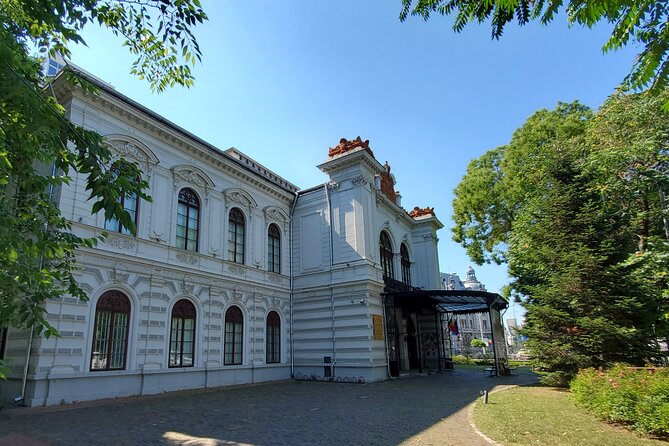
Before you get into the churches and passages, your guide makes a description of the building near the start and shares what is especially interesting there. There is also a built-in suggestion to visit the Museum of History of the Municipality of Bucharest after the walking portion, if you want to keep going.
This is a good warm-up. You get context early, so the later religious sites and political squares do not feel random. Instead, they feel like pieces of the same puzzle.
Stop 1: Biserica Sfantul Gheorghe Nou (early 18th century)
This is one of the more interesting churches in Bucharest, built in the early 1700s during a period of flourishing Romanian post-medieval culture and art. The stop is about 15 minutes, with free admission listed, so you can take in the details without turning it into a full church marathon.
Why it matters: you are seeing how religious architecture reflects artistic and cultural momentum after medieval changes. Even if you are not a church-architecture nerd, you can usually spot how styles and design choices signal shifting identity.
Practical note: since the admission is free, you are not juggling extra ticket steps at the door. Use that time to focus on what your guide points out, like the features that connect this site to its era.
These pair well with the day you just read about.
- Bucharest: Palace of Parliament Tickets and Guide
★ 4.3 · 3,182 reviews - Bucharest: Day Trip to Dracula Castle, Peles Castle & Brașov
★ 4.4 · 3,049 reviews - Bucharest to Dracula Castle, Peles Castle and Brasov Guided Tour
★ 4.5 · 2,933 reviews - Bucharest: Palace of Parliament Tickets and Guided Tour
★ 4.4 · 1,877 reviews - Dracula’s Castle, Peles Castle and Brasov Day Trip from Bucharest
★ 4.5 · 1,804 reviews
Stop 1.5: A key restaurant stop, with a real-life history angle
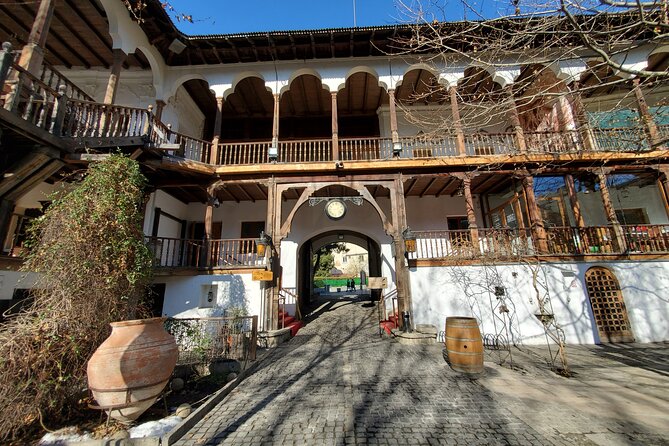
There is a stop at what the guide describes as one of Bucharest’s most interesting restaurants, and it is framed as a place of vital importance in Romanian history. Your guide presents the building and its historical significance, then offers help to reserve if you want to eat there after the tour.
This is a smart way to do food without making it awkward. You get context first, so when you later sit down, the place has meaning beyond just taste and menu.
What to consider: you do not have to eat there. But if you want to, make sure you are ready to commit to timing, because a reservation can help you avoid the usual “will they fit us in” stress.
Stop 2: Biserica Sfantul Anton – Curtea Veche (stone church, 1500s)
This church is described as the oldest existing stone church in Bucharest, built in the mid-1500s as a place of worship for the court connected to the suzerain prince. The stop is about 10 minutes, again with free admission listed.
Why you should care: this is the kind of site that changes how you picture the city. Instead of imagining Bucharest as something modern that grew up quickly, you understand it as a place with older foundations in stone and court life.
A drawback, in the general sense: the stop is short. If you love long, quiet church time, you might want to plan extra solo time afterward. The guide’s goal here is to keep the flow of the whole historical story.
Stop 3: The Macca Villacrosse Passage (and yes, narghilea fans)
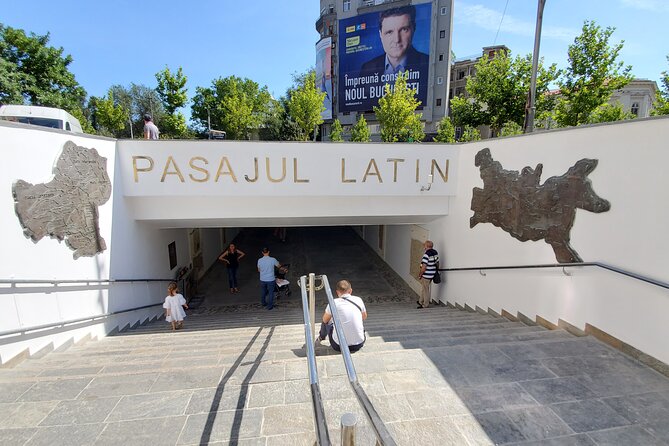
Then you shift from churches to a very Bucharest-style interlude: Macca Villacrosse Passage, described as the most interesting pedestrian passage in the city. The stop is about 10 minutes, with free admission listed.
And it has a specific vibe. The description calls it the perfect spot for lovers of cachimba, also known as narghilea. Even if you are not planning to smoke anything, it is still a useful pause because it shows how everyday social spaces and leisure culture fit into the city’s broader history.
What you’ll enjoy: the change of pace. After stone churches and royal eras, you get a more human, street-level sense of how people used to spend time in the city.
Stop 4: Church of the Stavropoleos Monastery (early 1700s, end of an era)
Next is the Church of the Stavropoleos Monastery, described as the most beautiful church in Bucharest. It was built in the first part of the 1700s, representing the end of an earlier Romanian renaissance period before the fanariote epoch.
The stop is about 15 minutes, with free admission listed. This is one of those locations where a good guide matters, because the value is in seeing the details and understanding the transition the church symbolizes.
A small caution: because this is a highlight stop, it can feel like there is a lot to look at in a short time. Keep your attention on the parts your guide directs, and you will get more out of it than if you try to read everything yourself on the spot.
Stop 5: Piata Revolutiei (Revolution Square) and the monarchy versus communism comparison
The final and biggest history pivot is Piata Revolutiei, described as the most important place in modern Romanian history. The guide uses it to put monarchy and communism side-by-side, so you see the contrast between the former Palace of the Romanian Royal and the headquarters of the Central Committee of the Romanian Communist Party.
This stop lasts about 20 minutes, with free admission listed. That extra time makes sense. It is not just about architecture, it is about memory and political power.
What makes this moment work: it is the end of the timeline loop. Earlier stops are about older roots, faith, and cultural shifts. Here you connect those shifts to what happens in modern governance, ideology, and public life.
And it also happens to be an area with a strong sense of place. The guide calls the surroundings emblematic of Bucharest, which helps you understand why this square is still such a focal point.
Pacing, comfort, and how to get the most out of the walk
The tour runs about four hours and is set up with short stops, so you are constantly switching modes from listening to looking. That pacing is exactly what you want on a walking tour, especially in a city where sidewalks can be uneven.
Bring comfortable shoes and plan for some walking in between. You are not using private transportation, and that is normal for this kind of route.
Also, the group is capped at 6 travelers and the tour is described as having a maximum of that size. That usually means you can ask questions without feeling like you are talking into a crowd. It is a good fit if you want explanations, not just a checklist of sites.
Adriana Chirau: the difference between a good guide and a great one
If there is one standout theme in the positive feedback, it is Adriana’s teaching style. People highlight that she explains well, stays passionate, and makes you understand more in a few hours than you might expect.
One practical tip shows up too: people recommend contacting her ahead of time by WhatsApp to help ensure the visit goes smoothly. If you plan to rely on anything specific, like hoping to include a follow-up stop at a nearby museum, that kind of heads-up can be useful.
This is exactly the kind of tour where a strong guide matters. The route is built from key places, but you only fully “get” the route when the story links those places together.
Who this tour is best for
You’ll probably love this if you want a focused, guided history walk that stays connected to real sights. It is also a great fit for a first visit to Bucharest, because it gives you a clean framework you can use later while exploring on your own.
It also suits people who like small groups. With a maximum of 6, you get more attention than the big-bus crowd.
If you are someone who hates churches or wants long quiet stops, this might feel fast at some points. But the itinerary is clearly designed to keep things moving, around 10 to 20 minutes per site.
Should you book this Bucharest peatonal with Adriana Chirau?
I’d book it if you want history that you can track on foot, and you value a guide who explains clearly and connects sites to the bigger national story. The price feels fair for a small-group, four-hour format, with bottled water included and free admissions at multiple stops.
I would think twice if you know you struggle with four hours of walking, or if you prefer long museum time over quick exterior and interior highlights. In that case, you might treat this as your “orientation walk” first, then pick your longer stops afterward.
If you like the idea of finishing near the Romanian Athenaeum and continuing your day with a grounded sense of what you just learned, this tour is a smart starting move.
Just Added: New Tours From Bucharest
- Bear Watching in Transylvania 2-Day Tour
- National Village Museum and Comana Adventure Park
- Half Day Tour in Bucharest
- From Dracula to Ceaușescu- Romanian Terror Stories tour
- Full-Day Private Tour of Brasov City and Peles Castle from Bucharest
- Bucharest: Tour The Wine Road, 2 Boutique Wineries in 1 Day
- Bucharest Ceaușescu House Parliament Palace &Village Museum
- Full-Day Private Tour of Bucharest and Mogosoaia Palace