
Reviewed · BUCHAREST
Eastern Orthodox Church Art in Bucharest
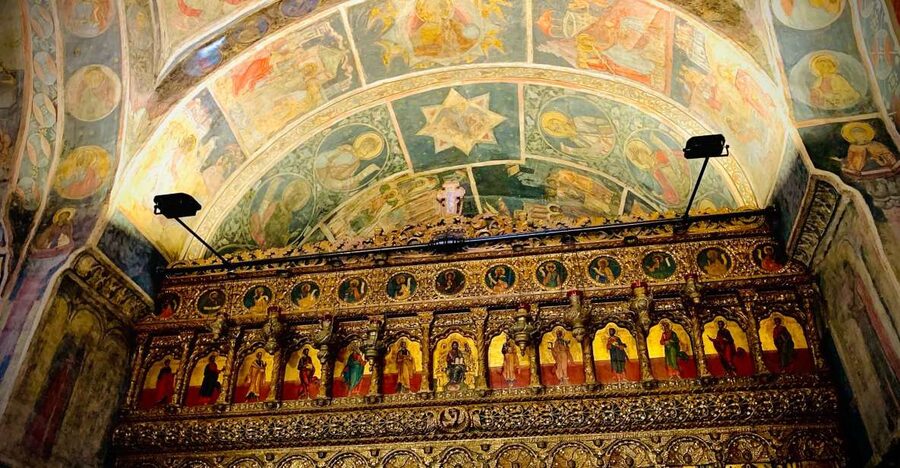
Icon frescoes turn Bucharest into a time machine. This small-group walk strings together Eastern Orthodox church art across active worship spaces, from Saint Anton to Stavropoleos and nearby highlights, including Byzantine-style painting. I love how the guide makes the symbolism click fast, and I love that you get practical leads like an icon-shop stop at the start. One drawback to consider is that these are working churches, so you need modest dress and calm behaviour the whole time.
I also like the small-group feel, max 10 people, because it stays conversational and not like a lecture hall. The feedback I saw specifically calls out guides named Helen and Elena for being personable and flexible, including adapting the route pace for someone using a walking stick or crutches.
You start near Lipscani’s church cluster area and end back in the historic core after roughly 2.5 hours on foot. You will see frescoes, icon details, and different Orthodox art styles tied to Wallachian-era Bucharest, plus a couple of sites that even locals have trouble finding quickly.
In This Review
- Key things I’d plan for
- Why Bucharest’s Orthodox churches feel different
- Your route from Saint Anton to the Stavropoleos area
- Starting at Saint Anton, with the Anton icon shop nearby
- Lipscani Street and Saint George Km0 fresco focus
- Saint Elias and Lady’s Church, where even locals need directions
- Stavropoleos Monastery and the art around its walls
- Saint Demetrios next door, a 19th-century neo-Baroque contrast
- The extra stop you’ll appreciate: Saint Cyprian Church
- Price and value: is $57 worth 2.5 hours?
- What to bring, and how to dress since these are active churches
- Who this tour suits best, and who might want a different style
- Should you book this Eastern Orthodox Church Art tour?
- FAQ
- How long is the tour?
- How much does it cost?
- Where do I meet the guide?
- Is there food or drinks included?
- What churches are included on the tour?
- Is the tour a museum-style visit?
- What languages is the guide available in?
- Is the group size small?
- What should I bring and wear?
- Are there any restrictions like pets or clothing rules?
Key things I’d plan for
- A tight 2.5-hour church crawl that focuses on Orthodox painting and meaning, not just dates and names.
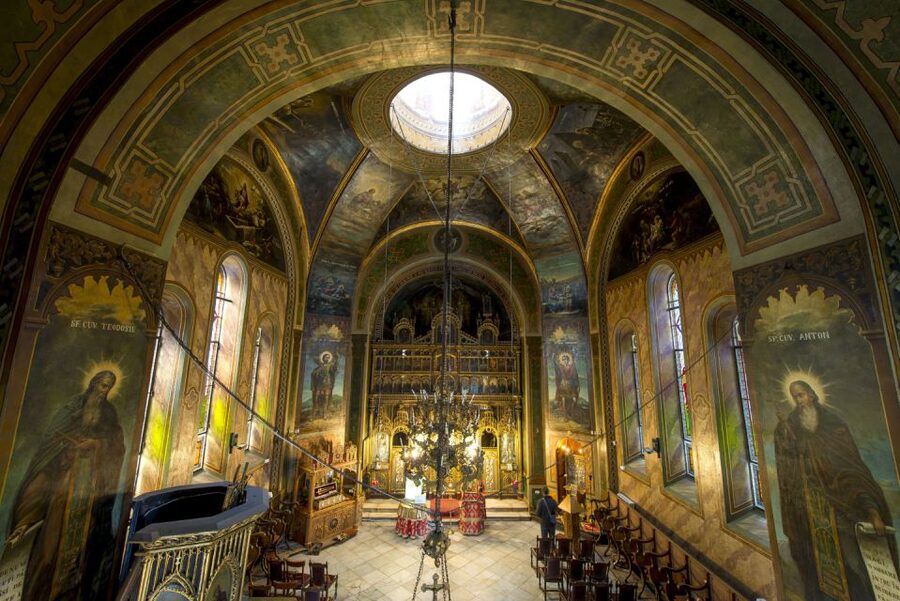
- Real, active churches with modesty rules, so you’re seeing art in its real setting.
- Several distinct painting moments, including frescoes by major Romanian church painters.
- Hard-to-find stops that make the walk feel like a local shortcut, not a generic highlights loop.
- Stavropoleos and nearby Saint Demetrios for the contrast between monastery atmosphere and 19th-century neo-Baroque detail.
- A small group up to 10 with English, Spanish, and Romanian live guidance.
Why Bucharest’s Orthodox churches feel different
Bucharest is famous for grand architecture, but Orthodox church interiors give you something more specific: a visual language built to teach. You don’t just look at decoration. You see how icons, fresco scenes, and church layout work together to express faith, hierarchy, and story.
What makes this tour especially satisfying is that it treats Orthodox art like something you can read. You are not left standing in front of a wall wondering what you’re supposed to notice. The guide points out the visual cues that make a fresco make sense, from composition and figure gestures to how saints and scenes are arranged.
There’s also a practical bonus. Since the churches are active, you get art in context. You may not see a museum-style explanation plaque, but you do see how people actually move through the space, and that changes how you understand the atmosphere.
Your route from Saint Anton to the Stavropoleos area
The walk is designed as a logical thread through central Bucharest. You begin near the Old Princely Court area, then head along Lipscani street for additional stops, and later shift into the monastery complex zone around Stavropoleos.
The order matters because it changes what kind of art you’re looking at. Early on, you set the baseline: how Orthodox churches present iconography in a way that feels coherent. Then you move into specific buildings with distinct fresco styles and different eras. By the end, the contrast between monastery spaces and a more ornate later style helps everything click.
This is also why you’ll want comfortable shoes. The tour is about 2.5 hours total, and it’s paced like a real walk between churches, not a slow stroll where you linger for hours in one spot.
A short list of what else is worth booking.
- Bucharest: Dracula’s Castle, Peles Castle, & Brasov Old Town★ 4.5 · 17,858 reviews
- Bucharest: Dracula Castle, Peles Castle & Brasov Old Town★ 4.6 · 10,891 reviews
- Bucharest: Dracula’s Castle, Peleș Castle & Brașov Day Trip★ 4.4 · 6,100 reviews
Starting at Saint Anton, with the Anton icon shop nearby
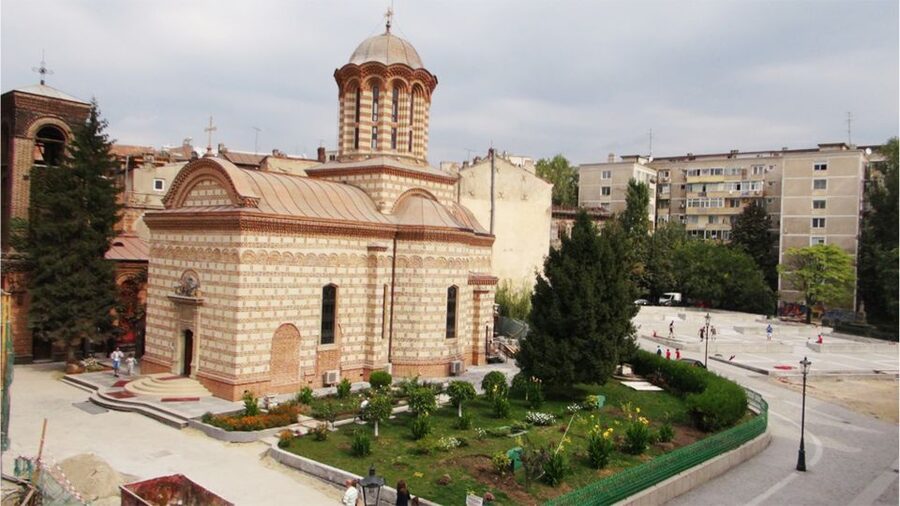
You meet in front of the Anton icon shop, right by the start of the Saint Anton Church experience. That first stop is smart because it frames what you’re seeing. If you want to bring something home, you’re placed right at the source for icons and religious art purchases, rather than trying to find one after the tour ends.
At Saint Anton Church, you’re in the early anchor point for the tour’s theme: Orthodox iconography in Wallachian-era Bucharest. The guide focuses attention on the church’s painted program so it feels less random and more intentional.
One practical tip: since you’re starting at a shop, you can use the first church context to decide what you actually want to buy. If you’re hoping to add an icon to your collection, it helps to know what details you should look for, like carving and paint style, before you commit.
Lipscani Street and Saint George Km0 fresco focus
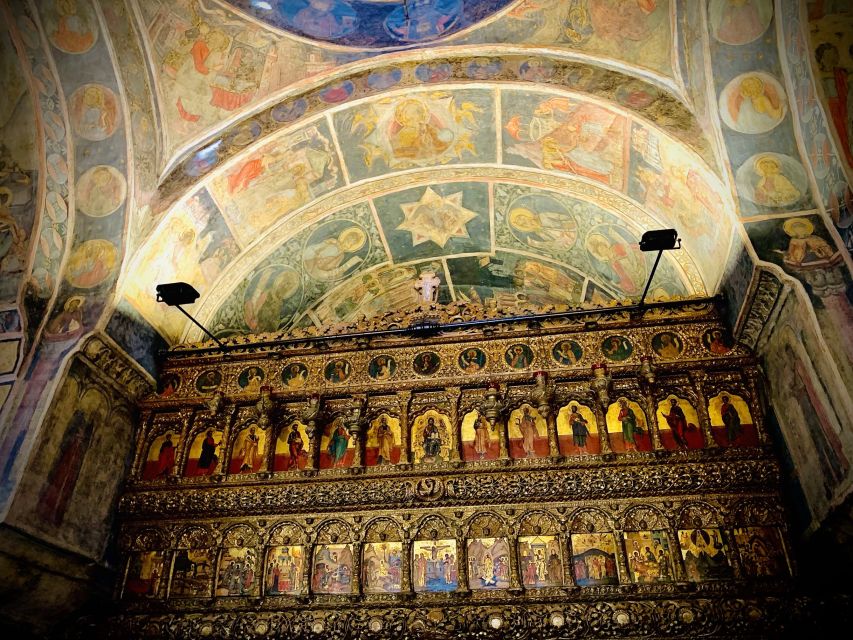
Next, you continue along Lipscani street to Saint George Km0. This stop is about fresco viewing with a purpose. You’ll admire a fresco created by one of Romania’s greatest church painters, and the guide helps you understand why the style matters.
Why I like this part of the route: Lipscani is busy and visually mixed, so it sets up the contrast when you step into a church. You get the feeling of stepping out of modern streets and into an older visual system where art has job duties, not just beauty.
Here’s what to pay attention to. Frescoes can look similar at first glance if you’re not sure what you’re looking for. Ask your guide to point out the storytelling cues. Even if you can’t name every figure, you can still track the narrative logic and read the emotions conveyed through the faces and gestures.
If you’re the type who loves photography, this is a great moment to slow down and frame shots carefully. Just remember churches have active worship space rules, so be respectful with where you stand and how you shoot.
Saint Elias and Lady’s Church, where even locals need directions
Two of the most rewarding stops are also two of the easiest to miss if you’re on your own. Saint Elias is an Orthodox basilica, and it is noted as one of two in the city. Lady’s Church follows, with some of the oldest preserved original frescoes in Bucharest.
That “even locals” detail matters because it turns your tour into more than a best-of list. You’re not just hitting famous landmarks. You’re getting a guided shortcut to places that feel tucked into the city’s fabric, which makes the whole experience more memorable.
Saint Elias is a chance to compare how a basilica setting handles icon display and interior painting. It’s not just another church door. It’s a distinct building type, and you’ll feel that difference when you look at how the painted program sits in the space.
Then Lady’s Church delivers the historical weight. The fact that the frescoes are among the oldest preserved original ones gives you a tangible sense of continuity. You’re seeing art that has lasted, and that makes the imagery feel less like a decorative feature and more like a preserved message carried forward.
Stavropoleos Monastery and the art around its walls
After Lady’s Church, the route shifts into the Stavropoleos Monastery area. This is where the tour’s “Bucharest time travel” feeling becomes strongest. Monasteries have a different rhythm than single parish churches. Even if you’re only here for a short visit, the atmosphere makes you slow down without being told.
Stavropoleos is described as eclectic, meaning you should expect a mix of styles in the look and feel of the place. That eclectic quality pairs well with the rest of the tour because you’re not just collecting one visual style. You’re learning how Orthodox art and church spaces in Bucharest can express different eras and influences.
While you’re there, focus on how the monastery layout supports movement and viewing. Art in Orthodox churches is often designed for looking from certain angles. When you follow the guide’s pointing, you start to notice patterns in where the eye goes naturally.
These pair well with the day you just read about.
- Bucharest: Palace of Parliament Tickets and Guide
★ 4.3 · 3,182 reviews - Bucharest: Day Trip to Dracula Castle, Peles Castle & Brașov
★ 4.4 · 3,049 reviews - Bucharest to Dracula Castle, Peles Castle and Brasov Guided Tour
★ 4.5 · 2,933 reviews - Bucharest: Palace of Parliament Tickets and Guided Tour
★ 4.4 · 1,877 reviews - Dracula’s Castle, Peles Castle and Brasov Day Trip from Bucharest
★ 4.5 · 1,804 reviews
Saint Demetrios next door, a 19th-century neo-Baroque contrast
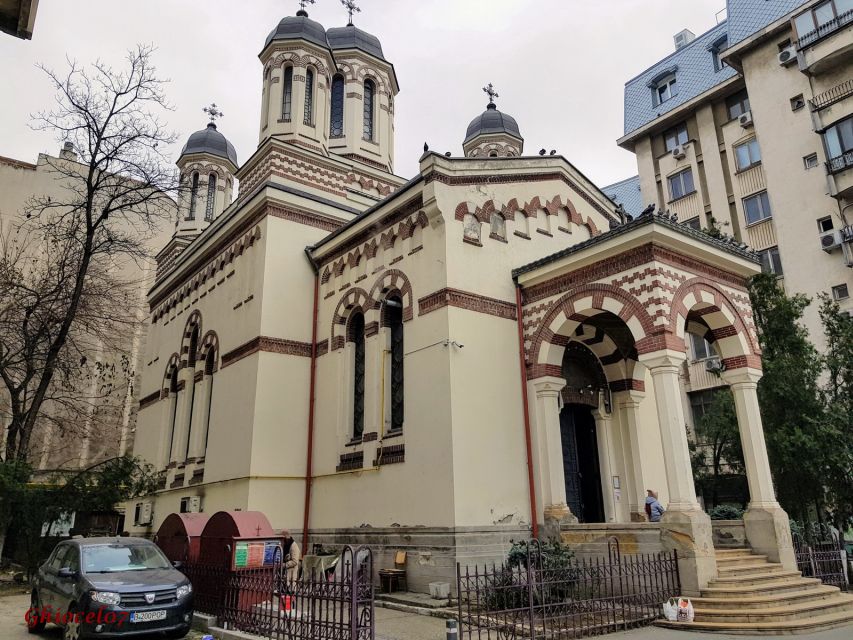
Right next to the monastery area, the tour includes Saint Demetrios, described as a neo-Baroc 19th-century gem. This stop is a smart counterpoint. Earlier churches and frescoes can feel more rooted in older visual systems. Then you step into something later with a different decorative language.
I like this contrast because it prevents you from freezing Orthodox art in one definition. Orthodox iconography is the core theme, but church art in Bucharest also reflects how buildings and styles evolved over time.
Use this moment to reflect on what you learned earlier. When the guide points out details in Saint Demetrios, try to connect them back to the earlier stops. That’s when the tour becomes more than five or six churches. It becomes a way to read the city.
The extra stop you’ll appreciate: Saint Cyprian Church
The tour also includes Saint Cyprian Church as one of the participating sites. Even without changing the overall structure, this kind of extra church stop matters because it prevents repetition.
Churches with similar themes can still feel totally different when you compare the placement of icons, the fresco focus points, and how the interior lighting interacts with paint. Saint Cyprian helps you see another angle of Orthodox visual culture in Bucharest, reinforcing the tour’s main idea that meaning and style are tightly linked.
Price and value: is $57 worth 2.5 hours?
At $57 per person for about 2.5 hours, you’re paying for a focused small-group guided experience built around church art interpretation. You’re not just paying for entry to a museum. You’re paying for someone to help you look.
For value, the biggest points in your favor are:
- Small group size up to 10, so you can ask questions and get attention.
- Live guide in English, Spanish, and Romanian, which is useful if you want clarity on religious and artistic terms.
- Multiple stops that are hard to find without help, including sites noted as difficult even for locals.
The biggest thing to know is also where value can drop. This tour does not include food or drinks. You will likely want a café break before or after, especially since church visits can make you feel slower and warmer than you expect.
If you enjoy visual art but don’t want to spend days researching independently, this price can feel like good shorthand: you trade some freedom for guidance and a well-paced route.
What to bring, and how to dress since these are active churches
This tour is only enjoyable if the church rules are taken seriously. The churches are active, not museums, so you’ll want modest dress and respectful behaviour the whole time.
Plan for:
- Comfortable shoes, because you’ll be walking between several sites.
- Modesty rules like no short skirts, no sleeveless shirts, no tight clothing, and no ripped clothing.
- No strong fragrances, which is good advice for any church visit.
- Pets are not allowed.
It also helps to go with a calm mindset. You’re stepping into worship spaces, so keep your voice low, follow the guide’s lead on where to stand, and avoid blocking sightlines.
If you have mobility needs, it’s worth knowing that flexibility has been mentioned in feedback. That suggests the guide may adjust pacing and logistics if you share your situation ahead of time.
Who this tour suits best, and who might want a different style
This is a great fit for you if you want Orthodox art explained clearly, and if you like learning how symbolism works in real places of worship. It also suits you if you’re curious about Romanian Orthodox culture and want context without needing to become a scholar first.
It’s less ideal if you want a strictly neutral, art-only tour. This tour is built around Orthodox churches and their meaning, and faith context can be part of the conversation. Also, one piece of feedback noted an issue with tone when a Catholic visitor was involved, so if you are sensitive about religious comparisons, go in with an open, respectful approach.
If you’re traveling with family, the small-group format can work well, but the dress rules mean you’ll want to plan outfits ahead.
Should you book this Eastern Orthodox Church Art tour?
Yes, if you want a guided route through Bucharest’s Orthodox church art with real interpretation, not just sightseeing. The mix of Saint Anton, Saint George Km0, Saint Elias, Lady’s Church, Stavropoleos, and the nearby Saint Demetrios creates variety, and the fact that some stops are difficult to find on your own is a clear value win.
Book this tour if you like your culture travel hands-on, with stops you can’t easily replicate without help. Skip it if you strongly prefer museum-only viewing, or if you know you will struggle with modesty rules inside active churches.
If you want the best experience, show up ready to look slowly, bring comfy shoes, and treat the churches with respect. That’s when the art becomes more than decoration, it becomes a story you can follow.
FAQ
How long is the tour?
The duration is 2.5 hours.
How much does it cost?
The price is $57 per person.
Where do I meet the guide?
You meet in front of the Anton icon shop.
Is there food or drinks included?
No. The tour does not serve food or drinks, but you can stop in the many cafes, bars, or restaurants nearby.
What churches are included on the tour?
The tour includes Saint Anton Church, Saint George Km0 Church, Saint Elijah, the Lady’s Church, Stavropoleos Monastery, and Saint Cyprian Church.
Is the tour a museum-style visit?
No. The churches are active, meaning modest dress and respectful behaviour are required.
What languages is the guide available in?
The live guide is available in English, Spanish, and Romanian.
Is the group size small?
Yes. It is limited to 10 participants.
What should I bring and wear?
Bring comfortable shoes. Wear modest clothing since there are dress restrictions inside active churches.
Are there any restrictions like pets or clothing rules?
Pets are not allowed. Also, short skirts, sleeveless shirts, tight clothing, ripped clothing, and strong fragrances are not allowed.
Just Added: New Tours From Bucharest
- Bear Watching in Transylvania 2-Day Tour
- National Village Museum and Comana Adventure Park
- Half Day Tour in Bucharest
- From Dracula to Ceaușescu- Romanian Terror Stories tour
- Full-Day Private Tour of Brasov City and Peles Castle from Bucharest
- Bucharest: Tour The Wine Road, 2 Boutique Wineries in 1 Day
- Bucharest Ceaușescu House Parliament Palace &Village Museum
- Full-Day Private Tour of Bucharest and Mogosoaia Palace