Reviewed · PRIVATE
Private 8 Day Romania UNESCO Tour
Eight days, and Romania changes under your feet.
This private guided route strings together Bucharest landmarks, medieval Transylvanian towns, UNESCO countryside sights, and Romania’s food traditions, all with a guide who’s there to answer your questions. You’ll also get a real change of pace with overnight stays in rural guesthouses and pensions, not just hotels in big cities.
What I love most is the UNESCO focus without feeling like a checklist. The painted monasteries in Bucovina and the wooden churches of Maramures each have a strong visual identity, and your guide helps connect the art to everyday life and belief.
The second thing I like is the practical value of private transport. You travel in a car or minibus, with pickup in Bucharest and drop-off back in the city, so you are not stitching together buses and timing all day.
One possible drawback: you will need to budget entrance tickets for several stops, and the schedule can involve a lot of driving between regions. If you hate long days in the car, pick the off-peak months and bring snacks, because you will be moving.
In This Review
- Key points worth knowing before you go
- Bucharest to start, with the right context for everything else
- Day 1 into Sibiu and rural Romania: medieval streets, then dinner
- Day 2: Corvin Castle and Alba Iulia, then Cluj Napoca for a city reset
- Day 3: Cluj Napoca’s center, then Maramures wooden churches
- Day 4: Sapanta’s Merry Cemetery and the top-of-world wooden churches
- Day 5: Bucovina painted monasteries, plus black pottery in Marginea
- Day 6: Voronet’s blue frescoes, then Red Lake and Bicaz Gorges
- Day 7: Sighisoara’s medieval streets, jam tasting, Prejmer’s fortified church
- Day 8: Bran and Peles, then back to Bucharest
- Price and value: what $2,315.49 covers, and what you still need to plan
- Logistics that matter on this route: pace, walking, and comfort
- Who should book this UNESCO Romania tour
- Should you book? My practical take
- FAQ
- Is this a private tour or a group tour?
- Where do I meet the guide, and what time does the tour start?
- Does the tour include pickup and drop-off in Bucharest?
- What is included in the tour price?
- Are entrance tickets included?
- Which UNESCO sites are included on the route?
- Are there any optional activities during the trip?
- What is the cancellation policy if plans change?
Key points worth knowing before you go
- Private 8-day route starting and ending in Bucharest, with hotel pickup around 9:00 AM
- UNESCO sights across Transylvania, Maramures, Bucovina, and Saxon towns like Sighisoara and Prejmer
- Rural overnights in local guesthouses and pensions, plus a horse-driven wagon tour in the Sibiu area
- Home-style experiences like a handmade dinner with traditional products and jam, chutney, and syrup tasting
- A guide built for questions, not just narration, plus time for short walks in key historic centers
- Entrance fees not included in the overall price, with an estimate of about 85 euro
Bucharest to start, with the right context for everything else
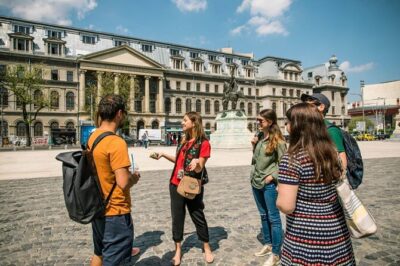
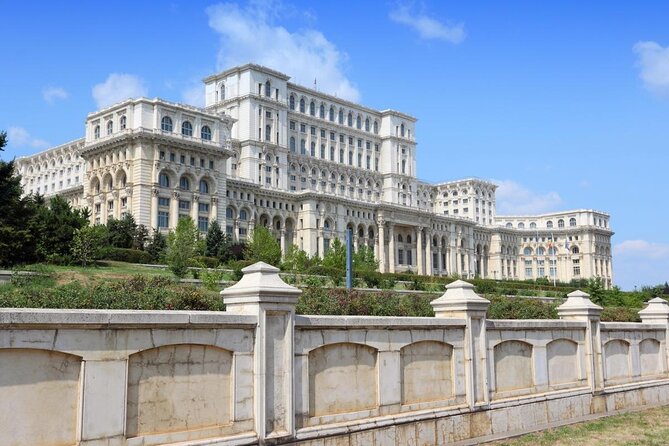
Day one begins right where most people have questions: Bucharest. You meet your guide in the morning at 9:00 AM at your Bucharest hotel, then head out for a panoramic loop that covers big landmarks like the Parliament Palace, Revolution Square, Athenaeum, Royal Palace, Triumph Arch, and Victoriei Avenue. This kind of orientation matters, because the rest of the trip keeps circling back to Romania’s modern history and identity.
After the city overview, you get a stop at Cozia Monastery, built at the end of the 14th century, tied to Wallachian history and the burial place of Mircea the Old. It is a good first lesson in how Romania’s story is written in stone and design, before you start chasing frescos and woodwork later on.
Then the day shifts to Sibiu with time for a guided walk through the Old District. You’ll see the Big Square, Small Square, the Stairs Tower area, Lier’s Bridge, and several religious buildings, plus medieval walls and fortifications. Sibiu has that easy-to-walk, human-scale feel that makes UNESCO towns more enjoyable than intimidating.
Day 1 into Sibiu and rural Romania: medieval streets, then dinner
The Sibiu walking portion is long enough to feel like you actually understand the place. You are not just passing by viewpoints. You get stops at different churches as part of the stroll, including Biserica Romano-catolica Sfanta Treime and the Orthodox Cathedral of Sfanta Treime with its frescoes.
The day ends outside the city with Sibiel, a village where older architecture and traditions are still visible. You get a horse-driven wagon tour, then a home-made dinner using traditional products. That mix is what makes this tour more satisfying than a straight museum run. It shows you how culture is kept through daily habits, not only monuments.
If you are choosing this tour specifically for local food, this is one of your early payoff moments.
Other day trips from Bucharest
- Castles of Transylvania: Private Day Trip from Bucharest★ 4.5 · 248 reviews
- Bucharest: Best of Bucharest Private Tuk-Tuk Tour★ 5.0 · 238 reviews
- Dracula’s Castle, Peles Castle and Brasov – Private Day Trip from Bucharest★ 5.0 · 211 reviews
Day 2: Corvin Castle and Alba Iulia, then Cluj Napoca for a city reset
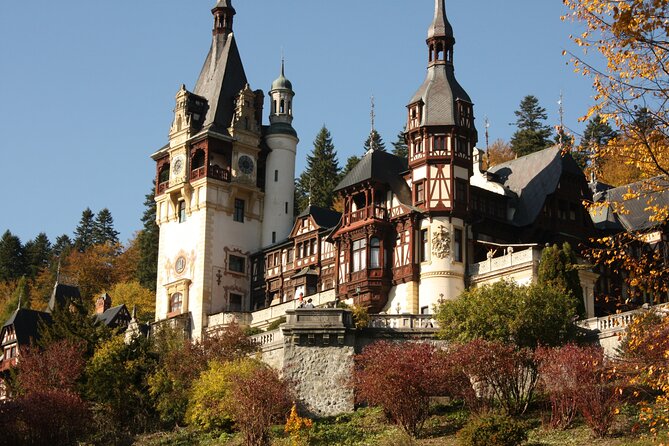
On day two, you head toward Hunedoara for Castelul Corvinilor (Corvin’s, or Hunyad, Castle). The highlight here is scale. It’s described as the biggest medieval castle from Romania, connected to the Transylvanian governors and dating back to the 15th century. Even if you are not a castle superfan, it gives you a sense of power and defense in a way that plain ruins cannot.
You then continue to Cetatea Alba Iulia, a city with long history and Roman ruins still visible. The itinerary frames it as the City of the Union, then adds both Orthodox and Catholic cathedral stops, the Vauban-style fortification system, and the Roman remains. It is a lot for one stop, but it also helps you see how religion, empires, and military architecture overlap in the region.
You finish the day in Cluj Napoca, staying at a 4-star hotel or similar. That city overnight is a smart contrast after the more rural, slower pace of the first day.
Day 3: Cluj Napoca’s center, then Maramures wooden churches
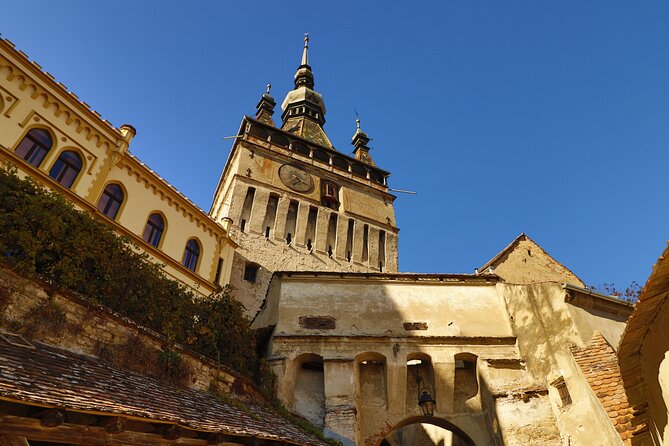
Day three starts with a walking tour in Cluj-Napoca, with highlights including St Michael’s Cathedral, Union Square, Museum Square, Orthodox Cathedral, National Theatre, and the Matei Corvin’s statue. You get the feeling of a Transylvanian capital city, not just a transit point.
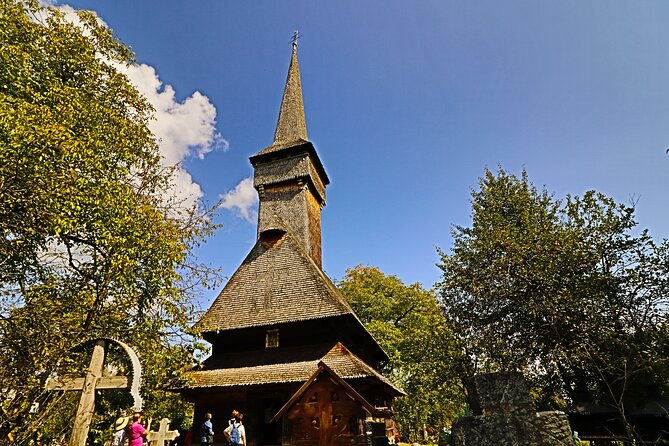
Then you head to Maramures, Romania’s northern region known for wooden churches and preserved traditions. Your first UNESCO-listed stop is Surdesti Wooden Church, built in 1766 on a wood structure, with a tower height of 54 meters, noted as one of the tallest old wooden churches in Europe. The second UNESCO-listed stop is Desesti Wooden Church in Desesti, again a major wooden church with that same UNESCO stamp on the itinerary.
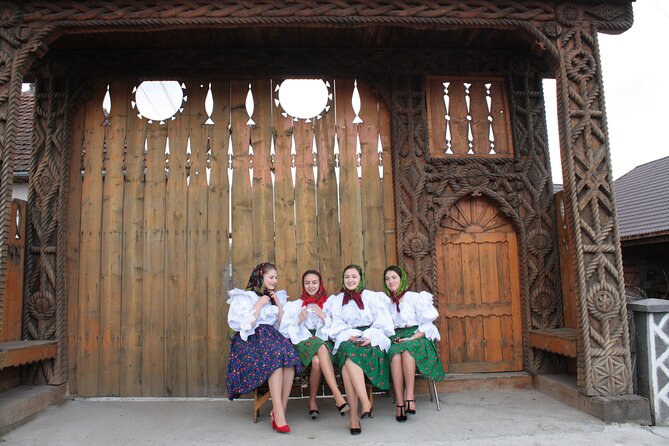
From there, you add community craft time. You are scheduled to visit local craftsmen like a weaver, a wood carver, and a water mill, plus traditional household elements. This is more than photo time. It helps you understand how materials and skills shape daily life, especially where church design, furniture, and tools all share the same logic of handwork.
You end the day in Botiza, with dinner and overnight in a local pension, plus a visit to a local household and a sheepyard depending on the season. This rural element is one of the tour’s stronger selling points because it slows the trip down just enough for real understanding.
Day 4: Sapanta’s Merry Cemetery and the top-of-world wooden churches
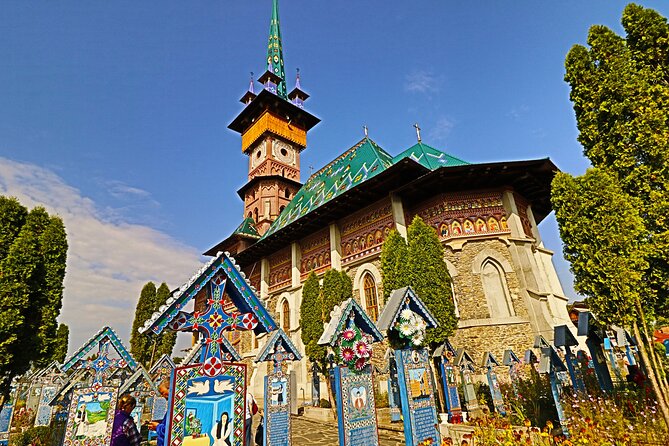
Day four continues in Maramures and leans hard into color and storytelling. First up is Sapanta Merry Cemetery, UNESCO-listed, known for colorful tombstones with funny poems. It sounds quirky, but it works as a window into how a community thinks about life, death, and memory.
In the same area, you can see Sapanta Peri, described as the highest wooden church at 75 meters. After that, you visit Sapanta-Peri Monastery, founded in 1997 to revive an older tradition tied to St. Archangel Michael in Peri. The itinerary notes the tower at 78 meters, and it adds a Guinness Book reference for the tallest wooden church in the world.
There is also an optional detour near Sighet, with the Communist Prison Museum as a possible stop. Because it’s optional, you can match it to your interests rather than being forced into it.
Later you visit the Maramures Woman Museum in Dragomiresti, where the itinerary calls it small but interesting, focused on how people used to live and the traditions and customs of the region. Finally, you return to rural Botiza for a simpler evening again, with dinner and overnight.
This day is a reminder of why Maramures is worth the effort. You do not just see wooden structures. You see how people explain their world through art, craft, and local humor.
Day 5: Bucovina painted monasteries, plus black pottery in Marginea
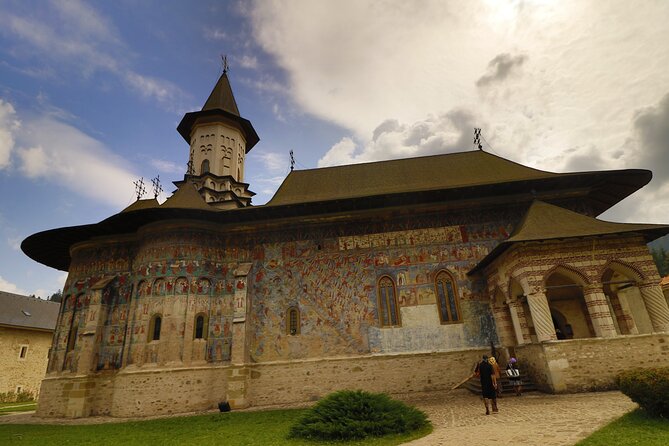
Day five is where many people come for the famous “painted monasteries” look. You drive across the Carpathians toward Bucovina, passing by Ciocanesti, a scenic village known for decorated houses and painted eggs traditions. There is also an optional local museum stop if you want to go deeper there.
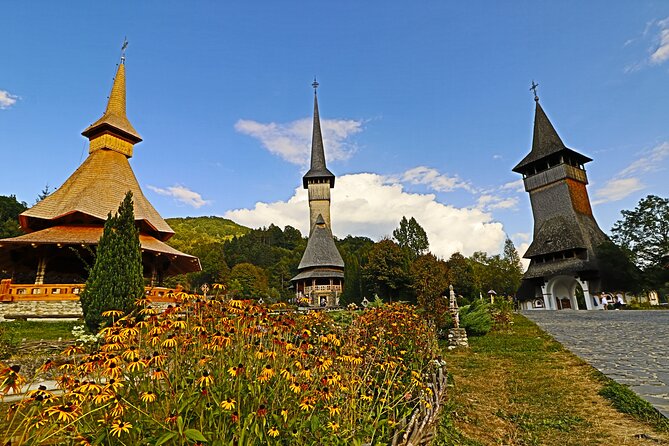
Then comes the centerpiece: UNESCO-listed Moldovita Monastery, with original interior and exterior frescoes kept from the 15th and 16th centuries. The itinerary notes the fortress-like feel with towers and thick walls, which helps you understand these places as protective buildings, not only religious art spaces.
Next is the Lucia Condrea museum dedicated to painted egg art and traditions, with the focus on techniques and designs. After that, you visit Sucevita Monastery, called the most magnificent monastic achievement among the painted monasteries in Bucovina, with a fortress character, towers, buttresses, and watch roads.
You finish the day with a practical craft stop at Ceramica neagra Marginea, where you visit a local family workshop making black pottery using old technology. This is a nice counterbalance after hours of frescoes. You get to touch another kind of cultural heritage: materials, firing methods, and the feel of older production styles.
These pair well with the day you just read about.
- Bucharest: Dracula’s Castle, Peles Castle, & Brasov Old Town
★ 4.5 · 17,858 reviews - Bucharest: Dracula Castle, Peles Castle & Brasov Old Town
★ 4.6 · 10,891 reviews - Bucharest: Dracula’s Castle, Peleș Castle & Brașov Day Trip
★ 4.4 · 6,100 reviews - Bucharest: Palace of Parliament Tickets and Guide
★ 4.3 · 3,182 reviews - Bucharest: Day Trip to Dracula Castle, Peles Castle & Brașov
★ 4.4 · 3,049 reviews
Day 6: Voronet’s blue frescoes, then Red Lake and Bicaz Gorges
On day six, you start with Voronet Monastery, founded in 1488 by Stephen the Great. The itinerary highlights the Last Judgment fresco as the best preserved and most impressive representation, plus the distinctive blue background color. If you have only seen photos before, this is the day when you see how much those colors were designed to be seen from a distance.
Then the route turns more scenic. You pass through the Carpathians back toward Transylvania, stopping at Red Lake and Bicaz Gorges. These are short stops, but they break up the monastery-heavy rhythm and give you a mental reset.
You finish the day in Sighisoara, which is a great base for the final UNESCO-focused days in Saxon Transylvania. It also reduces the feeling of constant packing and unpacking, compared with staying in more small villages for every night.
Day 7: Sighisoara’s medieval streets, jam tasting, Prejmer’s fortified church
Day seven is built around Sighisoara, described as the Pearl of Transylvania and a UNESCO-listed medieval town. You get a walking tour of the historic center, including the medieval citadel atmosphere created by German, or Saxon, settlers in the 13th century. It’s one of those towns where you can pause without feeling rushed.
You then drive through nearby villages like Saschiz, stopping for jam, chutney, and syrup tasting at a local producer shop. This small stop is surprisingly important, because it gives you a direct taste of what “tradition” can mean when it turns into something you can bring home, even if just in jars.
After that, you visit the Peasant Fortified Church at Prejmer, UNESCO-listed and dating to the 13th century. The itinerary calls it a unique defensive and religious structure, which is exactly the right way to frame it. These churches were not only for worship. They were for survival.
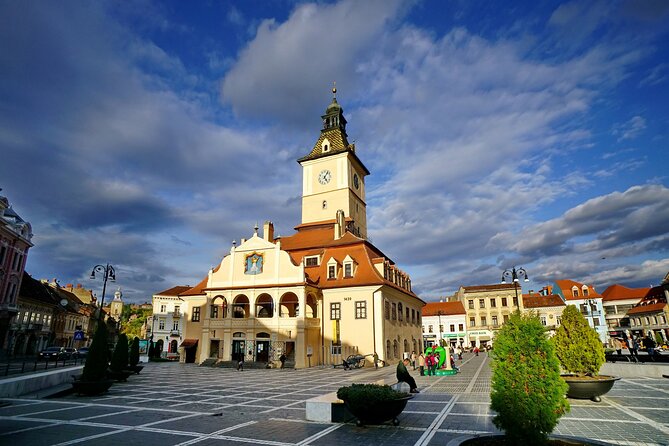
In the afternoon, you go to Brasov for a walking tour of the medieval historical center. You see Council Square, Black Church, White and Black Towers, Weaver’s Bastion, and Ecaterina’s Gate. The walk ends with Black Church (Biserica Neagra) as a landmark stop, plus optional time at Weaver’s Bastion or Bastionul Tesatorilor.
Day 8: Bran and Peles, then back to Bucharest
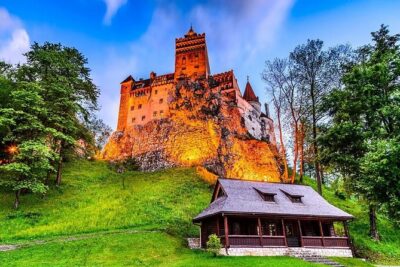
Day eight starts with Bran Castle, often called Dracula’s Castle. Built in the 14th century, it originally controlled access in Transylvania. Even if you do not care about Dracula as a story, the castle role as a gatekeeper helps it make sense historically.
Then you head to Peles Castle in Sinaia, the former summer residence of Romanian kings. The itinerary notes it as one of the nicest royal residences in Europe, and this is one of those stops where you get to see what “power and taste” looked like when Romania had its own royal court.
Finally, you return to Bucharest, with drop-off around 16:00 to the airport or to your hotel.
Price and value: what $2,315.49 covers, and what you still need to plan
At $2,315.49 per person, this is not a budget tour. The value comes from the combination of private guide time, transport, and lodging spread across both cities and rural stays.
Here’s what the price includes, based on the tour terms: 7 nights accommodation in double or twin rooms, a private tour guide, car or minibus transport, breakfast for 7 days, and dinners for 3 days. It also includes specific experiences like the horse-driven wagon tour in the Sibiu area, visits to local craftsmen, plus jam, chutney, and syrup tasting.
What is not included: entrance tickets as per itinerary, estimated at about 85 euro, plus tips. That admission estimate is important because it affects how “all-in” the trip feels on your credit card. If you tend to hate surprise costs, plan for that total before you go.
In plain terms, the best value is for couples or small groups who want a set route, private pacing, and someone to handle timing across many UNESCO stops. If you are traveling solo on a strict budget, you may find less expensive group tours, but you’ll likely trade away the one-on-one guide attention that helps this itinerary feel coherent.
Logistics that matter on this route: pace, walking, and comfort
This tour is “private,” so you have flexibility with questions and optional stops, but the itinerary still moves. Some days include multiple guided segments, plus transitions between regions. A few stops are described as around 15 minutes, others are longer walking tours like Sibiu’s Old District and Brasov’s center.
Walking time is usually manageable, but plan on uneven old streets and stair areas in medieval centers like Sibiu, Sighisoara, and Brasov. You will also spend real time in transit, especially between Maramures and Bucovina, and again through the Carpathian scenery stops.
Comfort-wise, the schedule alternates between city hotels and rural pensions or a local guest house. That is part of the appeal, but it also means you should not expect the same level of amenities every night, since the tour uses “local” accommodations in several places.
Who should book this UNESCO Romania tour
You should book if you want Romania to feel connected. This itinerary does that by mixing UNESCO sites with the surrounding story: how towns were defended, how communities preserved craft, and how art shows up on both churches and everyday traditions.
It’s also a strong fit if you care about more than just monuments. The included dinners in rural settings, the craft workshop visits, and the tasting stops help you see how tradition is practiced, not only displayed.
Consider skipping or adjusting expectations if you get cranky about long driving days. The route is ambitious, and the highlights are spread out for a reason.
Should you book? My practical take
If you want a well-structured UNESCO Romania circuit with a private guide, this is a solid choice. You get a clear arc from Bucharest into Transylvania’s Saxon towns, north into Maramures wooden churches and cemetery art, and then into Bucovina’s painted monasteries, finishing with the big-name castles.
The main reason to hesitate is cost plus extra entrance fees, and the reality that you will spend a lot of hours traveling between regions. If that matches your idea of a great trip, the mix of sights and hands-on culture is exactly the kind of journey that stays in your memory.
FAQ
Is this a private tour or a group tour?
It is a private tour. Only your group participates, and you travel with a private tour guide.
Where do I meet the guide, and what time does the tour start?
You meet your tour guide in Bucharest in the morning at 9:00 AM, at your hotel.
Does the tour include pickup and drop-off in Bucharest?
Pickup in Bucharest is offered at your hotel, and the tour ends in Bucharest with drop-off at the airport or to a hotel around 16:00.
What is included in the tour price?
The tour includes 7 nights of accommodation (double or twin rooms), a private tour guide, transport by car or minibus, breakfast for 7 days, and dinners for 3 days, plus several cultural inclusions like the horse-driven wagon tour, visits to local craftsmen, and jam, chutney, and syrup tasting.
Are entrance tickets included?
No. Entrance tickets are listed as not included, with an estimate of about 85 euro.
Which UNESCO sites are included on the route?
The itinerary explicitly lists several UNESCO sites, including Surdesti Wooden Church and Desesti Wooden Church (Maramures), Sapanta Merry Cemetery, painted monasteries such as Moldovita, Sucevita, and Voronet (Bucovina), Sighisoara (UNESCO town), and the Peasant Fortified Church at Prejmer.
Are there any optional activities during the trip?
Yes. Some stops are optional, including the Communist Prison Museum near Sighet, an optional museum in Ciocanesti, and an optional local carver workshop visit near Barsana.
What is the cancellation policy if plans change?
You can cancel up to 3 days in advance of the experience for a full refund. If you cancel less than 3 days before the start time, the amount paid will not be refunded.
Just Added: New Tours From Bucharest
- Bear Watching in Transylvania 2-Day Tour
- National Village Museum and Comana Adventure Park
- Half Day Tour in Bucharest
- From Dracula to Ceaușescu- Romanian Terror Stories tour
- Full-Day Private Tour of Brasov City and Peles Castle from Bucharest
- Bucharest: Tour The Wine Road, 2 Boutique Wineries in 1 Day
- Bucharest Ceaușescu House Parliament Palace &Village Museum
- Full-Day Private Tour of Bucharest and Mogosoaia Palace
Private, compared.

Castles of Transylvania: Private Day Trip from Bucharest
Read our review →
Dracula’s Castle, Peles Castle and Brasov – Private Day Trip from Bucharest
Read our review →
Bucharest Panoramic Sightseeing – Private City Tour
Read our review →
THERME “Take It Easy” Pack: Full Spa Access + Private Transfers
Read our review →
4h Bucharest Private Tour (2h by Car and 2h Walking in Old Town)
Read our review →