Reviewed · PRIVATE
Private: RedPatrol Bucharest Contrasts Tour in a Vintage Car
Bucharest changes fast, even in one drive. This private RedPatrol tour threads together royal-era Bucharest, communist housing blocks, and the rough edges of Ferentari, all while you cruise in a fully restored 1970s-80s Dacia 1300/1310. I especially love the practical hotel pickup and the way the guide links each neighborhood to real, human stories, not just dates.
One thing to weigh: the car is a classic Dacia, so it does not include modern tech or comfort like AC, ABS, GPS navigation, servo-direction, or automatic gearing. In winter the cars are heated, which helps a lot, but in warmer months expect a more old-school ride.
In This Review
- Key highlights you will actually care about
- Bucharest feels like two cities in one
- Price and time value, $126.43 for a half-day of contrasts
- The restored Dacia experience, what it is really like
- Stop 1: Academia Română and the unfinished demolition story
- Stop 2: Fântână, a free peek into the first royal influences
- Stop 3: Cotroceni Palace gardens and Belle Époque Bucharest
- Stop 4: Drumul Taberei Park, communist blocks and the mall-on-ruins idea
- Ferentari industrial edges and why this area is the contrast center
- Stop 5: Piața Rahova and the peasant market pulse
- Stop 6: Fosta Uzină Rocar ruins, an included ticket moment
- Stop 7: Broscuțe Park and the first Soviet occupation neighborhood
- Stop 8: Palace of Parliament, a massive rebuild with a neighborhood story
- Pacing and practical tips for comfort
- Who this tour is best for
- Should you book the Bucharest Contrasts Tour in a Vintage Dacia?
- FAQ
- How long is the Bucharest Contrasts tour in the vintage car?
- What does the tour cost?
- Is hotel pickup and drop-off included?
- Is the tour in English?
- Do I drive the Dacia car?
- Is air conditioning available in the Dacia?
- Are entrance tickets included?
- Can I cancel for free?
Key highlights you will actually care about
- Private door-to-door pickup in Bucharest so you start from your address, not a distant meetup spot.
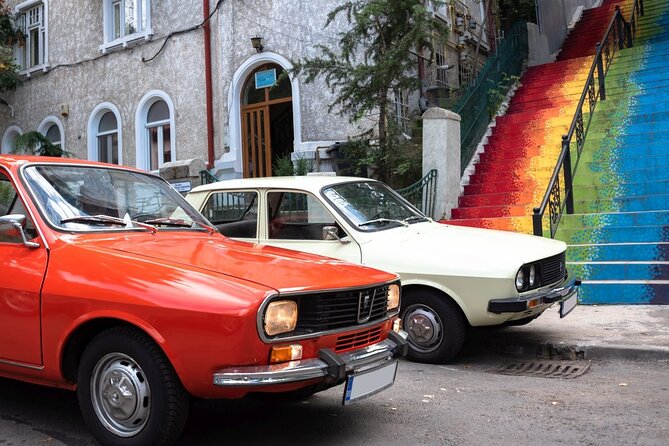
- Restored vintage Dacia 1300/1310 for the full period feel, with professional guide and driver handling the route.
- Tight, story-focused neighborhood stops across affluent villas, communist blocks, former industrial zones, and the Parliament area.
- A mix of included and free entry points, like Fântână (free) and certain ruined-site stops that are included.
- English-language guiding with specific place context, plus water in the car and a small tour gift.
Bucharest feels like two cities in one
Bucharest can look coherent on a map, but on the ground it plays like a set of different eras glued together. This tour works because it keeps your eyes moving, from the more curated center to the housing estates and industrial scars that still shape daily life.
What I like is the tone. The tour does not try to shock you, it tries to explain you. You get a guided circuit that builds the contrasts step by step, so the city stops feeling like random sightseeing and starts feeling like a story you can follow.
And yes, riding in a classic Dacia helps. It slows your attention in a good way. Even when you are just rolling past buildings, you are noticing details you would skip on foot.
Price and time value, $126.43 for a half-day of contrasts
At about $126.43 per person for roughly 3 to 4 hours, this is not a “cheap and cheerful” option. The value comes from the mix of three things: private touring, door-to-door pickup, and transport in a guided circuit with a local guide and driver.
You are also not paying extra for everything. Water is included, and you have a set structure of stops that includes both free and ticketed points. The tour is short enough that you get momentum, but long enough to see real variety without feeling dragged between far-off locations.
If you like history, this tour is a better use of time than picking one monument and calling it a day. If you are more of a neighborhoods person, it is also a solid fit, because several stops focus on how areas were built and how they changed.
Other day trips from Bucharest
- Castles of Transylvania: Private Day Trip from Bucharest★ 4.5 · 248 reviews
- Bucharest: Best of Bucharest Private Tuk-Tuk Tour★ 5.0 · 238 reviews
- Dracula’s Castle, Peles Castle and Brasov – Private Day Trip from Bucharest★ 5.0 · 211 reviews
The restored Dacia experience, what it is really like
This is a car-tour, but it is not a rides-only experience. You ride in a restored Dacia 1300/1310, and you do not drive it. The driver handles traffic, and your guide uses the route to tell stories as you move from one Bucharest “chapter” to the next.
A few practical notes matter here. The classic Dacia does not have AC, ABS, GPS navigation, servo-direction, or automatic gearing. That means you should expect a slower, more tactile feel than you get in a modern car.
During wintertime, the cars are heated, which is a big comfort upgrade. If you are sensitive to heat or prefer modern steering and braking feel, you may want to plan for the season you book.
Good news: RedPatrol says the cars are fully restored and meet safety traffic regulations. You are also not sharing the tour with strangers, since it is private and only your group participates. Reviews praised the professionalism and friendliness of drivers and guides, including Mihai, which tells me the experience is handled carefully, not just improvisationally.
Stop 1: Academia Română and the unfinished demolition story
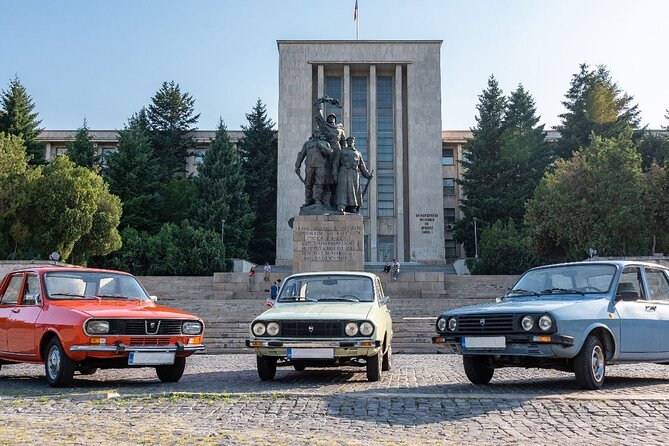
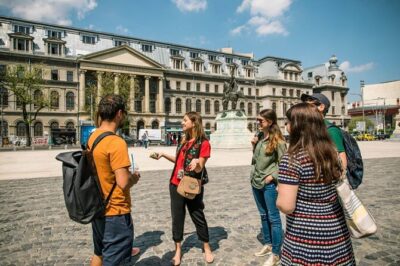
The tour opens at Academia Română, with a focused explanation of the area where an unimagined demolition plan from the 1980s was halted due to the Romanian Revolution.
This stop works even if you are not a hardcore communist-era architecture nerd. The guide uses the building and its surroundings to explain how political power can literally reshape streets, housing, and public space. You are not just looking at a facade, you are learning why the area feels the way it does today.
Timing is short, about 20 minutes, and the ticket is not included. So think of this as an orientation stop. You leave with a clearer lens for everything else the city shows you later.
Possible drawback: if you were hoping for a long inside visit, this is more about the surrounding context than deep museum time.
Stop 2: Fântână, a free peek into the first royal influences
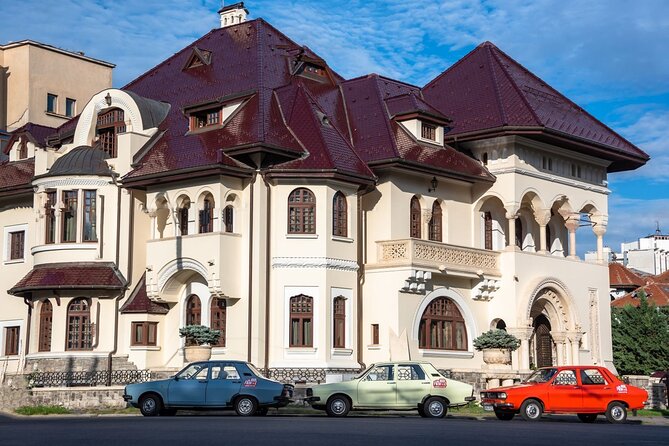
Fântână is a brief stop, around 15 minutes, with a simple presentation of a Bourgeoisie neighborhood that began in the 19th century, linked to the first Royal Palace of Romania.
I like this one because it resets your visual map of Bucharest. After the intense 20th-century themes, the city needs a different baseline. Fântână gives you that. It is also easy because the admission ticket is free.
If you are the type who enjoys “before and after” contrasts, this stop sets you up well. You are seeing the roots of the city’s higher-status areas before you move into later housing estates and industrial districts.
Stop 3: Cotroceni Palace gardens and Belle Époque Bucharest
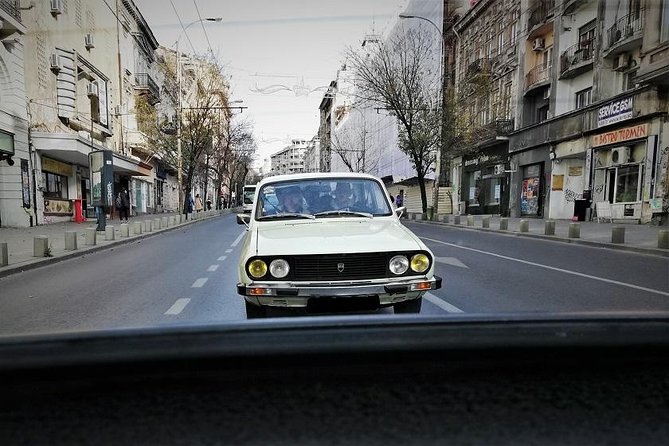
Next you head to the Cotroceni Palace gardens for a look at the first Royal Palace of Romania and a brief presentation of Belle Époque Bucharest.
This is another stop where you are not rushing through a checklist. You are getting the emotional vibe of the era, the idea of how a monarchy-era city tried to project power through gardens, buildings, and careful layout.
Timing here is about 30 minutes, and the admission ticket is not included. That means you should assume you might be paying separately if you want to enter specific parts. Still, even without adding tickets, the stop helps you understand why the city’s “better neighborhoods” are not random, they grew out of planned status zones.
These pair well with the day you just read about.
- Bucharest: Dracula’s Castle, Peles Castle, & Brasov Old Town
★ 4.5 · 17,858 reviews - Bucharest: Dracula Castle, Peles Castle & Brasov Old Town
★ 4.6 · 10,891 reviews - Bucharest: Dracula’s Castle, Peleș Castle & Brașov Day Trip
★ 4.4 · 6,100 reviews - Bucharest: Palace of Parliament Tickets and Guide
★ 4.3 · 3,182 reviews - Bucharest: Day Trip to Dracula Castle, Peles Castle & Brașov
★ 4.4 · 3,049 reviews
Stop 4: Drumul Taberei Park, communist blocks and the mall-on-ruins idea
At Parcul Drumul Taberei, the tone changes again. You get a presentation of a working-class communist-era flat area and a key detail about how a shopping mall was built on the ruins of a communist canteen.
I like that this stop is specific. It is easy to talk about communism as a theme, harder to connect it to what residents experienced in everyday spaces, like where people ate, worked, and gathered. The “mall on the ruins” concept makes the post-1989 transition feel real and immediate.
Expect photos and stories here, about 20 minutes total. Tickets are not included, which likely means most of what you see is outside or tied closely to the public park area.
From reviews, I also know the guide may point out Orthodox churches in the neighborhood context. I would treat that as part of what you might notice while looking around, not as a guaranteed ticketed stop.
Ferentari industrial edges and why this area is the contrast center
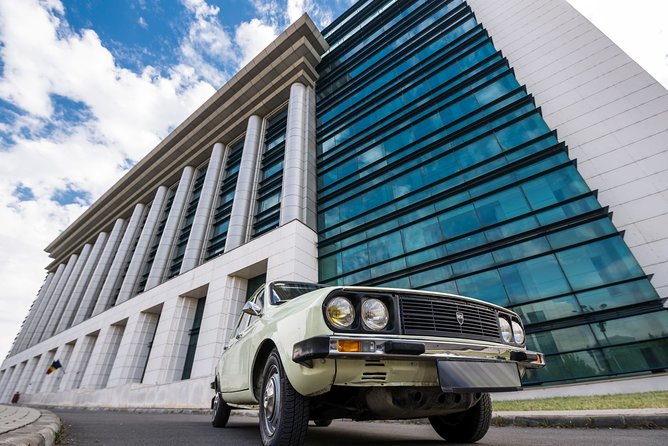
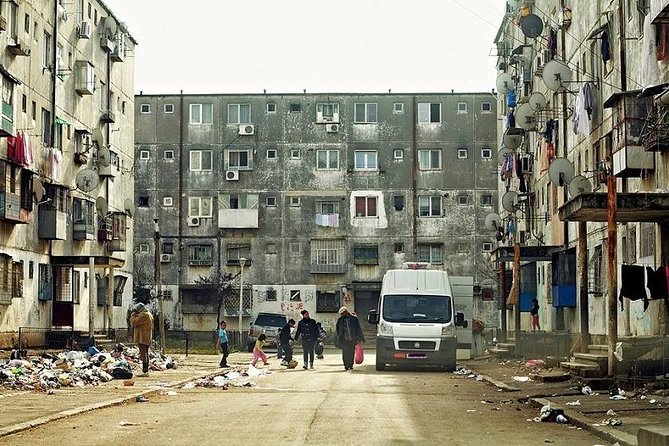
Then comes the heart of the concept: Ferentari, including the exploration of a fallen industrial area built by communists in the 1970s.
This is where Bucharest stops being a “pretty city” lesson and becomes a lived-city lesson. Ferentari is often described as one of the most contrasting districts, and the tour framework matches that. You are shown the way industrial planning, housing patterns, and economic upheaval created different kinds of streets over time.
You do not have to love every part of the neighborhood to get something valuable from it. The point is understanding. The guide uses stories to explain how post-socialist change reshaped the area into what some people call a city ghetto.
This stretch is not described with a specific ticket line in the itinerary, so your experience is likely more about walking, looking, and hearing the guide’s context. Reviews described the area as photogenic, even when the realities are tough, which tells me the goal is contrast, not sensationalism.
If you are uncomfortable in rougher urban settings, prepare yourself. Wear shoes you can walk in, keep your expectations grounded, and use the guide’s explanations to frame what you see.
Stop 5: Piața Rahova and the peasant market pulse
Piața Rahova is where the tour turns outward to everyday life. You explore the Ferentari blocks of flats area and the industrial district that shifted from a workers area into a city ghetto after the 90s.
The highlight here is a visit in the peasant market, around 30 minutes, with tickets not included.
This is one of my favorite kinds of tour stops because it is not staged. Markets are where you see the city’s rhythm, how people move, what gets bought, and how daily life continues through big historical changes.
Practical note: markets can be loud and busy. But that is part of the point. If your goal is to understand Bucharest as a functioning city, not just a museum, this market stop is doing real work.
Stop 6: Fosta Uzină Rocar ruins, an included ticket moment
Next you explore Fosta Uzină Rocar, described as a ruined Socialist-times area left abandoned after socialist factories collapsed. This stop is about 20 minutes, and the admission ticket is included.
I like included tickets on a tour like this. It reduces mental overhead, and you can focus on the explanation rather than wondering if you need to pay at each step. Here, the guide also connects the ruins to stories about the rise and fall of the neighborhood.
Because this is an included-site moment, I would expect more structured access than a purely external viewpoint. Even so, you should still think of it as a brief exploration. It is built to fit inside the half-day pacing.
Stop 7: Broscuțe Park and the first Soviet occupation neighborhood
Broscuțe Park is about the Colonel’s Quarter, which the tour frames as the first Soviet occupation era neighborhood. You get a brief presentation of what life was like in Stalinist days in Bucharest, about 20 minutes, and the admission ticket is included.
This stop is valuable because it connects foreign occupation patterns to local housing reality. Even when you are not seeing “Soviet architecture” in the obvious way, the guide’s framing helps you interpret the streets and blocks as part of a larger political machine.
The included ticket also signals that you are not just looking at a park sign. The stop likely includes entry or a guided access point within the area you would not get on your own as easily.
Stop 8: Palace of Parliament, a massive rebuild with a neighborhood story
The final major stop is the Palace of Parliament, described as the biggest civil building from the world. The tour explains that the House of Parliament sits in a neighborhood of about 20 square kilometers that was completely rebuilt after complete demolition, and you get a story about the neighborhood and the House.
This is the kind of stop that can feel overwhelming at first, just because the building is so large and the story so heavy. The tour’s value is the context. You are not just seeing an iconic monument, you are learning what it cost, what got erased, and why the space feels the way it does today.
Timing here is about 20 minutes, and admission is not included. So it is likely a look and listen stop rather than a full inside visit. If you want the inside experience, you might need separate ticketing plans, depending on what the tour actually allows at your time slot.
Even with a short stop, you get a final contrast beat that ties back to the earlier themes. From halted demolition plans to communist-era construction to Soviet-era quarters, this is Bucharest as a city shaped by power and policy.
Pacing and practical tips for comfort
The tour is designed for 3 to 4 hours, so it is naturally “stop heavy.” Most of the time you are out briefly, taking photos, and then moving on. That means you should come ready to stand and walk for short bursts.
Here is what I would plan for based on the car and the neighborhood mix:
- Wear comfortable shoes. You will be walking around multiple areas, including industrial and market zones.
- Bring a light layer for the car ride, especially outside winter heating. The itinerary runs in different areas with different outdoor temps.
- If you are sensitive to classic-car comfort limits, consider the season. The car has no AC, but it is heated in winter.
- Use the guide’s timing. Ask questions while you are stopped, not only while you are driving. Many stories click faster when you can point at what you are seeing.
Also, you can expect water in the car and a tour personalized gift. Small touches like that matter because you are out long enough to appreciate the basics handled.
Who this tour is best for
This tour is a strong match if you want to understand Bucharest as a social map. If you like the idea of tracing how politics shaped neighborhoods and how the city keeps living with those decisions, you will probably love the structure.
It is also great for people who enjoy old cars. Multiple reviews specifically singled out the experience of riding the Dacia as a highlight, and they praised the professionalism and friendly attitude of drivers like Mihai and the storytelling approach of Ivan Crinu.
If you only want a single highlight attraction and nothing else, this might feel too broad. But if you want contrasts, this tour has the range baked in.
One more fit note: RedPatrol does not allow pets and children under 10 years old. If that affects your group planning, it is worth checking early.
Should you book the Bucharest Contrasts Tour in a Vintage Dacia?
I would book this tour if your goal is to see Bucharest in context, not just on postcards. The combo of a classic restored Dacia, private door-to-door pickup, and a guided route across royal, communist, Soviet, industrial, market, and Parliament areas gives you a lot of “why this looks like this” in a short time.
I would think twice if you are counting on modern comfort in the car or you get uncomfortable in rougher urban settings. The lack of AC and modern systems is real, and some stops focus on places that reflect difficult social realities.
If you want a practical first half-day in Bucharest that teaches you how to read the city as you go, this one is easy to recommend.
FAQ
How long is the Bucharest Contrasts tour in the vintage car?
It runs about 3 to 4 hours.
What does the tour cost?
The price is $126.43 per person.
Is hotel pickup and drop-off included?
Yes. Pickup is included from all addresses in Bucharest, with drop-off after the tour.
Is the tour in English?
Yes, it is offered in English.
Do I drive the Dacia car?
No. You will not drive the Dacia car, a professional local guide and driver handle the vehicle.
Is air conditioning available in the Dacia?
The Dacia cars do not include AC. During wintertime, the cars are heated.
Are entrance tickets included?
Not always. Some stops state tickets are not included, while others are free or included. For example, Fântână is free, and Fosta Uzină Rocar and Broscuțe Park are listed as included, while Academia Română, Cotroceni Palace gardens, Drumul Taberei, Rahova area, and Palace of Parliament are listed as not included.
Can I cancel for free?
Yes. There is free cancellation, and you can cancel up to 24 hours in advance for a full refund.
Just Added: New Tours From Bucharest
- Bear Watching in Transylvania 2-Day Tour
- National Village Museum and Comana Adventure Park
- Half Day Tour in Bucharest
- Full-Day Private Tour of Brasov City and Peles Castle from Bucharest
- From Dracula to Ceaușescu- Romanian Terror Stories tour
- Bucharest: Tour The Wine Road, 2 Boutique Wineries in 1 Day
- Bucharest Ceaușescu House Parliament Palace &Village Museum
- Full-Day Private Tour of Bucharest and Mogosoaia Palace
Private, compared.

Castles of Transylvania: Private Day Trip from Bucharest
Read our review →
Dracula’s Castle, Peles Castle and Brasov – Private Day Trip from Bucharest
Read our review →
Bucharest Panoramic Sightseeing – Private City Tour
Read our review →
THERME “Take It Easy” Pack: Full Spa Access + Private Transfers
Read our review →
4h Bucharest Private Tour (2h by Car and 2h Walking in Old Town)
Read our review →