Reviewed · PRIVATE
Private -RedPatrol Tour of Bucharest with a Romanian Vintage Car
Communist Bucharest, but in a Dacia. That mix is why this private tour works so well: you ride a restored 70s or 80s Dacia 1300/1310 while a local guide brings the story of Romania under communism into clear focus. I love the one-group, private format, and the way the drive turns big landmarks into something you can actually picture.
What I like second is the human touch. The tour leans on storytelling, including firsthand-style context shared by the guide named Serban, plus photo stops where you can slow down and look carefully. One possible drawback: the car is an older classic with no AC, and you should expect a bit of real-weather driving comfort, not modern convenience.
You also get a practical setup that makes it easy to fit in. Hotel pickup and drop-off are included from all addresses in Bucharest, and you can choose a start time that matches your day.
In This Review
- Key things to know before you ride
- Why Bucharest on a restored Dacia 1300 feels different
- Hotel pickup and the private format you actually feel
- Revolution Square: where the story begins and the theme loops back
- Casa Radio: the Communist Ghost Palace feeling, in a photo stop package
- Academia Română: socialist-era monument energy, with a brief presentation
- Palace of Parliament: big scale, short time, plan around what matters
- Communist quarter blocks of flats and the residential quarter contrast
- Ceaușescu House and the unification monument presentation
- House of the Free Press: where media architecture gets attention
- Price and value: what you’re really paying for at $120.68
- Driving notes for the Dacia classic car (and why they matter)
- Who this tour fits best, and who might want a different style
- Should you book the RedPatrol private Dacia communism tour?
- FAQ
- How long is the RedPatrol private tour of Bucharest?
- What is the price per person?
- Is pickup and drop-off included?
- Is this tour private?
- Can I choose my start time?
- Do I need to pay admission tickets during the tour?
- Can I drive the classic car?
- Does the Dacia car have modern features like AC?
- Is food included?
- Are children or pets allowed?
Key things to know before you ride
- A restored Dacia 1300/1310 drives the whole experience, with a private guide in your car
- Serban’s storytelling is a major highlight, including personal perspectives on communism
- Admissions vary by stop: Revolution Square is free, House of the Free Press includes a ticket, and others are not included
- You can pick your start time, plus the tour is private so your group sets the pace
- Classic-car comfort is weather-dependent: no AC, but cars are heated in winter
Why Bucharest on a restored Dacia 1300 feels different
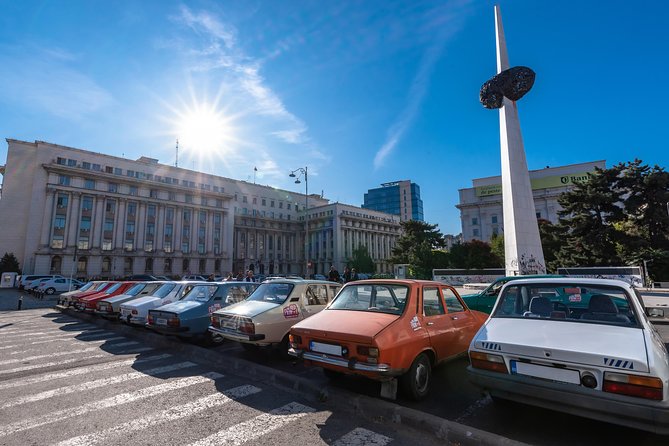
Most Bucharest tours walk. This one drives. That sounds simple, but in a city like Bucharest, it changes how the whole “communism story” lands. When you’re moving through long boulevards and broad ceremonial spaces, you understand the scale that planners and leaders were trying to project.
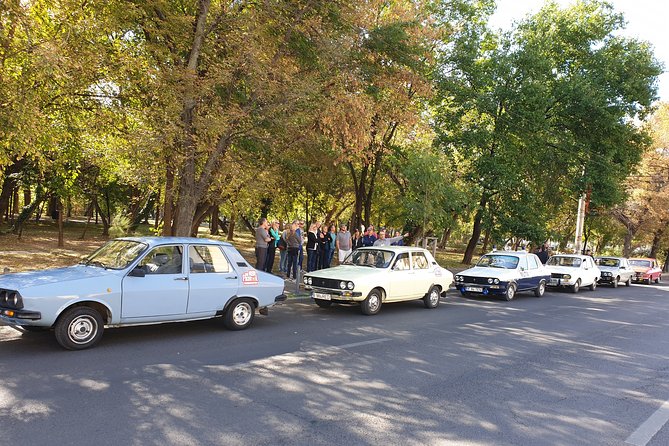
The car matters too. You are in a fully restored classic Dacia from the 70s or 80s, the type of vehicle that feels unmistakably of its era. The tour also gives you an easy choice: you can drive if you want, or you can ride with a private driver included. Either way, you get that classic-car experience without having to stress over every turn, parking trick, or route detail.
One more practical win: bottled water is included, and you’ll get a tour newspaper plus a personalized gift. Those small things add up when the topic is history-heavy, because they give you a takeaway beyond photos.
Hotel pickup and the private format you actually feel
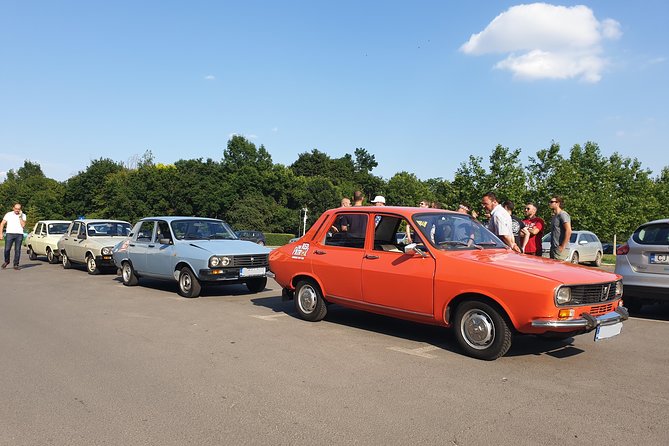
This is set up for comfort and control. Pickup and drop-off are included from addresses across Bucharest, so you’re not trying to coordinate meeting points or figure out transit timing while carrying luggage or shopping bags. The tour is also private, meaning only your group participates.
For a theme like communism and its urban legacy, private time helps. You can ask follow-up questions, spend an extra minute on a building detail, or adjust the pace if someone needs a quick break. If you prefer a calmer rhythm than the usual group bus, this format fits.
Language is straightforward: offered in English. And you’ll also get a mobile ticket, which is handy if you like going light and not hunting through printed confirmations.
Other day trips from Bucharest
- Castles of Transylvania: Private Day Trip from Bucharest★ 4.5 · 248 reviews
- Bucharest: Best of Bucharest Private Tuk-Tuk Tour★ 5.0 · 238 reviews
- Dracula’s Castle, Peles Castle and Brasov – Private Day Trip from Bucharest★ 5.0 · 211 reviews
Revolution Square: where the story begins and the theme loops back
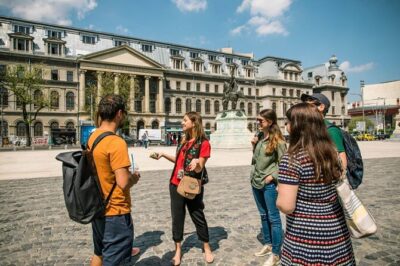
Your first stop is Revolution Square. The tour frames it as the place where communism started and ended in Romania, and you’ll have about 30 minutes there. Even with a short stop, this square is a strong anchor because it gives you the political and emotional context before you move into architecture.
Why this stop works: it gives meaning to what comes next. Later, you’ll see buildings and districts that were shaped by ideology and power. Starting here helps you read those structures as more than just old concrete.
Admission is easy on this one: the stop notes free admission ticket. So you can focus on looking, listening, and taking photos without adding another ticket step.
Casa Radio: the Communist Ghost Palace feeling, in a photo stop package
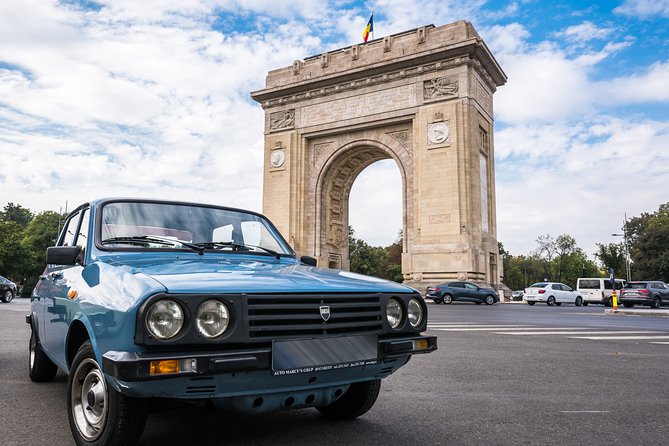
Next is Casa Radio, described as the Communist Ghost Palace of Bucharest. You’ll get around 20 minutes here, with a stop specifically planned for stories and photos. That mix is important. These buildings can look “cool” from outside, but the tour angle is about why they were built, how they were used, and what their presence signals.
One careful note: the stop lists admission ticket as not included, so if there’s something you want to do inside, you’ll need to plan for that separately.
Even if you only do the outside viewing, I like that the tour doesn’t treat this as a quick drive-by. The time is short, but the structure is designed so you’re not just passing by a landmark with no context.
Academia Română: socialist-era monument energy, with a brief presentation
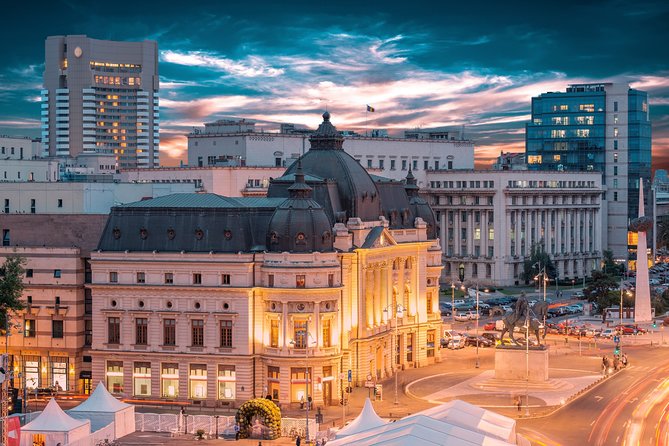
Then comes Academia Română, also described as a Socialist Academy of Romania Ghost Palace building. This is a short stop, about 10 minutes, with a brief presentation and pictures.
This stop is built for “context per minute.” It’s the kind of stop that works well when you’re trying to understand the pattern: how ideology shaped institutions, and how those institutions aged into strange monuments.
Again, admission is marked as not included, so treat it as a look-and-learn moment rather than a ticket-based attraction.
Palace of Parliament: big scale, short time, plan around what matters
The tour’s headline architecture stop is the Palace of Parliament, described as the second world’s largest administrative house of Bucharest. You’ll have about 30 minutes. That’s enough time to get oriented, take in the scale, and get the story, but it is not a full deep-dive visit.
Admissions here are not included. If you’re hoping for lots of interior time, you’ll want to set expectations now. This tour is designed to give you the communicative context and the key views, while leaving longer ticketed interior time to other plans you might add.
I think this stop works best if you come ready to look at proportions. When a building is this large, the “why” shows up in the way it dominates the surrounding streets. The driving format helps because you can see it from different angles as you roll past, not just from one locked viewpoint.
These pair well with the day you just read about.
- Bucharest: Dracula’s Castle, Peles Castle, & Brasov Old Town
★ 4.5 · 17,858 reviews - Bucharest: Dracula Castle, Peles Castle & Brasov Old Town
★ 4.6 · 10,891 reviews - Bucharest: Dracula’s Castle, Peleș Castle & Brașov Day Trip
★ 4.4 · 6,100 reviews - Bucharest: Palace of Parliament Tickets and Guide
★ 4.3 · 3,182 reviews - Bucharest: Day Trip to Dracula Castle, Peles Castle & Brașov
★ 4.4 · 3,049 reviews
Communist quarter blocks of flats and the residential quarter contrast
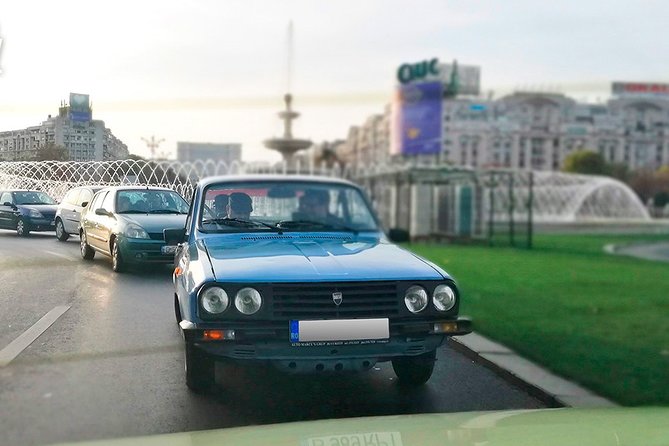
After the big institutional sites, the tour shifts into something more day-to-day: an exploration of communist quarter blocks of flats. It then moves to the residential quarter of Bucharest, including a panoramic tour.
This part is where the theme becomes real. Power isn’t only in squares and palaces. It shows up in housing blocks, in how cities were planned for workers, and in the long-term effect of those decisions on daily life.
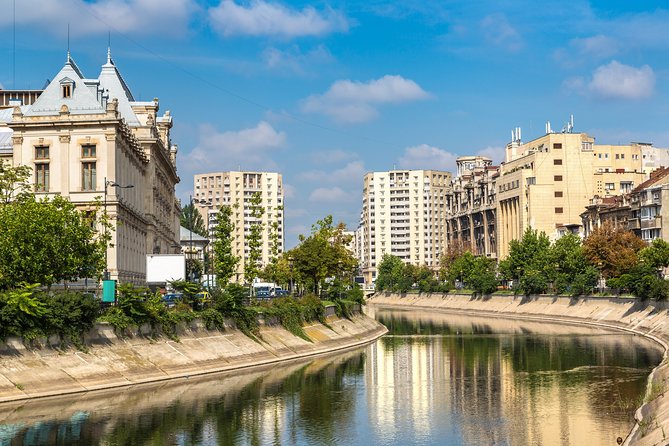
The tour also references the Palace of the Romanian Government as part of the residential area exploration. Even if you don’t go deep inside, it’s useful to see how government space sits alongside residential zones and boulevards.
One thing to keep in mind: the tour’s wording points more to touring and looking than to lengthy entry. So if you love interior museums, you might pair this with a separate ticket-based stop later. If you love urban context, this is the good stuff.
Ceaușescu House and the unification monument presentation
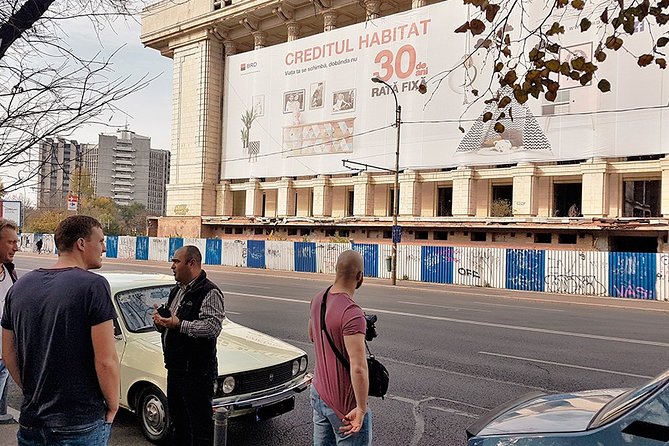
Next is the Ceaușescu House, described as the private residence of Nicolae Ceaușescu, with a brief presentation and about 15 minutes on site. Admission is listed as not included.
Even without an interior ticket, this stop has strong narrative value. It helps you connect ideology to the lives of leaders, which is a different angle than the public-facing squares and major party sites.
After that, there’s a presentation of Romania’s unification monument. The tour doesn’t give a time slot for it in the outline, so treat it as part of the pacing between longer stops.
House of the Free Press: where media architecture gets attention
Your final major stop is the House of the Free Press, with about 20 minutes of exploration. This one is noted with admission ticket included, which is a nice change in the middle of a tour where several other sites are not included.
If you’re tracing how communism shaped daily life, press control is a key thread. This stop is framed around the Communist press palace area, so the tour is likely to connect building purpose with the media system that ran through it.
After this, you also get a drive-by experience along one of Bucharest’s older boulevards, giving you a full car ride between points rather than a stop-and-start loop.
Price and value: what you’re really paying for at $120.68
At $120.68 per person for about 3 to 3.5 hours, the value comes from what’s bundled, not just the sightseeing list.
Here’s what you’re getting that often costs extra on other tours:
- Hotel pickup and drop-off from addresses across Bucharest
- A professional local guide riding with you in the car
- A fully restored Dacia experience, including the option of having a driver if you don’t want to drive
- Bottled water, plus a tour newspaper and a personalized gift
Because the car is part of the attraction, you’re paying for more than transit. You’re paying for an experience style that you can’t replicate easily with a regular cab. Also, private format pricing usually makes sense when you’d otherwise need a guide plus transport plus a flexible route.
What’s not included is also clear. Food and drinks are not included, and some admissions are not included (while a couple are free or ticket-included). So plan for that gap with a simple pre-tour snack or an easy meal afterward.
Driving notes for the Dacia classic car (and why they matter)
If you want to drive, the tour is built for you to do it, but you need to go in with realistic expectations.
The car is a Dacia 1300/1310 classic from the 70s or 80s. The tour notes it does not include AC, ABS, GPS navigation, servo-direction, or automatic gear drive. So yes, it’s more hands-on and less forgiving than a modern car.
There are also real-world comfort tips built into the experience. Bring a comfortable outfit for driving, and plan for weather. The tour adds that during wintertime cars are heated, which helps a lot if you’re visiting in colder months.
If you prefer not to drive, you can choose the private driver option. That’s a great compromise if you want the experience but don’t want the extra focus of operating a classic car.
Also bring your ID card and driving license if you plan to drive. If you want to provide your own driver, the provided driver needs a valid driving license on the tour date.
Who this tour fits best, and who might want a different style
I’d put this tour at the top of the list if you want:
- A private format with flexible pacing
- A hands-on way to see Bucharest, not just stand in one place
- A communism-focused route with strong storytelling
It also suits history-minded travelers who like architecture and city planning, since the route mixes symbols (Revolution Square) with institutions (Palace of Parliament, Academia Română, Casa Radio) and daily-life planning (communist housing blocks and residential quarters).
You might choose another option if:
- You expect ticketed interior time at most stops. Several sites list admissions as not included, so this is more about guided looking and context than museum-style exploration.
- You need modern comfort like AC. The car is an older classic by design.
One more fit note: pets and children under 10 are not allowed. So it’s geared toward adult groups and mature travelers who want a focused, safe experience.
Should you book the RedPatrol private Dacia communism tour?
I think this is a strong booking if you want Bucharest to feel like a story, not a checklist. The combination of private pacing, restored Dacia driving, and guide Serban style storytelling is exactly the kind of value that makes a short 3 to 3.5 hour tour feel more substantial.
Book it if you like seeing how big political ideas shaped housing, media buildings, and ceremonial spaces. Skip it if you’re mainly chasing long interior visits or you’re not comfortable with older-car driving conditions.
If your goal is a memorable, practical introduction to communist Bucharest with a guide who can explain it in human terms, this one makes sense.
FAQ
How long is the RedPatrol private tour of Bucharest?
It runs about 3 hours to 3 hours 30 minutes.
What is the price per person?
The price is $120.68 per person.
Is pickup and drop-off included?
Yes. Hotel pickup and drop-off are included from all addresses in Bucharest.
Is this tour private?
Yes. It is a private tour, with only your group participating.
Can I choose my start time?
Yes. You can choose a start time that works for you.
Do I need to pay admission tickets during the tour?
It depends on the stop. Revolution Square is listed as free, House of the Free Press includes an admission ticket, and places like Casa Radio, Academia Română, and the Palace of Parliament are listed as not included.
Can I drive the classic car?
You can. If you want to drive, bring your ID card and driving license. If you don’t want to drive, a private driver is included.
Does the Dacia car have modern features like AC?
No. The car does not include AC, ABS, GPS navigation, servo-direction, or automatic gear drive. The cars are heated during wintertime.
Is food included?
No. Food and drinks are not included.
Are children or pets allowed?
Pets are not allowed, and children under 10 are not allowed.
Just Added: New Tours From Bucharest
- Bear Watching in Transylvania 2-Day Tour
- National Village Museum and Comana Adventure Park
- Half Day Tour in Bucharest
- From Dracula to Ceaușescu- Romanian Terror Stories tour
- Full-Day Private Tour of Brasov City and Peles Castle from Bucharest
- Bucharest: Tour The Wine Road, 2 Boutique Wineries in 1 Day
- Bucharest Ceaușescu House Parliament Palace &Village Museum
- Full-Day Private Tour of Bucharest and Mogosoaia Palace
Private, compared.

Castles of Transylvania: Private Day Trip from Bucharest
Read our review →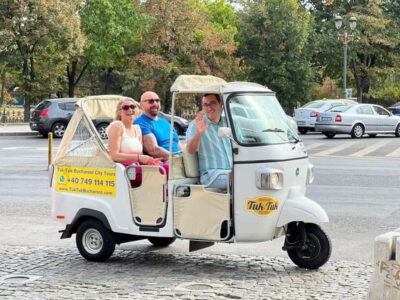
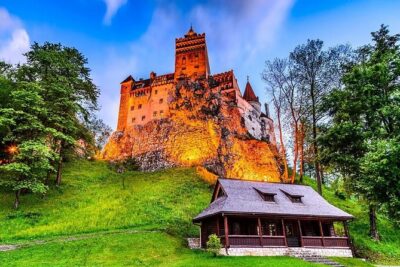
Dracula’s Castle, Peles Castle and Brasov – Private Day Trip from Bucharest
Read our review →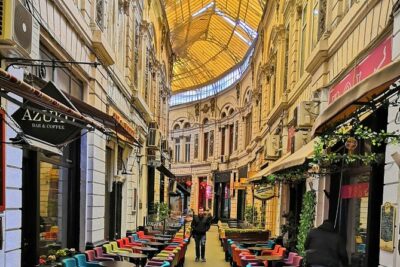
Bucharest Panoramic Sightseeing – Private City Tour
Read our review →
THERME “Take It Easy” Pack: Full Spa Access + Private Transfers
Read our review →
4h Bucharest Private Tour (2h by Car and 2h Walking in Old Town)
Read our review →