
Reviewed · BUCHAREST
The Real Story of Gypsies – Slavery in Romania
Roma history in Bucharest has consequences. This 3-hour walk traces it through memorials, architecture, and lived craft, from an old slaves market site to a copper workshop. You get a clear, human-scale route, not a lecture hall, and the guide works hard to keep questions moving.
I like two things most. First, the itinerary links hard history to real places you can stand on, from Piata Amzei onward. Second, the pacing stays friendly, with lots of time for conversation, and the tour stays in English and stays responsive. One thing to consider: some stops are heavy and somber, so you should be ready for a respectful, reflective mood for part of the walk.
In This Review
- Key highlights you will actually feel on the ground
- Where the tour fits in your Bucharest day
- Price and what you get for $30.04
- The walking loop, start to finish (and where it ends)
- Stop 1: Platoul Piata Amzei and the old slaves market site
- Stop 2: Palatul Stirbei, built in 1835, and a key Roma history connection
- Stop 3: Ateneul Roman and how arts shape perceptions
- Stop 4: Cismigiu Park, the city’s oldest and largest garden
- Stop 5: The Holocaust Memorial and Roma persecution in Romania
- Stop 6: The Iuliu Maniu statue, when Roma were called Gypsies
- Stop 7: Mesteshukar ButiQ, Roma copper craftsmanship, and the final chance to connect
- What the guide quality means for your experience
- Timing and pacing: how three hours really feels
- Who this tour is best for, and who should think twice
- Should you book The Real Story of Gypsies – Slavery in Romania?
- FAQ
- What is the duration of the tour?
- Where does the tour start?
- Where does the tour end?
- What time does the tour start?
- Is the tour offered in English?
- How much does it cost?
- Is the group size limited?
- Are there admission fees for the stops?
- Is mobile ticketing available?
- Is it easy to reach by public transportation?
- What is the cancellation policy?
Key highlights you will actually feel on the ground
- Seven stops in about three hours, with the walking time estimated at 1h 20m
- No paid admissions at the listed landmarks (marked as free at each stop)
- Small group size with a maximum of 15 travelers, so you are not lost in the back
- A mix of Bucharest icons and Roma-specific story points, from Cismigiu Park to the Holocaust Memorial
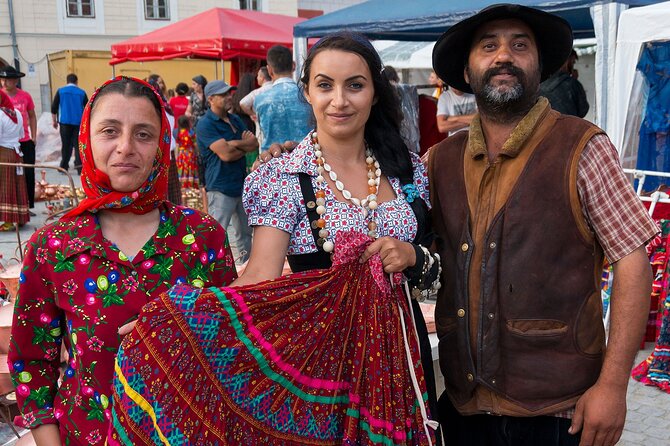
- End at a Roma craft shop, Mesteshukar ButiQ, where you can see copper work firsthand
- English-speaking guide experience, with room for questions during the route
Where the tour fits in your Bucharest day
This is a 3-hour walking tour in central Bucharest, starting at 10:00 am. The meeting point is at Teatrul „Ion Creangă” – Sala Mare, Strada Piața Amzei 13. From there, you will head into the neighborhood where the story centers around Roma history and its impact on Romanian society.
The route is designed to be doable for most people, and the tour caps at 15 participants, which usually means quieter corners stay manageable. If you like to walk at a steady, not-too-fast pace, this fits well. And because the itinerary includes memorial sites, you will want comfortable shoes, plus a mindset that expects short pauses and thoughtful listening.
Value check, too: at $30.04 per person, you are paying for a guided explanation across multiple important stops, not for museum tickets. The stops are listed as admission-free, so your money mostly goes to the interpretation and the route itself.
Price and what you get for $30.04
You are paying for three main things: context, access to a guided route, and time to ask questions. At this price, you are also avoiding common budget killers like separate paid entries at each location, since the stops are marked free admission.
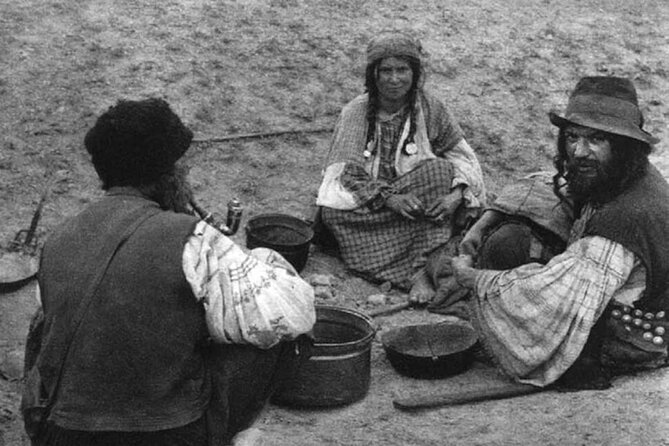
There are 7 points on the walk, and they are not random. The story line runs from Roma history connected to slavery, through persecution, and into cultural identity and craft. That means your guide is doing the work of connecting the dots while you physically move through the city.
One more practical angle: the tour is often booked around 10 days in advance on average. That does not mean you must panic book, but if you want a spot for a specific day, waiting too long is a bad habit.
A short list of what else is worth booking.
- Bucharest: Dracula’s Castle, Peles Castle, & Brasov Old Town★ 4.5 · 17,858 reviews
- Bucharest: Dracula Castle, Peles Castle & Brasov Old Town★ 4.6 · 10,891 reviews
- Bucharest: Dracula’s Castle, Peleș Castle & Brașov Day Trip★ 4.4 · 6,100 reviews
The walking loop, start to finish (and where it ends)
Your tour starts at Teatrul „Ion Creangă” – Sala Mare, then works toward the Piata Amzei area for the first major stop. It finishes at Mesteshukar ButiQ (MBQ) at Bulevardul Mihail Kogălniceanu 12, București 030167.
That end point matters. A lot of tours finish at a landmark and send you off into the city. Here, the final stop is a small shop with products made by Roma craftsmen, with copper craft as the featured focus. If you like buying something that feels connected to the story you just heard, this ending is more satisfying than a generic drop-off.
You do not need a private vehicle either. The tour is marked as near public transportation, which is useful in Bucharest, where routes can be easier by tram and metro than by guessing taxi times.
Stop 1: Platoul Piata Amzei and the old slaves market site
The first stop is at Platoul Piata Amzei, tied to the site of an old slaves market. This is the point where the tour stops being a city stroll and becomes a lesson you can see in the landscape.
What I find valuable here is the framing: the guide uses the site as a reminder of Romania’s complex history with the Roma community, and then explains how the trade in human lives affects Roma identity over time. Even if you think you know the basics, walking to the location and listening to the context tends to make the history feel less abstract and more real.
A practical note: this is likely the most emotionally heavy segment early on, so pace yourself. If you are the type who needs a moment to reset, plan for a slow exhale and a longer listen before moving on.
Stop 2: Palatul Stirbei, built in 1835, and a key Roma history connection
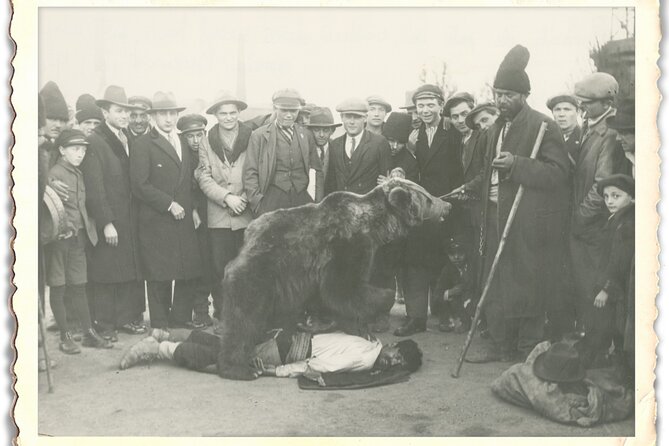
Next comes Palatul Stirbei, a palace in Bucharest built in 1835. The tour description highlights that it is connected to its owner and involvement in an important moment of Roma history in Romania.
This kind of stop works well for travelers who like architecture, but do not want their history sugar-coated. You are not only seeing a pretty building. You are being guided to understand how power, property, and personal influence shaped the lives of Roma people.
The main consideration at this step: palace context can feel indirect if you are expecting a straight, documentary-style storyline. Here, you are watching the guide do the important translation work, turning a building into a historical clue.
Stop 3: Ateneul Roman and how arts shape perceptions
After Palatul Stirbei, you pass by Ateneul Roman, the Romanian Athenaeum. The tour uses it as a springboard to talk about the role of the arts in shaping perceptions of the Roma community through history.
This is a smart inclusion because it shifts the lens from oppression alone to public image, storytelling, and cultural framing. You are essentially being asked: who gets represented, how are they represented, and what does that do to how people behave?
You will get exterior views as you move along, so do not treat this as a formal museum stop. Still, it is a recognizable Bucharest landmark, and the contrast between national pride and minority experience tends to land with people.
If you like taking photos, this is a good moment to do it quickly. Then focus on what the guide is explaining, because the point is not the façade, it is what the arts meant in the bigger story.
These pair well with the day you just read about.
- Bucharest: Palace of Parliament Tickets and Guide
★ 4.3 · 3,182 reviews - Bucharest: Day Trip to Dracula Castle, Peles Castle & Brașov
★ 4.4 · 3,049 reviews - Bucharest to Dracula Castle, Peles Castle and Brasov Guided Tour
★ 4.5 · 2,933 reviews - Bucharest: Palace of Parliament Tickets and Guided Tour
★ 4.4 · 1,877 reviews - Dracula’s Castle, Peles Castle and Brasov Day Trip from Bucharest
★ 4.5 · 1,804 reviews
Stop 4: Cismigiu Park, the city’s oldest and largest garden
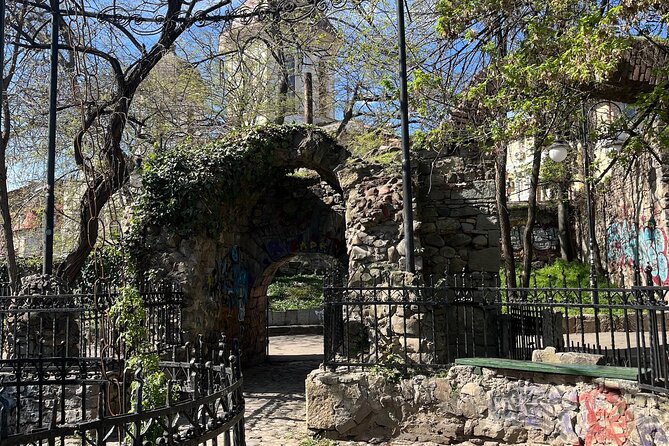
Then you shift gears with a stroll through Cismigiu Parc, described as the oldest and largest garden in Bucharest. This is where the tour gives your legs a break and lets your brain breathe.
The guide ties the park to more truths and myths about Roma history. That sounds like a contrast, but it makes sense. Outdoors in daylight, it is easier to talk about how narratives spread, how people label each other, and how myths can harden into assumptions.
What to expect: a gentler pace for this segment. It is also a good buffer if you have been bracing yourself emotionally at earlier stops.
Practical tip: bring water if it is warm. The itinerary is only about three hours, but you might still feel it if you linger for questions or photo breaks.
Stop 5: The Holocaust Memorial and Roma persecution in Romania
Now the tour takes a somber turn at the Holocaust Memorial in Romania. This stop is a commemoration of victims of the Holocaust in Romania, including the thousands of Roma lives lost to persecution and genocide.
I appreciate that the tour does not try to soften this part into general commentary. It is clearly positioned as remembrance, which matters. If you carry any emotion from the earlier slavery-focused stop, this one may add weight.
In practical terms, you should plan to walk slower here and keep your attention on the guide. A memorial is not the place to treat the moment as a photo opportunity or a casual chat.
If you are sensitive to dark history, this is the segment you might want to mentally prepare for most.
Stop 6: The Iuliu Maniu statue, when Roma were called Gypsies
Next you reach a stop at the Iuliu Maniu Statue. The tour description points to a moment in Roma history when the group was still commonly called Gypsies.
This is a useful inclusion because naming matters. Words used in official life, politics, and public conversation can shape how people are treated, how they are seen, and which policies end up justified.
You may find this stop shifts from suffering to language and identity, which helps the tour feel complete rather than relentlessly tragic. Still, it is not an escape hatch, it is part of the same story thread.
Stop 7: Mesteshukar ButiQ, Roma copper craftsmanship, and the final chance to connect
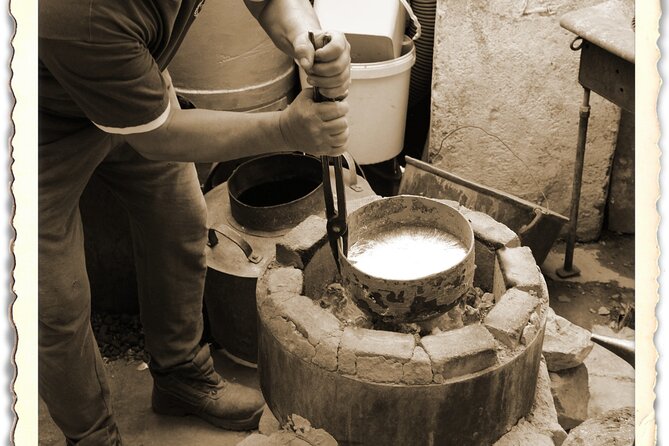
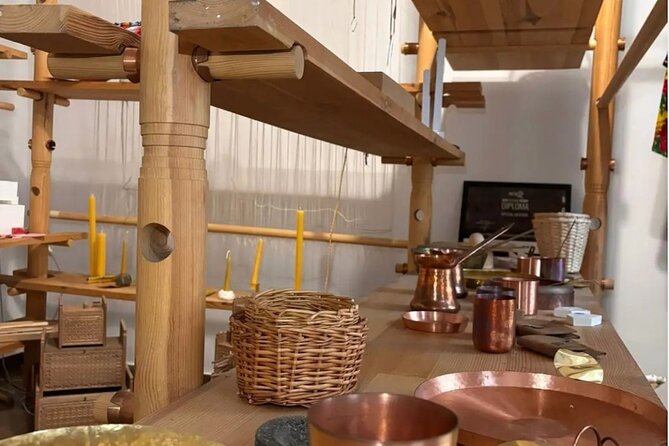
The tour ends at Mesteshukar ButiQ (MBQ), a small shop where products are manufactured only by Roma craftsmen. This stop gives you something hands-on at the end.
The tour description says you can witness enduring Roma craftsmanship firsthand, and the showcased focus is on copper work by skilled artisans. For many visitors, this is the emotional release valve. You are not leaving the topic behind, but you are also not stuck in memorial mode.
Even if you do not buy anything, you get a direct look at craft as living culture, not just museum nostalgia. If you do want a souvenir, this is one of the better ways to spend money during a story-focused tour, because the purchase ties to the artisans at the end of your route.
What the guide quality means for your experience
From the feedback on the tour format, the biggest pattern is clear: people appreciate an informative English-speaking guide who answers questions and takes time for them. That matters more than you might think.
With a topic as sensitive as this one, you do not want a guide who rushes through key points. You want someone who can explain clearly, correct misconceptions, and respond thoughtfully when you ask follow-ups.
Also, with a maximum group size of 15, you are more likely to hear each other’s questions rather than letting the tour become a one-way performance.
If you like tours where you can ask, this one fits your style.
Timing and pacing: how three hours really feels
The total time is about 3 hours, and the walking portion is estimated at 1h 20m. That tells you the tour is not designed as nonstop marching. Instead, you get multiple short stops where the guide talks and you can ask questions.
For your planning, build in buffer time before and after. Since the tour includes a Holocaust Memorial and other solemn points, it is smart not to schedule a tight museum hop immediately afterward.
If you are hungry after, plan a casual meal near where the tour ends. The ending at Mesteshukar ButiQ makes it easy to continue by foot or transit without backtracking.
Who this tour is best for, and who should think twice
This tour is a good match if you want more than postcard Bucharest. It is for travelers who care about the stories behind the buildings and who prefer a walking route with clear, contextual narration.
It also helps if you are comfortable with serious topics. The itinerary includes the site of an old slaves market and a Holocaust Memorial, so the mood is not light.
You might think twice if you expect a general cultural overview that avoids sensitive history. This route is explicitly about Roma history, persecution, remembrance, and how identity carries forward.
If your trip is short and you want one focused guided experience to understand Bucharest from a different angle, this is a strong candidate.
Should you book The Real Story of Gypsies – Slavery in Romania?
I would book it if you want a small-group, English-guided walk that connects multiple landmark stops to Roma history and identity in Romania. The value looks solid because admission is marked free at every stop, and the itinerary ends with a craft shop where you can see copper work and Roma craftsmanship in action.
I would skip it if you are avoiding heavy history on your vacation, or if you prefer tours that focus only on architecture and feel-good culture. This one asks you to face the hard parts directly.
If you book, go in with realistic expectations: wear comfortable shoes, keep your phone away during memorial moments, and bring questions. The guide seems set up for conversation, and that turns a good route into a more memorable one.
FAQ
What is the duration of the tour?
The tour lasts about 3 hours.
Where does the tour start?
The meeting point is Teatrul „Ion Creangă” – Sala Mare, Strada Piața Amzei 13, București, Romania.
Where does the tour end?
The tour ends at Mesteshukar ButiQ (MBQ), Bulevardul Mihail Kogălniceanu 12, București 030167.
What time does the tour start?
The start time listed is 10:00 am.
Is the tour offered in English?
Yes, it is offered in English.
How much does it cost?
The price is $30.04 per person.
Is the group size limited?
Yes, the maximum number of travelers is 15.
Are there admission fees for the stops?
The listed stops are marked as admission ticket free.
Is mobile ticketing available?
Yes, the tour offers a mobile ticket.
Is it easy to reach by public transportation?
The tour is marked as near public transportation.
What is the cancellation policy?
Free cancellation is available up to 24 hours in advance for a full refund. If you cancel less than 24 hours before the start time, the amount paid is not refunded.
Just Added: New Tours From Bucharest
- Bear Watching in Transylvania 2-Day Tour
- Half Day Tour in Bucharest
- National Village Museum and Comana Adventure Park
- From Dracula to Ceaușescu- Romanian Terror Stories tour
- Full-Day Private Tour of Brasov City and Peles Castle from Bucharest
- Bucharest: Tour The Wine Road, 2 Boutique Wineries in 1 Day
- Bucharest Ceaușescu House Parliament Palace &Village Museum
- Full-Day Private Tour of Bucharest and Mogosoaia Palace