
Reviewed · BUCHAREST
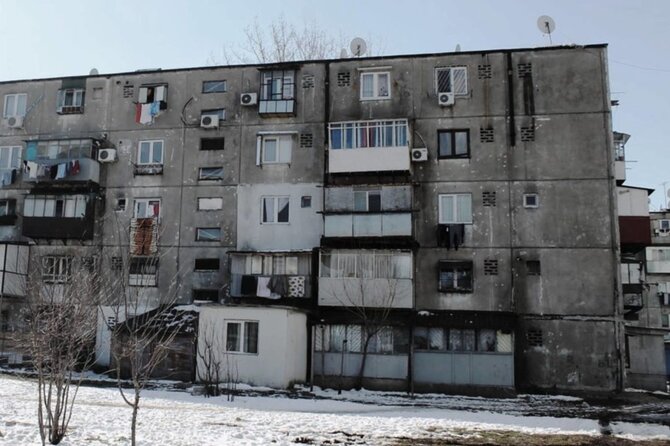
Troubled – Notorious Neighborhood – area known for social issues
Bucharest has a darker side. This private, English-language tour takes you into Ferentari, Rahova, and Sinești for a close look at everyday life in places most visitors never see, with pickup and a guide who sets clear boundaries from the start.
What I like most is the way the guides explain what you’re seeing and how to act in sensitive spaces. Names like Sebastian, Bogdan, Catalin, Valerica, and Matthew show up in the guide lineups, and the common thread is practical, calm direction.
The main consideration is that this is not a sightseeing bubble, so you need basic discretion: dress simply, keep your phone low-key, and be ready for a subject that involves poverty and social stress.
In This Review
- Key highlights to know before you go
- A reality-check route through Ferentari, Rahova, and Sinești
- Price and timing, and why it can still be good value
- Safety, respect, and the dress code that changes everything
- Stop 1: Ferentari and the street-level reality of low standards
- Stop 2: Rahova, the Roma community, and the penitentiary story
- Stop 3: Sintești and the contrast of Roma homes with money
- The route details: where the tour moves in real Bucharest
- Guides make or break it, and you’ll feel that here
- Who should book this tour, and who should skip it
- Quick checklist before you go
- Should you book this Bucharest Ferentari-Rahova-Sintești tour?
- FAQ
- How long is the tour?
- What neighborhoods and places are included?
- Is pickup offered?
- Is this tour private?
- What language is the tour offered in?
- Are there admission tickets you need to pay?
- Is a mobile ticket used?
- How early should I book?
- What is the cancellation policy?
- Is the meeting area near public transportation?
Key highlights to know before you go
- Private group, English-speaking guide for a more controlled, respectful pace
- Three stops in about 3 hours 30 minutes, built around real neighborhoods, not just viewpoints
- Market time and on-foot segments, including a flower market and local market areas
- Free admission at each stop, so your money goes to the guide and time, not tickets
- Dress and behavior rules to reduce attention and keep the focus on respectful presence
- Pickup and mobile ticket make logistics easier than a do-it-yourself plan
A reality-check route through Ferentari, Rahova, and Sinești
This is a Bucharest tour aimed at the city outside the glossy postcards. You’re heading into areas known for serious social problems, and you’ll also get a contrasting look at how Roma families live when money and stability are present in the same country. The point is not shock value. The point is context, and the guide does a lot of the work for you.
The structure matters. The tour uses a mix of vehicle travel and short walks, so you’re not stuck trudging for hours in places that can feel uncomfortable or chaotic. You also spend enough time at each place to notice details, like how people shop, how streets function, and how neighborhood life shapes daily routines.
Most importantly, the guide is explicit about what is and is not possible during the tour. That matters in Romania’s neighborhoods where one wrong move can put your group at risk, or put locals in a hard position.
Price and timing, and why it can still be good value
At $130.83 per person for about 3 hours 30 minutes, this isn’t a cheap “walk and snap photos” style activity. But it can be good value because the cost buys you three things that are hard to replace on your own.
First, you get a guided route through sensitive areas where a random wanderer is not welcome. Second, you get time that’s organized by the people who know the streets, not a guess you make from a map app. Third, admission is free for each stop, so you are paying for human guidance and the schedule, not entry fees.
It’s also booked fairly far in advance, with an average of 48 days. That usually means the operator sells out when the guide schedule lines up and word gets out. If this is high on your list, don’t wait until the last week.
A short list of what else is worth booking.
- Bucharest: Dracula’s Castle, Peles Castle, & Brasov Old Town★ 4.5 · 17,858 reviews
- Bucharest: Dracula Castle, Peles Castle & Brasov Old Town★ 4.6 · 10,891 reviews
- Bucharest: Dracula’s Castle, Peleș Castle & Brașov Day Trip★ 4.4 · 6,100 reviews
Safety, respect, and the dress code that changes everything
This tour asks you to act like a visitor who understands you are crossing into someone else’s daily life. The provided guidance is blunt: dress as simply as possible, avoid jewelry, and don’t carry expensive-looking items. It’s not about drama. It’s about lowering attention and not advertising yourself as someone with valuables.
You should also expect phone use to be controlled. The direction you get is essentially: watch first, ask second, and don’t treat people like props. When you see markets and street areas, it’s tempting to film everything. Resist that urge. The guide’s job is to help your group move through without causing friction.
On safety, the experience is designed to feel secure thanks to the guide’s control of timing and access. You’ll often be traveling by vehicle between nearby areas, which reduces the time you spend exposed in streets where you might not blend in. In the feedback you’ll see a consistent theme: the guides keep you aware, and they don’t just let you wander.
Stop 1: Ferentari and the street-level reality of low standards
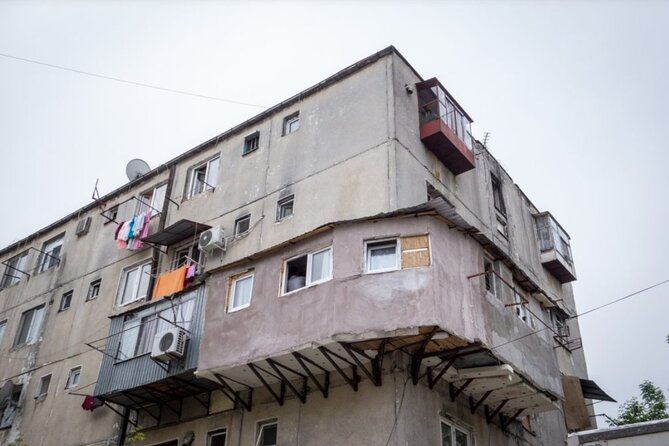
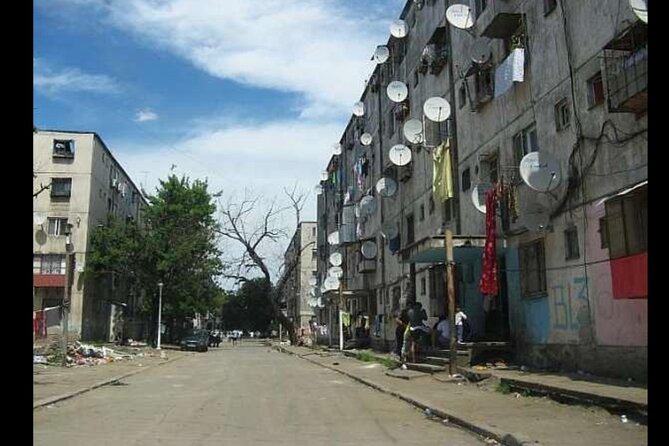
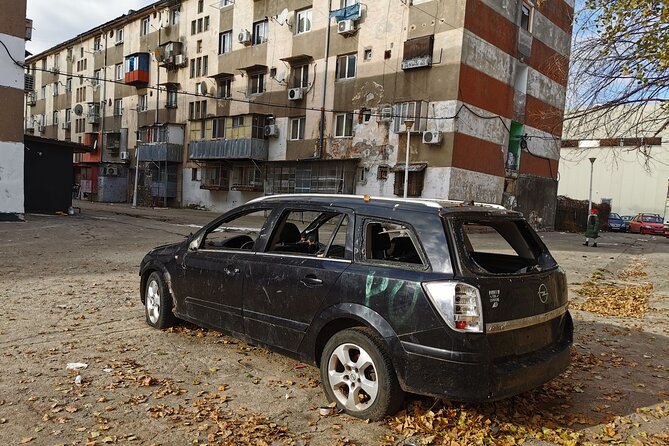
Your first stop is Ferentari, a district widely described as one of Bucharest’s most difficult areas, often associated with the lowest standard of living in the capital. The tour keeps this grounded. You’re not there to label people. You’re there to see what everyday life looks like when resources are scarce, and when social systems do not reach everyone equally.
This is where markets come into play. The on-foot time can include the flower market and nearby local market areas. It’s practical street tourism, not a staged museum moment. You’ll get a sense of how people plan shopping, how vendors work, and what kinds of goods are traded.
What I like about Ferentari as a first stop is that it sets expectations early. If the neighborhoods later feel confusing, this initial context helps you understand the logic of the route: why the guide chooses certain streets, why cameras need restraint, and why respect is not optional.
A drawback? If you came to Bucharest expecting mostly pretty streets and comfortable photos, Ferentari will feel heavy. It can also feel chaotic if you are rushing or distracted. Slow down. The tour is built for observation, not speed.
Stop 2: Rahova, the Roma community, and the penitentiary story
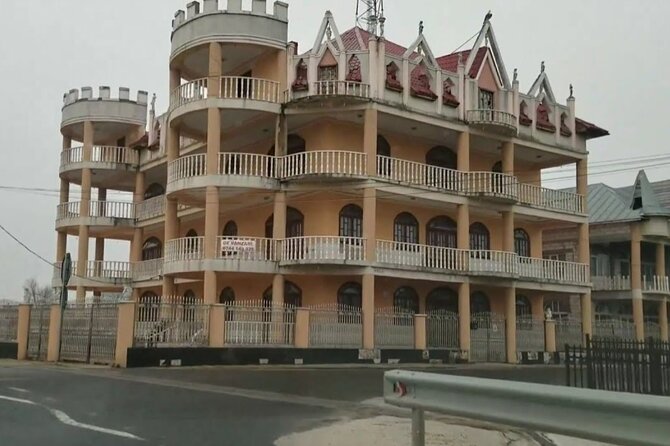
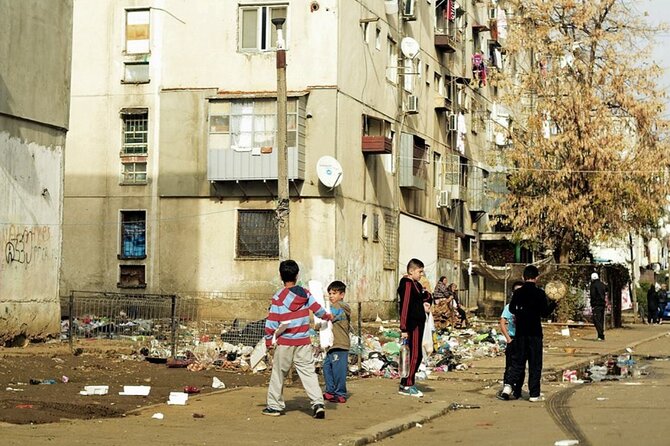
Next you’ll go to Rahova. This neighborhood is strongly associated with Roma communities, and the tour also includes the story of a penitentiary in the area. The inclusion of the prison topic is significant. It connects neighborhood life to broader social pressures and the way institutions shape futures.
In Rahova, you may spend time on foot in parts of the neighborhood, including areas tied to local markets and street life. The guide also helps you understand behavior and boundaries, including how to be alert and sensitive in places where people live, not where people perform.
The penitentiary piece can be uncomfortable, but it adds meaning. Without it, the neighborhood might look like a collection of streets you don’t understand. With it, you start seeing how systems influence housing, work, and mobility.
One thing to keep in mind: because you’re dealing with real communities and real people, the tone matters. This tour is designed to keep it respectful and controlled, not sensational. If you can handle serious topics, Rahova is often where the tour clicks into a deeper understanding of the city.
Stop 3: Sintești and the contrast of Roma homes with money
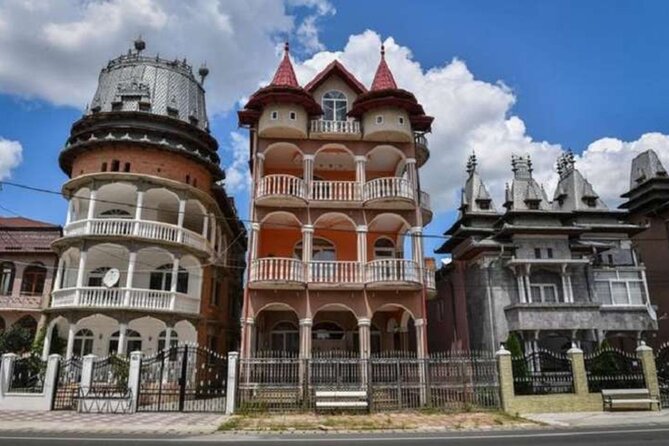
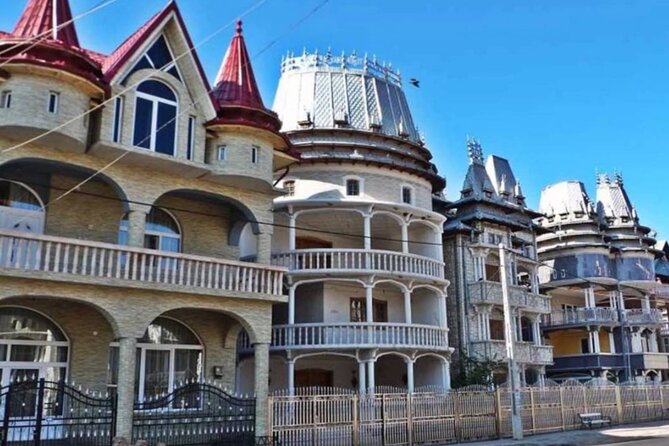
Your final stop is Sinești, a village area known for Roma palaces, a striking contrast to what you see in the city districts. This is not presented as a fairy tale. It’s a real-world variation, showing that Roma life in Romania is not one single story.
Here, the tour highlights difference in wealth and stability in plain sight. You’ll travel to the area along routes that may include Strada Principală Nr. 353A in Sintești. Expect more viewing than heavy walking, and expect the guide to explain what you’re seeing so you don’t reduce it to stereotypes.
What makes Sinești valuable is the balancing effect. After seeing the social stress of Bucharest neighborhoods, this stop reminds you that identity and circumstance are not locked in one direction. The code of conduct and discretion still matter, but the atmosphere often feels different because the built environment looks different.
If you’re the type of traveler who wants only poverty tourism, Sinești may challenge your expectations. But if you want a more accurate picture of how people actually live, this contrast is a big part of the tour’s usefulness.
These pair well with the day you just read about.
- Bucharest: Palace of Parliament Tickets and Guide
★ 4.3 · 3,182 reviews - Bucharest: Day Trip to Dracula Castle, Peles Castle & Brașov
★ 4.4 · 3,049 reviews - Bucharest to Dracula Castle, Peles Castle and Brasov Guided Tour
★ 4.5 · 2,933 reviews - Bucharest: Palace of Parliament Tickets and Guided Tour
★ 4.4 · 1,877 reviews - Dracula’s Castle, Peles Castle and Brasov Day Trip from Bucharest
★ 4.5 · 1,804 reviews
The route details: where the tour moves in real Bucharest
Your route includes specific street areas in Bucharest, such as Strada Zăbrăuţului 5, Aleea Iacob Andrei 11, Aleea Livezilor, Strada Pucheni 1, Strada Amurgului 4, and Rahova Penitentiary, Strada Adrian 4, plus the Sintești village location on Strada Principală Nr. 353A.
You don’t need to memorize these addresses to enjoy the tour, but they hint at why this feels different from a generic neighborhood drive. You’re moving through a patchwork of blocks and streets, which is exactly where real Bucharest life happens.
Also, the tour is described as near public transportation, which helps if you’re meeting up elsewhere before pickup or if you plan to hop back to the center afterward.
Guides make or break it, and you’ll feel that here
This kind of tour lives and dies by the guide. In the feedback, the guides named are not just friendly. They guide behavior. They explain context. They use humor at the right times, like a human trying to keep things from becoming too grim.
Sebastian is repeatedly mentioned for humor and a sense of what’s safe. Bogdan appears with strong storytelling. Catalin comes up for clear explanations and good pacing, including pointing out what’s possible. Valerica is highlighted for taking time, explaining code of conduct, and staying respectful. Matthew is also mentioned as part of a guiding team.
Even if you don’t remember names, you’ll feel the approach: the guide is not treating people as a spectacle. Your job is simple, be present, and follow the rules.
Who should book this tour, and who should skip it
This tour fits best if you want Bucharest in full color, including the parts shaped by poverty, marginalization, and everyday hardship. You’ll also like it if you care about the contrast between districts, and you’re willing to learn about Roma communities without turning it into gossip.
Skip it if you want an easy, photo-first city walk with light topics only. Also skip if you struggle with the idea of visiting neighborhoods where you will not blend in and where discretion is part of good manners.
Because you’ll be traveling by vehicle for a big chunk of the time and walking for shorter segments, this is not described as physically extreme. The operator also notes that most people can participate, which suggests the pace is designed to be manageable.
Quick checklist before you go
- Wear simple clothes, and keep jewelry minimal
- Leave anything expensive at home, or in your hotel safe
- Bring a smartphone only if you’ll use it respectfully and when the guide allows it
- Expect a mix of vehicle time and short on-foot sections
- Bring a flexible attitude. This is a lesson in how cities work, not just where landmarks are
Should you book this Bucharest Ferentari-Rahova-Sintești tour?
If you’re asking, should I go into the darker parts of Bucharest with a guide, my answer is yes, if you want real context and you can handle serious subjects with respect. The combination of private access, English guidance, and a structured route through Ferentari, Rahova, and Sinești makes this less risky and more meaningful than trying to DIY it.
On the other hand, if your priority is comfort, pretty streets, and purely photogenic sightseeing, you may find the premise stressful. This tour works best when you treat it like a conversation with the city, not a theme park.
If you book, commit to the basics: dress down, stay aware, follow the guide’s instructions, and focus on learning. That’s when $130.83 feels like time well spent.
FAQ
How long is the tour?
The tour lasts about 3 hours 30 minutes.
What neighborhoods and places are included?
You visit Ferentari, Rahova, and the village area of Sinești with Roma palaces.
Is pickup offered?
Yes, pickup is offered.
Is this tour private?
Yes, it is a private tour/activity, so only your group participates.
What language is the tour offered in?
The tour is offered in English.
Are there admission tickets you need to pay?
Admission tickets are listed as free for the stops.
Is a mobile ticket used?
Yes, the experience includes a mobile ticket.
How early should I book?
On average, it is booked 48 days in advance.
What is the cancellation policy?
You can cancel for free up to 24 hours in advance for a full refund.
Is the meeting area near public transportation?
It is described as near public transportation, and most people can participate.
Just Added: New Tours From Bucharest
- Bear Watching in Transylvania 2-Day Tour
- National Village Museum and Comana Adventure Park
- Half Day Tour in Bucharest
- From Dracula to Ceaușescu- Romanian Terror Stories tour
- Full-Day Private Tour of Brasov City and Peles Castle from Bucharest
- Bucharest: Tour The Wine Road, 2 Boutique Wineries in 1 Day
- Bucharest Ceaușescu House Parliament Palace &Village Museum
- Full-Day Private Tour of Bucharest and Mogosoaia Palace