Reviewed · TOURS
14-Day The Best of The Balkans Small Group Tour from Bucharest to Budapest
Balkans in two weeks, without spreadsheets. This 14-day small-group route stitches together Romania, Bulgaria, North Macedonia, Albania, Bosnia, Croatia, Slovenia, Serbia, and Hungary, with small-group comfort and a pro guide keeping the logistics sane. I love how it combines big-name sights with real local texture, so you are not just checking boxes.
My other favorite part is the daily reset built into the trip: you sleep in 3- and 4-star hotels with breakfast, then you roll out again, fed and ready. One thing to think about up front is the practical stuff, like entrance fees (not included) and a strict church dress code, meaning no shorts or sleeveless tops, and shoulders plus knees must be covered.
In This Review
- Key things to know before you go
- Why This Bucharest-to-Budapest Route Makes Sense
- A small-group trip that actually feels like a group
- Comfort and Timing: The Pace You Can Expect
- Bring the right clothing on day one
- Hotels and Breakfast: Where Value Shows Up
- What you should plan around
- Day-by-Day Highlights: From Frescoed Churches to Dubrovnik Walls
- Day 1: Bucharest to Bulgaria, with Veliko Tarnovo and Sofia
- Day 2: Rila Monastery’s artistry and Skopje’s fortress views
- Day 3: Skopje Old Bazaar to Ohrid on Lake Ohrid
- Day 4: Ohrid water-and-rock stops, then Tirana and Kruja
- Day 5: Kruja Castle and the Adriatic swing through Montenegro
- Day 6: Bay of Kotor cruise, then Croatia and Dubrovnik
- Day 7: Dubrovnik day with real choice built in
- Day 8: Mostar’s Old Bridge and Split’s Diocletian Palace
- Day 9: Plitvice Lakes National Park, with a weather caveat
- Day 10: Postojna Cave and arrival in Ljubljana
- Day 11: Ljubljana charm, then Zagreb’s hills and markets
- Day 12: Belgrade’s fortresses, Skadarlija, and Danube energy
- Day 13: Novi Sad stop before Budapest and a Danube cruise
- Day 14: Budapest free time, big UNESCO streets, and iconic buildings
- Entrance Fees, Mobile Tickets, and the Dress-Code Reality
- Weather-Dependent Days: Plitvice and the Danube Cruise
- Price and Logistics: Is This Good Value?
- Who This Tour Fits Best (And Who Might Want Something Else)
- Should You Book This Tour?
- FAQ
- What are the tour dates and start time?
- How many nights and breakfasts are included?
- Is pickup included?
- Are entrance fees included for churches and museums?
- What is the group size?
- Is there a dress code?
- What happens if Plitvice Lakes is closed due to weather?
- What happens if the Danube cruise cannot run?
- Are airport transfers included?
Key things to know before you go
- Nine countries in 14 days, with borders crossed in a mostly efficient rhythm and a small group of up to 15.
- A tour director who also drives, so you get continuity instead of handing the group to a stranger.
- Bread-and-butter logistics included: air-conditioned transport, 13 nights of hotel stays, and breakfast each morning.
- UNESCO hits are built into the days, from Sofia’s major sights to Ohrid, Kotor, Dubrovnik, and caves.
- Two “weather reality checks”: Plitvice Lakes and the Danube cruise can shift depending on conditions.
- You will be moving, with moderate fitness required and walking time on many days.
Why This Bucharest-to-Budapest Route Makes Sense
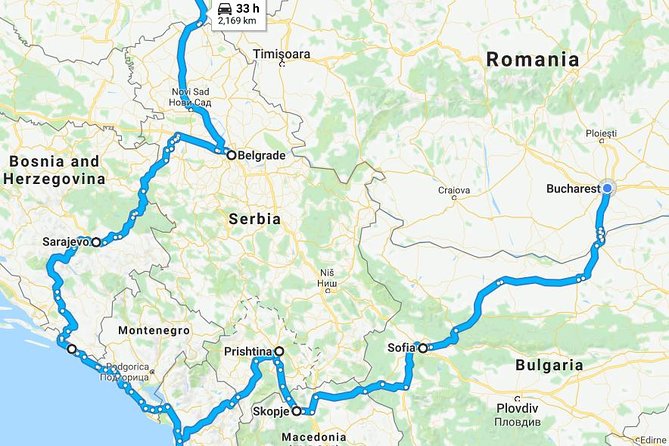
This is one of those trips that works because it is designed like a single travel thread, not a disconnected grab bag. You start in Bucharest, then head toward the Danube and the Balkans interior, finishing in Budapest. The route is ambitious on paper, but the day structure keeps it doable: morning drive, guided walking or site time, then an overnight with breakfast waiting.
I also like that the tour spends time in capitals and historic towns rather than only scenic stops. You get Sofia’s big domes and mosaics energy, Skopje’s fortress-and-market feel, Tirana’s central square, and then the Adriatic history in Kotor and Dubrovnik. After that, the trip pivots inland for Bosnia, Serbia, and the Danube cities again.
A small-group trip that actually feels like a group
The tour runs with a maximum of 15 travelers. That matters more than it sounds. In a small group, the guide can help faster with timing, questions, and practical pacing when you have long driving days followed by a concentrated walking stop.
And the guide being the driver is a plus. You are less likely to lose context when the group pauses, switches cars, or needs a quick clarification. It also usually means the “day plan” stays coherent instead of turning into a pile of separate handoffs.
A short list of what else is worth booking.
- Bucharest: Dracula’s Castle, Peles Castle, & Brasov Old Town★ 4.5 · 17,858 reviews
- Bucharest: Dracula Castle, Peles Castle & Brasov Old Town★ 4.6 · 10,891 reviews
- Bucharest: Dracula’s Castle, Peleș Castle & Brașov Day Trip★ 4.4 · 6,100 reviews
Comfort and Timing: The Pace You Can Expect
Plan for a lot of road time. The itinerary is packed with country-to-country transfers, so your “downtime” is mainly in the van, not in a relaxed countryside schedule. That is not a flaw, it is just the style of this route.
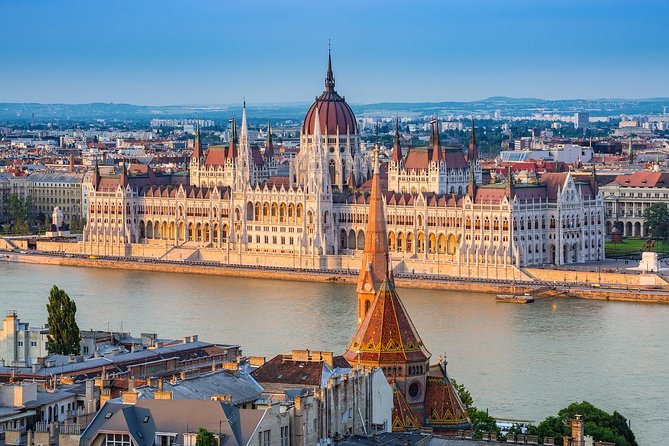
The day also includes free time on specific days. Dubrovnik is a good example: you get time to choose a boat option toward the Elafiti Islands or other nearby excursions, or just enjoy the promenade or beach area in Lapad. Budapest on the final day also includes free time for self-guided exploring, like Heroes’ Square, Andrássy Avenue, St Stephen’s Basilica, and the Castle District.
Bring the right clothing on day one
You cannot wing the dress code. For places of worship and selected museums, shoulders and knees must be covered. That means no shorts or sleeveless tops. You can also get turned away if you do not comply, even if you are only visiting for a short moment.
I suggest packing one “church outfit” that you can wear repeatedly, plus a light layer for evenings. You will be glad later when the itinerary has another stop that looks casual from the outside but has strict rules inside.
Hotels and Breakfast: Where Value Shows Up
This trip includes 13 nights of accommodation in 3- and 4-star hotels, with breakfast each morning. That is a big deal in a multi-country itinerary. Breakfast means you start with something reliable instead of spending your first hour hunting for food you can trust.
The hotels are not described in brand terms here, but the category range is practical for the type of route. You should expect clean, comfortable rooms and basic amenities, the kind of setup that makes a fast-moving itinerary feel less exhausting.
What you should plan around
Even with breakfast included, some days do not include timed meals beyond that. Most of the sightseeing is guided, and then you move on. So I like to think of meals as your responsibility to manage on the fly during free time, rather than something the tour fully plans for you.
Also note that entrance fees for museums and churches are not included. Breakfast might be included, but many of the “wow” interior visits will still require you to pay onsite or via ticketing where indicated.
These pair well with the day you just read about.
- Bucharest: Palace of Parliament Tickets and Guide
★ 4.3 · 3,182 reviews - Bucharest: Day Trip to Dracula Castle, Peles Castle & Brașov
★ 4.4 · 3,049 reviews - Bucharest to Dracula Castle, Peles Castle and Brasov Guided Tour
★ 4.5 · 2,933 reviews - Bucharest: Palace of Parliament Tickets and Guided Tour
★ 4.4 · 1,877 reviews - Dracula’s Castle, Peles Castle and Brasov Day Trip from Bucharest
★ 4.5 · 1,804 reviews
Day-by-Day Highlights: From Frescoed Churches to Dubrovnik Walls
Let’s walk through the trip like a friend planning your packing bag and your priorities. I’ll highlight what each segment is good for, plus a quick reality check where it matters.
Day 1: Bucharest to Bulgaria, with Veliko Tarnovo and Sofia
You leave Bucharest in the morning and head into Bulgaria. The first stop is a 16th-century Church of Nativity with richly painted frescoes. That is a strong opener because it sets a tone: art inside, history you can actually see.
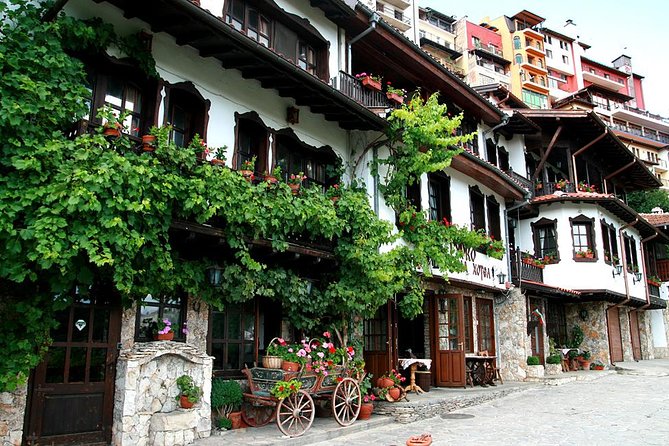
Then you roll into Veliko Tarnovo. Tsarevets Fortress gives you the “City of Tsars” backdrop and the monument areas tied to the Asenevtsi kings. You also get Samovodska charshia mentioned as a main attraction, which points to the crafts feel you associate with old towns.
In the evening you arrive in Sofia for a guided city center walk. Expect Alexander Nevsky Cathedral, Sveta Sofia Church, Banya Bashi Mosque, the Sofia Synagogue, and Vitosha, the main shopping street. It is a lot of religious and cultural architecture in a compact time window.
Good to know: some parts are free, but you still pay for certain sites where indicated.
Day 2: Rila Monastery’s artistry and Skopje’s fortress views
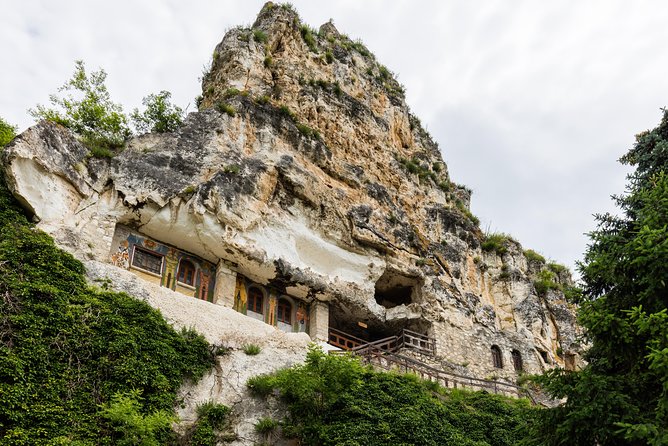
Today centers on Rila Monastery, a UNESCO World Heritage Site and one of Bulgaria’s best-known places. You visit the church, and the description focuses on its artistic program, including 19th-century painting and woodcarving work linked to specific schools. Even if you do not read every label, the scale and interior detail usually land.
In the late day, you continue south to Skopje. There is an orientation first, which is useful after a travel day. You then get back out the next day for the deeper walking tour, but orientation helps you understand where everything sits.
Day 3: Skopje Old Bazaar to Ohrid on Lake Ohrid
Skopje’s Old Bazaar gets a guided walk with the Vardar river quay, narrow bazaar streets, the Mother Teresa Memorial House, the Kale fortress area, and Alexander the Great Square. Skopje is not just one sight, it is a city with layers you can feel while you walk.
From there, you drive to Ohrid, another UNESCO-listed destination. Ohrid sits on the lake, perched on the Macedonia-Albania border, and the old center is the main stage. You get a walking tour of narrow streets, squares, and churches like Sveti Sofia Church, plus Ancient Theater and Tsar Samuil’s Fortress. Lake Ohrid is also described as one of Europe’s oldest lakes, formed millions of years ago, which gives context when you are standing near the water.
Day 4: Ohrid water-and-rock stops, then Tirana and Kruja
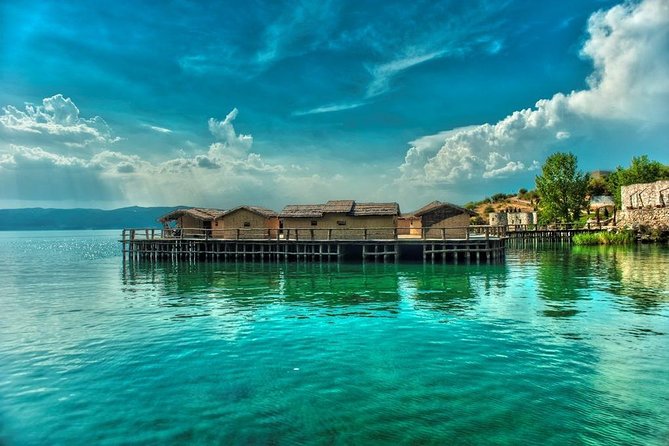
This day leans toward “nature plus culture.” You start with Bay of Bones, an archaeological complex with reconstruction of pile-dwelling settlement from long ago, plus a Roman military fortification connection. The next stop is the Monastery of Saint Naum, built on a rock with views over Lake Ohrid. You also get a small rowing boat ride to the springs of the Black Drimm river.
Then you cross into Albania and go to Tirana for a guided center walk. Skanderbeg Square anchors the stop, and you also visit the National History Museum, Palace of Culture, the National Bank, Et’hem Bey Mosque, and Skanderbeg’s statue. In the evening, you head to Kruja and get an orientation tour.
Day 5: Kruja Castle and the Adriatic swing through Montenegro
In Kruja, you visit the castle headquarters associated with Albania’s national hero Skanderbeg. The Kruja Castle Museum adds a short history lesson, then you have time at the local souvenir market in the old bazaar area.
After that, the tour heads toward Montenegro, with a stop around Budva’s old town and city walls. You are shown key areas like Ballerina and Mogren Beach, Land Gate, an ancient necropolis, the Square of Churches, the citadel, marina, and Slovenska Plaza.
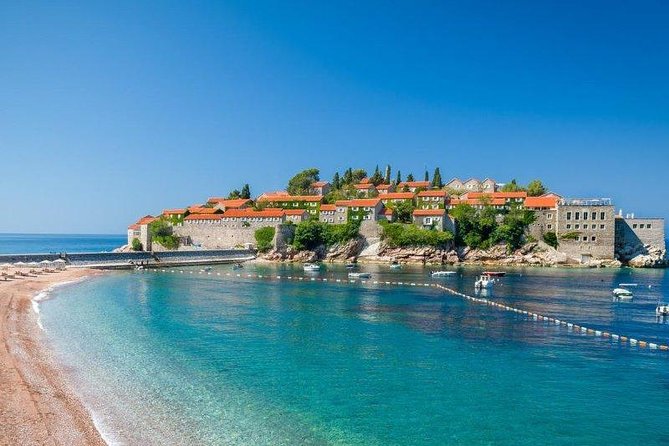
In the evening you arrive in Kotor and discover Stari Grad, the fortified old town, listed as UNESCO.
Day 6: Bay of Kotor cruise, then Croatia and Dubrovnik
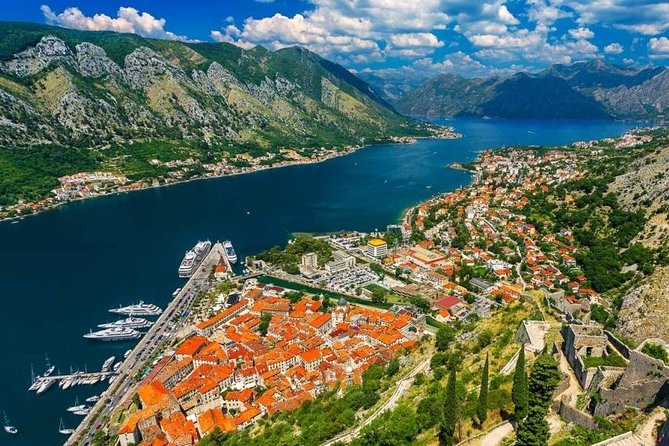
Today is very “Adriatic.” In Kotor you do a Bay of Kotor tour: Perast, with a boat trip to the Roman Catholic Church of Our Lady of the Rocks, plus Tivat and Porto Montenegro. Expect this to feel like a highlight day because it blends water views with historic stop points.
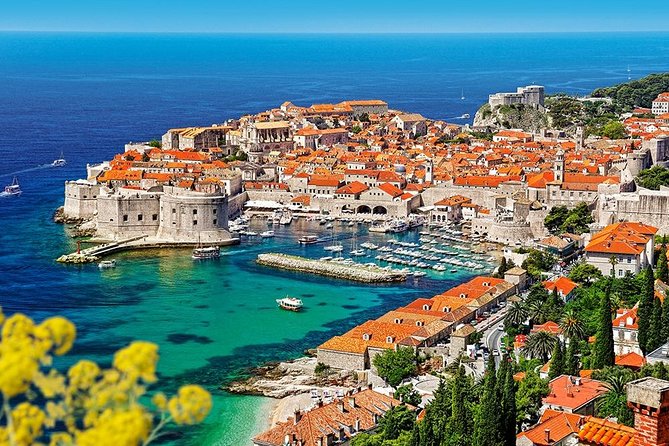
Then you cross into Croatia and head to Dubrovnik. The Old Town walk focuses on Onofrio’s Fountain, Prijeko Street, and the Old Port area tied to Dubrovnik’s trading and maritime history.
Day 7: Dubrovnik day with real choice built in
You get free time in Dubrovnik, and the tour manager provides indications for options. You might choose a boat trip to the Elafiti Islands or a trip toward the Blue Cave. If you just want to slow down, the promenade from Lapad and the Adriatic beach are ready-made.
You stay in the same 3-star hotel in Lapad, Dubrovnik, which makes this day feel less stressful.
Day 8: Mostar’s Old Bridge and Split’s Diocletian Palace
After breakfast, you head into Bosnia and Herzegovina and visit Mostar. You focus on the Old Bridge Area and the old city, part of UNESCO heritage. Mostar works best when you simply slow your pace and watch the bridge area from different angles, because the city looks different as you walk.
Then you cross back to Croatia for Split. The Diocletian’s Palace and Split’s historic center are the core guided stops, and the area is UNESCO-listed.
Day 9: Plitvice Lakes National Park, with a weather caveat
You head to Plitvice Lakes National Park, UNESCO-listed. The walking tour focuses on the park’s changing colors depending on sunlight. You stay in a 3-star hotel near Korenica close to the park.
Important practical note: the visit is conditioned by the weather. The park administration can close it. The tour says it is not responsible in that case, but the guide will try to adjust the next-day plan if conditions improve. This is one of those times you should pack patience and keep a flexible mindset.
Day 10: Postojna Cave and arrival in Ljubljana
After breakfast, you go to Slovenia and visit Postojna Cave, described as the largest show-cave in Europe. You tour by electrical train, which helps you cover ground without exhausting walking. It is exactly the kind of major attraction that feels like a reward after the driving days.
In the late evening you arrive in Ljubljana, Slovenia’s capital. If you are tired, good. Tomorrow is the full walking day.
Day 11: Ljubljana charm, then Zagreb’s hills and markets
Ljubljana gets a guided walk through a long list of major areas: Congress Square, the National University Library, New Square, Cobbler’s Bridge, Prešeren monument, Franciscan Church, Three Bridges, Old Square, river promenade, Municipality Square, St Nicholas Cathedral, the Open Air Market, Butcher’s Bridge, and Dragon Bridge.
Then you continue to Zagreb, Croatia for another guided city walk. You explore Upper Town and Lower Town, including views from Strossmayer Promenade, and stops like Lotrščak Tower, St Catherine’s Church, Stone Gate, and the Croatian Parliament area. You descend down via Tkalčićeva Street to Dolac Market and Kaptol, plus Ban Jelačić Square.
Day 12: Belgrade’s fortresses, Skadarlija, and Danube energy
After breakfast, you head into Serbia and reach Belgrade in the afternoon. The tour covers Republic Square, the National theater and National museum, Skadarlija, the Ottoman-heritage quarter, the only mosque in the city, and Kalemegdan Park and fortress. You also see Victor, the famous symbol of Belgrade, plus the confluence area where the Sava and Danube rivers meet.
Belgrade can feel intense but fun. It is not a polished tourist museum city, it is a city with a pulse. This is a good day to bring comfy shoes and decide you will walk, even if you only plan to “glance” first.
Day 13: Novi Sad stop before Budapest and a Danube cruise
You leave Belgrade for Budapest, with a stop in Novi Sad. You see Zmaj Jovina Street, the Danube embankment, and the Palace of the Orthodox Bishop. You also view y-Dunavska Street with the long line of single-storied 19th-century houses and the outside of Petrovaradin Fortress on the other bank.
Then you arrive in Budapest in the evening. After check-in, you get a 1-hour scenic cruise on the Danube to see key attractions. The tour includes a weather warning: low water levels or navigation restrictions can cancel cruises. If that happens, they try to swap it for the next day. If you do get the swap, you need to get yourself to the dock since it is listed as the last day with your tour manager.
Day 14: Budapest free time, big UNESCO streets, and iconic buildings
Your final day is free time in Budapest. You can explore Heroes’ Square, Andrássy Avenue (UNESCO World Heritage Site), St Stephen’s Basilica, Dohány Street Synagogue, and the Castle District in Buda.
The tour manager decides the order and time for visits when they are scheduled, based on weather, traffic, and restrictions. For a self-directed last day, that structure helps you avoid “where do we go now” stress.
Entrance Fees, Mobile Tickets, and the Dress-Code Reality
Entrance fees are not included at museums and churches where ticketing applies. So it helps to budget extra day-to-day for what you choose to enter, even if the walking tours are covered.
You also need to plan for the dress code. Knees and shoulders must be covered, and you should avoid shorts and sleeveless tops. Some places will enforce this firmly. Pack accordingly, and you will lose less time to last-minute solutions.
On the logistics side, the trip includes a mobile ticket option and offers pickup. It is also stated as “near public transportation,” which is useful if you decide to adjust your schedule slightly or handle a self-guided meal on your own.
Weather-Dependent Days: Plitvice and the Danube Cruise
Two parts of this itinerary are explicitly conditional on weather and water or navigation conditions.
Plitvice Lakes can close if the weather is bad. When that happens, the guide will decide and choose the best solution while respecting the included visits, and they will consider safety first.
The Danube cruise can also be affected by low water and navigation restrictions. If it cannot run, you may be moved to the next day’s cruise. The key practical takeaway is this: keep some flexibility on the later schedule, because you might have to travel to the dock on your own if your tour manager is not there the same way.
Price and Logistics: Is This Good Value?
At $3,009.77 per person, this is not a budget-friendly trip. But you are also buying a lot of “invisible work” that can easily cost time and money if you do it independently. This price includes 13 nights of hotel stays with breakfast, an air-conditioned vehicle, and a professional tour director who also drives.
You are also getting guided time in many high-demand places: fortress areas, old towns, UNESCO sites, and major city neighborhoods in capitals and Adriatic hubs. When you factor in transportation across nine countries, plus guidance that helps you manage day flow, the value proposition starts to look more reasonable.
The trade-off is that you still pay for entrance fees. So if you want to do every optional interior ticket and museum stop, your final trip cost will rise.
If your priority is maximum time in one country, this itinerary might feel rushed. If your priority is “see a lot without planning every border,” this is exactly the type of value you pay for.
Who This Tour Fits Best (And Who Might Want Something Else)
This works best for you if:
- You want a structured multi-country trip from Bucharest to Budapest without building your own route.
- You like guided walking tours in historic centers, fortresses, and UNESCO sites.
- You are okay with long driving days and moderate walking.
It may be less ideal if:
- You want lots of free time every day and minimal schedule pressure.
- You are not comfortable with dress-code rules for churches.
- You hate weather uncertainty, since Plitvice and the Danube cruise can shift.
One more note: the operator’s replies to reviews say they have improved later versions by adding more free time and a free day at your disposal. That suggests you might find this trip feels more flexible in updated editions than older versions.
Should You Book This Tour?
Book it if you want the Balkans and you want the planning stress removed. The combination of small-group size, breakfast-included hotel nights, and a guide who handles the routing makes this feel like a guided backpacking trip with better beds.
Before you book, check your own comfort with two things: daily travel time and the dress code. If you can pack for it and you can handle some weather-based schedule shifts, this route can deliver a lot of variety in one go.
If you like your travel days structured, with guided highlights and a few chances to wander on your own, you will likely enjoy the rhythm here. If you are chasing a slow, purely beach-and-nature itinerary, you might prefer a different style.
FAQ
What are the tour dates and start time?
The tour starts at 9:00 am, and the duration is about 14 days.
How many nights and breakfasts are included?
You get 13 nights of accommodation, with breakfast included each morning for those 13 days.
Is pickup included?
Pickup is offered.
Are entrance fees included for churches and museums?
No. Entrance fees for museums and churches are not included.
What is the group size?
The tour has a maximum of 15 travelers.
Is there a dress code?
Yes. For places of worship and selected museums, you must cover knees and shoulders. No shorts or sleeveless tops are allowed, and you may be refused entry if you do not comply.
What happens if Plitvice Lakes is closed due to weather?
Plitvice Lakes visit depends on weather. If it closes, the tour manager will try to make slight changes to the next day’s plan, keeping safety in mind.
What happens if the Danube cruise cannot run?
The cruise depends on weather, low water, and navigation restrictions. If it cannot run, they try to change it for the next day, and you may need to go to the dock since it could be the last day with your tour manager.
Are airport transfers included?
Airport transfers and other extra services are not listed as included. You can ask the tour manager in advance to see if it is possible to organize them and what the price would be.
Just Added: New Tours From Bucharest
- Bear Watching in Transylvania 2-Day Tour
- National Village Museum and Comana Adventure Park
- Half Day Tour in Bucharest
- From Dracula to Ceaușescu- Romanian Terror Stories tour
- Full-Day Private Tour of Brasov City and Peles Castle from Bucharest
- Bucharest: Tour The Wine Road, 2 Boutique Wineries in 1 Day
- Bucharest Ceaușescu House Parliament Palace &Village Museum
- Full-Day Private Tour of Bucharest and Mogosoaia Palace
Tours, compared.
Bucharest to Dracula Castle, Peles Castle and Brasov Guided Tour
Read our review →
Transylvania and Dracula Castle Full Day Tour from Bucharest
Read our review →
Peles Castle, Bran Castle, & Brasov Old Town Tour
Read our review →