
Reviewed · COMMUNIST BUCHAREST TOURS
Bucharest: Communism and History Guided City Walking Tour
Parliament and prison stories walk together here. In this 3-hour guided walk, you connect Communism, everyday life, and the 1989 Revolution using real streets and real buildings, not textbook diagrams. The House of People sits at the center of it all, even though you only see it from the outside.
I love two things most. First, you get a guided outside look at the Palace of the Parliament, with context on how Nicolae Ceausescu’s grand plans and megalomania shaped Bucharest. Second, the tour keeps dragging big history back down to daily routines, from religion under Communism to what people faced in day-to-day life in neighborhoods and in front of an old Alimentara grocery store.
One drawback to plan for: this is a walking tour with a hill climb at the start, so bring comfortable shoes and skip it if your back gives you trouble.
In This Review
- Key highlights you should care about
- Getting to the Patriarchal Cathedral start, plus the hill you’ll climb
- Religion under Communism, and why that first stop sets the tone
- Nationalisation, neighborhood change, and the city you can still read
- House of People from the outside, Ceausescu’s construction story, and the symbolism
- Antim Monastery and the buildings moved to survive
- A cafe break for your legs, plus an actual snack from the era style
- Alimentara stop: everyday wellbeing under rationing and pressure
- Calea Victoriei, communist symbols, and a Secret Police site
- Caru’ cu bere, a quieter stop, and why the walk ends at Revolution Square
- Guides, pacing, and what makes the experience feel worth $31
- Time, fitness, and who should book this
- Should you book this Bucharest Communism and History Walking Tour?
- FAQ
- Where does the tour start?
- What is the closest metro station to the meeting point?
- How long is the tour?
- What do I see at the House of People or Parliament building?
- Is there a break during the tour?
- What is included in the tour price?
- Is hotel pickup included?
- Does the tour run in bad weather?
- Is the tour suitable for people with mobility or back issues?
Key highlights you should care about
- Outside Parliament photos, plus construction and symbolism explained
- Nationalisation made visible in the neighborhood streets
- Secret Police influence tied to specific places in central Bucharest
- About 15 history moments mapped across the city in 3 hours
- A short cafe break with a communist-type snack
- Ends at Revolution Square, where the 1989 story comes together
Getting to the Patriarchal Cathedral start, plus the hill you’ll climb
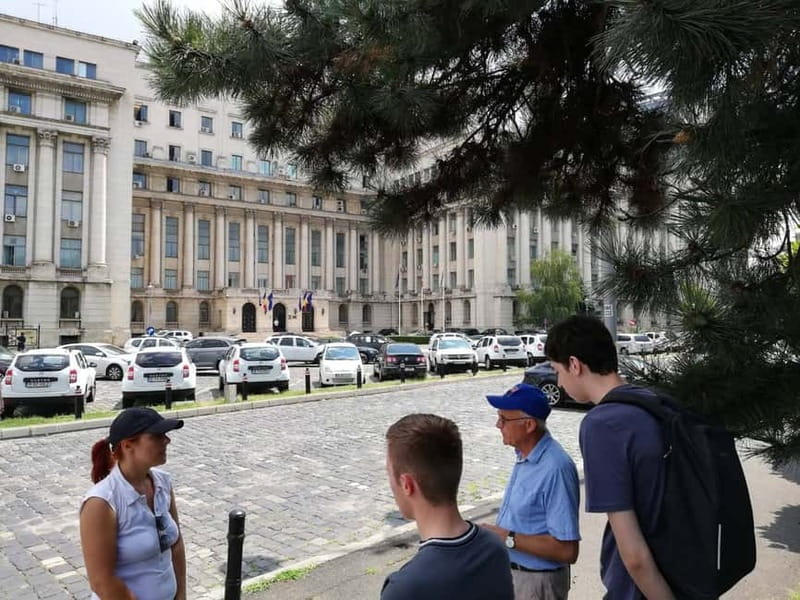
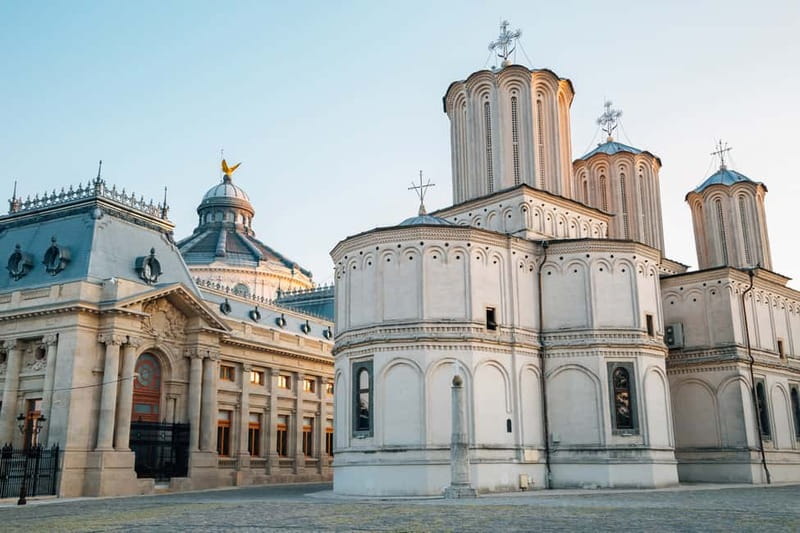
Your tour begins at the Patriarchal Cathedral. Plan to arrive a few minutes early and get your bearings before the group sets off. The closest metro station is Piata Unirii, also called Union Square, and you will need to climb the hill up to the cathedral area.
That hill matters. It’s not huge, but it’s enough that you’ll feel it if you arrive after rushing from the metro. If you want an easier start, do yourself a favor: drink water, check your footing, and wear shoes you can walk in for the next few hours.
Religion under Communism, and why that first stop sets the tone
The first real lesson happens right near the Patriarchal Cathedral. You are guided through what religion meant under Communist rule, and how earlier historical events helped lead toward the Communist regime in Romania.
This matters because it gives you a lens for everything that follows. You stop thinking of Communism as only politics and buildings. Instead, you see it as something that shaped belief, daily habits, and power in ordinary lives. And because the tour starts with a place tied to religion and history, it prevents the rest of the walk from turning into a cold list of facts.
Still standing, block after block
- The Real tour of Communism★ 5.0 · 666 reviews
- Life under Communism★ 5.0 · 358 reviews
- 3-Hour Guided Tour of Communist Bucharest★ 4.9 · 303 reviews
Nationalisation, neighborhood change, and the city you can still read

After the cathedral, you continue through a nearby neighborhood to see the results of nationalisation. The tour doesn’t treat nationalisation as abstract policy. It points you toward the physical and social impact, the kind of change that shows up in street life, who controls what, and how cities get reshaped.
This section is especially useful if you are visiting Bucharest for the first time. You’ll get a sense that the Communist era wasn’t only about what was built or destroyed. It was also about control and ownership, the stuff that affects everyday security and routines.
House of People from the outside, Ceausescu’s construction story, and the symbolism
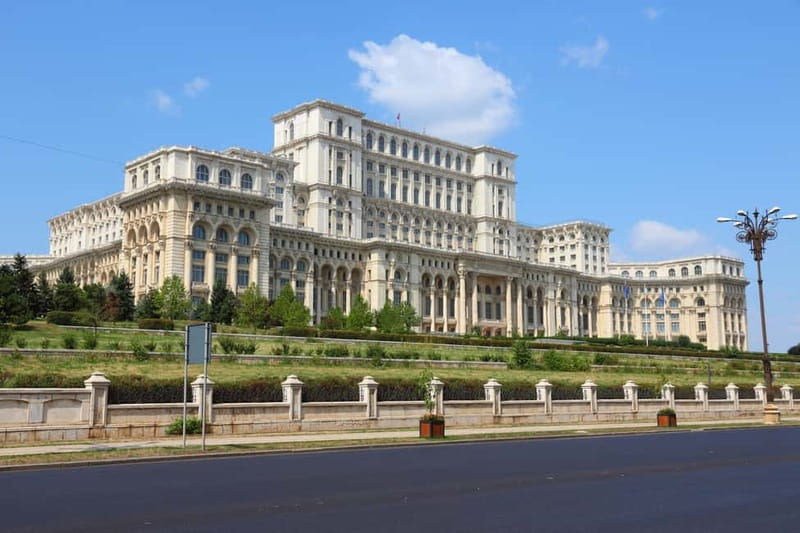
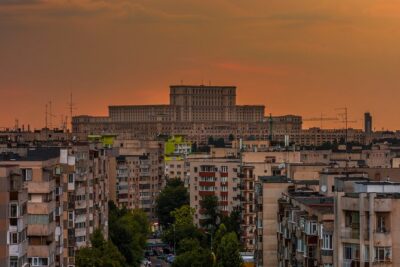
Then comes the view over the famous House of People, now the Parliament building. You only see it from the outside, but don’t treat that as a limitation. The guide uses the exterior to explain construction choices and the deeper symbolism of the era.
This is where you learn about the megalomania tied to Nicolae Ceausescu, and how the building became a major statement of power. It also connects to one of the tour’s strongest themes: the big destruction of a European city during peace time. You get context for why this kind of scale and ambition hit people hard, not just because it looked impressive, but because it changed lives and neighborhoods.
Practical note: this is also your best photo moment for the Parliament exterior. Move with purpose, and take your pictures quickly so you don’t hold up the group.
Antim Monastery and the buildings moved to survive
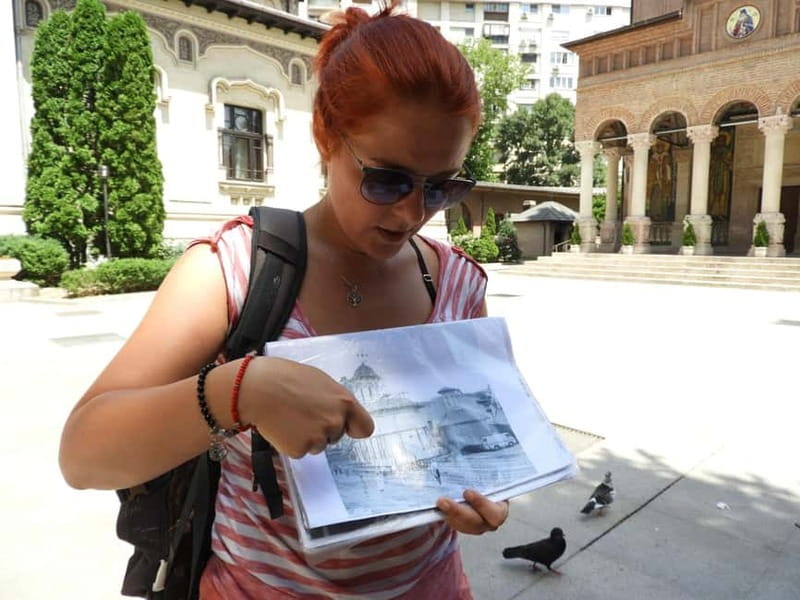
After that Parliament moment, the walk continues through the streets where you can see evidence of structures that were moved to be saved from destruction. One highlight named in the tour is Antim Monastery.
Why this stop is powerful: it shows a different side of the Communist-era story. Instead of only “loss,” you also see “saving,” choices made to preserve parts of Bucharest even as other areas were cleared. It gives the city a more human dimension, because monuments and neighborhoods are not just victims. They were also assets people fought to protect, even in difficult times.
A cafe break for your legs, plus an actual snack from the era style
Midway through, you get a short break at a local cafe for about 15 minutes. You can buy whatever you want to drink, but the tour includes a communist-type snack.
From the feedback on this experience, that included snack is not just a token item. One guide-style detail that popped up in recent comments is a rum-flavored biscuit from those times, which makes the whole period feel more tangible. It’s small, but it’s the kind of detail you remember on the metro afterward.
If you need bathrooms, this is your chance. Keep the break short, then get back into the walking rhythm.
Other day trips from Bucharest
- Bucharest: 3-Hour Dark History Tour with a Local
★ 4.9 · 301 reviews - Bucharest: Small Group History, Art & Secrets Tour
★ 4.7 · 152 reviews - Guided Walking Tour of Historical Bucharest
★ 5.0 · 84 reviews - Roma Culture, Realities and Slavery History, Walking tour
★ 4.9 · 52 reviews - Bucharest Jewish Heritage | Holocaust Memorial | Private Car Tour
★ 5.0 · 38 reviews
Alimentara stop: everyday wellbeing under rationing and pressure
Another strong thread of the tour is day-to-day life. You stop in front of an old Alimentara (the kind of grocery store associated with the period) to talk about people’s wellbeing and the reality of living under Communist rule.
This part is valuable because it helps you understand why the political system mattered. When you see and hear about daily constraints, the mood of the era shifts from “history” to “lived experience.” It also makes the later Revolution Square story easier to follow, because you can connect anger and fear to real, everyday pressure.
Calea Victoriei, communist symbols, and a Secret Police site
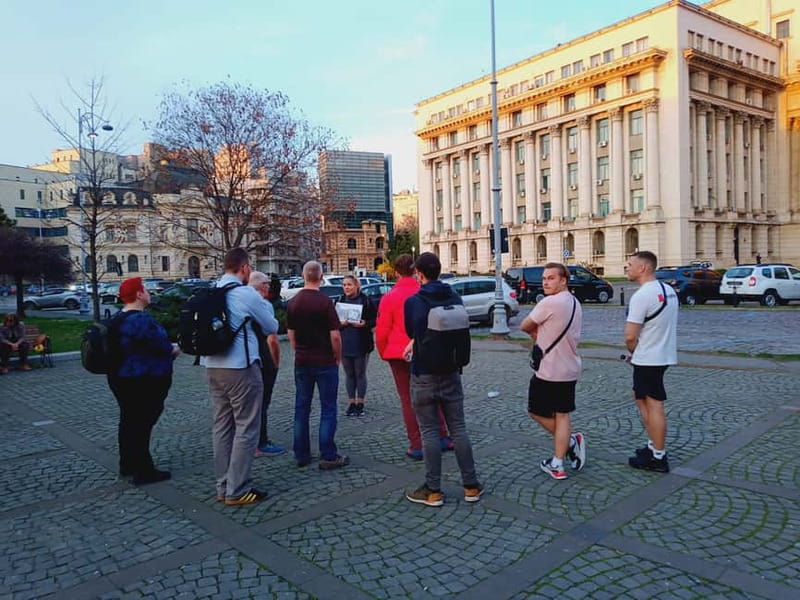
The second big central-street section is on Calea Victoriei Boulevard, one of Bucharest’s most beautiful streets. The tour keeps a normal walking pace here, which gives you time to take in the scale of the avenue and the buildings around you.
You also see communist symbols during this stretch, including what used to be a center used by the Secret Police for torturing people. This is the tour’s darkest theme. The point is not shock for shock’s sake. The point is understanding how power worked, how fear was enforced, and how those mechanisms left long shadows.
If your goal is to understand Romania’s 20th-century history in a way that feels real, this is the moment that delivers. Guides are praised for storytelling and for answering questions during sections like this, including being careful about balance.
Caru’ cu bere, a quieter stop, and why the walk ends at Revolution Square
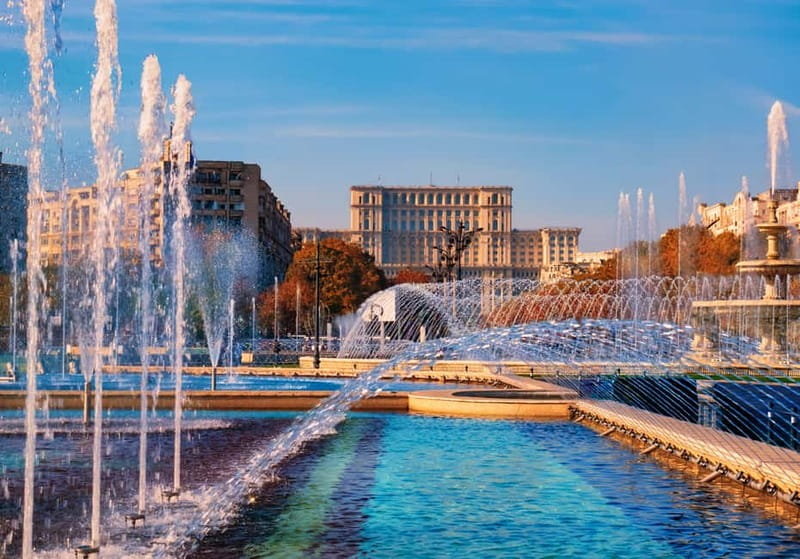
As you continue, you pass landmarks including Caru’ cu bere, then you reach another stop described as a less-known place with a specific Communist-era meaning. The tour keeps building the timeline as you go, including several “secret stop” moments, so you do not just watch buildings, you learn why those buildings matter.
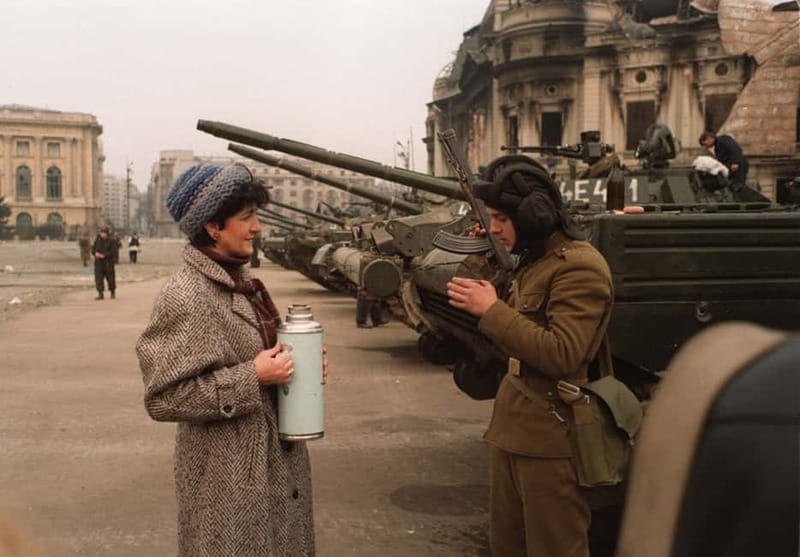
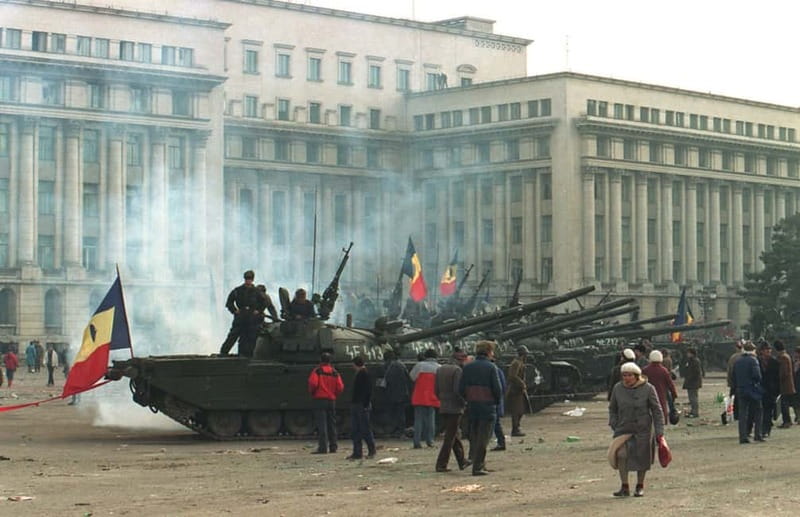
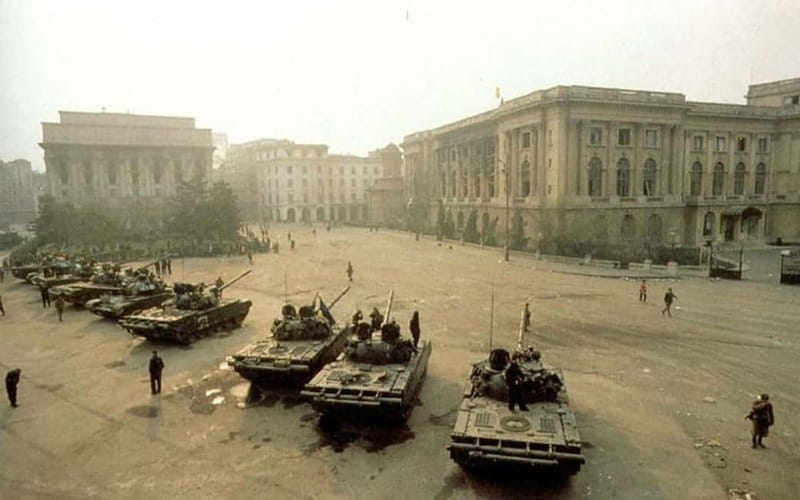
Finally, you arrive at Revolution Square, where you get the story of the end of the Communist regime in 1989 and the beginning of democracy. Ending here is smart. You start with structures of control and fear, then you close at the moment of rupture. That sequence helps your brain connect the dots.
Guides, pacing, and what makes the experience feel worth $31
This tour runs for 3 hours and includes around 15 objectives marking key moments across the Communist timeline. That structure is part of the value. At $31, you are not paying only for “seeing places.” You are paying for a guided narrative that ties places to themes: dictatorship, nationalisation, secret police influence, demolitions, and the Revolution.
A big reason this tour gets extremely high marks is the guide experience. Names like Andreea, Daniela, Mihai, and Octavian show up repeatedly in positive feedback, especially for clear English and strong storytelling. Many comments also mention visual aids and the way guides bring personal or family memories from the Cold War era into the explanations. That combination helps the facts land, not just float by.
Pacing is generally comfortable, and the route includes a short break. Still, it is a walking tour, and it ends in the central city area. If you like history, but you also prefer to keep moving, this fits well.
Time, fitness, and who should book this
This is designed for people who want a structured history walk with plenty of context. It works especially well if:
- You are visiting Bucharest early and want a foundation for the rest of your trip.
- You want to understand Communism’s impact on daily life, not just political events.
- You like asking questions and want a guide who will answer them in a direct way.
It is not a fit if you:
- Have back problems that make hills and continuous walking uncomfortable.
- Use a wheelchair, since it’s not suitable for that.
Also remember the tour is weather-dependent only in extreme conditions. It runs rain or shine, but if conditions make the experience unsafe, it can be canceled or rescheduled.
Should you book this Bucharest Communism and History Walking Tour?
If you want one tour that helps you read Bucharest through the Communist era, book it. The price is reasonable for a 3-hour guided narrative, and the stops are chosen to explain power, fear, and everyday life in a way that feels connected rather than random.
I’d book it sooner rather than later in your trip, because it gives you context for everything else you’ll see. If you arrive with curious questions about Ceausescu, the Parliament building, the Secret Police, or what changed for ordinary people, this tour is a strong starting point.
FAQ
Where does the tour start?
You meet in front of the Patriarchal Cathedral.
What is the closest metro station to the meeting point?
Piata Unirii (Union Square) is the closest metro station, and you will need to climb the hill to reach the cathedral.
How long is the tour?
The tour lasts 3 hours.
What do I see at the House of People or Parliament building?
You see the House of People, the Parliament building, from the outside only.
Is there a break during the tour?
Yes, there is a short local cafe break time of about 15 minutes.
What is included in the tour price?
A 3-hour guided walking tour, around 15 objectives, and a communist-type snack are included.
Is hotel pickup included?
No, hotel pickup and drop-off are not included.
Does the tour run in bad weather?
It takes place rain or shine, but it can be canceled and fully refunded or rescheduled if weather makes it impossible or unsafe (for example heavy rain, blizzard, extreme wind, or extreme heat).
Is the tour suitable for people with mobility or back issues?
It is not suitable for people with back problems and wheelchair users.
More Walking Tours in Bucharest
- Bucharest: City Highlights Guided Walking Tour
★ 4.9 · 1,482 reviews - Bucharest Highlights Walking Tour
★ 5.0 · 469 reviews - Bucharest: Hidden Markets Walking Tour with Tastings
★ 4.9 · 329 reviews - Bucharest: Ghost Stories & Romanian Mythology Walking Tour
★ 4.9 · 287 reviews
Just Added: New Tours From Bucharest
- Bear Watching in Transylvania 2-Day Tour
- National Village Museum and Comana Adventure Park
- Half Day Tour in Bucharest
- From Dracula to Ceaușescu- Romanian Terror Stories tour
- Full-Day Private Tour of Brasov City and Peles Castle from Bucharest
- Bucharest: Tour The Wine Road, 2 Boutique Wineries in 1 Day
- Bucharest Ceaușescu House Parliament Palace &Village Museum
- Full-Day Private Tour of Bucharest and Mogosoaia Palace
Communist Bucharest Tours, compared.
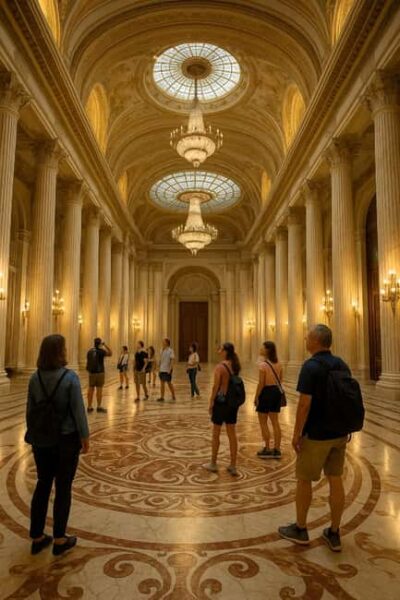
Parliament, Ceausescu House & Village Museum Tour
Read our review →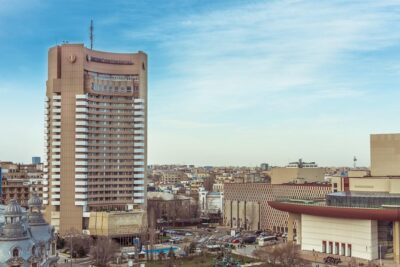
Bucharest Essential Tour: Old Town, Calea Victoriei & Communism
Read our review →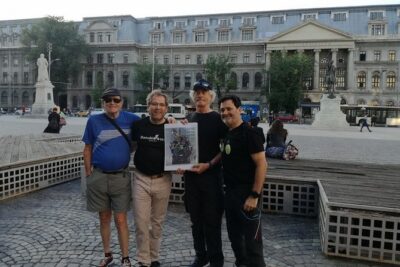
Communism in Bucharest – Landmarks, Museum & Communist Appetizers
Read our review →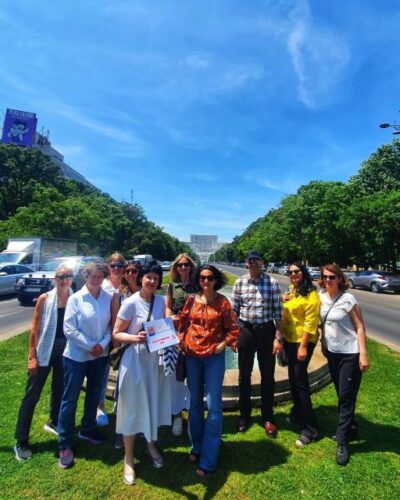
Bucharest Under Communism: Life, Terror & Hope
Read our review →Browse the lists this tour appears in