
Reviewed · HISTORICAL TOURS
Guided Walking Tour of Historical Bucharest
Bucharest history walks right up to you. This 3-hour guided route strings together old inns, churches, grand state buildings, and the places tied to Romania’s 1989 revolution, with a lot of built-in photo stops as you go. You start at Hanul lui Manuc (Manuc’s Inn) in the Old Centre and finish back where you began, which makes it a tidy first-day plan.
I especially like the way the tour mixes architecture with real political context, so the city’s look makes sense. You’ll see everything from University Square and Suţu Palace to the Palace of Parliament viewpoints, and the guide ties it to what happened in Bucharest under the Ceauşescu era and during the Cold War. My other favorite is the practical setup, including hotel pickup and drop-off plus a mobile ticket.
The main consideration is simple: it’s a lot of walking in about 3 hours. You should have at least moderate physical fitness, and you may find the pace varies a bit depending on the day and the guide’s style.
In This Review
- Key things you’ll notice on this Historical Bucharest walking tour
- Walking Bucharest’s timeline, from Manuc’s Inn to the 1989 Memorial of Rebirth
- The 3-hour schedule that feels like a full city orientation
- Hanul lui Manuc and the old-inn story that sets the tone
- St Anton Orthodox Church, and why churches matter in the city’s memory
- Old Princely Court ruins and Vlad the Impaler links
- Piaka Unirii, Socialist Victory Boulevard energy, and Parliament photo angles
- Piaka Constitukiei and the 1724 church stop
- CEC Palace, Victoria Avenue, and Bucharest’s shopping-street pulse
- Entering the old center, passage Macca and Villacrosse, and the National Bank grandeur
- University Square, Alexandru Ioan Cuza, and the scale of education in the city
- Suţu Palace and Colțea Hospital: two different kinds of “heritage”
- Passing the National Theatre and finishing with churches and revolution sites
- Memorial of Rebirth and the Military Circle, Sărindar Fountains, plus gardens
- Guide style matters here, so match your expectations
- Price, pacing, and who gets the best value
- Should you book this Historical Bucharest walking tour?
- FAQ
- How long is the guided walking tour of historical Bucharest?
- How much does the tour cost?
- Is hotel pickup and drop-off included?
- What is the meeting point for the tour?
- Is the tour offered in English?
- Is this a private tour?
- How physically demanding is it?
- Are children allowed?
- Is the tour dependent on weather?
- What is the cancellation window for a full refund?
Key things you’ll notice on this Historical Bucharest walking tour
- A strong “how we got here” story, from older ruling-era sites through 20th-century politics and the Cold War
- Big-photo energy at places like University Square, the Palace of Parliament areas, and the Revolution memorials
- Old-city texture, including entry into passage Macca and Villacrosse and time around restored inner-city spaces
- Revolution 1989 stops you can actually picture, including the balcony where Nicolae Ceauşescu made his final speech
- Private tour feel, since only your group participates, which makes questions easier as you walk
- Expect real mileage, one step-counter report hit 17,000+ steps on the route
Walking Bucharest’s timeline, from Manuc’s Inn to the 1989 Memorial of Rebirth
If you want to understand Bucharest fast, this kind of guided walk is one of the best bets. The city looks like it was built in layers on top of layers, and a walking route helps you see those changes in the order they happened. In this tour, that story starts early, right at Hanul lui Manuc.
Manuc’s Inn is more than a pretty start point. It’s tied to Bucharest’s oldest and most famous inn tradition, which sets a grounded tone before the route jumps into palaces, squares, churches, and major civic architecture. The practical bonus is that you’re meeting in the Old Centre, where you can easily transition into dinner plans after the tour ends.
Because this is a private tour, you can ask for clarification on the details that matter to you. The route also repeats key themes as you go, so if you miss a point at one stop, you usually catch it again at the next square or building.
The 3-hour schedule that feels like a full city orientation
A 3-hour walk sounds short until you see how many stops fit into it. The itinerary is built around clusters, so you’re not crisscrossing the whole city. That matters because Bucharest distances can surprise you, and time gets eaten quickly if you rely only on taxis between sights.
What helps most here is the structure. You start with older anchors like churches and historic ruins, then you move into Bucharest’s major civic zones, like the Unirii area and Parliament viewpoints. Later you shift into University Square and the surrounding landmarks, and then you end with a heavy but important finale tied to the 1989 revolution and memorial sites.
If you’re visiting for a few days, I’d treat this as your early-day or mid-morning plan. It gives you the framework you need to enjoy the city’s neighborhoods later, instead of just snapping photos of impressive buildings without understanding why they look the way they do.
Other day trips from Bucharest
- Bucharest: Communism and History Guided City Walking Tour★ 4.9 · 918 reviews
- Bucharest: 3-Hour Dark History Tour with a Local★ 4.9 · 301 reviews
- Bucharest: Small Group History, Art & Secrets Tour★ 4.7 · 152 reviews
Hanul lui Manuc and the old-inn story that sets the tone
The tour begins at Manuc’s Inn, also known as Hanul lui Manuc, in the Old Centre. From there, the guide starts with the history of Bucharest’s oldest and most famous inn. Even if you usually skip stories about inns, this stop works because it explains how Bucharest functioned as a crossroads city long before it became a modern capital.
You’ll likely find this useful later in your own exploring. Once you understand the inn culture and how people moved through the city, the Old Centre feels less like a museum and more like a living space that grew up around travelers, commerce, and politics.
St Anton Orthodox Church, and why churches matter in the city’s memory
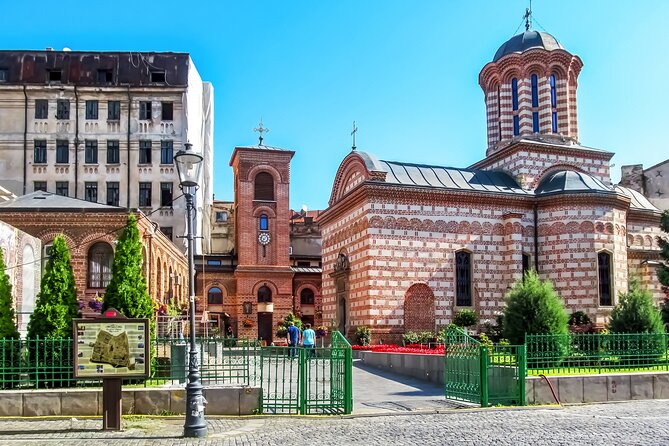
Next up is St Anton Orthodox Church, described as a former Coronation Church of Wallachian rulers. That phrasing is key. In Bucharest, churches are not just religious buildings, they are also part of the political theater of power, legitimacy, and public memory.
This stop is also a good “mind shift” moment in the tour. Early on, you’re learning about structures tied to rule and authority. Then you switch to a more spiritual landmark that still has political weight, and it helps you connect Bucharest’s faith architecture to the way leaders wanted to be seen.
Old Princely Court ruins and Vlad the Impaler links
Old Princely Court is one of the most powerful stops on the route because it points to how old Bucharest’s center really is. You’re told you’ll see the ruins of the Old Princely Palace of Wallachian rulers, described as one of the oldest buildings in Bucharest and once a residence of Vlad the Impaler.
Even when you’re just looking at ruins, this is a compelling way to understand continuity. Bucharest keeps changing, but not in a straight line. The city layers over itself, and Vlad’s name shows up as part of the historical narrative tied to power and rule.
A practical point: ruins are weather-dependent. If it’s hot, plan to keep water handy. If it’s rainy, you’ll want good shoes with grip.
Piaka Unirii, Socialist Victory Boulevard energy, and Parliament photo angles
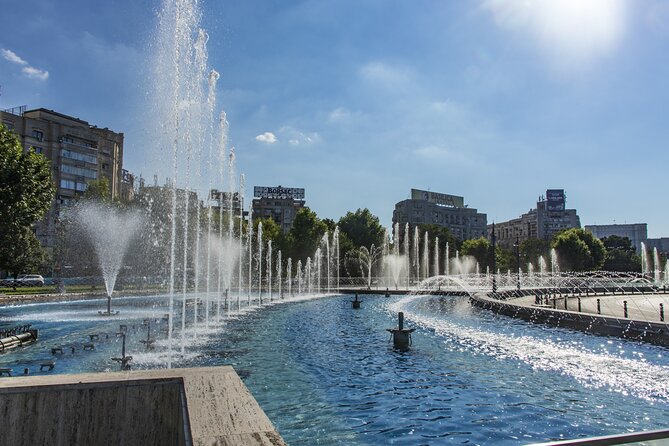
The itinerary then moves into the Unirii area, which is basically where Bucharest shows off its 20th-century ambitions. Piaţa Unirii is framed as the heart of Bucharest, with refurbished fountains and excellent photo opportunities.
From there, you walk along Bulevardul Unirii, described as the former Boulevard of Socialist Victory, also compared to Romania’s Champs-Élysées. That comparison helps you understand the scale of the space and why it feels like a grand stage for public life.
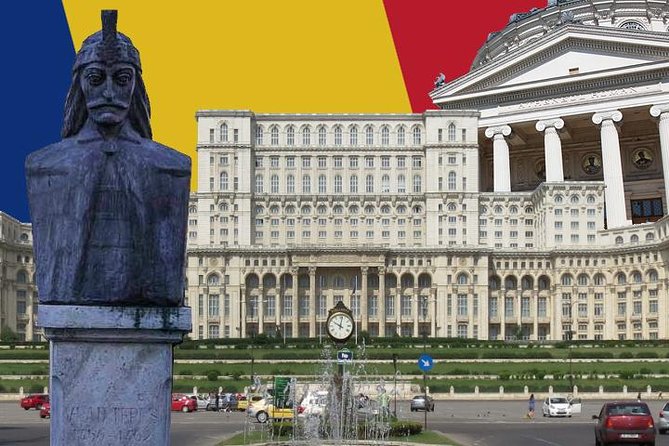
Then comes the Palace of Parliament, the eye-catching stop that many people picture before they even arrive in Bucharest. The tour focuses on viewpoints and photos, and you’ll be able to see how the Palace looks over Unirii Boulevard toward the city center. This is the kind of stop where it’s worth paying attention to the way the guide explains the Cold War and dictatorship influences, because the building’s size and mood don’t come from nowhere.
These pair well with the day you just read about.
- Bucharest: Dracula’s Castle, Peles Castle, & Brasov Old Town
★ 4.5 · 17,858 reviews - Bucharest: Dracula Castle, Peles Castle & Brasov Old Town
★ 4.6 · 10,891 reviews - Bucharest: Dracula’s Castle, Peleș Castle & Brașov Day Trip
★ 4.4 · 6,100 reviews - Bucharest: Palace of Parliament Tickets and Guide
★ 4.3 · 3,182 reviews - Bucharest: Day Trip to Dracula Castle, Peles Castle & Brașov
★ 4.4 · 3,049 reviews
Piaka Constitukiei and the 1724 church stop
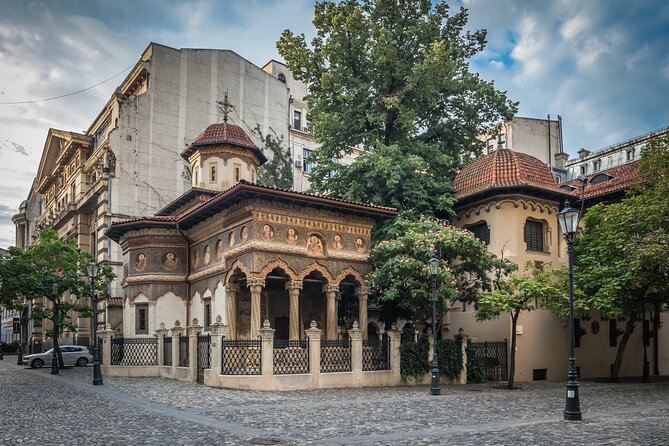
Piaka Constituției is positioned near the Parliament buildings, so it’s another strong photo zone. The route keeps you close to the big civic landmarks, and that’s smart because you can take in the architecture without losing time crossing the city.
Near this area, you also get a church built in 1724 with a fascinating history. Even if you only glance at churches while passing, a stop like this helps balance the tour. Parliament and socialist-era spaces can dominate your mental image of Bucharest. A church like this reminds you the city also has earlier chapters that shaped its identity before the 20th-century political shift.
CEC Palace, Victoria Avenue, and Bucharest’s shopping-street pulse
The tour then shifts into something more everyday: the history of the CEC Palace, then a walk along part of Victoria Avenue lined with shops. This matters because it shows how grand buildings sit next to regular city life.
CEC Palace is described as having an interesting history, and the guide’s job here is to connect the building to how Bucharest functioned as a modern capital. Victoria Avenue is a good break from “big monument mode.” It’s also a place where you can plan what to do after the tour, because you’ll have a sense of where the city’s energy moves.
If you like to mix sightseeing with practical wandering, these segments help you do that.
Entering the old center, passage Macca and Villacrosse, and the National Bank grandeur
You then enter the old center of Bucharest, described as an area with culture and history dating back over 500 years. That line is not just marketing copy. It explains why the city feels different as soon as you step into the inner lanes and passages.
Passage Macca and Villacrosse is another standout. The itinerary says you’ll enter it and hear about its past. Passages like this are where Bucharest feels most human. Instead of staring at one huge building, you experience the city as a set of connected routes, small spaces, and changing facades.
You also see the National Bank of Romania, described as having grandeur and an interesting history. Even if you don’t go inside, the building’s scale and the way it sits in the street help you understand the capital’s financial power and how it wanted to look.
University Square, Alexandru Ioan Cuza, and the scale of education in the city
University Square is a major anchor on this route. You’ll see the oldest and largest university in Bucharest, built by Alexandru Ioan Cuza and founded in 1864. That’s a lot of historical weight for one place, and it shows how education and public institutions shaped Bucharest’s modernization.
The guide also includes a statue of Vlad the Impaler as one of the route highlights, which adds another layer to the city’s identity story. Bucharest uses both literary, mythic, and institutional symbols, and a single walking route helps you keep them in the same mental map.
Suţu Palace and Colțea Hospital: two different kinds of “heritage”
Suţu Palace is described as the history museum of Bucharest and also the former residence of Costache Suţu. Even if you’re not stepping inside, the stop gives you a sense of how private wealth and later public cultural use are part of the city’s evolution.
Then you reach Colțea Hospital and church, described as iconic and built in 1888. Hospitals and churches might sound like a contrast to Parliament and revolution memorials, but they actually balance the story. They show how Bucharest invested in services and community life alongside political spectacle.
If you’re someone who likes to understand what a city does for people, not only what it displays to power, these two stops are well worth your attention.
Passing the National Theatre and finishing with churches and revolution sites
You’ll pass by the National Theatre of Bucharest, noted as iconic with many changes to its design. The tour includes this because the theatre connects culture to politics and time. A theatre that changes design over a short history is basically a visual record of shifting priorities.
The itinerary also includes Biserica Kretzulescu, described as a beautiful church with an interesting history to discover. Along with the 1724 church earlier, this gives you a clear pattern: Bucharest keeps returning to religion and monument building even as regimes change.
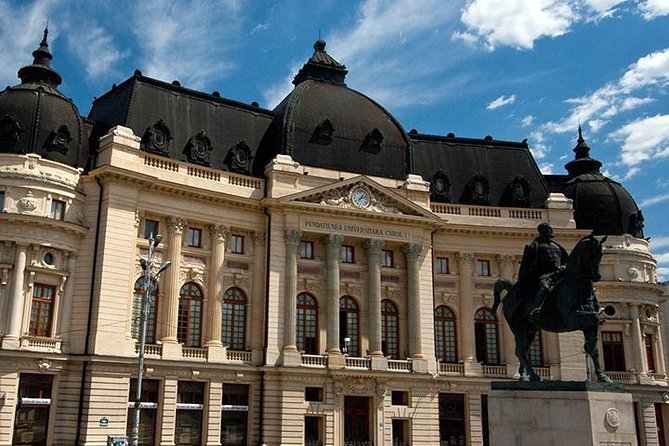
Then the tour shifts into the 1989 revolution story. You’ll see the area where the famous revolution started and memorials tied to the life-changing events. Included elements are the balcony where Nicolae Ceauşescu made his final speech, the former headquarters of the Communist party, the Monument of National Rebirth, King Carol the First’s equestrian statue, and the University library.
This is the emotional center of the walk. It’s not just a list of monuments, it’s a guided explanation of how the city changed when regimes fell. Expect the guide to explain Cold War influences and dictatorship impacts in plain terms as you look around.
Memorial of Rebirth and the Military Circle, Sărindar Fountains, plus gardens
The walk includes Memorial of Rebirth, described as a 25-meter high memorial for the struggles and victims of the Romanian Revolution of Christmas 1989. After earlier stops, this one hits hard because it forces you to slow down and look at scale.
Then the route finishes with the Military Circle and Sărindar Fountains. It’s described as built for the people of Bucharest by the people, over 100 years ago, and you’ll get gardens and a stunning historical building. The value here is tonal balance. You end with something that feels communal and designed for public enjoyment, instead of ending right after heavy historical messaging.
It’s also a good moment to take final photos and reset your brain before heading back to the meeting point.
Guide style matters here, so match your expectations
A big reason this tour scores well is the guide style. People describe guides like Alina as enthusiastic, funny, animated, and very strong on architectural, cultural, and societal history. Another guide mentioned is Elena, described as an excellent guide and historian.
That same energy is also why I’d suggest going with a flexible mindset. A couple of comments mention English clarity can be a little challenging at times. If English comprehension is your top priority, consider choosing a time when you’ll be fresh and not rushed, and don’t be afraid to ask for repetition.
There’s also a range of comfort levels with political commentary. Some people love the way the guide connects buildings to Romania’s modern political story. Others prefer less opinion and more strictly factual narration. If you’d rather keep things tightly neutral, tell yourself to focus on the places and timeline, not on debates.
One more practical note: expect the tour to sometimes run longer than the scheduled 3 hours, depending on how questions and conversation go. That’s not always a problem, especially if you’re into history. If you have a hard deadline, give yourself a buffer after the tour ends.
Price, pacing, and who gets the best value
At $30.77 per person for about 3 hours, this is priced like a true orientation walk rather than a museum day. You’re paying for a guide, a route that hits major Bucharest anchors, and the structure that helps you understand what you’re seeing.
You’ll probably get the best value if you are:
- Visiting for the first time and want an overview that connects architecture to modern history
- Interested in Ceauşescu-era impacts and the Cold War context that shaped the city center
- The kind of traveler who likes to walk, take photos, and ask questions
You might not love it if you:
- Prefer minimal walking and shorter sight lists
- Hate political discussion in a guide-led format
- Need a fully easy pace with no variation
Pacing-wise, you should plan for a moderate walking level. It’s not described as a fast race, and one step-counter report said 17,000+ steps on the route, which suggests steady, real walking time rather than quick hops.
Should you book this Historical Bucharest walking tour?
Book it if you want a guided way to make sense of Bucharest’s biggest contrasts, Old Centre streets on one side, Palace-era politics on the other, and the 1989 memorials that explain the city’s turning point. I like that it’s private, it includes hotel pickup and drop-off, and it’s timed as a solid half-day orientation.
Skip it or choose another option if you’re not into guided political context, or if long walking in about 3 hours will be uncomfortable. Also consider that a few people found the English level could be a bit tough, so if that would stress you out, pick a tour time when you can stay patient and focused.
FAQ
How long is the guided walking tour of historical Bucharest?
The tour lasts about 3 hours.
How much does the tour cost?
The price is $30.77 per person.
Is hotel pickup and drop-off included?
Yes, hotel pickup and drop-off are included. Pickup is described as outside the main entrance of Manucs Inn at 62 Strada Franceza in the Old Centre.
What is the meeting point for the tour?
The tour starts at Manuc’s Inn, Hanul lui Manuc, Str. Franceză 62, București 030167, Romania, and it ends back at the meeting point.
Is the tour offered in English?
Yes, the tour is offered in English.
Is this a private tour?
Yes. Only your group will participate.
How physically demanding is it?
It’s listed for travelers with a moderate physical fitness level.
Are children allowed?
Children must be accompanied by an adult.
Is the tour dependent on weather?
Yes. It requires good weather, and if it’s canceled due to poor weather you’ll be offered a different date or a full refund.
What is the cancellation window for a full refund?
You can cancel up to 24 hours in advance for a full refund. If you cancel less than 24 hours before the start time, the amount paid is not refunded.
Just Added: New Tours From Bucharest
- Bear Watching in Transylvania 2-Day Tour
- National Village Museum and Comana Adventure Park
- Half Day Tour in Bucharest
- From Dracula to Ceaușescu- Romanian Terror Stories tour
- Full-Day Private Tour of Brasov City and Peles Castle from Bucharest
- Bucharest: Tour The Wine Road, 2 Boutique Wineries in 1 Day
- Bucharest Ceaușescu House Parliament Palace &Village Museum
- Full-Day Private Tour of Bucharest and Mogosoaia Palace
Historical Tours, compared.

Roma Culture, Realities and Slavery History, Walking tour
Read our review →
Bucharest Jewish Heritage | Holocaust Memorial | Private Car Tour
Read our review →
Private Bucharest: History & Food with Traditional Meal
Read our review →
Bucharest Historical Food Tour in Old Center
Read our review →
Half-Day Jewish Heritage Walking Tour in Bucharest
Read our review →Browse the lists this tour appears in