
Reviewed · FOOD & DRINK
Private Bucharest: History & Food with Traditional Meal
Bucharest hits different when you eat as you learn. This private 4-hour tour links the city’s major eras to what ends up on your plate, from street snacks to a proper traditional meal. I especially like the focus on how history shaped cuisine, and the first-day city orientation you get while walking.
A big highlight is the way you’re guided through the story of the Old Town, where Ottoman, Austro-Hungarian, and Balkan influences show up in real flavors. You also get a strong sense of the city’s geography, not just isolated sights, which makes Bucharest easier to explore on your own afterward.
One consideration: you do get a three-course meal at the end, but if you were hoping for lots of extra bites along the walk, the pace can feel more history-forward than food-forward. Chris, for example, expected more sampling items than what’s included between stops.
In This Review
- Key things I’d plan for
- Revolution Square to set the tone for Bucharest’s story
- Covrig and Victory Street: your quick 101 plus the food geography behind it
- Old Town passageways and the empire-style flavor trail
- People’s Palace: why this mega-project still shapes Bucharest
- Ending at a hanu for a three-course traditional Romanian meal
- Who this private tour is for, and when it’s the best fit
- Price and logistics: what you get for $140 in 4 hours
- Should you book this Bucharest history and food tour?
- FAQ
- What’s the duration of the Bucharest History and Food tour?
- Where does the tour start?
- What does the price include?
- Is this tour private?
- What languages are offered?
- Is the tour carbon neutral?
- What should I wear?
- Can children join, and is there a child price?
Key things I’d plan for

- Revolution Square as the historical starting gun, tied directly to the 1989 Romanian Revolution
- A hands-on food primer, including a salty daily snack like covrig
- Old Town as a food map, where empires left their marks in dishes like mici and sarmale
- A practical walk through Bucharest landmarks, from Victory Street sites to Kretzulescu Church
- People’s Palace views with context, so you understand why it dominates the skyline
- A real end-of-tour meal, a three-course spread with house beer, wine, or a soft drink
Revolution Square to set the tone for Bucharest’s story
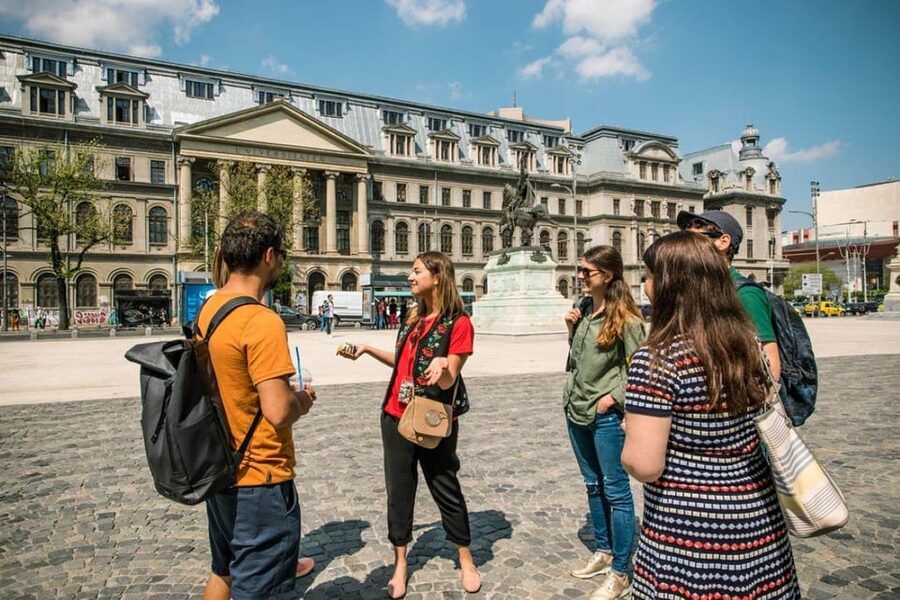
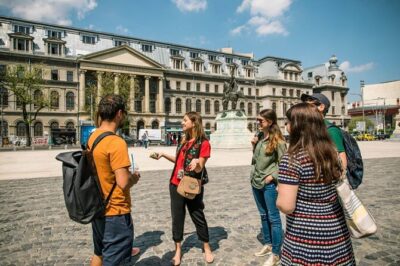
Most first-time visits miss the logic of the city. This tour doesn’t. You start at the equestrian Statue of Carol I, Sector 1, then head straight into the political heart of Bucharest at Revolution Square, formerly Palace Square. It’s the kind of place where the buildings and street layout feel tied to what happened there.
In 1989, this is where Nicolae Ceausescu made his last rallying speech, and the crowd turned against him. Standing nearby, you get a clearer sense of how fast history can flip, and why Bucharest’s later layers feel so intense. Around the square, you also pass major landmarks, including the former Royal Palace and the Athenaeum concert hall, plus Athenee Palace, which matters in the inter-war years for intrigue and espionage stories.
Why I like this setup: it stops the trip from becoming a random collection of photos. It gives you a frame to interpret what you see next.
Practical tip: wear comfortable shoes. This is a walking tour, and the streets around the center can add up over 4 hours.
Covrig and Victory Street: your quick 101 plus the food geography behind it
After Revolution Square, you’re treated to a small taste experience right away: covrig, a salty daily snack for many Romanians. You’ll hear where it likely came from, tied to medieval-era Hapsburg or German merchants. Even if you’ve had a bread-based snack before, covrig works as an easy entry point because it’s everyday food, not museum food.
Then you move along Victory Street, named for the Romanian victory in the 1871 War of Independence. It’s also a useful reminder that Romania’s path to unity took longer than the headline victory. Full unification of the principalities didn’t happen until 1918, and that timing explains why regional traditions still feel distinct today.
You’ll hear how cuisine maps onto regions: sweet for Moldova, earthy for Transylvania, and spicy for Muntenia. That’s more than trivia. It helps you understand why dishes you see later on menus can feel different even when they’re all Romanian.
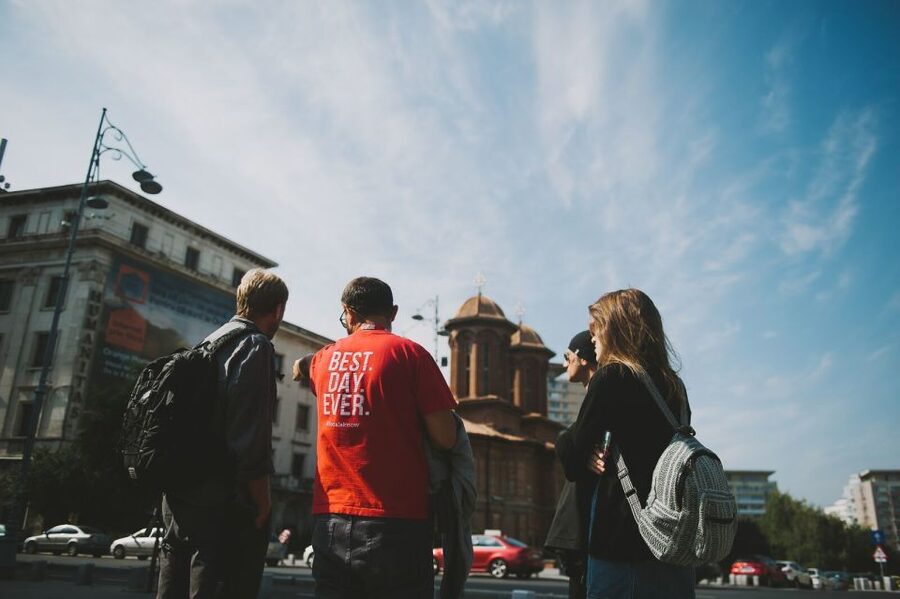
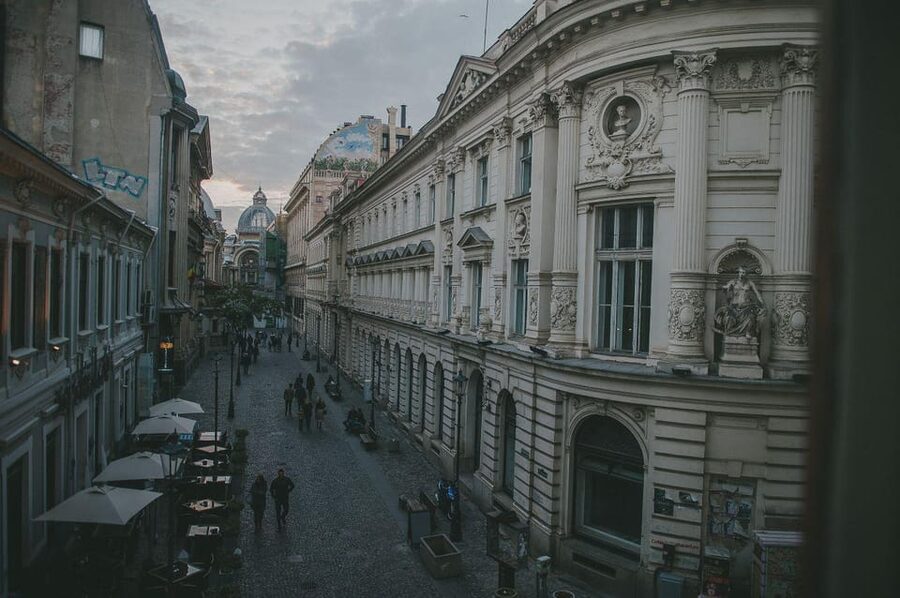
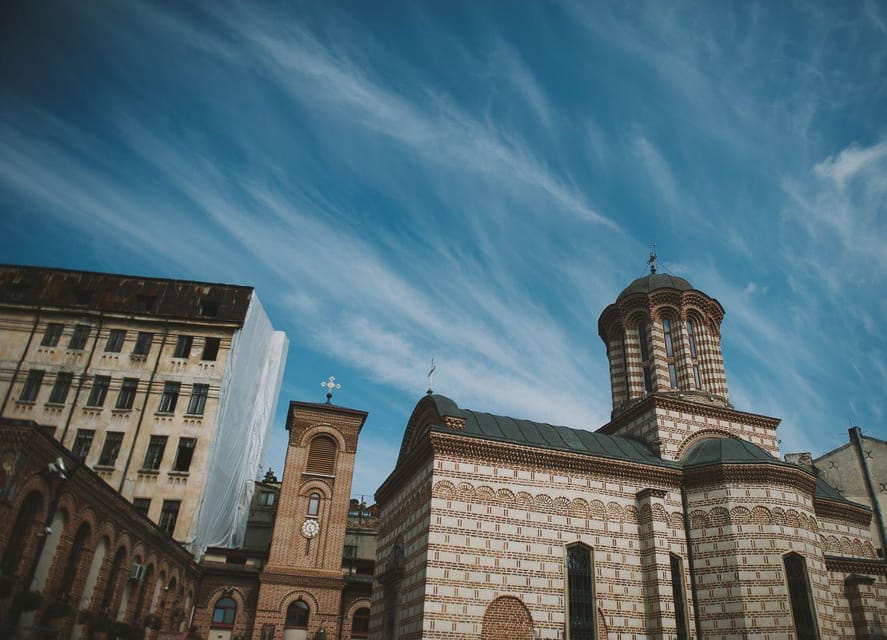
As you walk, look out for inter-war period landmarks and architecture that help you get your bearings fast. This stretch includes places like the Telephone Palace, the Military Circle, and the former National Theatre, plus the church of Kretzulescu, one of Bucharest’s best-known churches. If you pay attention to details like how buildings sit on the street and how they mix different styles, the whole city starts to make more sense.
Value for money note: you’re paying for a guide to connect dots. Without that commentary, Victory Street can look like just another elegant boulevard. With it, it becomes a timeline you can walk through.
Sarmale, mici, and a lot of dill
- Taste Bucharest: A Food Lover’s Tour of Markets & Neighbourhoods★ 5.0 · 689 reviews
- Street Food’n’Culture Tour★ 5.0 · 209 reviews
- Discover Bucharest: Private Highlights and Traditional Food Tour★ 5.0 · 86 reviews
Old Town passageways and the empire-style flavor trail
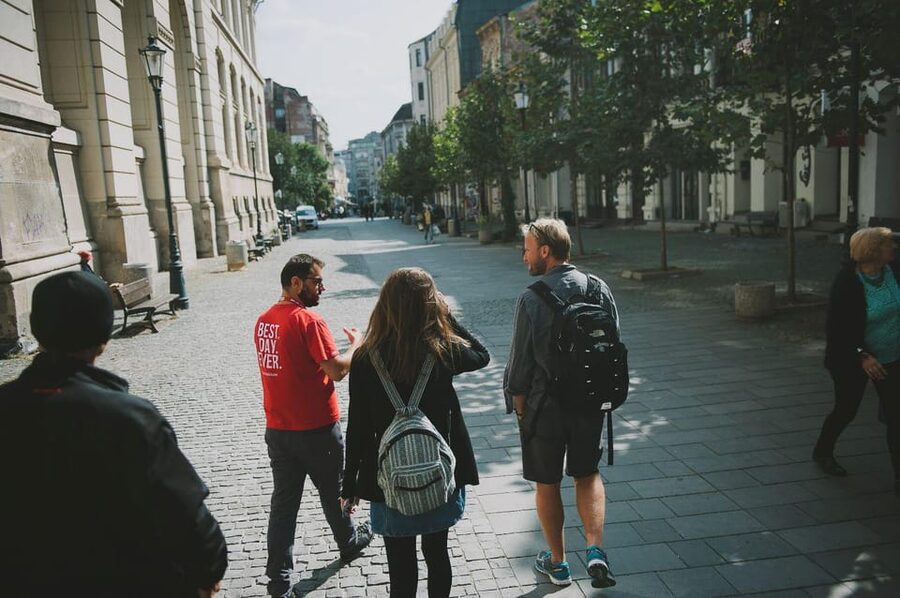
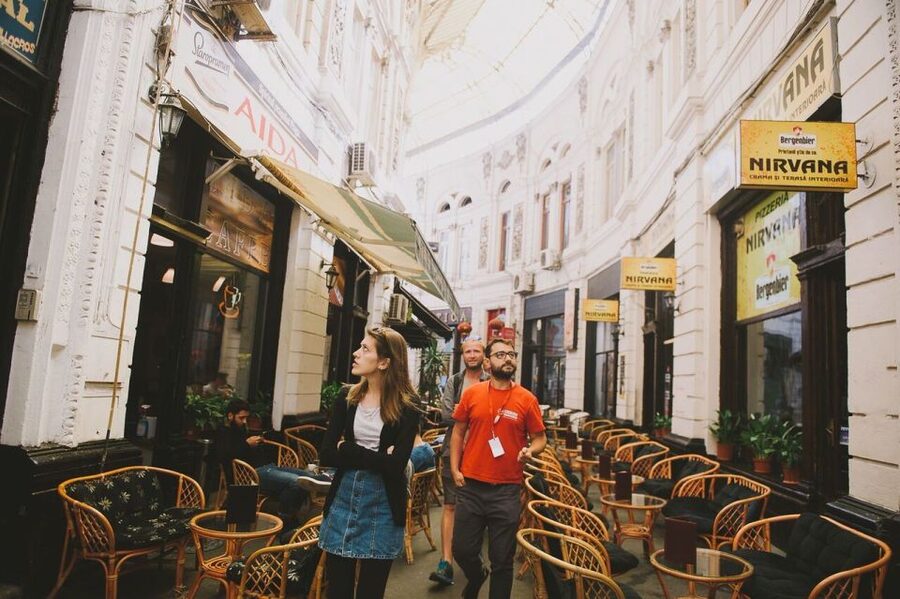
This is where the tour turns into a real experience, not just a history lecture. You head into older Bucharest and explore the Old Town’s paths and passageways, the crossroads where Eastern and Western influences rubbed shoulders.
You’ll hear how Ottoman pashas and Transylvanian princes lived in the same orbit, and how churches and mosques sat side by side. Walking these lanes, you start to notice why Bucharest food feels like a patchwork. It didn’t develop in isolation.
Here’s the food logic you’ll get tied to what you’re seeing:
- Balkan comfort food like mici (skinless sausages)
- Ottoman-influenced sarmale (stuffed cabbage leaves)
- Sour soups like borscht and ciorba
- Austro-Hungarian-style dishes such as schnitzel
This is also where I think the tour earns its name History and Food. It doesn’t treat dishes like random souvenirs. It frames them as cultural leftovers, carried forward by trade, rule, and migration.
You’ll also see standout landmarks along the way, including the calm presence of an orthodox monastery interior and Hanul Lui Manuc, a well-known wooden inn. Even if you’re not a history architecture buff, these places help you picture how people moved through the city in earlier centuries.
A small drawback to keep in mind: Old Town streets can be uneven and narrow in places. If you have mobility concerns, you might want to ask your provider how the route tends to run on the day.
People’s Palace: why this mega-project still shapes Bucharest
As you travel toward the tour’s final stop, you get a look at the People’s Palace, strongly linked to Ceausescu’s attempt to reshape the city on a massive scale. This building is famously huge, and you’ll be told it ranks as the second largest in the world, after the Pentagon.
What you should take from this segment is not just size. It’s attitude. The Palace represents a political worldview, built on the idea that power could rewrite the city’s rules. Even if you don’t tour inside (the details of any interior visit aren’t specified here), seeing it from the outside helps you connect the dots to the square where the regime fell.
For first-time visitors, this is a good balance. You get the revolutionary context earlier, then the architectural consequence later. It’s a clean, understandable way to see cause and effect.
Ending at a hanu for a three-course traditional Romanian meal
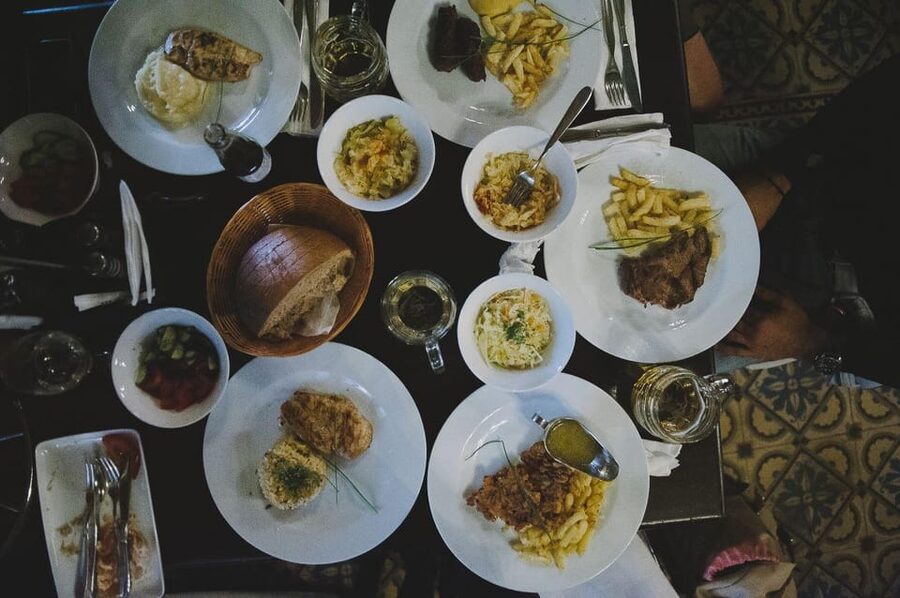
The tour finishes with what most people actually came for: food you can taste and talk about. You head to a traditional hanu, or inn, widely considered one of the most charming in Bucharest.
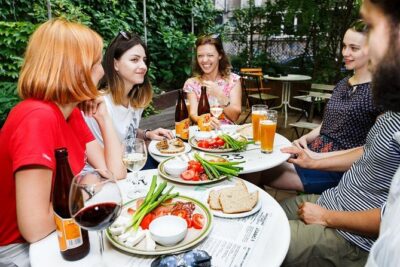
The meal is three courses, plus platters of local delicacies, so you’re not stuck with a single dish and called it a day. You’ll also have a choice of a house drink: beer, wine, or a soft drink. That drink choice matters because Romanian meals often pair well with something local, and having it included keeps the experience from turning into a money trap.
There’s also a fun historical tidbit tied to Dacians and alcohol. The story goes that Dacians banned wine production, and then turned to brewing beer instead. Whether you take the legend literally or as storytelling, the point is clear: alcohol and social meals have deep roots here, and the tour leans into that.
Practical expectation: the earlier walk gives you context, and the restaurant gives you the payoff. Plan to eat slowly and ask questions. If your guide has strong food instincts, this is where you can turn the meal into a mini crash course on what to order later.
Who this private tour is for, and when it’s the best fit
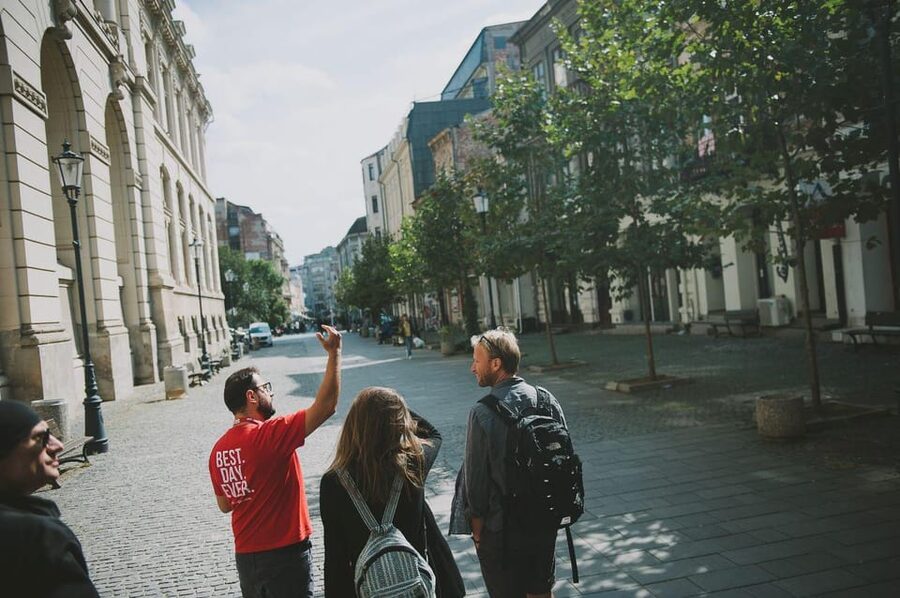
At $140 per person for a 4-hour private group with a local English-speaking guide, the value depends on what you want from Bucharest.
This tour tends to be a great fit if:
- You want a structured first-day plan, not a loose wandering plan
- You like architecture and city layers, not just one museum stop
- You enjoy history explained through everyday life, including food
- You’re traveling with kids or want a pace that can flex
It’s also worth noting the tour is child-friendly, with children under 6 permitted free of charge (and you’re asked to inform the supplier at booking if you’re bringing a child under 6). Several guides have been praised for patience and including children in the walk.
If you’re the type who wants maximum food tastings throughout the route, you might find the meal is the main food moment. One review noted the description suggested more sampling items than what was eaten between stops. That doesn’t mean the food is disappointing, just that it is more concentrated at the end.
Other day trips from Bucharest
- Bucharest: Communism and History Guided City Walking Tour
★ 4.9 · 918 reviews - Bucharest: 3-Hour Dark History Tour with a Local
★ 4.9 · 301 reviews - Bucharest: Small Group History, Art & Secrets Tour
★ 4.7 · 152 reviews - Guided Walking Tour of Historical Bucharest
★ 5.0 · 84 reviews - Roma Culture, Realities and Slavery History, Walking tour
★ 4.9 · 52 reviews
Price and logistics: what you get for $140 in 4 hours

Let’s talk value like a grown-up.
You’re paying for:
- A private guide who connects Revolution Square, Old Town, and People’s Palace into one story
- A three-course Romanian meal at the end
- A house drink (beer, wine, or soft drink)
- A manageable time window (4 hours) that works on a tight itinerary
That means you’re not just buying sightseeing. You’re buying interpretation plus a finished meal, which is a big deal in a city where eating can be easy but choosing the right place is harder.
Also, the tour is carbon neutral and run by an eco-certified operator. If that matters to your travel choices, it’s a real plus, not a marketing sticker.
Heads up on expectations: the tour focuses on walking and stories, not hopping between many different restaurants. That’s why the meal at the end feels like the payoff.
Should you book this Bucharest history and food tour?
Book it if you want your first Bucharest visit to feel organized, meaningful, and delicious. The biggest strength is the way the tour links places you can actually see, like Revolution Square and Old Town passageways, to dishes and everyday snacks like covrig, mici, and sarmale. You leave with a better mental map of the city and a stronger idea of what to try next.
Skip or reconsider if you mainly want lots of separate tastings scattered across the route. In this experience, the food focus is strongest at the three-course hanu meal.
If you do book, come hungry, bring comfortable walking shoes, and go into Old Town prepared to look at details. That’s where the history-into-food connection really clicks.
FAQ
What’s the duration of the Bucharest History and Food tour?
The tour lasts 4 hours.
Where does the tour start?
The meeting point is the Equestrian Statue of Carol I, Sector 1, Bucharest 030167, Romania.
What does the price include?
It includes a local English-speaking guide, a three-course Romanian meal, and a house beer or wine or soft drink.
Is this tour private?
Yes, it is a private group experience.
What languages are offered?
The tour guide is available in English.
Is the tour carbon neutral?
Yes. It is carbon neutral and operated by an eco-certified tour operator committed to using travel as a force for good.
What should I wear?
Casual clothing is recommended.
Can children join, and is there a child price?
Children under 6 are permitted to join free of charge, and you should inform the supplier at the time of booking if you’re bringing a child under 6.
More Food & Drink in Bucharest
- Wine Tasting in Bucharest
★ 5.0 · 183 reviews - Bucharest: Romanian Wine Tasting Experience at Corks
★ 4.6 · 84 reviews - Bucharest Beer and Culture Tour with a Local
★ 5.0 · 47 reviews - Bucharest: Private Wine Tasting Experience
★ 5.0 · 44 reviews
Just Added: New Tours From Bucharest
- Bear Watching in Transylvania 2-Day Tour
- National Village Museum and Comana Adventure Park
- Half Day Tour in Bucharest
- From Dracula to Ceaușescu- Romanian Terror Stories tour
- Full-Day Private Tour of Brasov City and Peles Castle from Bucharest
- Bucharest: Tour The Wine Road, 2 Boutique Wineries in 1 Day
- Bucharest Ceaușescu House Parliament Palace &Village Museum
- Full-Day Private Tour of Bucharest and Mogosoaia Palace
Food & Drink, compared.
Taste Bucharest: A Food Lover’s Tour of Markets & Neighbourhoods
Read our review →
Discover Bucharest: Private Highlights and Traditional Food Tour
Read our review →
Bucharest Beer and Culture Tour with a Local
Read our review →
Browse the lists this tour appears in