
Reviewed · COMMUNIST BUCHAREST TOURS
Life under Communism
Bucharest changed fast, and you can still see it. This 3-hour walk links major communist-era architecture with the human stories behind Ceaușescu and the 1989 revolution, so politics becomes something you can picture. I especially like how the guide uses clear, easy-to-follow English storytelling, with Christina named in many accounts as a standout, including accommodating stops for guests with hearing and mobility needs.
You also get the big, dramatic monuments and the smaller, everyday leftovers of the system. I like that the route balances power and pressure, from the Palace of Parliament scale to the quieter clues in places like the Old Town. The main consideration: it is still a walking tour with short time windows at each stop, and the Palace of Parliament ticket is not included, so you should plan for that extra cost and make comfortable-shoe choices.
In This Review
- Key things to know before you go
- Why Bucharest starts with church power and ends with a revolution site
- Catedrala Patriarhala: the tour’s opening shot at communist violence
- Palace of Parliament: the administrative giant and the cost behind it
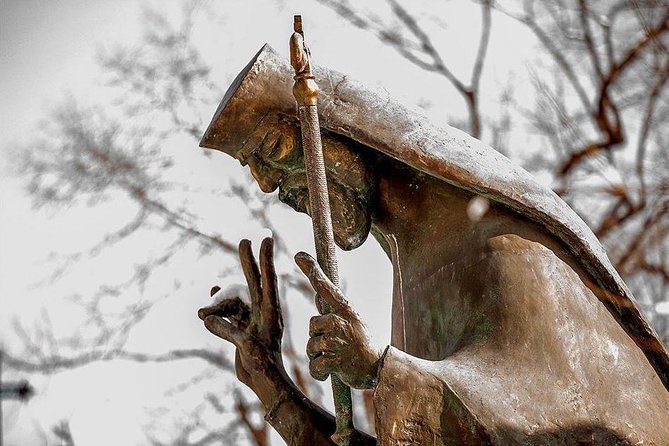
- Manastirea Antim: religion under pressure and why it endured
- Old Town and Caru’ cu bere: foreign policy gets a table
- Piața Revoluției: the violent collapse of communism and Ceausescu’s downfall
- What the 3-hour walking pace actually feels like
- Meeting point and finish: start near Dealul Mitropoliei, end at Revolution Square
- Price and value: $42.33 makes sense if you plan for Parliament entry
- Who this tour is best for (and who should choose a different plan)
- Should you book Life under Communism in Bucharest?
- FAQ
- How long is the Life under Communism tour?
- What is included in the price?
- Is the Palace of Parliament ticket included?
- What language is the tour offered in?
- Where do you meet and where does the tour end?
- What is the cancellation policy?
Key things to know before you go
- Cristina’s storytelling style, clear English and real context, including family-perspective details
- Power vs. daily life, from the Palace of Parliament to overlooked reminders of rationing and surveillance
- Religion under communism, with time at Manastirea Antim and a church-linked opening stop
- Caru’ cu bere and foreign policy, a memorable way to understand how diplomacy worked
- Revolution Square in focus, where the fall of the regime becomes visible and concrete
- Small group size (max 20) keeps questions possible and the pace manageable
Why Bucharest starts with church power and ends with a revolution site
This is a high-impact way to understand communist Romania without getting lost in dates. You start at a major church landmark, then shift to the era of grand state control, before finishing at the place tied to the violent end of the regime.
If you like history that has edges, this tour fits. One reason it works is the contrast between stone, policy, and daily feelings. Churches and monasteries represent older Romanian identity and beliefs, while government buildings represent the new order. Then, at the finish, the story turns from architecture to aftermath.
You also get a guided experience with a professional guide, and the tour runs in English. That matters here, because the topic is heavy, and you want explanations you can actually follow.
Catedrala Patriarhala: the tour’s opening shot at communist violence
The walk starts at Catedrala Patriarhala, and the discussion sets a blunt tone early. You hear about the violent beginning of communism in Romania, then immediately connect the political shock to what it meant for ordinary life.
This first stop is also practical. It is a free admission point, and the stop is short at about 10 minutes. That works well for setting context without turning the morning into a long lecture.
Why this opening is smart: starting with a major religious landmark helps you understand what communism tried to reshape. Even if you do not leave this stop knowing every detail, you get the idea that the system did not only change laws. It targeted social structures and loyalties.
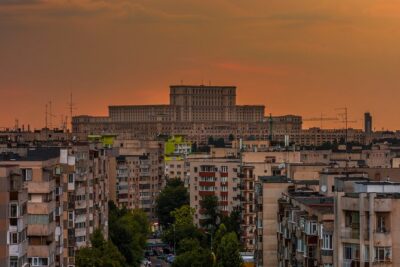
Still standing, block after block
- Bucharest: Communism and History Guided City Walking Tour★ 4.9 · 918 reviews
- The Real tour of Communism★ 5.0 · 666 reviews
- 3-Hour Guided Tour of Communist Bucharest★ 4.9 · 303 reviews
Palace of Parliament: the administrative giant and the cost behind it
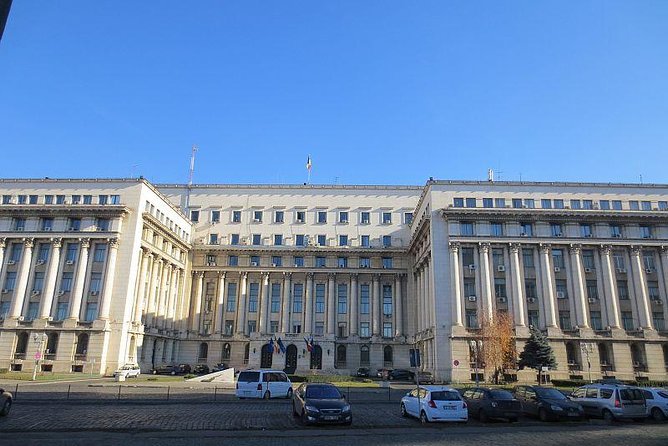
The next major moment is the Palace of Parliament, often described as the world’s second largest administrative building. Here, the guide focuses on the real story behind the scale, not just the postcard view.
Important practical note: this stop is about 15 minutes, and the ticket is not included. That means you may want to check the process the day of your visit, so you do not lose time wondering about entry. (If you want the fullest experience inside, you might plan extra time around this on your own later.)
Why this stop matters on a communist tour:
- The building is a symbol of state power made physical.
- The size is hard to ignore, even if you only get a brief look.
- It turns abstract control into something you can stand in front of and feel.
In a walking format, you do not get a slow museum-style experience, but you do get a guided explanation that ties the monument to the regime’s priorities. That is the key value here.
Manastirea Antim: religion under pressure and why it endured
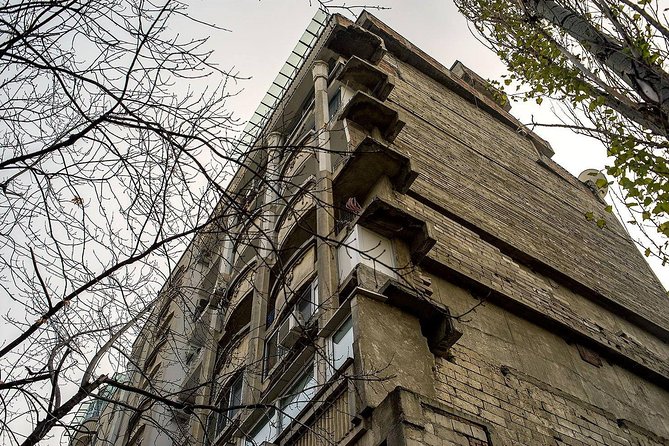
After the state’s biggest concrete statement, you switch gears to Manastirea Antim, a picturesque medieval monastery. The tone becomes less about government control and more about how religion was impacted by the communist regime.
This is another quick stop, about 10 minutes, and admission is free. You will not be in a long service or a long interior tour, but you should leave with a clearer picture of how communism treated faith, institutions, and public life.
What I like about pairing this monastery with the Palace of Parliament is that it forces you to see two sides of the same system. One side built monuments to command. The other dealt with the quieter struggle of how communities held onto identity when the state tried to reshape beliefs.
Old Town and Caru’ cu bere: foreign policy gets a table
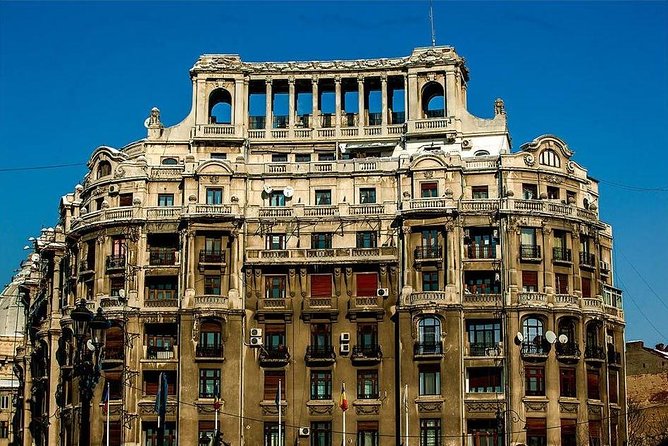
Then you move into Bucharest’s Old Town for a stop tied to Caru’ cu bere, a famous restaurant. The guide explains the role it played in foreign policy under communism, which is a great reminder that diplomacy was not only in offices. It happened in spaces where people ate, negotiated, and built relationships.
This part is short at about 10 minutes, and admission is free. Even if you do not go inside for a meal during the tour, the setting helps the story land. You get the sense of how the state presented itself to outsiders and how contact with foreigners worked in practice.
One detail that makes this stop more than just scenery: the guide connects big-picture ideology to small daily routines. In some routes like this, you may also get quick references along the way to the era’s food lines and hard-to-find items, including mentions of places like an Alimentară store and the idea of standing in line. That kind of context helps you stop treating communism as only a political storyline and start seeing it as a lived routine.
Piața Revoluției: the violent collapse of communism and Ceausescu’s downfall
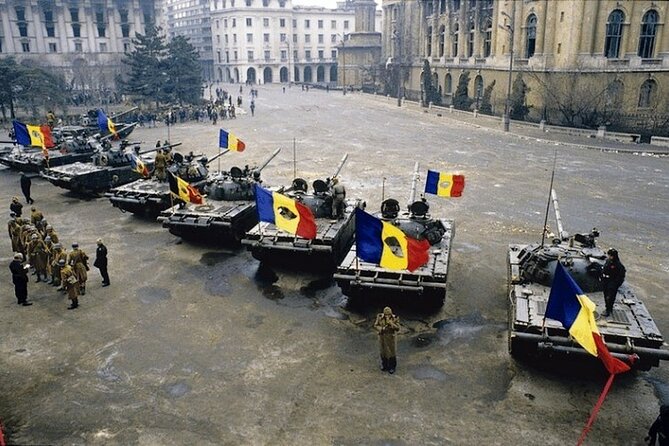
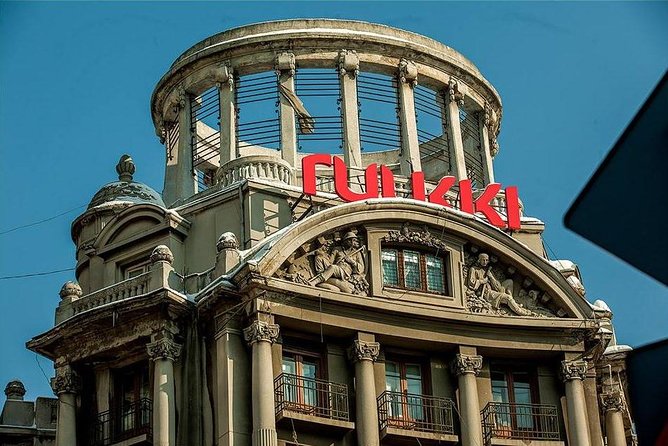
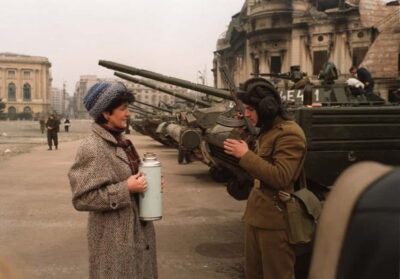
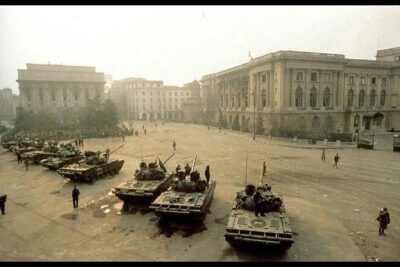
The tour’s finale is at Piața Revoluției, or Revolution Square. This is where the guide turns from architecture and policy to the violent collapse of communism and Ceausescu’s downfall.
This stop runs about 15 minutes and is free. It is also one of the most emotionally direct locations in Bucharest for this topic, because it is tied to the end of an era that reshaped Romania for decades.
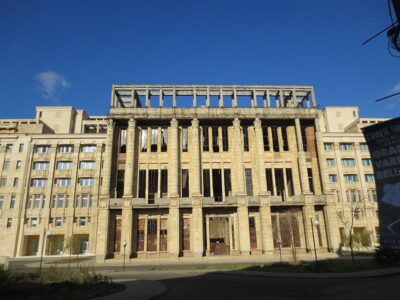
A powerful element here is the focus on physical reminders of conflict. In accounts of this tour, people describe seeing marks like bullet holes on buildings in the area. Even if you only spot a few details, it gives you a different feeling than hearing about the revolution as a distant event. You see proof that history left scars.
These pair well with the day you just read about.
- Bucharest: Dracula’s Castle, Peles Castle, & Brasov Old Town
★ 4.5 · 17,858 reviews - Bucharest: Dracula Castle, Peles Castle & Brasov Old Town
★ 4.6 · 10,891 reviews - Bucharest: Dracula’s Castle, Peleș Castle & Brașov Day Trip
★ 4.4 · 6,100 reviews - Bucharest: Palace of Parliament Tickets and Guide
★ 4.3 · 3,182 reviews - Bucharest: Day Trip to Dracula Castle, Peles Castle & Brașov
★ 4.4 · 3,049 reviews
What the 3-hour walking pace actually feels like
This experience is designed as a walking tour, about 3 hours long, with stops that average around 10 to 15 minutes each. That structure is good if you want breadth, not depth spending hours in one place.
Wear comfortable shoes. It is still city walking, and the time between points is part of the experience, because that is where the guide can connect the story to what you are seeing nearby.
Also note that the tour has a maximum of 20 travelers. A smaller group makes it easier to ask questions and keep the pace from turning into a hurried file of people following a guide without room to think.
In several accounts of Christina and the guides on similar departures, guests mention the guide adjusting for a slower pace and offering seating options when stops happen. That is a real-life benefit of the group size and the guide’s approach. Still, you should plan for walking throughout.
Meeting point and finish: start near Dealul Mitropoliei, end at Revolution Square
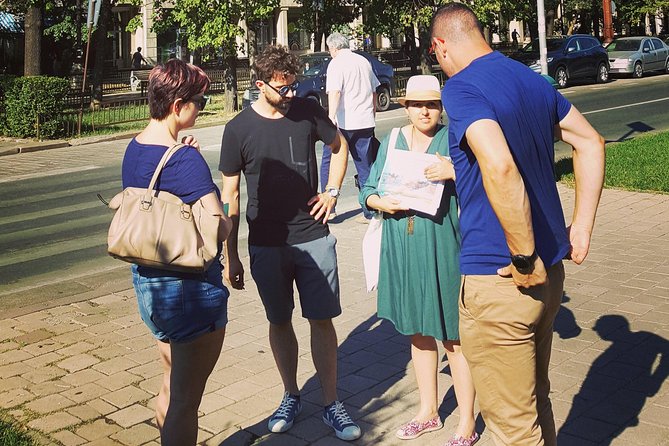
You begin at Aleea Dealul Mitropoliei 19, București 030167, Romania. You finish at Revolution Square (Piața Revoluției), București.
This end point matters if you like to keep exploring after. Revolution Square is a natural hub for continuing on foot or grabbing public transportation nearby. It also gives the day a satisfying arc, ending exactly where the story’s turning point happened.
The tour uses a mobile ticket, and it operates in all weather conditions, with a straightforward reminder to dress appropriately. If it is a rainy day, bring the kind of footwear that can handle slick sidewalks.
Price and value: $42.33 makes sense if you plan for Parliament entry
The price is $42.33 per person for about 3 hours with a professional guide. For a tour that covers multiple free stops plus a heavy-hitter landmark like the Palace of Parliament, that is solid value, especially with a guide who can explain both the politics and the day-to-day human impact.
One catch: Palace of Parliament admission is not included. You should budget for that separately. In practice, that means this tour’s total cost is really the guide fee plus what you pay for Parliament entry.
Another value point: the tour mostly uses free admission stops, including Catedrala Patriarhala, Manastirea Antim, Caru’ cu bere area (as a free walk-by/interpretation stop), and Revolution Square. The paid element is concentrated, not spread out.
Booking timing also signals demand. On average, this is booked about 25 days in advance, which suggests a lot of people plan around a short Bucharest visit. If you are traveling in peak periods, booking earlier is a smart move.
Who this tour is best for (and who should choose a different plan)
This tour is a strong fit if you:
- Want a clear, guided way to understand communism in Romania, not just big names
- Like walking routes that connect places to what happened there
- Prefer an objective tone, with both the benefits people sometimes talk about and the real costs
It is also a good pick if you care about English clarity. Multiple accounts highlight that the guide’s spoken English is easy to follow, including accommodating guests with hearing differences and slower walking needs.
You might pick something else if:
- You expect a deep, museum-length experience inside the Palace of Parliament, because this is a guided stop with limited time
- You do not like walking between points, since it is a city walk across several landmarks
Should you book Life under Communism in Bucharest?
If your goal is to get your bearings on communist Romania fast, this is one of the best ways to do it in Bucharest. You get major sites tied to the regime, plus quieter clues that show how people lived with the system. Ending at Revolution Square gives the narrative closure many history tours lack.
Book it if you want a guide who can explain context in plain language and keep the story connected to places you can stand in front of. Just plan for the Palace of Parliament ticket separately, wear good shoes, and arrive ready for a history walk with real emotion behind the facts.
FAQ
How long is the Life under Communism tour?
It lasts about 3 hours.
What is included in the price?
The tour includes a professional guide.
Is the Palace of Parliament ticket included?
No. Admission to the Palace of Parliament is not included.
What language is the tour offered in?
The tour is offered in English.
Where do you meet and where does the tour end?
You meet at Aleea Dealul Mitropoliei 19, București 030167, Romania, and you end at Revolution Square (Piața Revoluției), București.
What is the cancellation policy?
You can cancel for free up to 24 hours in advance for a full refund. If it is canceled due to poor weather, you will be offered a different date or a full refund.
Just Added: New Tours From Bucharest
- Bear Watching in Transylvania 2-Day Tour
- National Village Museum and Comana Adventure Park
- Half Day Tour in Bucharest
- From Dracula to Ceaușescu- Romanian Terror Stories tour
- Full-Day Private Tour of Brasov City and Peles Castle from Bucharest
- Bucharest: Tour The Wine Road, 2 Boutique Wineries in 1 Day
- Bucharest Ceaușescu House Parliament Palace &Village Museum
- Wines of Wallachia – 8 hours
Communist Bucharest Tours, compared.
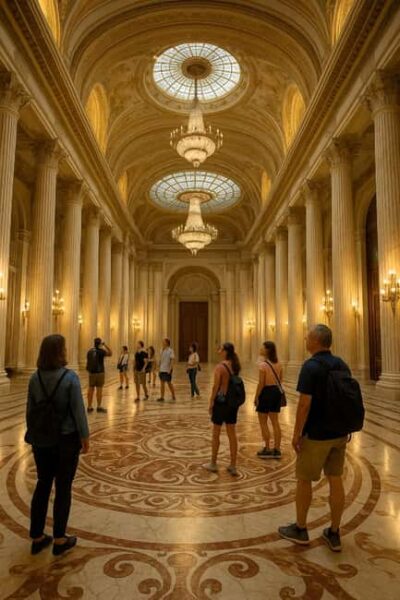
Parliament, Ceausescu House & Village Museum Tour
Read our review →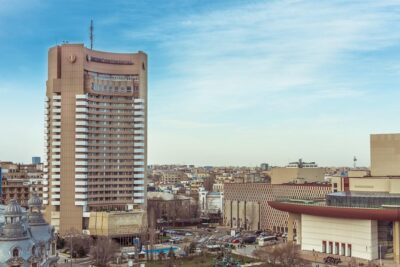
Bucharest Essential Tour: Old Town, Calea Victoriei & Communism
Read our review →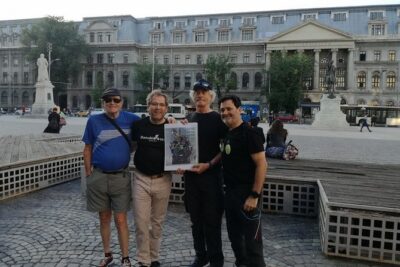
Communism in Bucharest – Landmarks, Museum & Communist Appetizers
Read our review →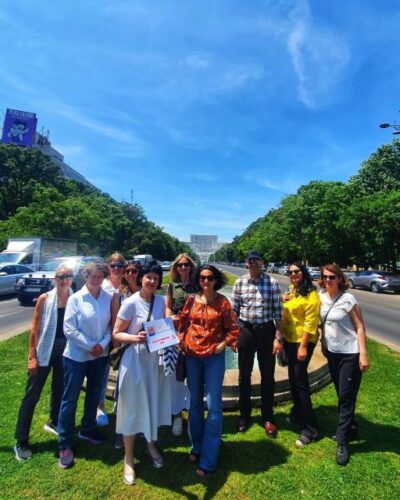
Bucharest Under Communism: Life, Terror & Hope
Read our review →Browse the lists this tour appears in