
Reviewed · COMMUNIST BUCHAREST TOURS
Bucharest Under Communism: Life, Terror & Hope
Some tours show you buildings. This one explains why they were built, and at what cost. I love the way it connects politics to daily life, from 1980s shortages to the dictator’s grand schemes along the main boulevards. You’ll get a story-driven route with real landmarks, not just general history talk.
I also like that the pacing works, you move across the city while the guide keeps bringing the timeline into focus. Guides I’ve encountered on tours like this, including Laura and Tamar, tend to use extra context like historical photos and clear answers, with a friendly, sometimes funny tone. The one drawback to consider is the subject matter itself, this is about terror and repression, so it can feel heavy if you want only light sightseeing.
In This Review
- Key things to know before you go
- A 3.5-hour communist-era walk, timed for a perfect afternoon
- Unirii Square and Victory of Socialism Boulevard: where the city got a makeover
- Palace of the Parliament: size, cost, and the 1980s shortages you can’t ignore
- Mihai Voda Monastery: churches hidden behind utilitarian walls
- Revolution Square: where the regime started and ended in 1989
- University Square protests: where the cost of freedom becomes visible
- How your guide turns dates into a city you understand
- Price and value: is $23.22 worth it?
- Who should book, and who might skip it
- Should you book Bucharest Under Communism, Life, Terror & Hope?
- FAQ
- How long is the Bucharest Under Communism tour?
- Where does the tour start and where does it end?
- What time does the tour begin?
- Is this tour private or a small group?
- Are entrance fees included?
- What happens if the weather is bad?
- What is the cancellation window?
Key things to know before you go
- Private guide in a small group (up to 15), so questions usually get real answers, not hand-waving
- Major landmarks in 3.5 hours, including the Palace of the Parliament and Revolution Square
- Admission details are mixed, some stops are free and one major site is not included
- Unirii Square and Revolution Square give you the most visible “before and after” communist story
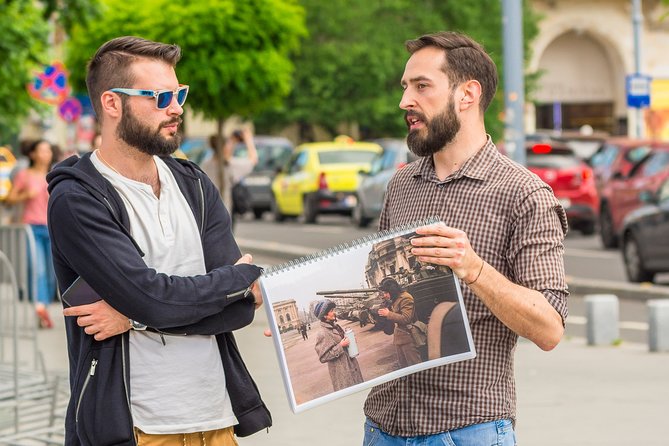
- Expect human context, not just dates, with guides sharing additional visuals and local perspective
A 3.5-hour communist-era walk, timed for a perfect afternoon
This is a guided walking tour of central Bucharest, around 3 hours and 30 minutes. It starts at 4:00 pm at Piaţa Sfântul Anton 64 (near the center) and ends at Revolution Square, which is about 5 minutes from the Old Town on foot.
What you should expect is steady walking with several stops where you pause, look, and listen. Because it is set up for a maximum of 15 travelers, it does not feel like a giant bus tour that gets stuck in the back of your head. You’ll also get a mobile ticket, which is handy and reduces fuss the day of your visit.
One practical note: this tour needs good weather. If conditions are poor, the experience can be rescheduled or refunded, which matters if you are planning tightly.
Unirii Square and Victory of Socialism Boulevard: where the city got a makeover
You begin at Piaka Unirii (Unirii Square), a central place designed in the last phase of communism in Romania. The setting helps the message land. You see a planned public space with splendid fountains, and you get the sense that this was built for spectacle, not comfort.
From there, the guide connects the square to the wide straight run of the former Victory of Socialism Boulevard. Standing near it, you can understand the megalomaniac planning. Everything points forward, in a way that communicates power, control, and one vision for the future.
This stop is also a good warm-up because it is quick, about 30 minutes, and the admission is free. If you are curious about how communist-era urban design changes your body’s experience of a city, this is where you start noticing it.
What you might watch for as you walk: how wide the avenue feels compared to older streets nearby, and how the space seems made for crowds. Even if you already know the political headline, the geometry gives you a second layer of meaning.
Still standing, block after block
- Bucharest: Communism and History Guided City Walking Tour★ 4.9 · 918 reviews
- The Real tour of Communism★ 5.0 · 666 reviews
- Life under Communism★ 5.0 · 358 reviews
Palace of the Parliament: size, cost, and the 1980s shortages you can’t ignore
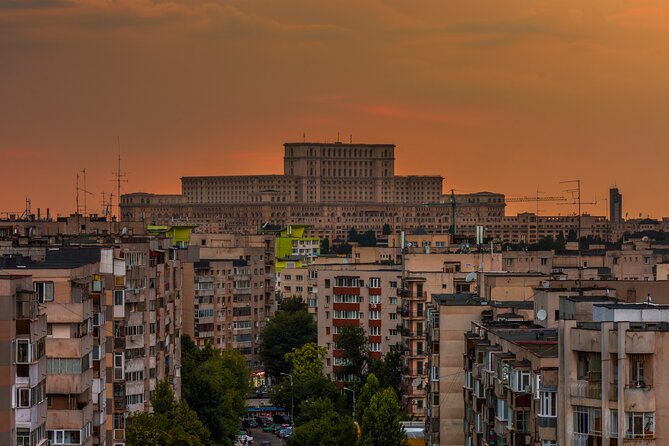
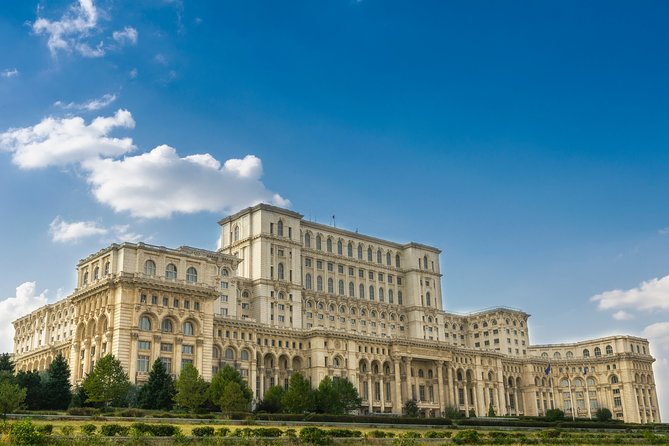
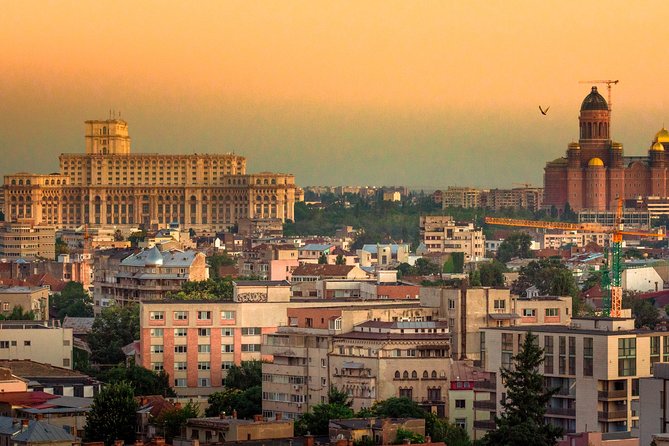
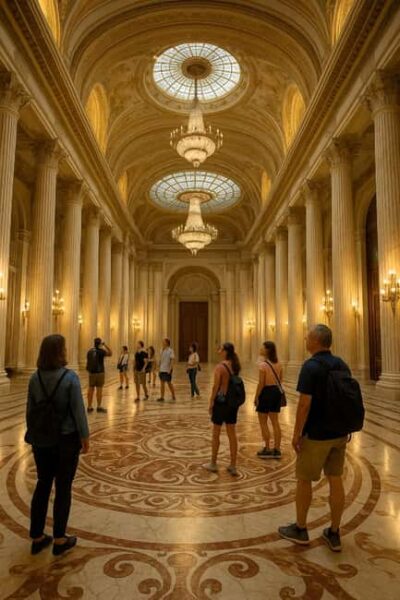
Next comes the Palace of the Parliament, one of those places that basically forces a reaction. The tour frames it as the second largest building in the world after the Pentagon, and also the most expensive administrative building. Even if you have seen photos, the guide’s angle is different: this is not just architectural scale, it is a story about what got squeezed to pay for it.
Here’s the key idea you will hear: in the 1980s, the building required vast resources and work effort, and the Romanian people experienced shortages of many kinds. That contrast matters. When you stand across from something that huge, it is easy to focus on the monument. This tour asks you to also picture what went missing at home.
You’ll hear the full narrative of how it was made and what locals think about seeing it from different angles. That last part is smart, because viewpoint changes the message. You can feel the difference between facing the palace directly versus approaching from side angles where the scale can look almost unreal.
Admission note: the Palace visit is listed as not included. So budget for a ticket at that stop. (If you are traveling with a tight schedule, it is also worth knowing you might need a bit of extra time for on-site entry.)
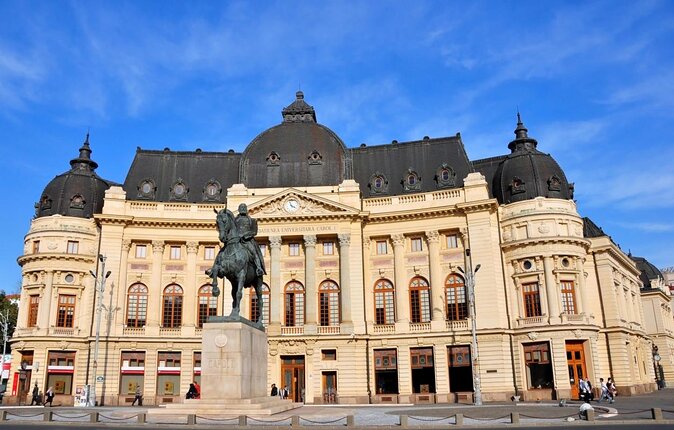
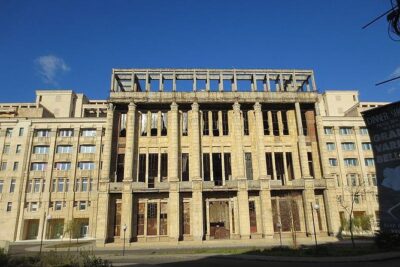
One more detail the guide brings in: across the palace you can see the Academia Romana building in a similar style, intended for the use of Elena Ceaușescu. That connects the palace project to family power, not only state power.
Mihai Voda Monastery: churches hidden behind utilitarian walls
After the sheer mass of the Parliament area, you switch to a very different kind of scene at Mihai Voda Monastery. This stop is about survival versus erasure.
You learn how some churches were destroyed, while others were saved in surprising ways during the communist period. One of the striking sights you’ll notice is how some religious spaces ended up hidden behind utilitarian buildings. In other words, the city kept functioning, but faith was pushed into the margins.
The centerpiece is the Mihai Voda Church, a Middle Ages religious place that survived the demolition frenzy. The guide uses that survival to help you visualize how Bucharest looked before the late communist transformation.
This stop is about 30 minutes, and admission is free. That makes it an easy win: you get real contrast without paying another entry fee.
If you are the kind of traveler who likes to match stories to specific materials and layouts, this is a good stop. Look for the way the monastery’s setting sits among newer, harsher structures. The point is not only what was built, but how power tried to manage what was allowed to be seen.
Revolution Square: where the regime started and ended in 1989
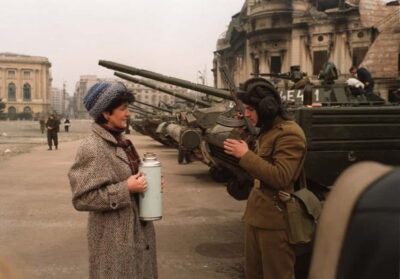
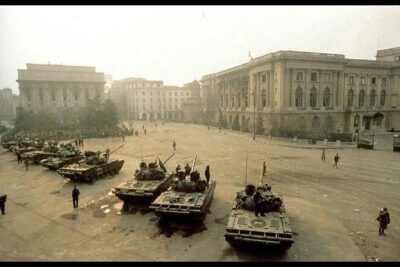
Then the tour moves into the political climax. Revolution Square is where the communist regime began and also where it ended with the people’s protests during the Revolution of 1989. This is one of those places where the guide’s job is to help you read the site, not just remember names.
You’ll see the building that housed Ceaușescu’s office, along with the balcony from which the dictator had his last speech. The guide also places you near the locations tied to the first mass demonstration in Bucharest. That turns the square from a landmark into a timeline you can walk through.
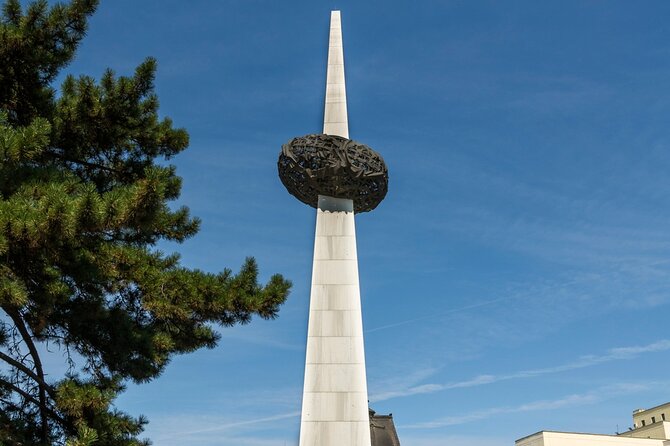
The tour also discusses what happened to those who protested against totalitarianism, including the story behind the monument dedicated to them, and what followed after the revolution. Even when you think you know the headline, these details help you understand the turn from public spectacle to mass resistance.
Admission at this stop is listed as free, and the stop is around one hour. You need the time. Revolution Square is not the place for a rushed photo and a quick exit, because the meaning depends on context.
Also, watch how the guide manages the tone here. It is factual and guided, but it also respects the subject. If you want to take a breath and look before continuing, this is a good place to do it.
University Square protests: where the cost of freedom becomes visible
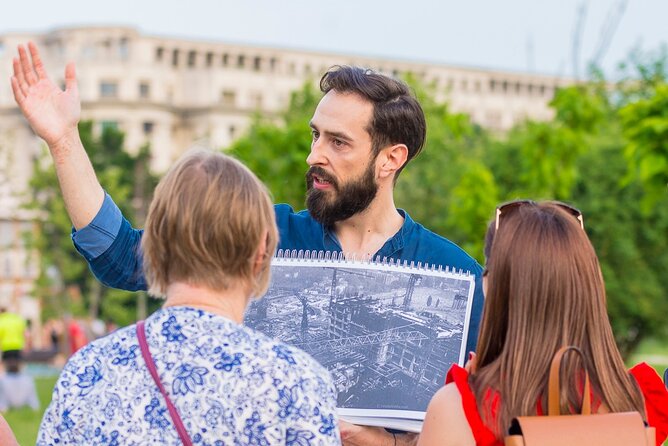
The last stop is University Square (often referred to as Piaţa Universităţii), and the guide focuses on the main protests against communism in 1989. This is where the story becomes brutally specific: hundreds were massacred for their belief in a free society.
This kind of detail can be hard to hold in your head, so I appreciate that the tour keeps the attention on the meaning of the spot. You are not asked to glamorize suffering. You are asked to remember what happened in the pursuit of basic rights.
This stop includes admission (ticket included), and it lasts about 30 minutes. The pacing is good, because it gives you a chance to absorb the place without rushing onward.
If you want a practical takeaway, it’s this: you leave the tour understanding that Bucharest’s communist-era story is not only about symbols. It is also about people who paid in the real world for demanding change.
These pair well with the day you just read about.
- Bucharest: Dracula’s Castle, Peles Castle, & Brasov Old Town
★ 4.5 · 17,858 reviews - Bucharest: Dracula Castle, Peles Castle & Brasov Old Town
★ 4.6 · 10,891 reviews - Bucharest: Dracula’s Castle, Peleș Castle & Brașov Day Trip
★ 4.4 · 6,100 reviews - Bucharest: Palace of Parliament Tickets and Guide
★ 4.3 · 3,182 reviews - Bucharest: Day Trip to Dracula Castle, Peles Castle & Brașov
★ 4.4 · 3,049 reviews
How your guide turns dates into a city you understand
The biggest reason this tour gets such strong marks is how well the guide keeps the story human. Multiple guides are named in the experience feedback, including Laura and Tamar, and both are described as bringing energy without turning the topic into something light.
I like the way history degrees and extra materials show up in the delivery. One guide, Laura, is described as having a degree in history and using additional historical photos to connect the dots. That matters because it lets you compare what you see now with what existed then.
Tamar is described as very knowledgeable, and also as someone who keeps attention with clear, engaging explanations and room for questions. In practice, that means you can ask the obvious stuff, like why certain buildings look the way they do, and you can also ask the harder stuff, like what daily life under communism actually felt like.
You also get a sense of the full arc: Romania’s 45-year communist rule, the rise and fall of the Ceaușescu era, the Romanian Revolution, and the transition from socialism to democracy. The key is that it is not treated like separate chapters. The guide shows the links between policy, architecture, and public behavior.
If you are a first-time visitor, this is a smart way to get your bearings fast. If you are returning to Bucharest, it helps you see familiar streets with new meaning.
Price and value: is $23.22 worth it?
At $23.22 per person, this tour sits in a very accessible range for a guided, multi-stop history walk. The value comes from three places.
First, you are paying for a guide to stitch together the why behind what you see, especially around the biggest sites like the Palace of the Parliament and the revolution locations. Second, the route is built around stops with different roles in the communist story, so you do not just get one “big building” lecture. Third, the ticket setup is partly covered within the itinerary, with multiple stops listed as free and only certain admissions flagged as included or not included.
Here’s the practical budgeting reality from the itinerary details:
- Free stops include Unirii Square, Mihai Voda Monastery, and Revolution Square
- The Palace of the Parliament stop lists admission as not included
- University Square lists admission as included
So yes, you may need to add some spending at the Palace, depending on current entry requirements. Still, for what you learn and how long the guide stays with you, it is good value.
I’d also point out something subtle: the tour is capped at 15 travelers and involves a guide, not just a self-guided audio route. In this kind of history, that social and interpretive layer is the product you are buying.
Who should book, and who might skip it
This tour is a strong fit if you want to understand Bucharest beyond postcard landmarks. If you care about politics, architecture, and how people live under systems that control daily life, you’ll enjoy connecting each stop to the wider story.
It also suits travelers who like walking tours because the route builds momentum. You start in a square designed to project a communist vision, you end at the places tied to protests that broke that vision open.
If you prefer only light, neutral sightseeing, you might find the “life, terror, and hope” framing emotionally intense. The tour does not shy away from the facts of repression and violence tied to 1989. You should be ready for that.
Should you book Bucharest Under Communism, Life, Terror & Hope?
I think you should book this if you want the real Bucharest story in a short amount of time. The route is focused, the guiding style (Laura and Tamar are mentioned) seems built for questions and clarity, and the stops move from built power to resisted power in a way that feels logical on foot.
Book it sooner rather than later if you are only in town briefly. Once you understand the communist-era logic behind the city, the rest of your sightseeing gets easier to read.
FAQ
How long is the Bucharest Under Communism tour?
It runs about 3 hours and 30 minutes.
Where does the tour start and where does it end?
It starts at Piaţa Sfântul Anton 64, București 030167. It ends at Revolution Square, Piața Revoluției, București.
What time does the tour begin?
The start time is 4:00 pm.
Is this tour private or a small group?
You have a private guide, and the maximum group size is 15 travelers.
Are entrance fees included?
Admission at several stops is listed as free. The Palace of the Parliament is listed as not included, while University Square is listed as included.
What happens if the weather is bad?
This experience requires good weather. If it is canceled due to poor weather, you will be offered a different date or a full refund.
What is the cancellation window?
You can cancel for free up to 24 hours in advance for a full refund. If you cancel less than 24 hours before the start time, the amount paid is not refunded.
Just Added: New Tours From Bucharest
- Bear Watching in Transylvania 2-Day Tour
- National Village Museum and Comana Adventure Park
- Half Day Tour in Bucharest
- From Dracula to Ceaușescu- Romanian Terror Stories tour
- Full-Day Private Tour of Brasov City and Peles Castle from Bucharest
- Bucharest: Tour The Wine Road, 2 Boutique Wineries in 1 Day
- Bucharest Ceaușescu House Parliament Palace &Village Museum
- Full-Day Private Tour of Bucharest and Mogosoaia Palace
Communist Bucharest Tours, compared.
Parliament, Ceausescu House & Village Museum Tour
Read our review →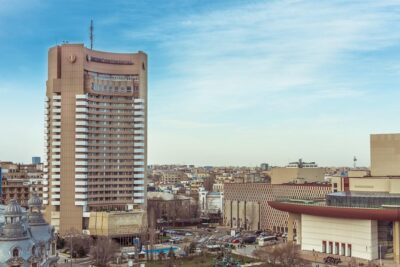
Bucharest Essential Tour: Old Town, Calea Victoriei & Communism
Read our review →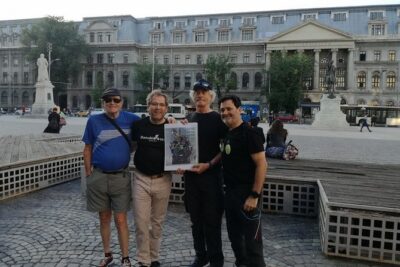
Communism in Bucharest – Landmarks, Museum & Communist Appetizers
Read our review →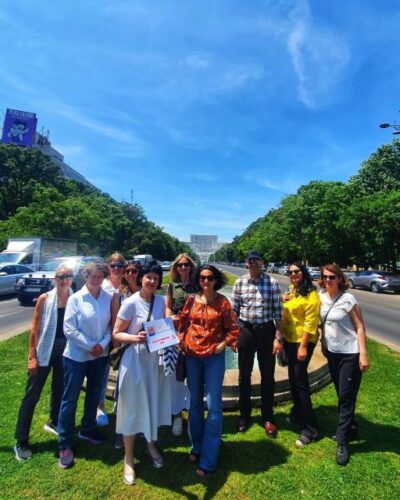
Browse the lists this tour appears in