
Reviewed · CITY TOURS
4h Bucharest City Tour – Group Trip Maximum 5 Persons – The Taste of Bucharest
Bucharest hits hard in four hours. This small-group tour stitches together the Palace of Parliament scale, Romanian village traditions at the Dimitrie Gusti museum, and the streets around Revolution Square and Old Town. I especially like how the route forces you to compare past and present in real places, and how guides (often Nicolas, Alex, and Alexandru Stroe) bring the facts with clear English and quick pacing. The one catch is the big sights are meaningful, so if you dislike heavy political context, plan to go in with the right mindset.
You’ll ride in an air-conditioned vehicle with WiFi on board, and you get pickup by waiting in the lobby or on the sidewalk. Most travelers can participate, and the max group size is 5, so questions are actually welcome instead of drowned out.
One more practical note: some entrances cost extra. The National Village Museum at Dimitrie Gusti has an admission ticket that is not included, while the other stops on the route are free to enter (based on the tour plan).
In This Review
- Key highlights you’ll care about
- A tight, small-group taste of Bucharest’s big contrasts
- People’s House (Palace of Parliament): the weight of communism in one building
- Dimitrie Gusti National Village Museum: Romanian traditions in wooden homes and mills
- Calea Victoriei: Victory Avenue’s Royal versus communist-era landmarks
- Revolution Square: where the December 1989 revolution took shape
- Old Town and Hanul Lui Manuc: walking through a fortified inn and living streets
- Price and value: what you pay for, and what you should budget
- Who this tour is best for (and who might not love it)
- Should you book this Bucharest Taste of Bucharest group tour?
- FAQ
- How long is the 4h Bucharest City Tour?
- How much does the tour cost?
- Is pickup included?
- What language is the tour offered in?
- What group size should I expect?
- What is included in the price?
- Are entrance tickets included?
- Is food or drinks included?
- Do I need to buy a paper ticket?
- What is the cancellation policy?
- Is the tour near public transportation?
Key highlights you’ll care about
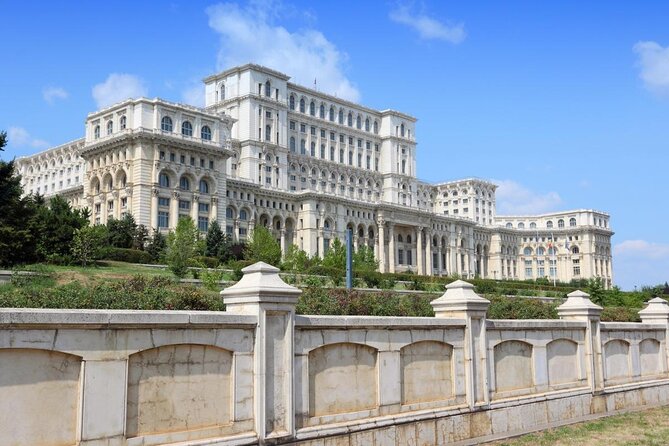
- People’s House scale and meaning: the Palace of Parliament framing, with context on totalitarian damage and megalomania.
- Dimitrie Gusti Village Museum in one block: wooden and adobe homes, plus symbols like the mill and wooden church.
- Calea Victoriei contradictions: Royal Palace on one side, communist-era landmarks and Revolution Square proximity on the other.
- Revolution Square walking landmarks: key points tied to the December 1989 revolution and where it unfolded.
- Old Town with Hanul Lui Manuc: a fortified inn setting (built around 1806) that still anchors the neighborhood.
- Top guide energy: repeated praise for Nicolas, Alex, and Alexandru Stroe for being knowledgeable and fun in English.
A tight, small-group taste of Bucharest’s big contrasts
This is the kind of Bucharest tour that works because it doesn’t try to do everything. Instead, it chooses a handful of places that explain the city’s swing between power and people: communist monumentality, traditional rural life, and then back to the lived-in streets of central Bucharest.
The group limit to 5 is a real advantage. You feel it when the guide stops explaining and starts checking in, asking what you want to know next. It also helps with timing because there’s less herding, more moving as a small unit, and it is easier to stay together.
I also like the format. You get a short ride time between areas, then a guided walk where Bucharest details matter: building facades, street names, the feel of public spaces. If you’re visiting for the first time, this tour can help you get your bearings fast and understand why certain neighborhoods look the way they do.
And yes, the tour is designed for English, with mobile ticketing and onboard WiFi. That’s not just convenience. It means you can look up a street or building detail during breaks instead of waiting until later.
People’s House (Palace of Parliament): the weight of communism in one building
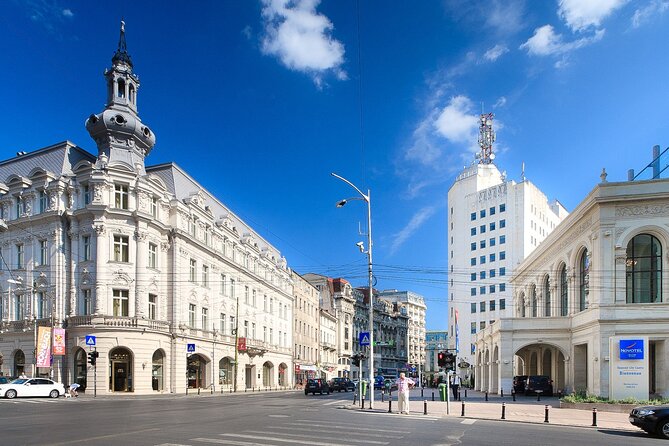
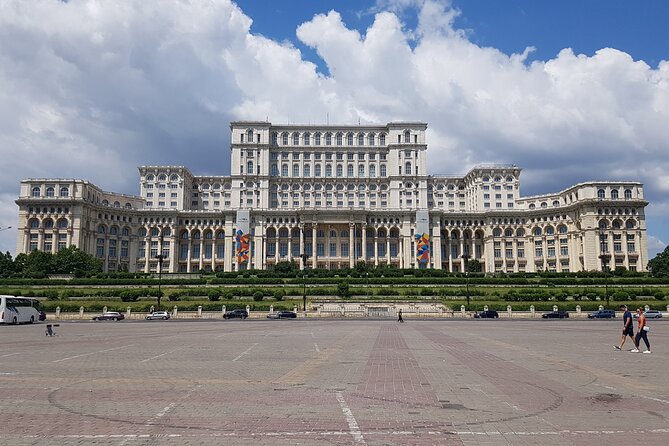
The tour begins at the Palace of Parliament, also known as the People’s House. The point isn’t just sightseeing. It’s perspective.
You’re guided through why totalitarian regimes can be dangerous and damaging for a nation, using this building as a physical example of pointless opulence and megalomania. The narration typically lands with the idea that the scale itself makes you feel small. That reaction is part of the experience, and it’s why the stop is the centerpiece.
The scale is huge enough that it’s often compared as the second-largest administrative building on the planet, after the Pentagon. Even if you’re not into architecture, the building’s size is the lesson. It communicates ideology through stone, corridors, and mass.
What to watch for during the visit:
- How the building’s scale affects your sense of space
- The way the guide ties design choices to political messaging
- The contrast between the idea of public power and what that power did to everyday life
A quick consideration: this stop can feel heavy. The tour frames it with direct commentary about the harms of communist rule and the damage done to society. If you prefer a lighter sightseeing mood, you might want to balance your day with something fun later, like a relaxed café break or an easy stroll through parks.
Still, for most first-time visitors, it’s the fastest way to understand why Bucharest looks the way it does today.
Other day trips from Bucharest
- Bucharest: City Highlights Guided Walking Tour★ 4.9 · 1,482 reviews
- Bucharest: Communism and History Guided City Walking Tour★ 4.9 · 918 reviews
- Bucharest: 2-Hour City Highlights Bike Tour★ 4.8 · 269 reviews
Dimitrie Gusti National Village Museum: Romanian traditions in wooden homes and mills
Next you shift from concrete monumentality to the textures of everyday life at the Muzeul National al Satului Dimitrie Gusti, the National Village Museum.
This stop is built around the idea of Romanian village life, shown through traditional homes and community spaces from across the country. The museum is presented as a way to see Romanian traditions in one place, and it also frames village life with a theme of sustainability and ecological thinking, like building an environment that worked in the backyard rather than taking from elsewhere.
What you’ll get here goes beyond cute cottages. The tour description points out that you can see houses made from materials like wood and adobe, plus stone and other traditional building methods. That variety matters because it shows regional differences without making you drive around for days.
You’ll also see traditional symbols and structures tied to daily life and spiritual identity, such as:
- A mill (as a marker of local work and food processing)
- A wooden church (as a marker of faith and community continuity)
This is also where the tour’s tone changes in a good way. Instead of focusing on what systems did to people, it highlights what people built and preserved. It’s about staying united for thousands of years without invading other nations, at least as the guide frames the symbolism.
Practical heads-up: the admission ticket for this stop is not included. So before you go, make sure you have money or a card ready. If you hate surprise costs, this is the one to plan for.
Time-wise, the museum stop is about 1 hour. That’s enough to understand the layout and get a strong sense of rural architecture, but not enough to see every tiny detail in depth. If you love museum time, you might want to add a second visit later on your own.
Calea Victoriei: Victory Avenue’s Royal versus communist-era landmarks
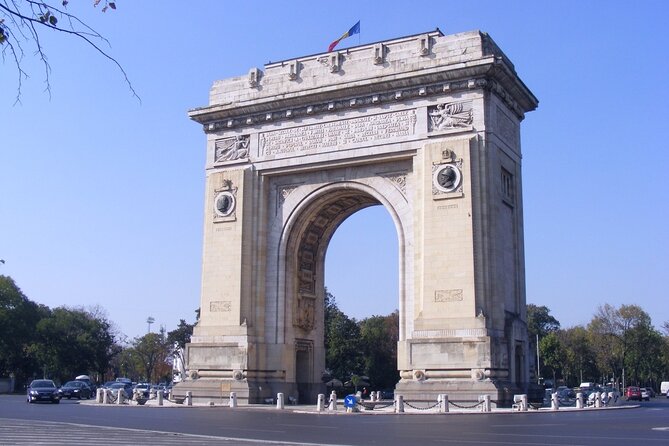
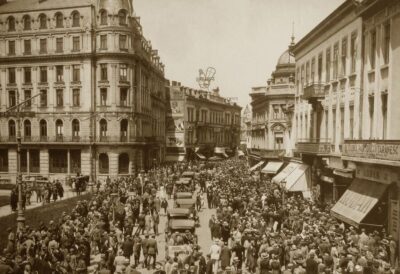
Then you move to Calea Victoriei, Victory Avenue, one of Bucharest’s most famous stretches. The tour’s angle here is contradictions of history.
On one side you have Royal-era landmarks, and on the other you’re close to communist party power centers and Revolution Square, where Nicolae Ceaușescu fled by helicopter. That single detail helps the street feel like more than an avenue. It becomes a corridor where regimes changed and people kept moving.
You’ll pass or reference a blend of:
- Old Orthodox churches with a mysterious, quiet aura
- Cultural spots like museums and theatres
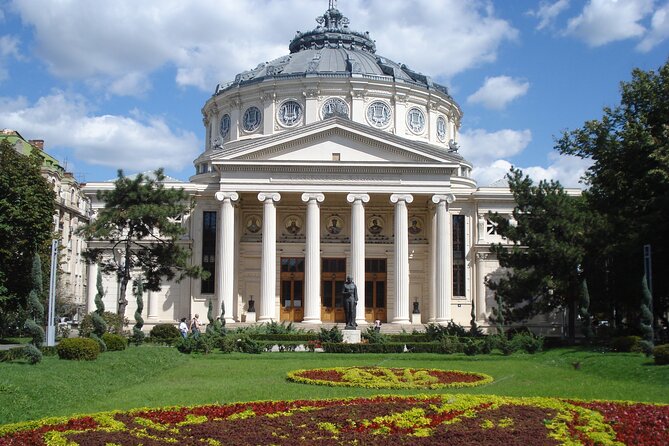
- The Romanian Athenaeum and other notable buildings in the area
- The National History Museum
- Commercial life like music stores, casinos, and tea shops
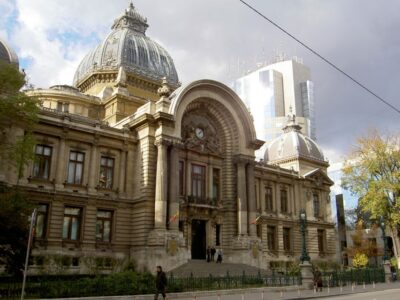
- The CEC Palace and other architecture landmarks
- Gift shops where you can pick up souvenirs
This stop works well for getting your mental map. If the first stop is about power and the museum is about roots, Calea Victoriei is about daily life and layers. You can stand in one spot and feel multiple eras speaking at once.
What I’d do to make this section click: stay curious about the contrasts. When you see an ornate church facade, ask yourself what it means that the city also kept building for entertainment, money, and politics. The guide’s job is to point you toward that pattern.
One consideration: this is partly a street experience, not a full interior tour. You’ll see plenty from outside and through guided stops, but you won’t get long, slow time inside every landmark mentioned.
Revolution Square: where the December 1989 revolution took shape
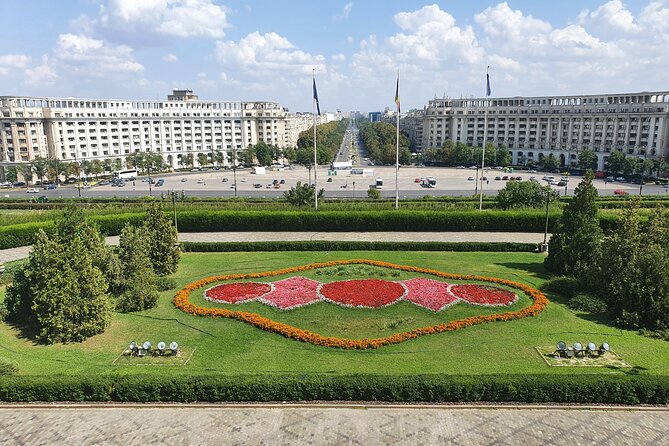
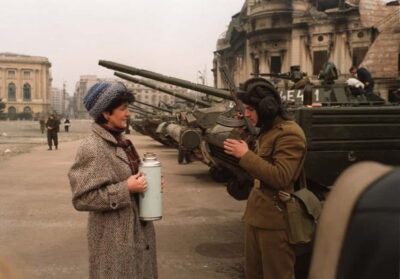
Revolution Square is one of those places where the story is bigger than the space. The tour frames it through the moment Nicolae Ceaușescu was ousted and what that meant, including mentions of secrets around a fortune and controversies tied to the state security service and offshore accounts.
Even if you don’t know every name in advance, the guide provides the connective tissue. You learn why this square matters and how it links to the December 1989 revolution.
A key piece of orientation is the Senate Palace. The tour plan notes that the building used to house the Central Committee of the Romanian Communist Party and is tied directly to where the revolution of December 1989 started. That detail turns the square from a monument into a location in a chain of events.
Admission for this stop is free, which is nice because it keeps costs predictable while still giving you a significant historical payoff.
How to make the most of the 30-minute window:
- Focus on the guide’s pointers about who used which building and when
- Look for how the surrounding architecture supports the story
- Keep an eye on the way the route cues you toward the next location
This section is where the tour can feel the most intense. The subject matter is political and emotional, and the guide’s delivery matters. The repeated praise for guides like Nicolas and Alex for being communicative and fun is a good sign, because it suggests the storytelling stays human, not dry.
Old Town and Hanul Lui Manuc: walking through a fortified inn and living streets
The last major stop is Old Town, guided by Livram Timp in the plan you’re following. This is the reset.
After heavy themes and museum lessons, Old Town brings Bucharest back to street level. You’ll relive the olden days through a blend of mystery and contrasts on the historical city center streets.
The anchor is Hanul Lui Manuc, an immense fortified inn built around 1806 by Manuc Bei, described as one of the wealthiest landowners in the Balkans. That building matters because it tells you how Bucharest functioned economically. Merchants passed through and gathered there, so this inn was a cultural and economic hub, not just a pretty facade.
This stop also connects you to modern Bucharest in a natural way. The area includes:
- Popular restaurants
- Museums
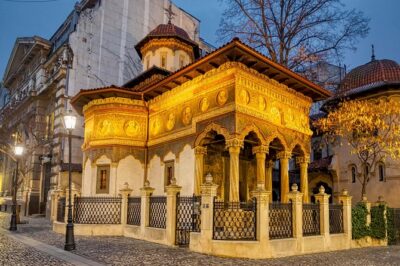
- Old spectacular churches
- An experiential library where you can buy books, music, and other souvenirs
I like ending here because it gives you something you can immediately use. If you want to grab food afterward, you’re already in the right area. If you want to wander independently for another hour, this neighborhood makes it easy.
Time-wise, expect about 45 minutes. That’s enough to walk the core streets around Hanul Lui Manuc and still feel like you’ve tasted the vibe, without cutting your legs off.
These pair well with the day you just read about.
- Bucharest: Dracula’s Castle, Peles Castle, & Brasov Old Town
★ 4.5 · 17,858 reviews - Bucharest: Dracula Castle, Peles Castle & Brasov Old Town
★ 4.6 · 10,891 reviews - Bucharest: Dracula’s Castle, Peleș Castle & Brașov Day Trip
★ 4.4 · 6,100 reviews - Bucharest: Palace of Parliament Tickets and Guide
★ 4.3 · 3,182 reviews - Bucharest: Day Trip to Dracula Castle, Peles Castle & Brașov
★ 4.4 · 3,049 reviews
Price and value: what you pay for, and what you should budget
At $162.56 per person for about 3 hours 50 minutes to 4 hours 30 minutes, you’re paying for guided coordination, small-group attention, and transportation between Bucharest’s key zones.
Here’s what is included:
- Air-conditioned vehicle
- WiFi on board
- Fuel and parking
- All fees and taxes
Here’s what is not included:
- Entrance tickets
- Food and drinks
The value equation is strongest if you’re doing this as your first organized overview day. The tour bundles four distinct experiences into one half-day: a political monument stop, a major cultural museum, an iconic avenue walk, and an Old Town finish. Without a guide, you can still reach these places, but you’d spend more time figuring out what to look at and why.
Your “watch this cost” item is the National Village Museum admission, since it is stated as not included. The other stops on the route show admission as free, which helps keep your budget under control.
If you’re traveling solo, the max group size of 5 can be a real comfort upgrade. If you have someone who wants a packed route and someone who wants fewer museums, the route is still balanced enough to satisfy both, because you get a mix of walking and structured stops.
Who this tour is best for (and who might not love it)
This tour fits best if you want an orientation day in Bucharest and you like your sightseeing with meaning. It’s ideal for first-timers, couples, and small groups who want to understand the city’s layers without building a complicated self-guided itinerary.
It also suits history-minded travelers who can handle direct framing. The communist-era parts of the tour, especially the Palace of Parliament and Revolution Square, are not fluffy. They’re presented as lessons on political harm and the consequences of dictatorship.
Where it might be less ideal:
- If you want only scenic stops and light commentary, this tour includes too much political context for a carefree vibe.
- If you dislike museums, you might find the Dimitrie Gusti Village Museum stop a bit more time than you expected, especially since it has an admission cost.
On the other hand, the repeated praise for guides like Nicolas and Alexandru Stroe, with emphasis on English proficiency and fun professionalism, suggests the experience is kept approachable.
Should you book this Bucharest Taste of Bucharest group tour?
Book it if you want a compact, guided introduction to Bucharest’s most important contrasts in under half a day. I’d especially recommend it if you appreciate guided context at the Palace of Parliament and Revolution Square, because that is the kind of material that’s hard to make meaningful on your own.
Skip or reconsider if your idea of a perfect tour is mostly outdoors, mostly cheerful, and mostly free of heavy political framing. You’ll still see beautiful neighborhoods at the end, but the middle of the route is emotionally serious.
If you book, plan for one extra cost at the National Village Museum, wear comfortable shoes for walking in Old Town and along Calea Victoriei, and show up ready to ask questions. With a max group size of 5 and guides praised for clear communication, that’s where you get the best returns on your time.
FAQ
How long is the 4h Bucharest City Tour?
The duration is about 3 hours 50 minutes to 4 hours 30 minutes.
How much does the tour cost?
The price is $162.56 per person.
Is pickup included?
Yes. Pickup is offered, and you wait in the lobby or on the sidewalk at the meeting point.
What language is the tour offered in?
The tour is offered in English.
What group size should I expect?
The tour has a maximum of 5 travelers.
What is included in the price?
Included are an air-conditioned vehicle, WiFi on board, fuel, parking fee, and all fees and taxes.
Are entrance tickets included?
Entrance tickets are not included. The National Village Museum admission ticket is noted as not included, while other stops listed are free.
Is food or drinks included?
No. Food and drinks are not included.
Do I need to buy a paper ticket?
You get a mobile ticket.
What is the cancellation policy?
Free cancellation is available. You can cancel up to 24 hours in advance for a full refund.
Is the tour near public transportation?
Yes, it is noted as near public transportation.
Just Added: New Tours From Bucharest
- Bear Watching in Transylvania 2-Day Tour
- National Village Museum and Comana Adventure Park
- Half Day Tour in Bucharest
- From Dracula to Ceaușescu- Romanian Terror Stories tour
- Full-Day Private Tour of Brasov City and Peles Castle from Bucharest
- Bucharest: Tour The Wine Road, 2 Boutique Wineries in 1 Day
- Bucharest Ceaușescu House Parliament Palace &Village Museum
- Full-Day Private Tour of Bucharest and Mogosoaia Palace
City Tours, compared.

Bucharest Panoramic Sightseeing – Private City Tour
Read our review →
Black Sea and Constanța City – Private Tour from Bucharest
Read our review →Browse the lists this tour appears in