
Reviewed · WALKING TOURS
Bucharest highlights – full day private walking tour
Bucharest changes moods fast.
This full day private walking tour strings together the city’s biggest contrasts, from late medieval lanes to hard-edged communist-era monuments, then out to Bucharest’s biggest outdoors museum. I like that you get a guided sense of how the city layers build on each other, instead of just ticking off photos. I also like that the route is practical, with an actual metro hop and planned time for a quick snack or lunch break on request.
Two big favorites for me are the storytelling around Revolution Square and the Atheneum area, and the day ending at the Dimitrie Gusti National Village Museum. Both give you context for why Bucharest looks the way it does, not just what it looks like.
The main drawback is simple: it is a long day with 7 to 8 hours of walking. In July and August, heat can hit 35 to 40 C, so you need to pace yourself and bring sunscreen.
In This Review
- Key things that make this tour worth your time
- From Piața Unirii fountains to Old Town lanes
- Old Town to Calea Victoriei: seeing the city’s “layers”
- University Square and Revolution Square: where Bucharest forces the issue
- Victory Boulevard and the end-of-century city mood shift
- King Michael I Park, Triumphal Arch, and the Palace of the Press
- Village Museum: the outdoors museum that closes the loop
- Metro, included tickets, and why the group price can work
- Who should book, and who might want a shorter day
- Should you book this Bucharest highlights private walking tour?
- FAQ
- Where does the tour start?
- How long is the tour?
- Is this a private tour?
- What languages is the live guide available in?
- What is included in the price?
- Do I need to buy Village Museum tickets?
- What should I bring for summer weather?
Key things that make this tour worth your time
- Piața Unirii clock fountain start so you can meet fast and get going without hunting around
- Communism to revolution context around Revolution Square, then on to major cultural landmarks
- Metro ride included to reach King Michael I Park efficiently, not by pure trudging
- Palace of the Press and Victory-era sights that show different political eras in the same breath
- Village Museum guiding included so you understand what you are looking at before you start wandering
- Private group up to 10 with an Italian or English live guide, and room to tailor the pace
From Piața Unirii fountains to Old Town lanes
You start at a very clear landmark, the clock by the main fountain in Piața Unirii. That matters in Bucharest, because the city can feel like it is talking in three different dialects at once. Once you meet your guide, you head out into the places that help you understand where modern Bucharest actually began.
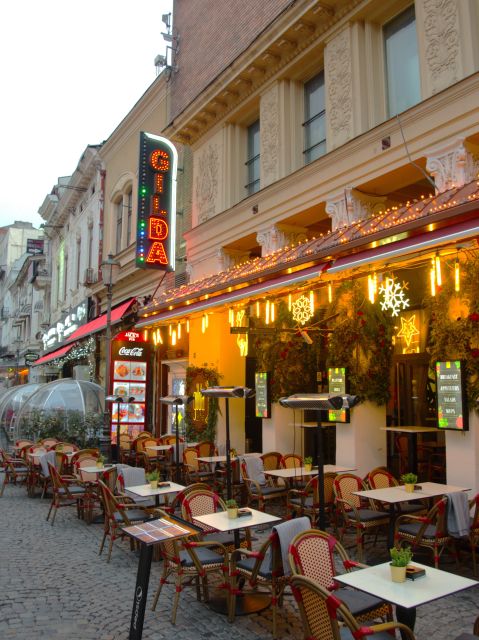
From there, I like the way the tour begins in the city’s everyday texture: auberges, taverns, and bookstores. This is the kind of early focus that helps the later big monuments make sense. When you see the more serious architecture later, it lands with more meaning because you already felt the street-level rhythm first.
Then comes a quick look at the 1980s, including the utopian architecture look from that era. Even without technical details, you can notice how that optimism sits next to more pragmatic city features. It is a good early warning that Bucharest history is not one style, it is a collage.
Practical tip: wear shoes you can walk in for hours. This is not a stop-and-stare loop, and you will be on your feet from the start.
Old Town to Calea Victoriei: seeing the city’s “layers”
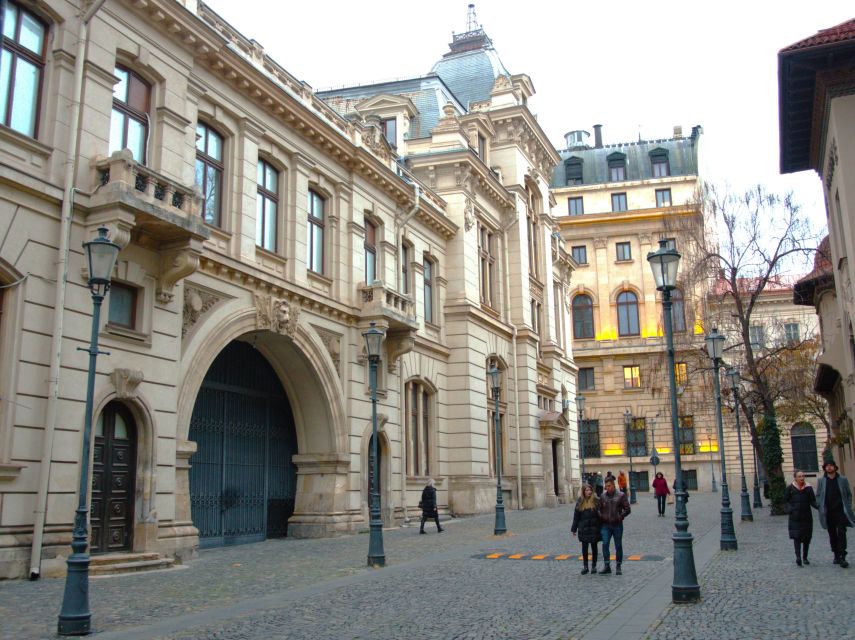
The route moves through the Old Town for about an hour of guided walking. This is where you get the late Middle Ages to more recent-day features in a way that feels connected, not separated by museum glass. If you care about street form, view corridors, and how buildings hug the road, you will enjoy this segment.
Next up is Calea Victoriei for a shorter guided stop. This avenue is the kind of place where Bucharest’s personality changes instantly. You go from older street character to grander, more formal city presence. It is also a fast way to pick up the “royal period” vibe the tour highlights, since this corridor is tied to that era’s urban ambition.
I found the time on these central streets useful because it sets a baseline for everything after. Without it, the Revolution-era squares and communist-era buildings can look like isolated landmarks. With it, you start to understand the city as a series of choices made at different times.
One consideration: because these segments are walking-heavy, your best strategy is to take breaks early only when you need them. If you wait until you are drained, the later emotionally intense areas can feel heavier.
Other day trips from Bucharest
- Bucharest: City Highlights Guided Walking Tour★ 4.9 · 1,482 reviews
- Bucharest: Communism and History Guided City Walking Tour★ 4.9 · 918 reviews
- Bucharest Highlights Walking Tour★ 5.0 · 469 reviews
University Square and Revolution Square: where Bucharest forces the issue
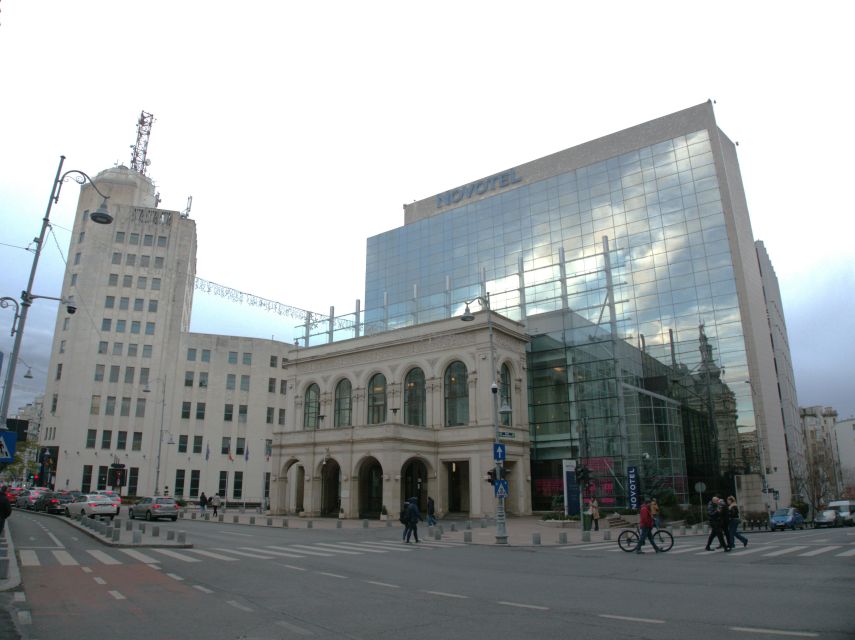
A major strength here is how the tour handles the communist period and the revolution story without turning it into a lecture. You spend time around University Square and then move into the emotional center at Revolution Square for about an hour of guided exploration.
What I like is the framing of communism as a gruesome social experiment, then linking that worldview to the physical spaces you see. Bucharest has the kind of architecture that can look impressive from a distance, yet feel unsettling when you know what it represented. Revolution Square is where the tour leans into that contrast.
The tour also connects this area with the cultural weight of nearby landmarks, including the National Art Gallery and the concert hall of the Romanian Athenaeum (you pass by, rather than linger for a long stop). Even if you are not going inside, it is valuable to understand why this is a cultural anchor for the city.
One useful thing to know: you will likely want a little mental breathing room after Revolution Square. If you get overwhelmed, ask for the snack or lunch break at a moment when the group naturally transitions. The tour can be flexible, and that flexibility matters on a long day like this.
Victory Boulevard and the end-of-century city mood shift
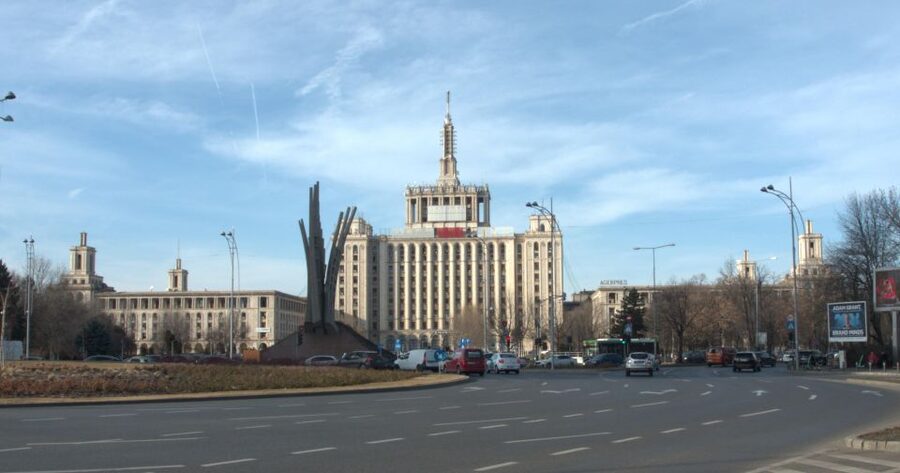
The tour’s next shift brings you into the Victory Boulevard and royal-to-late-century themes. You get a guided look tied to the route’s story arc, including how Bucharest moved through different “glory days” and styles as the century changed.
I like this part because it changes your pace and your eyes. After the heavy notes around communism and revolution, the city’s more celebratory architecture and broader avenues help you reset. It is still part of the same story, but the tone changes enough that the day stays interesting instead of draining.
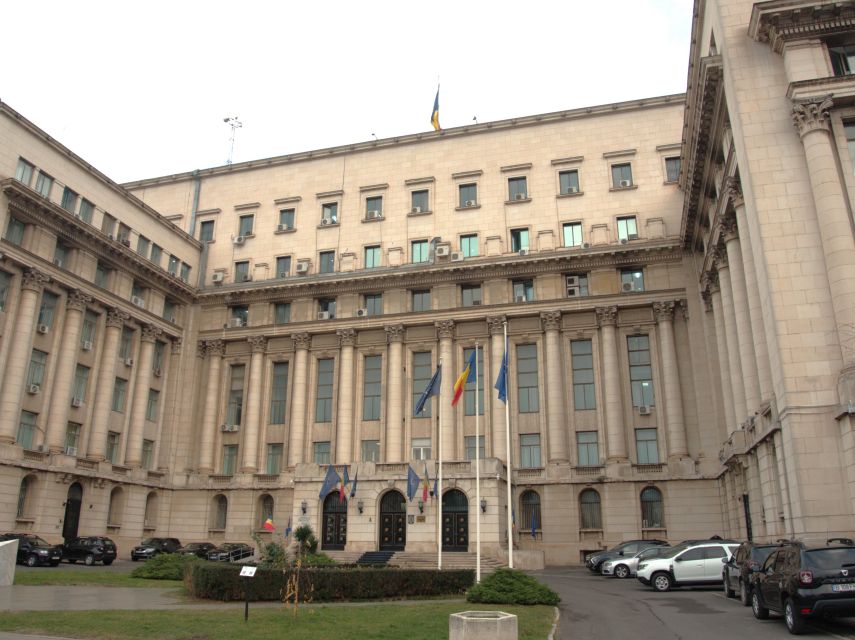
There is also a quick pass by National Military Circle. It is short, but it adds another layer. Bucharest has an odd way of putting power and culture into the same walking radius, and these brief look-ins keep you from missing that pattern.
Then you reach the Romanian Athenaeum pass-by moment. The tour does not require you to be an architecture expert to get value here. You learn where it sits in the city’s cultural narrative, and you are able to recognize it as more than a pretty building.
King Michael I Park, Triumphal Arch, and the Palace of the Press
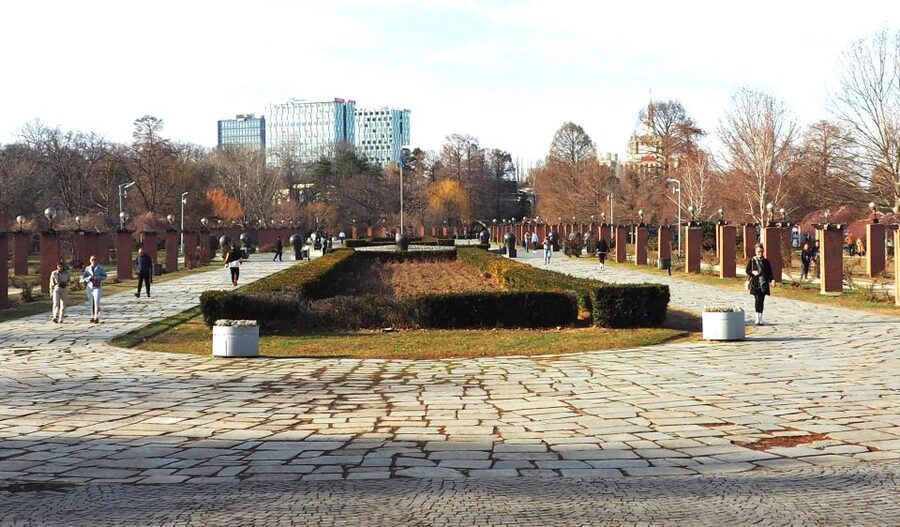
After you have worked through the central city, the tour uses transit in a way that keeps the day realistic. You take a metro ride to King Michael I Park, which the tour highlights as the largest park of Bucharest. This is a smart choice on an 8-hour walking day, and it prevents the route from turning into one long endurance test.
The guided stop in the park is about 30 minutes. I like this because it gives you space to see Bucharest with a different visual rhythm. Parks change how you read a city, even if you are not spending hours there.
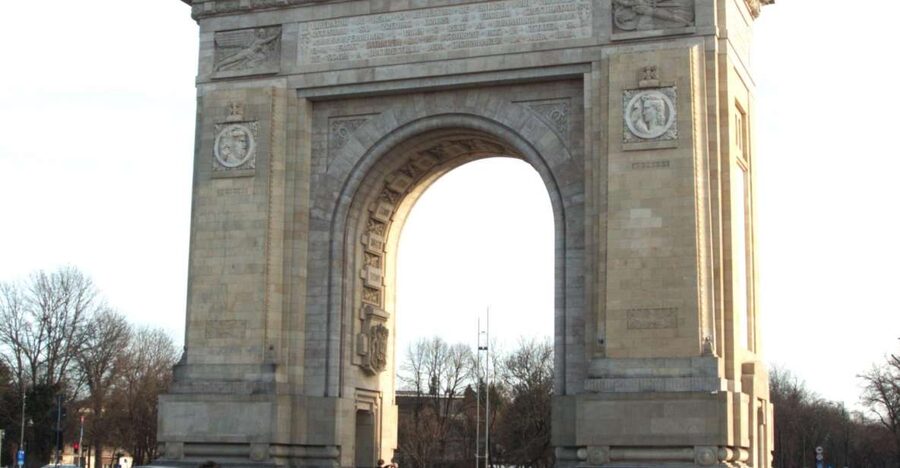
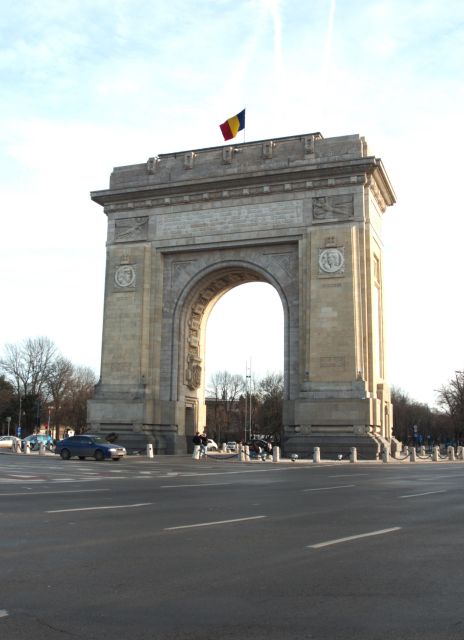
From there, you head toward the Triumphal Arch and the House of the Free Press, also described as the Stalinist Palace of the Press. This is one of the most memorable sections of the whole day because it compresses politics, symbolism, and architecture into a compact walkable arc.
The Triumphal Arch moment is a highlight because it feels distinctive in the Bucharest skyline. Meanwhile, the Palace of the Press area reminds you that some buildings were designed for control, not comfort. Put together, these stops help you see how different regimes tried to shape public space.
Practical tip: take a moment to step back and look at proportions. The tour is guided, but part of the fun is noticing how the city’s scale shifts between park space, monument space, and street space.
Village Museum: the outdoors museum that closes the loop
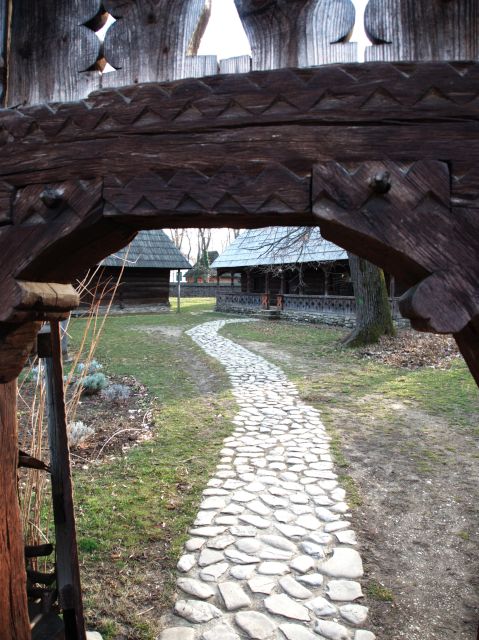
The final anchor is the Dimitrie Gusti National Village Museum, with about an hour of guided time included. This is Bucharest’s biggest outdoors museum, and it works as a kind of emotional reset after the political landmarks.
I like that the Village Museum is guided as part of the tour, because it changes how you move through the grounds. Instead of feeling like you are wandering from building to building, you can connect what you are looking at to the broader story you have been building all day.
You should also plan for real walking here. Outdoors museum grounds can feel bigger than you expect, and you will be moving between buildings. If you have limited stamina, tell your guide early so you can pace inside the hour.
Important note: Village Museum entry tickets are not included. That is easy to handle if you plan ahead. Still, the fact that guiding is included means you are paying for understanding as much as for access.
These pair well with the day you just read about.
- Bucharest: Dracula’s Castle, Peles Castle, & Brasov Old Town
★ 4.5 · 17,858 reviews - Bucharest: Dracula Castle, Peles Castle & Brasov Old Town
★ 4.6 · 10,891 reviews - Bucharest: Dracula’s Castle, Peleș Castle & Brașov Day Trip
★ 4.4 · 6,100 reviews - Bucharest: Palace of Parliament Tickets and Guide
★ 4.3 · 3,182 reviews - Bucharest: Day Trip to Dracula Castle, Peles Castle & Brașov
★ 4.4 · 3,049 reviews
Metro, included tickets, and why the group price can work
Let’s talk value, because this kind of all-day private tour can be a splurge. The price is $235 per group up to 10, and it runs about 8 hours. That means your cost per person depends entirely on group size.
If you have a full group of 10, that is about $23.50 per person for an all-day private guide plus transportation tickets and a guided Village Museum visit. If you have fewer people, the per-person number climbs, but you still get real benefits: a licensed local guide, a water bottle, public transportation tickets, and the structure of a day that actually connects Bucharest’s eras.
The included public transportation tickets matter more than people think. Bucharest walking days feel longer when you have to self-navigate transit, especially when you are trying to fit in King Michael I Park and the Triumphal Arch area without wasting time.
Two practical items to remember:
- bring sunscreen
- expect a long day of walking, especially in summer
Who should book, and who might want a shorter day
This private highlights tour is ideal if you want guidance through Bucharest’s contrasts. You will get the most from it if you like context, street-level orientation, and the idea that different eras leave different fingerprints on the same city.
It is also a good fit for small groups, since the tour price is per group up to 10. If you are traveling with family, friends, or a mixed-age group that still wants a single guide to keep everyone moving in the right direction, private format helps.
You might want a different option if you hate long walking days, or if heat in July-August is a major concern. The tour can be flexible, but it cannot rewrite physics. If you are sensitive to 35 to 40 C weather, plan your pace carefully.
Should you book this Bucharest highlights private walking tour?
I would book it if your priority is understanding Bucharest, not just collecting landmarks. The best part is how the day is built like a story, starting around Piața Unirii, moving through older streets and grand avenues, then hitting Revolution Square and ending with the Village Museum guided visit.
I would skip it if you want a light, relaxed stroll or you are not comfortable with a 7 to 8 hour walking schedule. For everyone else, it is a strong value way to cover major districts with a local licensed guide, plus the practical win of metro included.
FAQ
Where does the tour start?
The meeting point is the clock by the main fountain in Piața Unirii (Unirii Square).
How long is the tour?
It lasts about 8 hours, with roughly 7 to 8 hours of walking during the day.
Is this a private tour?
Yes. It is a private group tour, priced per group up to 10 people.
What languages is the live guide available in?
The live tour guide speaks Italian and English.
What is included in the price?
It includes a water bottle, city guiding services with a local licensed guide, guiding in the Village Museum, and public transportation tickets.
Do I need to buy Village Museum tickets?
Yes. Entry tickets for the Village Museum are not included.
What should I bring for summer weather?
Bring sunscreen, and be prepared for high temperatures in July and August, which can reach 35 to 40 degrees Celsius.
Just Added: New Tours From Bucharest
- Bear Watching in Transylvania 2-Day Tour
- National Village Museum and Comana Adventure Park
- Half Day Tour in Bucharest
- From Dracula to Ceaușescu- Romanian Terror Stories tour
- Full-Day Private Tour of Brasov City and Peles Castle from Bucharest
- Bucharest: Tour The Wine Road, 2 Boutique Wineries in 1 Day
- Bucharest Ceaușescu House Parliament Palace &Village Museum
- Full-Day Private Tour of Bucharest and Mogosoaia Palace
Walking Tours, compared.

Ghost Stories & Romanian Mythology Walking Tour
Read our review →
Walking Tour- Delightful Bucharest (Highlights, Stories, Sights)
Read our review →Browse the lists this tour appears in