Reviewed · GUIDED
From Bucharest: 10 Days Private Guided Tour in Romania
Romania gets a lot clearer with the right route. This private 10-day trip from Bucharest strings together history, mountains, and monastery art in a way that feels practical, not random.
The two best parts: first, the human side. You’ll travel with a private guide, and the experience is especially praised for Nicolas, from Nicolas Experience Tours. Second, the pacing is built around timed stops, so you can actually move through big sights like the Palace of Parliament and the painted monasteries without chaos.
One thing to consider is cost stacking. At $3,310.33 per person, you’ll want to confirm what’s covered for entrance fees, since the details hint that some admissions are included while the overall package notes entrance fees as not included.
In This Review
- Key Highlights You’ll Care About
- How a Private 10-Day Route Actually Makes Romania Feel Manageable
- Bucharest in One Strong Day: Parliament, Village Museum, Athenaeum, and Revolution Square
- Day Two Mood Shift: Curtea de Argeș, Poienari Fortress Ruins, and Transfăgărășan to Sibiu
- Hunedoara to Sarmizegetusa: Castles and Dacian Power in a Single Arc
- Transylvania Day Four: Salt Mine Breathing, Botanics, and the Wooden Church Craft
- Maramureș Stops Five and Six: Merry Cemetery Humor, Communism Memory, Barsana, Tihuța Pass, and Painted Houses
- Bukovina Monasteries Day Seven: Voroneț Blue, Fortified Humor, Sucevita’s Bible-Walls, and Moldovița Murals
- From Lucia Condrea’s Egg Museum to Bicaz Gorges, Day Eight Changes the Pace
- Sighișoara and Biertan: Medieval Saxon Fortification at Full Volume, Day Nine
- Final Day: Brașov Old Town, Bran Castle Myth, and Peles Castle Royal Details
- Price and Tickets: What $3,310.33 Buys You, and What You Must Confirm
- Should You Book This Private Romania Tour?
- FAQ
- What is the duration of the Romania tour?
- What locations does the tour start from?
- Is this a private tour?
- Will I have pickup, and do I travel with just my group?
- Do I travel with an English-speaking guide?
- Are meals and accommodation included?
- Is internet provided during the drive?
- What is the cancellation policy?
Key Highlights You’ll Care About
- Private guide plus private car: your group stays together, with pickup offered from your base in Bucharest.
- Nicolas Experience Tours: the guide quality is the standout strength, with sincere, practical attention.
- Carpathian road focus: Transfagarasan Highway is a major highlight, and it runs only seasonally.
- Bukovina painted monasteries: Voroneț, Humor, Sucevita, and Moldovița each have a distinct look and style.
- Medieval fortified towns: Sighișoara and Biertan bring Saxon-era defenses into view.
- A real mix of moods: communist-era history, wooden churches, salt mines, gorges, and castles, all in one circuit.
How a Private 10-Day Route Actually Makes Romania Feel Manageable
Romania can feel huge, even when you stay within “just a few” regions. The real value here is that someone does the planning for you, while you get to focus on the places themselves. With a private car for your group and a private licensed English-speaking guide/driver available throughout the tour, you avoid the typical stress of coordinating buses, tickets, and timing across multiple areas.
I also like the flexibility element. The tour notes great flexibility for changing the daily itinerary even after it starts. That matters in Romania, where weather, opening hours, and travel times can shift.
The tradeoff is obvious: you’re covering a lot of ground in 10 days. If you prefer slow travel and lots of downtime, you’ll feel the pace. But if you want first-time Romania to hit the major emotional and visual targets, this route is built for that.
Bucharest in One Strong Day: Parliament, Village Museum, Athenaeum, and Revolution Square
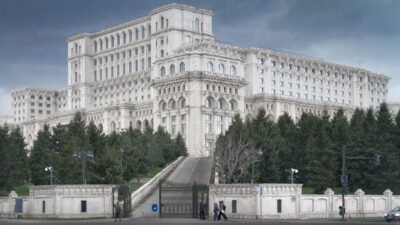
Bucharest is a fast start, and it doesn’t play cute. Your first major stop is Palace of Parliament (People’s House). It’s one of the most controversial administrative buildings on the planet, and the scale does something to your brain. It’s described as the second-largest administrative building on Earth after the Pentagon, so even a short visit can feel oddly humbling. Bring comfortable shoes, because you’ll likely spend time circling and viewing from multiple angles, not just snapping a photo and leaving.
Next comes the Bucharest National Village Museum Dimitrie Gusti. This is where you switch gears from politics and power to daily life and built tradition. The museum is framed around Romanian village culture and an ecological, sustainable way of living, presented through the layout and exhibits. It’s a great antidote to the Palace’s megalomania.
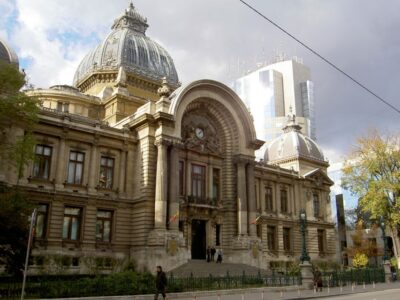
Then you’ll be at the Romanian Athenaeum, a major cultural symbol often associated with Bucharest itself. If you care about architecture and identity, this stop helps you understand why Bucharest isn’t only concrete and history headlines.
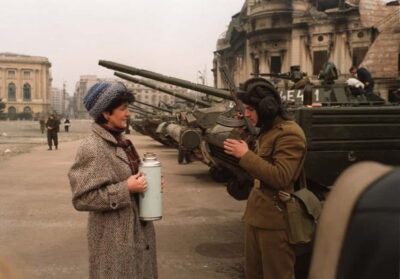
Finally, you end with Revolution Square (Piața Revoluției) and the story of the December 1989 events that removed Ceaușescu from power. The time here is short, around 30 minutes, but it’s one of those places where context makes even a brief stop feel heavy. After that, you get Old Town time, including Hanul lui Manuc, a fortified inn built in 1806 and tied to merchants who passed through the city.
Practical note: your Old Town block is about two hours, so use it for wandering between a few anchor streets rather than trying to see every restaurant at once.
Other day trips from Bucharest
- Castles of Transylvania: Private Day Trip from Bucharest★ 4.5 · 248 reviews
- Bucharest: Best of Bucharest Private Tuk-Tuk Tour★ 5.0 · 238 reviews
- Dracula’s Castle, Peles Castle and Brasov – Private Day Trip from Bucharest★ 5.0 · 211 reviews
Day Two Mood Shift: Curtea de Argeș, Poienari Fortress Ruins, and Transfăgărășan to Sibiu
Day two is about escalation. You start at Curtea de Argeș Monastery, tied to royal tombs and Wallachian power. The stop is framed by the older court ruins, the 13th-century Royal Church, and the story around the Argeș Monastery. Even in a short visit, it’s easy to see why this region attracts people who like stone, legends, and royal-era threads.
From there, you move to Poienari Castle (Fortress) ruins. It’s perched high above the Argeș River with Carpathian views, and the story connects to Vlad’s era. The text mentions a secret passage route Vlad used to escape north through the mountains. You’re not going there for comfort, you’re going for atmosphere. If you’re sensitive to hills or uneven paths, pace yourself.
The biggest visual payoff is Transfăgărășan Highway. This road is famous in part because it appeared on BBC Top Gear in 2009, but the bigger reason is the scenery and altitude. It’s fully open only from June to October, and the highest point is 2,042 meters, with a tunnel linking sides at Lake Bâlea (Balea Lac). If you’re traveling outside that June to October window, plan on reduced options, since the road is not fully open year-round.
The day closes with Sibiu’s Big Square (Piața Mare). Even if you only spend about an hour, you get the core feel: Saxon and Central European influence, plus cathedral presence that helps explain why Sibiu earned the European Capital of Culture label.
Hunedoara to Sarmizegetusa: Castles and Dacian Power in a Single Arc
Day three is a history roller coaster in the best way. First you hit Corvin Castle in Hunedoara, also called Hunyadi Castle or Castelul Huniazilor. It’s described as Gothic-Renaissance and one of the largest castles in Europe, also listed among the Seven Wonders of Romania. This stop is built for time. A two-hour block gives you room to take in architecture details, not just the front gate.
Then you step back in time further, to Densuș Church (St Nicholas’ Church), noted as the oldest stone church in Romania. The story here is layers: built in its present form in the 13th century, with a 2nd-century Roman temple site underneath and materials connected to Dacian fortresses. Inside, the murals are the real hook, including scenes where Jesus is shown wearing Romanian traditional clothes, created by Ștefan, with later additions by Simion de Pitești.
After that, it’s Sarmizegetusa Regia, the Dacian capital and major religious, military, and political center before Roman wars. The fortress sits on top of a 1,200-meter mountain and is part of a defensive system in the Orăștie Mountains. This stop is listed at about three hours, which makes sense because you’re walking and absorbing a landscape that feels strategic, not just scenic.
Tip: bring patience. When ruins are spread out and elevated, you’ll see more by moving slowly than by checking boxes.
Transylvania Day Four: Salt Mine Breathing, Botanics, and the Wooden Church Craft
Day four starts with Salina Turda, Turda Salt Mine. This is one of those stops people remember because it changes your mood. You descend into an underground world and then come out feeling like your lungs got a reset. It’s also pitched as beneficial for respiratory issues such as allergies or asthma, so if that’s relevant to you, this is a practical stop, not only a photo stop.
Next you’re at Grădina Botanică Alexandru Borza and then connected to Cluj-Napoca context. The wording ties this day to a city tour focus on architecture and historical styles, with Baroque, Renaissance, and Gothic influences. Even if you only spend around two hours, this is a nice change from purely medieval stone and castles, because it adds a lighter visual rhythm.
Then comes Surdesti Wooden Church. This one is all about craftsmanship and height. It’s called out as having an impressive tower height, and it dates to 1721. Wooden churches are easier to read emotionally than massive stone sites, because you feel the human hands in the details.
Maramureș Stops Five and Six: Merry Cemetery Humor, Communism Memory, Barsana, Tihuța Pass, and Painted Houses
Maramureș is where the tour shifts from grand monuments to something more personal. It includes Merry Cemetery (Sapânța), where crosses are colorful, and each tombstone includes humorous poems about the person who died. The premise is Dacian and folk attitude toward death and birth, and you end up laughing even if you also feel the care behind the art.
Then you visit the Memorial of the Victims of Communism and of the Resistance. This stop is about learning why Romania fought to escape communist oppression and how damaging totalitarian rule was. It’s about emotion and context, not sightseeing, so give it your full attention.
The next big spiritual moment is Barsana Monastery. It’s described as one of the most beautiful wooden monasteries in Romania, with a noted height around 57 meters. The stop is framed as a mix of spiritual connection and that barefoot-courtyard feel, so it’s not just a look-and-go building.
After Barsana, you head to Tihuța Pass in the Eastern Carpathians, a high mountain pass. It’s linked to Dracula because Bram Stoker used the name Borgo Pass for the novel, even though he most likely never visited. There’s also mention of Hotel Castel Dracula at around 1,116 meters and built in 1976, which turns a real place into a themed waypoint.
Finally, you reach Ciocănești, famous for merry painted houses with traditional motifs on both sides of the Golden Bistrița River. It’s surrounded by pine and spruce forests and meadows, and the tour frames it as very close to Vatra Dornei. This is a good day for photos, but also for slowing down and noticing the patterns.
These pair well with the day you just read about.
- Bucharest: Dracula’s Castle, Peles Castle, & Brasov Old Town
★ 4.5 · 17,858 reviews - Bucharest: Dracula Castle, Peles Castle & Brasov Old Town
★ 4.6 · 10,891 reviews - Bucharest: Dracula’s Castle, Peleș Castle & Brașov Day Trip
★ 4.4 · 6,100 reviews - Bucharest: Palace of Parliament Tickets and Guide
★ 4.3 · 3,182 reviews - Bucharest: Day Trip to Dracula Castle, Peles Castle & Brașov
★ 4.4 · 3,049 reviews
Bukovina Monasteries Day Seven: Voroneț Blue, Fortified Humor, Sucevita’s Bible-Walls, and Moldovița Murals
This is one of the tour’s emotional peaks. Day seven is packed with painted monasteries, and each one has a distinct identity.
Start with Voroneț Monastery, called the Sistine Chapel of the East because of the intense blue color known in Romania as Voroneț blue. It’s tied to Stephen the Great and the commemoration of victory at the Battle of Vaslui. The story behind the artwork matters here, because it turns the frescoes into part of a lived political and spiritual moment.
Then you go to Humor Monastery, described as a fortified monastery built about 500 years ago. The point is protection. Churches were built away from enemies, hidden in woods or in rock caves, and Humor is an example that endured.
After that comes Sucevița Monastery, noted as one of the most beautiful of the region, with biblical scenes painted in a way that acts like an open book. It’s also connected to UNESCO World Heritage status in the description, which you’ll understand once you see the scale and clarity of the art.
The day ends with Moldovița Monastery, built around 1532. This one is described as mixing Byzantine, Gothic, and Moldavian elements, and the standout is the mural artwork on both inside and outside. If you want to understand why northern Moldavia became famous for sacred art, this is where the tour makes it feel obvious.
Practical note: these monasteries can be visually intense. Take a minute at each one to pick one detail to focus on, otherwise they start blending into a single big blue memory.
From Lucia Condrea’s Egg Museum to Bicaz Gorges, Day Eight Changes the Pace
Day eight adds more curiosity than big-ticket landmark power. First is Muzeul Internațional al Oualor Lucia Condrea, a museum focused on eggs, opened in 1993. It’s presented as unique in Romania and possibly the world, with over 5,500 exhibits arranged across 56 display cases.
Then you visit the Popa Museum in Târpești near Târgu Neamț, founded by Nicolae Popa. The story is personal and shaped by hardship. After being wounded in World War II, imprisoned by communists, and left with little besides his house, he turned to art and became known as a naive sculptor. This stop is small and human, and it pairs well after the monasteries.
After museums, you switch to nature with Bicaz Gorges. The tour frames it as a walk along a river the mountains carved through virgin forests. The time here is about three hours and it’s listed as free admission in the details, which makes it a good value add if you want a break from ticketed indoor spaces.
Bring layers. Even in warmer seasons, gorges and river areas can feel cooler.
Sighișoara and Biertan: Medieval Saxon Fortification at Full Volume, Day Nine
Day nine is all about Transylvania’s fortified medieval identity. You start with Sighișoara’s Clock Tower, plus the Arms museum, and then you explore the medieval citadel. The tour describes Sighișoara as built in 1280 and a living medieval fortress, with over 700 years of habitation. That’s rare. It changes how you walk the streets, because it doesn’t feel like a staged set.
Then comes Biertan Fortified Church, a UNESCO site and a major Saxon settlement marker. It’s described as a hillock church surrounded by three defensive walls and seven bastions. The setting itself is part of the story, because fortified churches were designed to protect the community.
If you like architecture plus defense plus community life, this is a strong pairing in one day.
Final Day: Brașov Old Town, Bran Castle Myth, and Peles Castle Royal Details
Day ten starts in Brașov with the Black Church (Biserica Neagră) and a walk through the Old Town. You’ll cover the Old Town square and medieval city walls, then you get free time in cafés. This is one of the few points in the tour where you can reset your brain after a heavy run of sites.
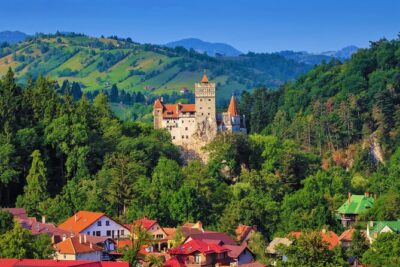
Next you go to Bran Castle, often linked to Dracula. The tour frames it as between myth and history, noting that the fictional castle matches Bran so closely that people assume Bram Stoker used it as inspiration. Whether you care about Dracula lore or not, this stop is still about how legends stick to real stone. You also get a chance to try Romanian foods outside the castle, including handmade cheeses, pálinka, and traditionally produced ham and sausages.
To end, you visit Peles Castle, the Romanian royal family’s summer residence. The description is simple here: it’s widely seen as one of the most beautiful castles in Europe, and the point is that you’ll feel the royalty in the details during your visit.
Price and Tickets: What $3,310.33 Buys You, and What You Must Confirm
Let’s talk value, because the price is big enough that details matter. At $3,310.33 per person for about 10 days, you are paying for a full package of private movement and private expertise: private car, pickup, a guide/driver who speaks English throughout, and wifi in the vehicle.
Where the budgeting gets tricky is that the tour data includes mixed signals about admissions. Many stops list admissions as included or free. At the same time, the general package notes that entrance fees as per the itinerary are not included. That mismatch is the one thing I’d treat as a must-check.
Also note that accommodation and meals for you are not included. So your real all-in cost depends on where you stay and how you eat during transfers. If you already have lodging lined up, the base tour price might feel easier to swallow. If you still need hotels and daily meals, budget for it early so there are no surprises.
The good news is that private cars often save time compared with public transport in Romania. And in a 10-day window, time is the currency you can’t always buy back.
Should You Book This Private Romania Tour?
I’d book this tour if you match one of these styles:
- You want a first-time Romania overview with a local English-speaking guide from start to finish.
- You care about architecture and culture across regions, from Bucharest to Transfagarasan to Bukovina painted monasteries.
- You like the idea of private logistics, where your group can keep moving without waiting on strangers.
- You want a guide who is genuinely praised, especially Nicolas from Nicolas Experience Tours.
I’d hesitate if:
- You have a low tolerance for long days and a lot of driving.
- You rely on the assumption that all entrance fees are fully covered, because the package details suggest you should confirm what’s included for your exact dates.
If you do book, my practical advice is simple: before you pay, ask for a clear written list of which entrance fees are included at each stop, and confirm Transfăgărășan Highway timing based on your month. That one check turns this into a smooth, high-value trip instead of a budget puzzle.
FAQ
What is the duration of the Romania tour?
The tour is listed as about 10 days.
What locations does the tour start from?
It starts in Bucharest, Romania.
Is this a private tour?
Yes. It’s a private tour/activity, and only your group participates.
Will I have pickup, and do I travel with just my group?
Pickup is offered, and you travel in a private car (tourism car or minibus) only for you and your friends or family.
Do I travel with an English-speaking guide?
Yes. A private, licensed English speaking guide/driver is available throughout the tour.
Are meals and accommodation included?
No. Accommodation, meals, and beverages are listed as not included.
Is internet provided during the drive?
Yes. Complimentary wireless internet access is provided in the comfortable car.
What is the cancellation policy?
Free cancellation is offered. You can cancel up to 24 hours in advance for a full refund.
Just Added: New Tours From Bucharest
- Bear Watching in Transylvania 2-Day Tour
- National Village Museum and Comana Adventure Park
- Half Day Tour in Bucharest
- From Dracula to Ceaușescu- Romanian Terror Stories tour
- Full-Day Private Tour of Brasov City and Peles Castle from Bucharest
- Bucharest: Tour The Wine Road, 2 Boutique Wineries in 1 Day
- Bucharest Ceaușescu House Parliament Palace &Village Museum
- Full-Day Private Tour of Bucharest and Mogosoaia Palace
Guided, compared.
Bucharest to Dracula Castle, Peles Castle and Brasov Guided Tour
Read our review →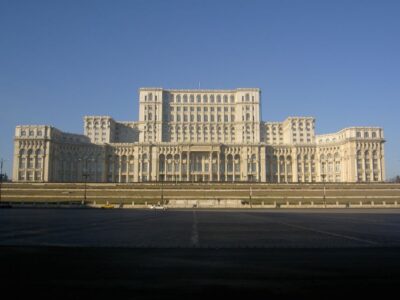
Palace of Parliament in Bucharest – fast-track tickets and guide
Read our review →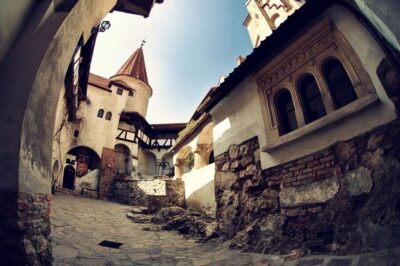
Dracula Castle, Peles Castle & Brasov Guided Tour
Read our review →