
Reviewed · TRANSYLVANIA TOURS
7-Day Romania Tour -Transylvania and Painted Churches
Dracula and painted churches, in one week. This Romania trip strings together UNESCO sights in Transylvania and the world-famous painted monasteries of Bucovina, with a driver that handles the roads while you focus on the stops. You get a clear route, built for a first visit, without the stress of figuring out transport between far-flung towns.
I also like that the itinerary mixes famous names with daily-life Romanian culture, so you are not stuck only in costume-and-castle territory. One thing to consider, though, is the amount of time in the car. This is a lot of distance in a short span, and you will feel it on the longer crossing days.
You start at 8:00 am, with pickup offered from Bucharest. Depending on your arrival time, you may also get a quick orientation of Bucharest highlights, then the trip really kicks into gear toward Transylvania.
In This Review
- Key things that make this tour worth your attention
- From Bucharest to Transylvania: how the route keeps you sane
- Palace of Parliament in Bucharest: a modern start with a big wow factor
- Peles Castle in Sinaia, Bran Castle near Brasov: royalty and Dracula vibes, in balanced doses
- Peles Castle
- Bran Castle
- Brasov and Tâmpa Mountain cable-car time: a clear base for the region
- Agapia Monastery and the painted churches of Bucovina: Orthodox art you can actually notice
- Agapia Monastery and its workshops
- Voronet Monastery: the Last Judgment mural
- Moldovita Monastery: frescoes with a specific kind of drama
- Sucevita Monastery: the Virtue Staircase
- Red Lake and Sighisoara: from gothic scenery to a living medieval town
- Sighisoara old town walk: Clock Tower, Church on the Hill, and Vlad Tepes birthplace
- Biertan Fortified Church and Sibiu: UNESCO stonework plus Saxon city design
- Biertan Fortified Church (UNESCO)
- Sibiu walking tour and the Saxon feel
- Brukenthal Museum, Evangelical Cathedral, Liar’s Bridge, and the Orthodox Cathedral replica
- Curtea de Arges Monastery to Bucharest: history lessons on the way back
- Price and value: what you are really paying for
- Is this tour for you? Best fit and smart cautions
- Should you book this Transylvania and Painted Churches tour?
- FAQ
- What city does the tour start from?
- How long is the tour?
- What is included in the price?
- Is food included?
- Are admission tickets included for the sights?
- Does the tour include UNESCO World Heritage Sites?
- Is this a private tour?
- Are service animals allowed?
Key things that make this tour worth your attention
- Two UNESCO stops in Transylvania, including the still-inhabited medieval citadel of Sighisoara and Biertan’s fortified church.
- Bucovina’s painted monastery route, including Voronet, Moldovita, and Sucevita with exterior murals and fresco details.
- Dracula storytelling with real locations, from Vlad Tepes birthplace history in Sighisoara to Bran Castle’s hilltop look.
- Royal architecture in Sinaia, especially Peles Castle with its ornate interiors and Wagner-themed art scenes.
- Multiple monastery visits that show Romanian Orthodox practice beyond postcard views.
- Comfort built in, with 6 nights in B&B-style inns and air-conditioned transport throughout.
From Bucharest to Transylvania: how the route keeps you sane
This tour is designed around one big idea: you show up, then let a driver-guide do the heavy lifting. That matters in Romania, because the distances between regions can be surprising on a map, and the best time-savers are always the boring ones like parking, route planning, and getting you to the right road at the right hour.
You also start early at 8:00 am, which is a quiet advantage. Early departures help you hit the day’s main sights before lighting changes and before crowds become an issue. The group is private, meaning it is just your party, not a shared cattle-cart approach.
One more practical note, you will likely be using cars for long stretches. Bring snacks if you know you get hungry between stops, and plan for a calmer pace inside churches and museums compared with the more energetic castle days.
Palace of Parliament in Bucharest: a modern start with a big wow factor
The first stop is the Palace of Parliament, with a stated time of about 3 hours. Admission is not included, so this is a good example of how you should treat the headline sights as visit plans, then budget separately for ticketed entries where needed.
If your flight lands at a reasonable hour, you may also get a quick tour of major Bucharest sights. That depends on your arrival time, but the idea is smart: you do not lose the first day to logistics.
Even if you are not a Soviet-era architecture buff, it is worth stepping inside at least once. The building size is hard to process from outside, and the guided look helps you connect the structure to Romania’s more modern political story.
Castles, forests, and the region Dracula made famous
- Transylvania and Dracula Castle Full Day Tour from Bucharest★ 4.5 · 1,589 reviews
- Castles of Transylvania: Private Day Trip from Bucharest★ 4.5 · 248 reviews
- 2-Day Medieval Transylvania with Brasov,Sibiu and Sighisoara Tour from Bucharest★ 4.5 · 145 reviews
Peles Castle in Sinaia, Bran Castle near Brasov: royalty and Dracula vibes, in balanced doses
Day 2 is split between Peles Castle and Bran Castle, and the contrast is the point. Sinaia brings you 19th-century elegance, while Bran is the Dracula magnet, perched on a hilltop that practically begs for legends.
Peles Castle
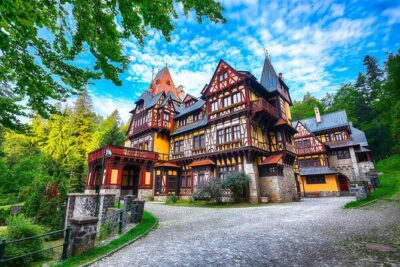
Peles Palace is described as one of the best-preserved royal palaces in Eastern Europe. Expect lots of ornament work, both outside and inside. The interiors are especially packed with details, including wood sculptures and paintings connected to Richard Wagner’s works. That Wagner link is a fun twist if you like opera or know a bit of European arts history, because the palace decorations are not just generic royal flair.
Time is about 2 hours, and again, admission tickets are not included. If you want good photos, go with a bit of patience in the indoor rooms where you may have to share space and step around groups.
Bran Castle
Then you head to Bran Village for Dracula’s Castle, with about 2 hours allocated. The tour frames the castle’s hilltop look as the inspiration behind many myths and legends. Even if you come for Dracula, I like using Bran as a springboard. It is a good moment to talk about how Transylvania legends got packaged into modern tourism.
Bran’s ticket is also not included, so plan your time and budget accordingly.
Brasov and Tâmpa Mountain cable-car time: a clear base for the region
On Day 3, you get Brasov Historical Center for about 2 hours, and this stop is marked free for admission. Brasov sits in central Romania, surrounded by the Southern Carpathians. It is a practical base, and the old town is well preserved enough that you can feel the medieval street pattern without needing a ton of extra imagination.
The tour suggests seeing the area best from Tâmpa Mountain (995 m) by cable car. Cable car access itself is not described with a ticket note here, but the stop is marked free, so you can treat Brasov as your breathing room day, then keep your energy for the monasteries that come next.
If you only do one Transylvania town besides the UNESCO sites, Brasov is a strong pick. It has the feel of a lived-in city, and it gives you the “mountain edge” context for what comes next.
Other day trips from Bucharest
- 4×4 Driving Experience at Flying Altitudes – 7 Days
★ 5.0 · 13 reviews - 7-Day Private Tour of Transylvania from Bucharest
★ 5.0 · 13 reviews - Amazing Romania – Seven day private tour from Bucharest
★ 5.0 · 7 reviews - Transylvanian week
★ 5.0 · 7 reviews - 7 days Private Romania Grand Tour from Bucharest
★ 5.0 · 6 reviews
Agapia Monastery and the painted churches of Bucovina: Orthodox art you can actually notice
This is where the tour earns its name. It is not only castles and legends. It is churches where you can spot how Romanian Orthodox life shows up in images, walls, and workshop work.
Agapia Monastery and its workshops
You stop at Agapia Monastery on the way before reaching Gura-Humorului. It is described as one of the largest nunneries in Romania, with more than 300 nuns working together in different workshops. The tour notes you can visit workshop areas where nuns make things like painted icons and handmade carpets.
This stop is marked free for admission, which makes it a high value stop. Also, workshops are not just a sightseeing gimmick. They show craft as daily practice, not just a souvenir business. When you look at icons after seeing how they are made, you start noticing the care that goes into even small details.
Voronet Monastery: the Last Judgment mural
Then comes Manastirea Voronet, erected in 1488. It is painted with a mix of Byzantine, Gothic, and local elements. The exterior murals are the star, including a famous Last Judgment scene unique in the whole world, according to the tour description.
You get about 2 hours here, and admission is not included. I suggest using the time to walk the exterior walls slowly before rushing into any indoor areas. The mural story is easier to “read” when you take a minute to find the main figures and the overall composition.
Moldovita Monastery: frescoes with a specific kind of drama
Next is Moldovita Monastery, built in 1532. You reach it by a beautiful road through Bucovina Mountains, with panoramas from Ciumarna Pass. That pass detail matters because the approach itself sets expectations. The day is about atmosphere, not only architecture.
Inside the central painted church, there are frescoes from 1537. The tour also points out the southern exterior wall depiction of the Siege of Constantinople in AD 626, including besiegers shown in Turkish dress. That choice is meant to keep parishioners focused on the “current enemy,” at least in the minds of the era. It is a reminder that religious art often carried real political messaging too, not just spiritual symbolism.
Time is about 1 hour, with admission not included.
Sucevita Monastery: the Virtue Staircase
Finally you visit Sucevita Monastery for about 1 hour. The highlight is the “Virtue Staircase,” described as impressive in its dimension and contrast between angels’ order and devil’s chaos.
Sucevita tends to hit different than Voronet. Voronet feels iconic and sweeping; Sucevita feels more like a moral drama mapped into stone and paint. If you love noticing how art teaches, this is the stop to slow down at.
Red Lake and Sighisoara: from gothic scenery to a living medieval town
Day 5 brings a big scenery shift. You cross the Eastern Carpathian Mountains through Bicaz Gorge, then arrive at the Red Lake. This stop is about 1 hour and is marked free for admission.
The tour ties Red Lake to the Dracula story atmosphere described by Bram Stoker, then reminds you that you are moving into an area with the Hungarian Szekler community. That detail is useful because it reframes Transylvania as more than one ethnic or one-language story. It is a patchwork region, and the architecture and traditions reflect that.
In the evening, you reach Sighisoara Medieval Town, which is UNESCO-listed and described as the only still inhabited medieval fortress in Europe. You get about 1 day allocated, and admission is marked free for this visit segment.
If you like places that feel lived-in, Sighisoara is a good fit. You are not only looking at ruins. You are walking through a town that still has routines.
Sighisoara old town walk: Clock Tower, Church on the Hill, and Vlad Tepes birthplace
On Day 6, Sighisoara’s Old Town is explored in more detail, with about 2 hours planned. You start with the cobbled streets, then see burgher houses and ornate churches.
This day includes:
- The Clock Tower
- The Church on the Hill
- Dracula’s house, where Vlad Tepes was born in 1431
Admissions are listed as not included for this segment, so budget for any ticketed access depending on what you choose to enter.
What I like about Sighisoara is that it lets you mix the legend layer with the everyday medieval town layer. You can look at the Dracula connection for the story, then shift to town architecture and church views to understand why people stayed here.
Biertan Fortified Church and Sibiu: UNESCO stonework plus Saxon city design
Day 6 continues into Biertan Fortified Church, then later on to Sibiu for sightseeing.
Biertan Fortified Church (UNESCO)
Biertan is one of the UNESCO sites and described as one of the first German settlements in Transylvania. The fortified church is surrounded by three rows of fortifications, built by German peasants and used for nearly 300 years as the residence of the Transylvanian Archbishop.
There is also an intriguing human detail. A room in the citadel was used for a long time as a reconciliation place for couples about to divorce. That story is not just trivia. It highlights that fortifications were not only about defense. They were about keeping community life functioning in difficult times.
Admission is listed as not included here, and the time is about 1 hour.
Sibiu walking tour and the Saxon feel
Then you move to Sibiu’s Tourist Information Center for a walking tour. Sibiu is described as the chief city of the Transylvanian Saxons. You walk around with the tour referencing old surrounding defense walls and remaining towers tied to guilds.
Time here is listed as 1 day, and admission is not included.
Sibiu is where the trip becomes more relaxed. You start focusing less on “one big landmark” and more on how a planned city feels. The streets make it easy to take breaks, which is helpful after the intense monastery and castle blocks.
Brukenthal Museum, Evangelical Cathedral, Liar’s Bridge, and the Orthodox Cathedral replica
On Day 7, your Sibiu time includes major landmarks. The Brukenthal Museum is assembled by Baron Brukenthal, governor of Transylvania at the end of the 18th century. The Evangelical Cathedral is noted as completed in its actual shape in 1520, with an exquisite fresco of the Crucifixion on the north wall of the choir dating from 1445.
You also see the Passage of Stairs linking the Upper town to the Lower town, the Liar’s Bridge built in 1859, and a Byzantine-style Orthodox Cathedral that is described as a replica of St. Sophia in Constantinople.
Because admissions are not included for these museum and cathedral elements in the tour notes, treat the day as part viewing and part paying if you want interior access.
Curtea de Arges Monastery to Bucharest: history lessons on the way back
The trip ends with Curtea de Arges Monastery, then a drive back to Bucharest.
Curtea de Arges is described as the first capital of Wallachia, with the old Princely Court and monastery. It is also described as the burial place of three of the four Romanian Kings of the Hohenzollern dynasty.
Admission is listed as not included, and time is about 1 hour. This stop works well as a closing chapter because it broadens the story beyond Transylvania. Even if you came for Dracula, you end up with a more complete picture of Romanian royal and religious history.
Price and value: what you are really paying for
At $1,708.12 per person for a 7-day trip with 6 nights of accommodation on a B&B basis, the price is not a budget bargain, but it can be good value depending on how you travel.
Here is what is included:
- 6 nights accommodation on a B&B basis
- Driver/guide
- Transport by air-conditioned car, minivan, or minibus
- Fuel and parking fees
What is not included:
- Food and drinks (not specified)
- Most admission tickets are listed as not included, while a few stops are marked free
So the cost mostly covers your biggest pain points: staying somewhere decent for six nights, moving between regions without dealing with route planning, and having a guide-driver to keep the day running. If you are the type who would otherwise rent a car and spend time decoding schedules and ticket lines, this package can feel fair.
Your key budget add-ons are meals and admissions. The tour does include several free stops, like Agapia Monastery, Red Lake, and Brasov Historical Center in the notes, which helps offset costs. Still, castles, palaces, and cathedral interiors can add up.
Is this tour for you? Best fit and smart cautions
This tour is a strong match if you:
- Want a first-time route that hits Transylvania towns plus Bucovina painted monasteries
- Like history that shows up in real places, not only movies and legend
- Prefer a structured plan where transport is handled
- Enjoy walking towns that still function, like Sighisoara and Sibiu
You may want to consider a slower-paced option if:
- You dislike long car days, because this route strings together regions across major geographic barriers
- You prefer fully flexible schedules, since this itinerary is built around set timing and planned stops
My practical advice: wear comfortable shoes and plan to treat travel days as part sightseeing and part recovery. The scenery is the reward, but your legs still have a say in it.
Should you book this Transylvania and Painted Churches tour?
If you want one trip that gives you castles, UNESCO sites, and the painted monastery experience without doing logistical homework, I think this is a sensible choice. The strongest part is the balance between the big-name icons and the Romanian Orthodox art route in Bucovina, which is what turns the week from a theme park into a real cultural journey.
Book it if you are okay with organized pacing and car time, and if you are prepared to budget for meals and tickets at major paid sights. If you want to spend days lingering in fewer places, you might prefer a tailored private route that reduces driving. But for most first-time visitors, this one-week package hits a sweet spot.
FAQ
What city does the tour start from?
The tour is based in Bucharest, Romania. Pickup is offered, and the meeting/start time is 8:00 am.
How long is the tour?
The duration is 7 days (approx.), with 6 nights of accommodation included.
What is included in the price?
The price includes 6 nights accommodation on a B&B basis, a driver/guide, transport by air-conditioned car/minivan/minibus, plus fuel and parking fees.
Is food included?
No. Food and drinks are not included, unless specified.
Are admission tickets included for the sights?
Most stops list admission ticket not included. Some stops are marked admission ticket free, including Agapia Monastery, Brasov Historical Center, and Red Lake.
Does the tour include UNESCO World Heritage Sites?
Yes. The highlights specify two UNESCO World Heritage Sites, and the route includes Sighisoara and Biertan Fortified Church.
Is this a private tour?
Yes. It is described as a private tour/activity, meaning only your group participates.
Are service animals allowed?
Yes. Service animals are allowed.
Just Added: New Tours From Bucharest
- Bear Watching in Transylvania 2-Day Tour
- National Village Museum and Comana Adventure Park
- Half Day Tour in Bucharest
- From Dracula to Ceaușescu- Romanian Terror Stories tour
- Full-Day Private Tour of Brasov City and Peles Castle from Bucharest
- Bucharest: Tour The Wine Road, 2 Boutique Wineries in 1 Day
- Bucharest Ceaușescu House Parliament Palace &Village Museum
- Full-Day Private Tour of Bucharest and Mogosoaia Palace
Transylvania Tours, compared.
Transylvania and Dracula Castle Full Day Tour from Bucharest
Read our review →
Castles of Transylvania: Private Day Trip from Bucharest
Read our review →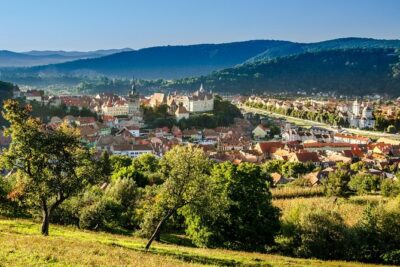
2-Day Medieval Transylvania with Brasov,Sibiu and Sighisoara Tour from Bucharest
Read our review →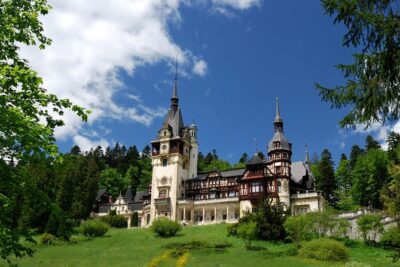
2-Day Transylvania from Bucharest: Brasov, Bran, Sighisoara
Read our review →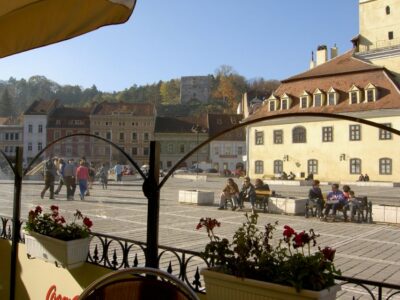
Transylvania: Cultural Full-Day Trip by Minivan
Read our review →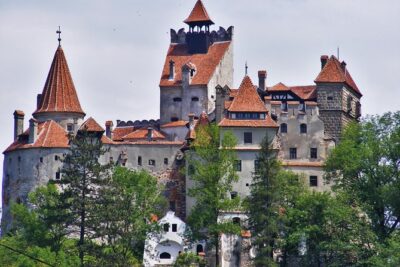
4-Day Private Tour in Transylvania from Bucharest
Read our review →
Private Tour: Transylvanian Castles and Brasov’s Medieval Old Town
Read our review →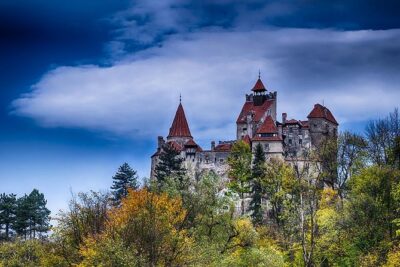
Transylvania Castles 4-day tour from Bucharest
Read our review →Browse the lists this tour appears in