
Reviewed · MARAMURES TOURS
8 Days Private Tour in Romania – Transylvania, Maramures & Moldova
Romania feels like several countries in one trip. This private 8-day route strings together Bucharest, fortified churches, wooden monasteries, mountain gorges, and royal castles without forcing you into a rigid group schedule.
I like that you travel in a private car and licensed English guide/driver, with flexibility if your day runs long or you want to adjust. I also like how many stops are UNESCO-level sights, from Saxon strongholds to painted monasteries.
The main consideration is that this is a lot to pack into eight days, and the big sights often require entrance tickets you pay separately.
In This Review
- Key highlights worth planning around
- Bucharest First: Palace of Parliament, Village Museum, and Revolution Square
- From Wallachia to Sibiu: Curtea de Arges, Poienari, and Transfagarasan Highway
- Saxon Strongholds: Biertan Fortified Church and Sighisoara’s Medieval Core
- Turda Salt Mine, Cluj Botanical Gardens, and Surdesti Wooden Church
- Maramures Humor and Communism Memory: Sapanta and a Resistance Museum
- Barsana, Sucevita, Moldovita: Moldavia’s Painted Fortified Monasteries
- Voroneț Blue and Humor Monastery: Bukovina Frescoes Plus Bicaz Gorges
- Brasov Castles Finish: Black Church, Bran, and Peles
- Price and Value for a Private 8-Day Romania Loop
- Should You Book This Romania Private Tour?
Key highlights worth planning around
- Private door-to-door flexibility, with a guide who travels with you through the whole circuit
- Bucharest contrasts, from the Palace of Parliament to the Village Museum and Revolution Square
- Transylvania’s fortified story, including Biertan and the medieval citadel feel of Sighisoara
- Open-air wow on the calendar, especially the Transfagarasan Highway being fully open only June to October
- Maramures and Moldavia wooden and painted churches, including tall Barsana and the famous Voroneț blue frescoes
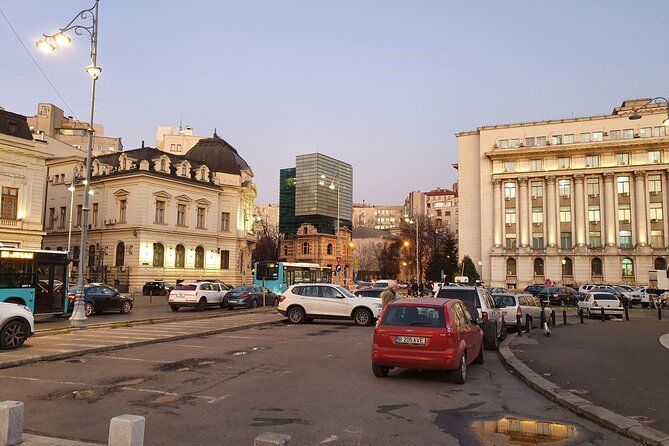
Bucharest First: Palace of Parliament, Village Museum, and Revolution Square
Start in Bucharest, and do it the smart way, with a private guide and driver handling the logistics so you can focus on what you came for. The day balances heavy history with classic Romanian culture, which is exactly what helps Bucharest click.
The day’s biggest stop is the Palace of Parliament (People’s House). Even if you are not into politics, you will feel the scale. It is described as one of the largest administrative buildings on the planet, and standing in front of it makes that feel real. You will have about 2 hours, and entrance is not included, so plan for that cost.
Next is the National Village Museum Dimitrie Gusti, a good pause after all that granite. You get a concentrated look at traditional Romanian village life and how people built in harmony with their surroundings. With about 1 hour, it is long enough to walk carefully and short enough that you do not feel rushed.
Then comes the Romanian Athenaeum. It is one of Bucharest’s signature cultural landmarks, tied to Calea Victoriei and recognized as part of Europe’s heritage list. You will see it for about 30 minutes, and admission is not listed as included, so you may just enjoy the exterior and quick context unless your guide suggests otherwise.
The tone shifts again at Revolution Square. Here, the story is tied to December 1989 and the fall of Ceaușescu, plus the central-committee building role in the revolution. The stop is about 30 minutes, and admission is free. If you like history that feels close, this kind of place does that.
You end in the Old Town with time to wander. The route includes Hanul lui Manuc, a fortified inn dating to the early 1800s, built around 1806 by Manuc Bei. The guide helps connect the dots, and you get around 2 hours for the old-city streets, where the mix of commerce, architecture, and people gives the area its energy.
From Wallachia to Sibiu: Curtea de Arges, Poienari, and Transfagarasan Highway
Day 2 is where Romania starts getting dramatic. You move out of Bucharest’s urban rhythm toward Wallachia and then into Transylvania, with viewpoints that make the drive itself part of the experience.
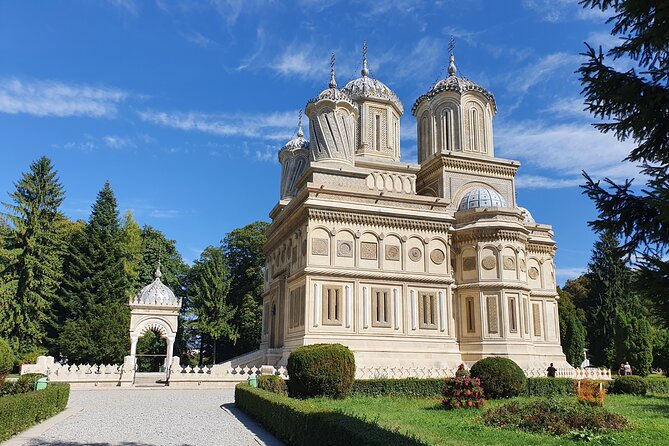
Curtea de Argeș Monastery sets the tone first. You will spend about 30 minutes around the royal church and tombs, plus nearby ruins linked to the Wallachian princely court. The time is short, so I’d treat it as an introduction and let your guide’s storytelling do the heavy lifting.
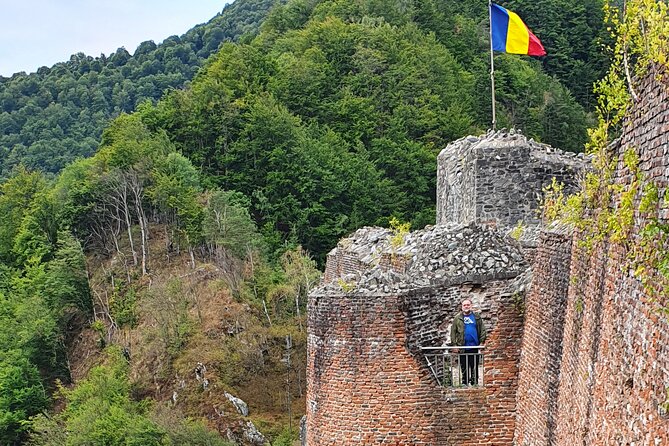
Then you go to Poienari Castle (Poenari Fortress) above the Argeș River. Expect about 2 hours here, and no entrance fee is listed. This is one of those places where the setting matters as much as the stones. The ruins sit high near the Carpathian foothills, and the story included here connects Poienari with early Wallachian rulers and Vlad’s escape route when the fortress was taken in 1462.
After that, the route turns toward Transylvania with Piata Mare (Big Square). The description specifically connects this stop with Sibiu, including the Evangelical Cathedral and the Old Town center. You get about 2 hours. This is a good moment to slow down, because the mood in central squares is very different from cliff-top ruins.
The big road moment is the Transfagarasan Highway. This is a headline attraction for a reason: it is said to be over 150 kilometers long and famous enough to reach BBC Top Gear fame. The highest point is listed at 2,042 meters, with a tunnel linking sides at Lake Balea. The important practical detail: the highway is fully open only June to October. If you are traveling outside that window, this stop may not be available the same way, so ask your guide early.
You spend about 2 hours here, likely with a mix of viewing spots and photo time. Even if you do not take many pictures, you’ll enjoy how the road makes you look up and out. For road-trip lovers, it is one of the most satisfying parts of the whole trip.
Wooden churches carved without a single nail
Saxon Strongholds: Biertan Fortified Church and Sighisoara’s Medieval Core
Day 3 leans hard into Transylvania’s Saxon heritage. The theme is protection. These are not just pretty buildings. They were built to hold ground.
Biertan Fortified Church is listed as a UNESCO World Heritage site. You get about 2 hours, and the setting is classic for the region: the church sits on a hillock in the center of town, surrounded by three defensive walls and seven bastions. That defense setup matters because it explains why these towns look the way they do. You can almost read the architecture like a map of how people lived and survived.
Then you head to Sighisoara. You will visit the Clock Tower and an Arms museum, with about 3 hours total in the medieval core. The Sighisoara Citadel is described as built in 1280 and still inhabited for over 700 years, which is rare in Europe. This is also connected to Vlad the Impaler, described here as his place of birth, so Dracula fans will feel like the ground is under their feet.
One practical tip for a day like this: wear shoes that handle uneven streets and keep a light layer. Stone towns can swing from sunny to cool fast, and you walk more than you think.
Turda Salt Mine, Cluj Botanical Gardens, and Surdesti Wooden Church
Day 4 offers a nice change of pace. You move from Saxon stone to natural air and then to wood craftsmanship.
The day begins at Salina Turda, the Turda Salt Mine. You spend about 2 hours here. The listing highlights the saline air and even calls it beneficial for people with respiratory issues like allergies or asthma. Even if that is not you, it is still a memorable sensory stop: cool interior air, unusual interior spaces, and a change from open landscapes. Entrance is not included, so factor it into your budget.
Next is Gradina Botanica Alexandru Borza. You get about 1 hour. The description also points you toward a Cluj Napoca city tour vibe, mentioning the Old City Center and architecture styles like Baroque, Renaissance, and Gothic, plus monuments dating back to the 1600s. If you love walking through city layers, this is a good fit. It also notes restaurants can mean lines, so plan your timing with a little flexibility.
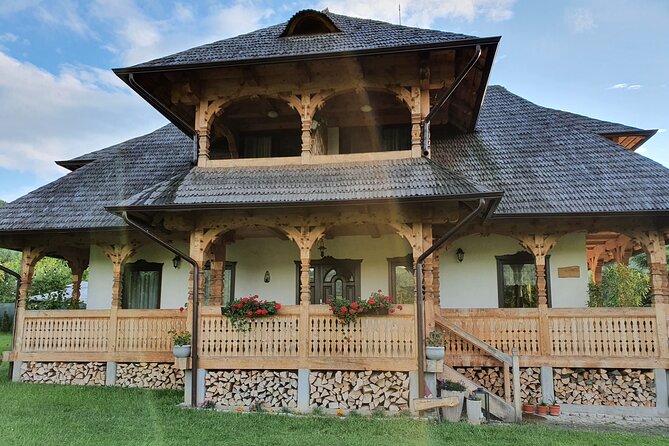
The day ends with Surdesti Wooden Church. This is where wood becomes the main character. You get about 45 minutes, and the listing emphasizes the tall construction, including a tower measurement of 54 meters and a build date of 1721. It is described as an architectural masterpiece, and if you like craftsmanship and architecture details, this stop rewards you with fewer crowds than the headline castles.
Maramures Humor and Communism Memory: Sapanta and a Resistance Museum
Day 5 is emotionally different, but it is a good kind of different. Romania is not only monuments. It is people coping, surviving, and remembering.
The first stop is the Merry Cemetery in Sapanta, about 1 hour. The key idea is that the tombstones carry humorous poems about the deceased. The listing frames it through a Dacian cultural angle and connects it to Sapanta’s long continuity. Whatever your humor tolerance, you will likely appreciate how this tradition turns death into something less scary.
Then you go to the Memorial to the Victims of Communism and to the Resistance for about 2 hours. The listing calls out how Romanian people fought to escape communist oppression and how quickly the totalitarian regime caused pain and suffering. Even if you already know the broad history, this kind of museum makes it personal by focusing on victims and resistance. It is not a light stop, but it adds context to everything you saw in Bucharest at Revolution Square.
This day works best if you do not try to multitask. Let it sit with you a bit.
Barsana, Sucevita, Moldovita: Moldavia’s Painted Fortified Monasteries
Day 6 is all about monasteries, with wood and paint doing the talking.
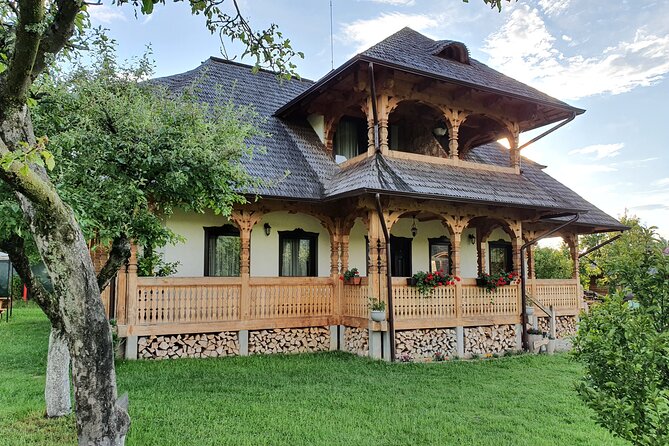
Barsana Monastery is introduced as one of the tallest wooden churches in Romania, with a listed height of 57 meters. You get about 1 hour. The description also pushes a barefoot, walk-on-grass spiritual feel, which signals that this is not only sightseeing. Even if you do not follow every ritual suggestion, you can feel that visitors are meant to slow down here.
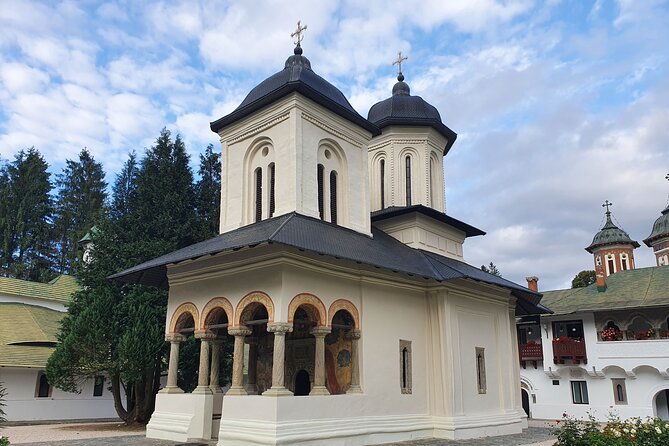
Then you head to Sucevita Monastery for about 45 minutes. This listing places Sucevita and Voronet together as two of the most beautiful Romanian monasteries and connects them to UNESCO heritage. The focus is on biblical scenes and icons painted on the walls, with the monastery described as fortified and like an open book for visitors.
Next is Moldovita Monastery, also about 45 minutes. The key date given is 1532, and it is described as fortified with Byzantine, Gothic, and Moldavian style. The highlight is mural artwork on both inside and outside surfaces. If you are taking notes for one day, this is a day where murals deserve attention from multiple angles, because the colors and shapes can look different as you move.
Practical note for all these stops: churches and monasteries often mean limited seating and cooler interiors. Bring a layer.
Castles, forests, and the region Dracula made famous
- Transylvania and Dracula Castle Full Day Tour from Bucharest
★ 4.5 · 1,589 reviews - Castles of Transylvania: Private Day Trip from Bucharest
★ 4.5 · 248 reviews - 2-Day Medieval Transylvania with Brasov,Sibiu and Sighisoara Tour from Bucharest
★ 4.5 · 145 reviews - 2-Day Transylvania from Bucharest: Brasov, Bran, Sighisoara
★ 5.0 · 60 reviews - Transylvania: Cultural Full-Day Trip by Minivan
★ 4.8 · 57 reviews
Voroneț Blue and Humor Monastery: Bukovina Frescoes Plus Bicaz Gorges
Day 7 begins with Voroneț Monastery. You will spend about 45 minutes here. It is described as built by Stephen the Great in 1488 over 3 months and 3 weeks, linked to the victory at the Battle of Vaslui. The name that keeps coming up is Voroneț blue, a very intense shade of blue in Romanian tradition. The listing even compares it to the Sistine Chapel of the East, and that comparison makes sense once you see the fresco concentration and color intensity.
Then you go to Humor Monastery for about 45 minutes. The listing emphasizes it as a fortified monastery. It also gives a layered story: an earlier church around 1400 was destroyed, and the present structure survived over centuries. The message here is simple, religion was both shelter and identity, and builders responded to danger.
After that, the route shifts into nature with Bicaz Gorges. You get about 3 hours. The stop is described as a walk along a river that has carved through mountains and virgin forests. Admission is listed as free. The key practical idea is that you will likely pause often for photos, because the scenery is the point, not a single monument. If you like wild water, dramatic rock walls, and short stops with big views, this is your day.
Brasov Castles Finish: Black Church, Bran, and Peles
Day 8 brings you to Brasov, tucked in the Carpathian foothills. This is a satisfying end because it mixes walking history with castle-time fun.
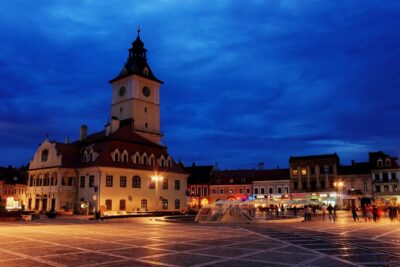
You start with the Black Church (Biserica Neagra) in Brasov and then do a walking tour of Old Town, including Old Town square and medieval city walls. You also get free time in Brasov’s cafes, about 2 hours total. Entrance is not listed as included for this stop, so plan on paying if you want to go inside.
Then comes Bran Castle, often linked to Dracula’s castle in pop culture. The listing describes the belief that Bram Stoker may have drawn inspiration from Bran’s look. You get about 2 hours. What I like here is the practical angle: beyond the myth, you get time to see the castle setting and then try traditional foods outside, including handmade cheeses, pálinka (plum and pear brandy), and traditionally produced ham and sausages. Entrance is not listed as included.
Your final castle is Peles Castle. You spend about 2 hours. The listing frames it as the Romanian royal family’s summer residence and says it is considered one of the most important attractions in Romania and Europe. If you want a grand finale, Peles does that. It closes the loop from stern medieval fortifications to polished royal design.
Price and Value for a Private 8-Day Romania Loop
At $2,565.50 per person, this is not a budget trip. But the cost can make sense because you are not just paying for a car. You are paying for a private licensed English-speaking guide/driver available throughout the tour, plus all the car expenses such as gasoline, parking, and road tolls, and even wireless internet in the vehicle.
Accommodation and meals for you are not included, and entrance tickets for the itinerary stops are not included either. That means the true trip total will be higher than the headline price, depending on your hotel choices and what sights you enter. Still, the structure is built to reduce stress. You get great flexibility regarding itinerary changes even after the start, and that matters on a multi-day route where weather, timing, and energy can shift quickly.
Value check I’d use: this price is easiest to justify if you want privacy, a guide who can connect the sites into a coherent story, and you plan to actually use the extra time at each place rather than rushing through everything. If you like the idea of driving your own schedule, a private format is often worth it in Romania, because distances and road conditions can add friction on a self-drive plan.
Should You Book This Romania Private Tour?
Yes, if you want an organized route that covers Bucharest, Transylvania’s Saxon sites, Maramures wooden monasteries, Moldavia painted churches, and two major castle stops without turning your trip into map-reading and scheduling.
I would especially recommend it if:
- You travel with friends or family and want a private car for your group only
- You care about guided context, not just photo stops
- You enjoy both human history and physical scenery, from Revolution Square to Bicaz Gorges
I would pause if:
- Your travel dates fall outside the window when the Transfagarasan Highway is fully open June to October
- You prefer fewer stops and longer stays rather than an eight-day sprint across regions
- You want all entrance fees included in the price, because this itinerary lists entrance fees as not included
If you book, do yourself a favor and bring comfortable walking shoes and a flexible mindset. This route moves fast, but it also gives you a clear theme each day, and that is what makes it feel like more than a checklist.
Just Added: New Tours From Bucharest
- Bear Watching in Transylvania 2-Day Tour
- National Village Museum and Comana Adventure Park
- Half Day Tour in Bucharest
- Full-Day Private Tour of Brasov City and Peles Castle from Bucharest
- From Dracula to Ceaușescu- Romanian Terror Stories tour
- Bucharest: Tour The Wine Road, 2 Boutique Wineries in 1 Day
- Bucharest Ceaușescu House Parliament Palace &Village Museum
- Full-Day Private Tour of Bucharest and Mogosoaia Palace
Maramures Tours, compared.
Classic Romania Tour – small group in 8 days: Transylvania and Maramures
Read our review →
A Journey Back in Time: Countryside from Transylvania and Maramures – 15 Days
Read our review →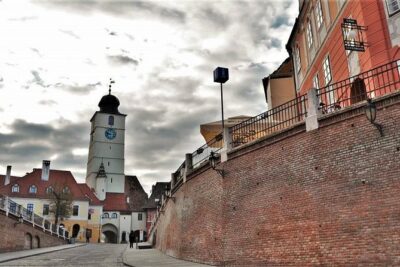
Your rendez-vous with Europe’s past: time-travel to Maramures, Transylvania
Read our review →6-Days Transylvania & Wooden Churches of Maramures from Bucharest
Read our review →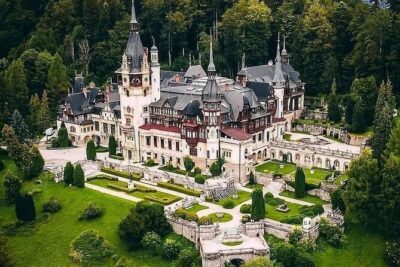
Private 7-Day Tour in Transylvania, Maramures and Bucovina from Bucharest
Read our review →6-Days Transfagarasan, Transylvania & Maramures Wooden Churches from Bucharest
Read our review →Browse the lists this tour appears in