
Reviewed · COMMUNIST BUCHAREST TOURS
Bucharest: Communist Bike Tour
Communist Bucharest makes sense on two wheels. In a 4-hour bike-and-story route, you move from old-city streets to the big symbols of Soviet rule and Ceausescu’s final days, including the first Romanian parliament and Revolution Square.
I love how you cover major landmarks fast, without waiting for buses or lining up for long transfers. And I also like that the guides, such as Horia or Alex, explain what you’re seeing in plain terms, then connect it to how life changed in each period.
One drawback to plan for: this is city cycling, so you’ll want to feel comfortable riding in busy traffic, and it’s not recommended if you have mobility limitations.
In This Review
- Key things I’d highlight before you go
- Getting oriented at the start, Hanu’ Berarilor to the old city
- Coral Temple and how politics reshapes neighborhoods
- The communist bomb attack site and the first Romanian parliament
- Soviet occupation years and elite housing for the generals
- Stalin-era elite neighborhood energy and what it does to the city
- Casa Radio, the biggest unfinished communist project
- Revolution Square and the shift from rule to uprising
- The Central Committee area and Ceausescu’s last speech
- Price and what $53 really buys you
- Bikes, helmets, and your responsibility on the road
- Who this communist bike tour suits best
- Should you book the Bucharest Communist Bike Tour?
- FAQ
- Where is the meeting point for the Bucharest Communist Bike Tour?
- How long is the tour?
- What does the tour cost?
- Is the tour guided in English?
- What is included in the ticket price?
- What is not included?
- What should I bring?
- Is this tour suitable for people with limited mobility?
- How does cancellation work?
- Can I reserve without paying right away?
Key things I’d highlight before you go
- A clear 4-hour route through the loudest communist landmarks, from early party power to December 1989.
- Guides who add context beyond dates, tying politics to streets, neighborhoods, and daily life.
- Coral Temple and the Jewish community’s early communist links, set into the wider story of Bucharest.
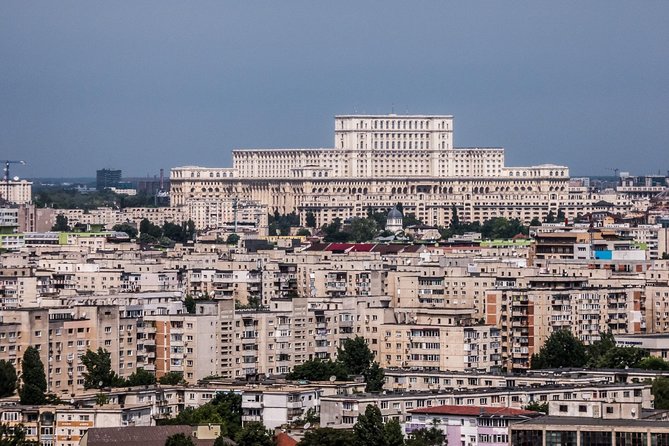
- Casa Radio and the “unfinished” communist ambition, easy to spot and hard to forget.
- Revolution Square plus the Central Committee area, where the story turns from control to uprising.
Getting oriented at the start, Hanu’ Berarilor to the old city
I like starting Bucharest tours from a place that feels real, not staged. Your meeting point is just across from Hanu’ Berarilor (Casa Oprea Soare), which is a convenient way to get your bearings fast before you roll out.
You’ll begin in Bucharest’s old city center. The first moments set the tone: your guide frames how the communist era changed the look and feel of the historic parts of town. That matters, because if you’ve only ever seen Bucharest as pretty facades and café streets, you can miss the part where whole sections were shaped by ideology and power.
Even the first rides are useful. You’re not just getting from stop to stop. You’re learning how the city flows, where the traffic tends to bunch up, and which stretches are best for staying relaxed in the saddle.
Coral Temple and how politics reshapes neighborhoods
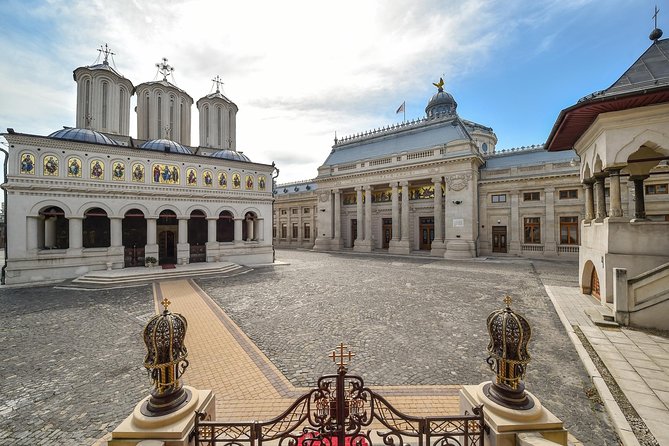
Next up is Coral Temple. This stop isn’t only about architecture. Your guide points out that the Jewish community were among the initiators of the communist movement in the early 1920s, which gives Coral Temple a stronger role in the story than you might expect from a quick glance.
I like this kind of stop because it stops the “communism equals one stereotype” thinking. You get a reminder that political movements are built from people and communities, not just official speeches and posters.
From here, the tour keeps nudging you to look around while you pedal. Even if you’re focused on staying safe and alert, your eyes will start to pick up patterns: which streets look older, which buildings show heavy remodeling, and where the city feels like it was planned to impress rulers.
Still standing, block after block
- Bucharest: Communism and History Guided City Walking Tour★ 4.9 · 918 reviews
- The Real tour of Communism★ 5.0 · 666 reviews
- Life under Communism★ 5.0 · 358 reviews
The communist bomb attack site and the first Romanian parliament
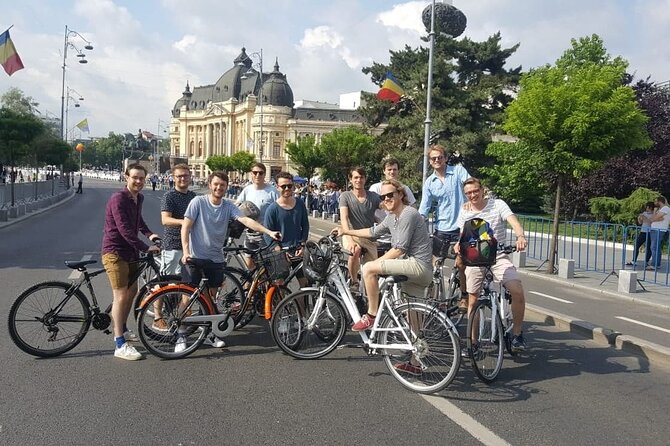
The tour then heads to the site of a communist bomb attack against the democratic Romanian government, tied to the first Romanian parliament. This is one of those moments where you can feel the “why does this matter” question landing.
Your guide uses it to connect two ideas that are easy to keep separate when you travel: government institutions and violence used to force political change. Standing at the spot, you’re not reading a textbook. You’re seeing how conflict can sit right inside the civic heart of a city.
Practical tip: keep your bike locked in the secure zone your guide points out, even if the stop is quick. The tour moves along a few important sites, and you’ll want to stay efficient so you don’t end up stressed.
Soviet occupation years and elite housing for the generals
After the second World War, Romania faced Soviet occupation for 12 years. This part of the route passes through a neighborhood where Russian army generals, who were in charge of ruling the country, lived.
I like this stop because it gives you a street-level way to understand power. Elite housing isn’t just “where rich people lived.” It’s an address system for control, comfort for the occupiers, and contrast for everyone else.
You’ll get time to look at how the neighborhood reads today compared with the story your guide is telling. Even without extra museum hours, this creates a clear mental map: who occupied what space, and how that changed the urban feel of Bucharest.
This stretch also helps you appreciate why cycling works for this topic. Walking would work, but you’d spend more time crossing between areas. Biking lets you keep the narrative moving from one era to the next.
Stalin-era elite neighborhood energy and what it does to the city
One of the tour highlights is the neighborhood built for communist elites during the Stalin era. The idea here is simple: when leaders want to live differently from everyone else, the city becomes a physical sorting system.
Your guide points out what’s visible now and what that visibility meant back then. It’s not just historical trivia. It’s a lens for understanding why certain areas feel “set apart,” even today.
And because this is a bike tour, you get a rhythm of observation. Stop, listen, look, pedal again. That repetition is useful for remembering details later when you’re wandering on your own.
Casa Radio, the biggest unfinished communist project
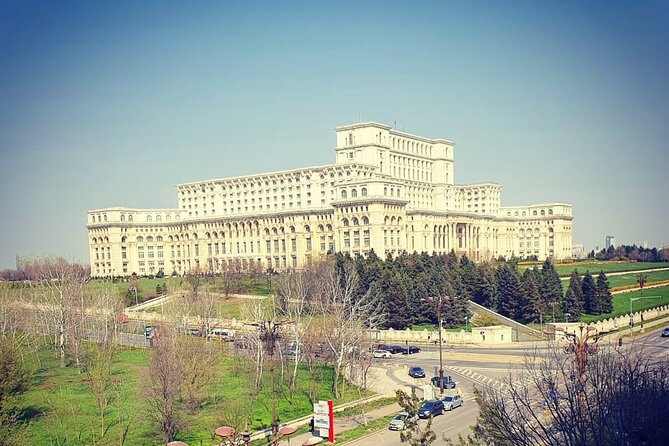
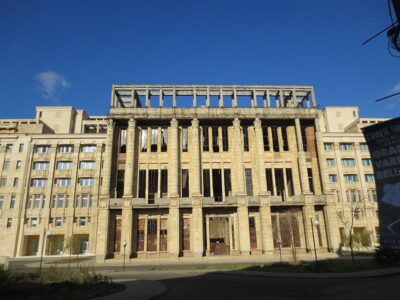
Then comes one of the most memorable visuals on the route: Casa Radio, described as the biggest unfinished communist urban project.
This is where the tour turns from politics to a kind of built environment reality check. “Unfinished” buildings can feel like leftovers, but your guide helps you see the deeper meaning. When projects stop, you learn where priorities shifted, where costs mattered, and how grand plans can fail in practice.
I also like that Casa Radio is dramatic enough that you don’t need a long explanation to get the point. Still, the guide’s context makes it stick. You’ll look at the structure differently after hearing how it fits the communist-era style of planning and ambition.
If you’re the type who normally skips the “history stops” because you want scenery, this one usually wins people over. The building holds your attention while the story gives it weight.
Two wheels through the boulevards
- Bucharest: Half Day Bike Tour
★ 4.9 · 379 reviews - Bucharest Half a Day Bike Tour
★ 5.0 · 325 reviews - Bucharest: 2-Hour City Highlights Bike Tour
★ 4.8 · 269 reviews - Bucharest Highlights Bike Tour
★ 5.0 · 102 reviews - From Bucharest: Forest and Hills ATV Quad Bike Tour
★ 4.7 · 34 reviews
Revolution Square and the shift from rule to uprising
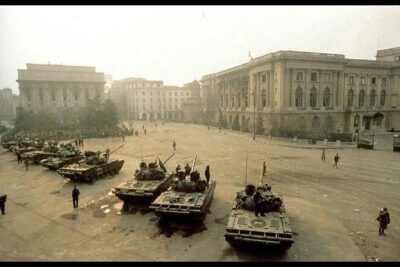
Revolution Square is another highlight, and it’s the emotional center of the tour’s final stretch.
By now, you’ve already ridden through institutions, elite neighborhoods, and unfinished projects. So when the tour arrives here, you’re ready for the theme change: from control and occupation to the moment things crack open.
Your guide frames the ending with the revolution that started in December 1989. That timing matters because it connects the long arc you’ve been riding to the specific turning point that redefined Romania.
This is also a good time to watch how you feel while looking around. The square has a public scale, so the story lands with more force than it would on a quiet side street.
The Central Committee area and Ceausescu’s last speech
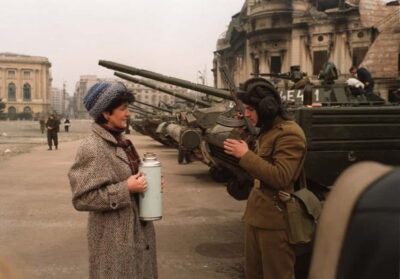
The last stop is in front of the Communist Central Committee, where Ceausescu held his last speech and where the revolution started in December 1989.
This final area is a heavy one. Even if you don’t know every detail of the period, the tour gives you enough context to understand why this specific location ends the way it does. The route has been building toward a conclusion, and this stop acts like the final page.
I recommend you slow down a bit here, even if your brain wants to move on quickly. Take a moment to look at the space and imagine how a speech would have filled it. Then compare that to the idea of a revolution starting there. The contrast is exactly what the tour is trying to make visible.
Price and what $53 really buys you
At $53 per person for a 4-hour tour, the value is mostly about what you get without extra rentals and extras. You’re paying for a live English guide, plus bikes, helmets, and bike locks.
That’s a practical deal. Bucharest can be pricey if you start adding bike rentals, safety gear, and guided time separately. Here, the equipment is included, and you get a structured route that hits major sites in one half-day.
Also, a 4-hour format is long enough to feel like you saw the city at work, but short enough that you’re not exhausted for the rest of the day. Several guides in the program are known for adding extra context, and that can make the bike time feel smarter than just transportation.
Food and beverages are not included, so plan to eat afterward. A bike tour is not the moment to try to skip lunch.
Bikes, helmets, and your responsibility on the road
The tour provides bikes, helmets, and bike locks, which makes it easier to travel light. You still need to bring comfortable shoes, because you’ll be getting on and off the bike and walking short distances at each stop.
One big factor: this tour isn’t for people who need mobility accommodations, and it also isn’t ideal if you’re brand-new to riding in traffic. A couple of guides have emphasized that the action range can feel like a lot, and that your ability to pedal steadily in dense city traffic matters.
If you’re a confident rider, this style of route is a great match. If you’re not, you may spend your energy thinking about the bike instead of the story.
My advice: before you start, adjust your seat and check brakes. Then focus on your line and keep an even pace. The guide’s job is to talk and point things out. Your job is to ride safely so you can actually hear them.
Who this communist bike tour suits best
This is a strong choice if you want political history tied to real streets, buildings, and neighborhoods. It’s also ideal if you like tours that start with a plan and then add human context.
You’ll likely enjoy it most if you:
- can comfortably ride in central Bucharest traffic for a solid stretch
- like understanding why a city looks the way it does
- want a first-day, half-day orientation so the rest of your Bucharest walk feels purposeful
Skip it if:
- you have mobility impairments or limited mobility
- you strongly prefer slow, car-free walking tours over riding
Should you book the Bucharest Communist Bike Tour?
I’d book this tour if you want an efficient way to connect Bucharest’s communist-era story to what you can see today. The combination of clear stop sequence (parliament, elite neighborhoods, unfinished projects, Revolution Square, Central Committee) and guides who explain context in English makes it a good first serious tour, not a random “see sights” ride.
I’d think twice if you’re uncomfortable cycling in busy areas, or if sitting on a bike for the ride duration is challenging for your body. In those cases, you might prefer a walking or taxi-based format that keeps you off traffic lanes.
If you do book it, plan for a post-tour meal and wear shoes you trust. Then ride with your curiosity turned up. Bucharest starts to make sense when you’re moving through it, one politically meaningful street at a time.
FAQ
Where is the meeting point for the Bucharest Communist Bike Tour?
Meet just across from the restaurant Hanu’ Berarilor (Casa Oprea Soare).
How long is the tour?
The tour lasts 4 hours.
What does the tour cost?
The price is $53 per person.
Is the tour guided in English?
Yes, the live tour guide speaks English.
What is included in the ticket price?
Your ticket includes a live guide, bikes, helmets, and bike locks.
What is not included?
Food and beverages are not included.
What should I bring?
Bring comfortable shoes.
Is this tour suitable for people with limited mobility?
No. The tour is not recommended for people with limited mobility, and it is not suitable for people with mobility impairments.
How does cancellation work?
You can cancel up to 24 hours in advance for a full refund.
Can I reserve without paying right away?
Yes. You can reserve now and pay later, with no payment due today.
Just Added: New Tours From Bucharest
- Bear Watching in Transylvania 2-Day Tour
- National Village Museum and Comana Adventure Park
- Half Day Tour in Bucharest
- From Dracula to Ceaușescu- Romanian Terror Stories tour
- Full-Day Private Tour of Brasov City and Peles Castle from Bucharest
- Bucharest: Tour The Wine Road, 2 Boutique Wineries in 1 Day
- Bucharest Ceaușescu House Parliament Palace &Village Museum
- Wines of Wallachia – 8 hours
Communist Bucharest Tours, compared.

Parliament, Ceausescu House & Village Museum Tour
Read our review →
Bucharest Essential Tour: Old Town, Calea Victoriei & Communism
Read our review →
Communism in Bucharest – Landmarks, Museum & Communist Appetizers
Read our review →
Browse the lists this tour appears in