
Reviewed · COMMUNIST BUCHAREST TOURS
Exploring a Former Communist Prison
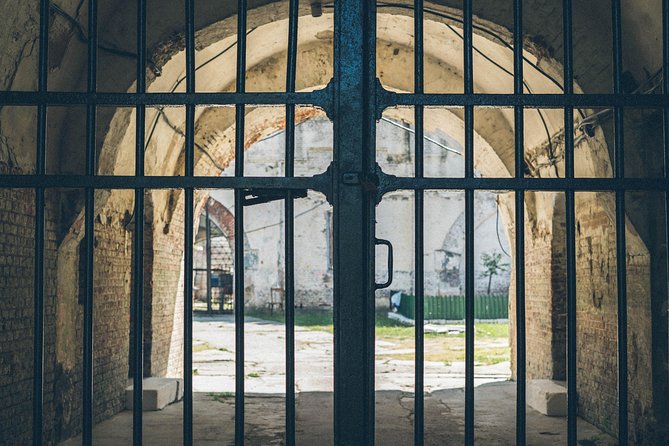
Prisons tell truth fast. This Bucharest tour connects the political story in the streets to an actual former communist detention and execution site at Fort 13 Jilava. I like that it is not just photos and facts, it is a day built around human stories and places you can actually stand in.
Two things I really appreciate are the guide’s firsthand perspective and the access you get. I especially like hearing from guide Mircea, including his connection to Revolution Square during December 1989, and I also love that you receive exclusive access inside the memorial at the former prison site.
One drawback to plan for: the visit to the prison has strict rules. Mobile phones are not allowed inside, and photo permissions are limited to a camera, so bring what you need before you enter.
In This Review
- Key highlights worth showing up for
- Bucharest’s communist layer, from Revolution Square to Fort 13 Jilava
- Meeting at Piața Revoluției: what to watch for in the first hour
- Quick stop at the Palace of Parliament: why only 20 minutes
- Ferentari and Second Hand: a reality check outside the postcard route
- Carol Park: the mausoleum and a traditional communist meal
- Inside Jilava Fort 13: rules, access, and what to do with a camera
- Snacks, beer, and pacing: how the included breaks keep the story moving
- Timing, small groups, and how the route actually feels
- Price and value: what you’re really paying for at $173.47
- Who should book this Bucharest communist prison tour
- Should you book? My practical take
- FAQ
- How long is the experience?
- What time does the tour start, and where do you meet?
- How many people are in a group?
- Is this tour ticketed digitally?
- What food and drinks are included?
- Is the Palace of Parliament admission included?
- Can I use my mobile phone inside Fort 13 Jilava?
- Are photos allowed inside Fort 13 Jilava?
- What happens if the weather is bad or I need to cancel?
Key highlights worth showing up for
- Exclusive time at Fort 13 Jilava memorial in Bucharest’s largest prison area
- Revolution Square context with Mircea, including his December 1989 perspective
- A drive through Ferentari, the so-called Bronx of Bucharest, away from the usual tourist routes
- Snacks and drinks built into the pace, including covrig and traditional bites
- A small group size (max 8) for more conversation, not just a lecture
- Air-conditioned transport to keep the long half-day manageable
Bucharest’s communist layer, from Revolution Square to Fort 13 Jilava
This is the kind of tour where the city layout starts to explain the city’s mood. You begin at Piața Revoluției and then move through Bucharest in a way that makes the 20th-century regime feel less abstract. The day ties together power, punishment, and how ordinary neighborhoods still carry the aftereffects.
What makes this tour work well is the mix of views. You get iconic sites like the Palace of Parliament for context, but you also spend real time on lesser-seen areas such as Ferentari. And then, the day’s weight lands at Jilava Fort 13, a 19th-century military fort that was turned into a communist detention and execution camp.
Meeting at Piața Revoluției: what to watch for in the first hour
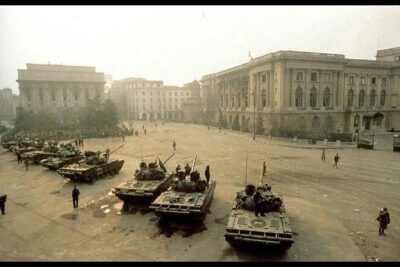
You start at the Memorial of Rebirth on Piața Revoluției, right in the heart of the Revolution Square area. That first stop is about getting your bearings fast, both geographically and historically, and the tour uses a car to connect the dots across Bucharest’s past.
This is a good time to pay attention to how the guide frames the city’s development over roughly the last 500 years. The idea is not to memorize dates. It is to understand how Bucharest’s military fortification system came into existence and why that matters when you reach the prison sites later.
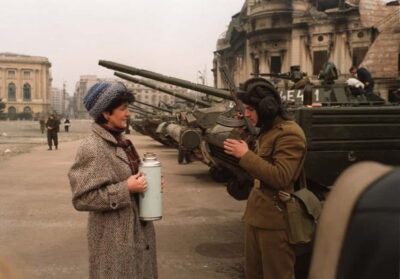
That first block also sets up the emotional tone of the day. Mircea is the kind of guide who brings the story closer, including recollections connected to December 1989 when communism fell. That makes the political turns feel less like a timeline and more like lived experience.
Still standing, block after block
- Bucharest: Communism and History Guided City Walking Tour★ 4.9 · 918 reviews
- The Real tour of Communism★ 5.0 · 666 reviews
- Life under Communism★ 5.0 · 358 reviews
Quick stop at the Palace of Parliament: why only 20 minutes
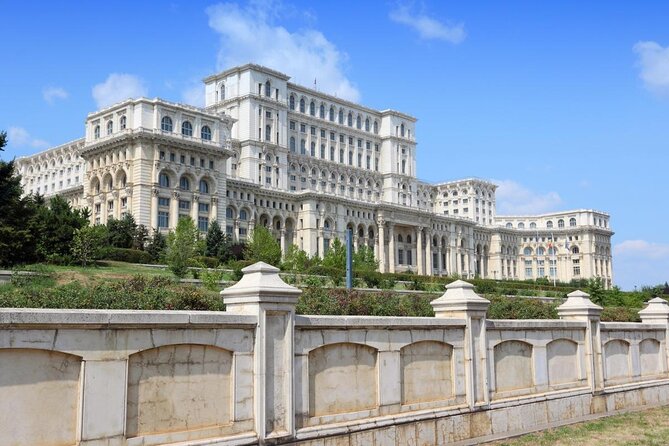
The Palace of Parliament stop is short, about 20 minutes. That might sound like you barely touched it, but there is a reason for the pacing: you circle the building and focus on what it meant for the local community, including the darker stories tied to it.
If you want a deep architectural walkthrough, this likely will not replace a dedicated Parliament visit. But as part of a longer communist-themed route, this time works as a dramatic pivot point. You see the scale, then you get guided interpretation right away, instead of leaving the building and wondering what you just looked at.
Also, note that the Palace of Parliament admission is not included. So if you want to go inside, you will need to plan that separately.
Ferentari and Second Hand: a reality check outside the postcard route
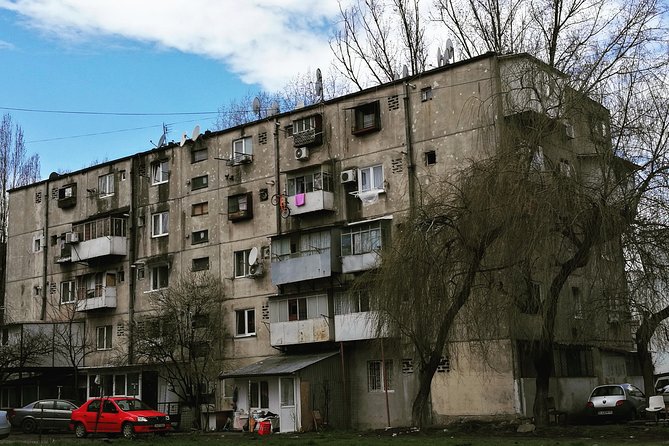
One of the most memorable parts is the drive through the so-called Bronx of Bucharest, especially the Ferentari area. This is where the tour shifts from monuments to neighborhoods and from history you read about to a place you can still feel today.
Your stop here is Second Hand Ferentari. You spend about an hour, and the big draw is the connection to an older military fort inside an active prison environment. The tour frames it as a site used as an extermination camp for those who stood against the regime.
Because the fort is inside an active prison, you should expect a more controlled feeling around the premises. The value here is perspective, not comfort. It is the tour’s way of saying, yes, politics happened, and yes, it had physical places, walls, and routes that shaped lives.
Admission for this stop is included, which also helps the day feel “complete” rather than constantly adding extra tickets.
Carol Park: the mausoleum and a traditional communist meal
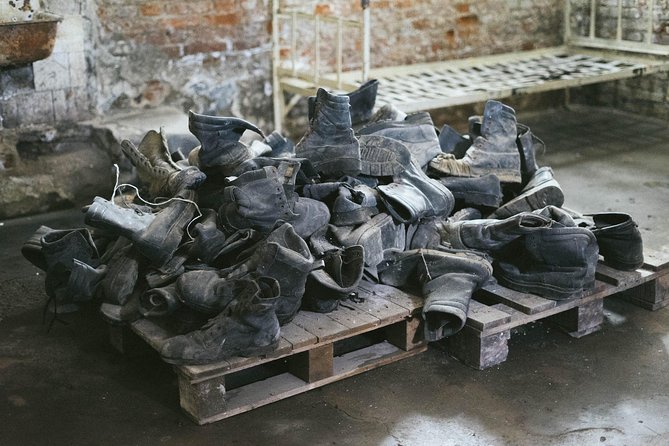
Then you head to Carol Park. The tour includes time to admire a communist leaders mausoleum located inside one of Bucharest’s most emblematic parks. This is another short-but-meaningful moment, around 30 minutes, and it works because it reminds you that regimes do not just control people, they shape public space.
What I like about this stop is the pairing of atmosphere and food. The day includes a traditional communist meal here. That meal is included in the tour, and it gives you a practical break from the heavy material without turning the story into something light.
Also, admission for this stop is listed as free, so you are not double-paying just to get the park experience.
Inside Jilava Fort 13: rules, access, and what to do with a camera
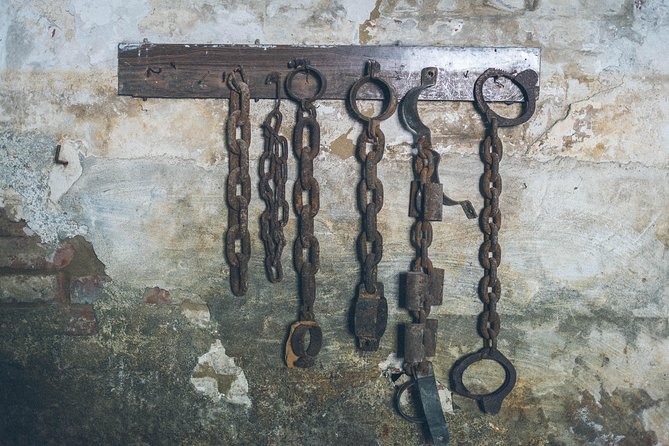
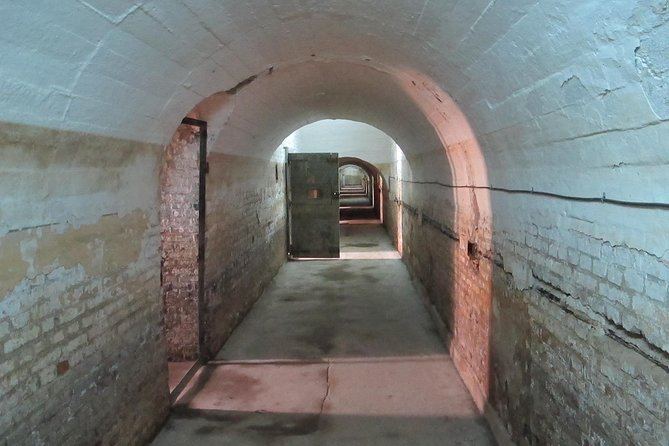
The highlight is the access to Jilava Fort 13. This is a former military fort that was transformed into a communist detention and execution camp. You get about two hours here, and this is where the day’s tone becomes very real.
There are clear rules. Mobile phones are not allowed inside the prison. Photos are allowed only with a camera. So if you rely on your phone for everything, you will want to adjust before you enter.
This set of restrictions actually makes sense in a place like this. It reduces distractions and stops people from treating it like a quick photo stop. Instead, you can focus on the guided interpretation and on the space itself.
If you are the type of visitor who likes to ask questions, this is also where the guide’s conversational style pays off. The tour is built around stories and exchange, not just one-way facts.
These pair well with the day you just read about.
- Bucharest: Dracula’s Castle, Peles Castle, & Brasov Old Town
★ 4.5 · 17,858 reviews - Bucharest: Dracula Castle, Peles Castle & Brasov Old Town
★ 4.6 · 10,891 reviews - Bucharest: Dracula’s Castle, Peleș Castle & Brașov Day Trip
★ 4.4 · 6,100 reviews - Bucharest: Palace of Parliament Tickets and Guide
★ 4.3 · 3,182 reviews - Bucharest: Day Trip to Dracula Castle, Peles Castle & Brașov
★ 4.4 · 3,049 reviews
Snacks, beer, and pacing: how the included breaks keep the story moving
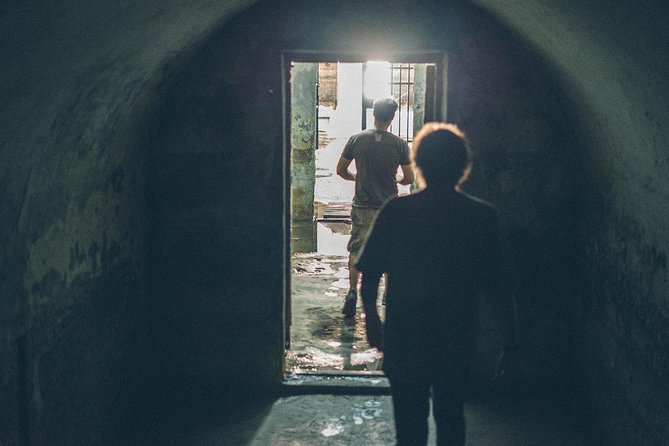
A common issue on political tours is fatigue. You end up tired before you reach the most important parts. This itinerary tries to avoid that with built-in food and drink.
You get snacks during the day, including covrig (a Romanian street snack/pretzel) plus local traditional bites. There is bottled water included too, 500 ml. Then there is also coffee and/or tea, which is helpful if you want something warm after stops outside.
Alcohol is included as well, one beer (400 ml) or equivalent. That might be a surprise if you prefer a completely dry day, but it also reflects how the tour is designed to feel like a real half-day outing, not a classroom with a lunch break.
The pacing is also practical: the tour runs about six hours, with shorter segments at places like Revolution Square and the Palace of Parliament, then longer time at the two prison-related stops. It is a structure that avoids rushing the heavy parts.
Timing, small groups, and how the route actually feels
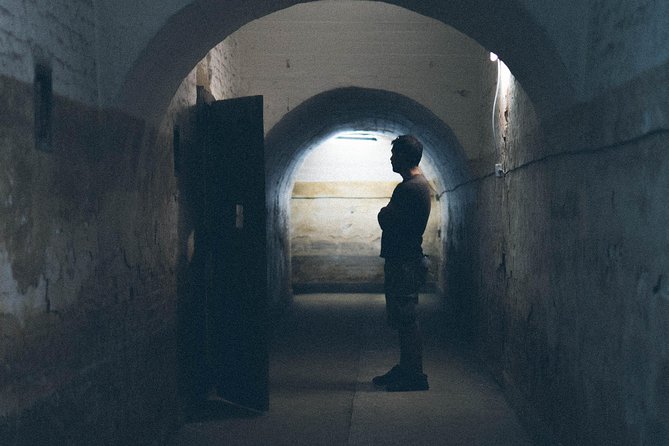
This is designed for a group size capped at 8 travelers. That matters. Smaller groups tend to mean you can ask follow-up questions and hear the guide’s explanations clearly. It also helps on a tour where the content can feel tense.
You start at 9:30 am at Piața Revoluției and you end back at the same meeting point. The round-trip setup is a relief if you are planning the rest of your day in Bucharest.
The tour also uses an air-conditioned vehicle, which is a real quality-of-life detail, especially in warm weather. And because it is mostly car-connected with set stops, you do not lose the day to constant long transfers.
It is worth booking ahead. The listing notes an average booking window of about 24 days in advance, which suggests popular dates fill up.
Price and value: what you’re really paying for at $173.47
At $173.47 per person, the price is not bargain-basement. But it is closer to “pay for access and interpretation” than “pay for a casual city walk.”
Here is what you are getting for the money, based on what is included:
- Transport in an air-conditioned vehicle for the full day flow
- Snacks and drinks (covrig, traditional bites, water, coffee/tea, and a beer or equivalent)
- Included admission at the Second Hand Ferentari fort stop and at Jilava Fort 13
- A structured day with multiple stops tied to communist history and its impact on the city
Meanwhile, the Palace of Parliament admission is not included. That is one clear place where extra costs can appear if you want to go inside.
The big “value lever” is the exclusive access part and the guided framing. A former communist prison site is not something you want to visit blindly, and you often cannot recreate that context on your own without time-consuming planning.
Add in the fact the group is limited to 8, and the $173.47 feels more reasonable as a ticket to a guided, tightly managed experience, not just transportation and entry.
Who should book this Bucharest communist prison tour
This is a good match if you want a route that mixes big landmarks with less touristy neighborhoods, and if you like explanations that connect political systems to real places.
Book it if:
- You want Fort 13 Jilava access with a guided narrative
- You enjoy history told through human memory, like Mircea’s connection to December 1989
- You are comfortable with heavier subject matter and want it handled directly, not softened
Skip it if:
- You want a purely architectural tour with lots of inside time at major landmarks, especially the Palace of Parliament since admission is not included
- You are not willing to follow no phone rules inside the prison
Should you book? My practical take
I think you should book this tour if your main goal is understanding communist Romania through the places that still carry the scars. The “value” is not just the sites, it is the way the day links Revolution Square context, Ferentari reality, and the Fort 13 memorial into one coherent story.
If the rules around phones and cameras inside the prison would annoy you, plan around them before you go. Bring a camera if you care about photos there, and leave your phone behind for that section.
If you want a head-turning, emotionally direct, well-paced half day in Bucharest that goes beyond the usual highlights, this one is worth your time.
FAQ
How long is the experience?
It runs for about 6 hours.
What time does the tour start, and where do you meet?
The start time is 9:30 am. You meet at the Memorial of Rebirth, Piața Revoluției, Bucharest (030167), Romania.
How many people are in a group?
The tour has a maximum of 8 travelers.
Is this tour ticketed digitally?
Yes, it uses a mobile ticket.
What food and drinks are included?
Snacks are included, including covrig and local traditional bites, plus 500 ml bottled water. You also get coffee and/or tea, and one beer (400 ml) or an equivalent option.
Is the Palace of Parliament admission included?
No. The tour includes a short stop there, but admission is not included.
Can I use my mobile phone inside Fort 13 Jilava?
No. Mobile phones are not allowed inside the prison.
Are photos allowed inside Fort 13 Jilava?
Photos are allowed only with a camera, not with a phone.
What happens if the weather is bad or I need to cancel?
The tour requires good weather. If it is canceled due to poor weather, you will be offered a different date or a full refund. You can cancel for a full refund up to 24 hours in advance.
Just Added: New Tours From Bucharest
- Bear Watching in Transylvania 2-Day Tour
- National Village Museum and Comana Adventure Park
- Half Day Tour in Bucharest
- From Dracula to Ceaușescu- Romanian Terror Stories tour
- Full-Day Private Tour of Brasov City and Peles Castle from Bucharest
- Bucharest: Tour The Wine Road, 2 Boutique Wineries in 1 Day
- Bucharest Ceaușescu House Parliament Palace &Village Museum
- Full-Day Private Tour of Bucharest and Mogosoaia Palace
Communist Bucharest Tours, compared.
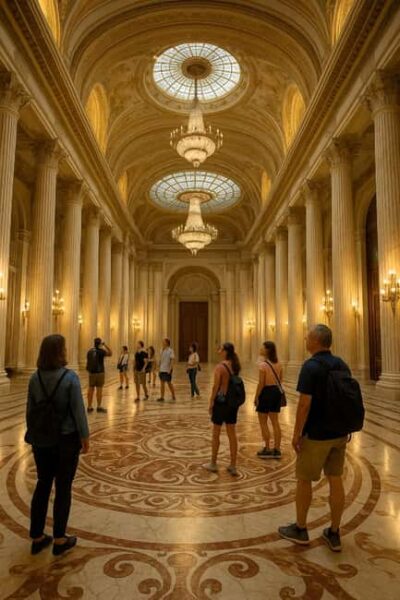
Parliament, Ceausescu House & Village Museum Tour
Read our review →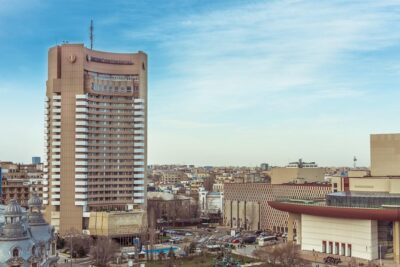
Bucharest Essential Tour: Old Town, Calea Victoriei & Communism
Read our review →
Communism in Bucharest – Landmarks, Museum & Communist Appetizers
Read our review →
Browse the lists this tour appears in