
Reviewed · COMMUNIST BUCHAREST TOURS
Private Walking Tour of Communist Bucharest
Bucharest rewrites itself in one long morning. This private walking tour of Communist Bucharest turns major landmarks into a clear story of Romania under Communism, then through the 1989 break. I especially liked how the guide brought political context without turning it into a lecture, and how the route stays focused on what matters.
Two big wins for me: you get a private, flexible itinerary, so you can ask questions and adjust pacing to your interests. And the guide team has real training in political science and tourism, plus local know-how that helps you spot what you would normally miss at places like Revolution Square and the House of the People.
One thing to consider is that you’ll face extra time planning for a couple of paid interiors. The Atheneul Roman and the Palace of Parliament have admissions not included, so you may want to budget a bit more if you want to go inside and see what you came for.
In This Review
- Key highlights I’d plan around
- Why Communist Bucharest feels different from the usual sights
- Private walking, pickup, and how the day actually runs
- Piata Universitatii and Piata Revolutiei, the Revolution’s pressure points
- Ateneul Roman, classical music, and the 19th-century counter-story
- Ceaușescu’s mansion, the private face behind the regime
- The Palace of Parliament, where the numbers do the talking
- Piata Constitutiei, the Communist civic center in plain sight
- Antim and Mihai Voda Monasteries, churches saved by relocation
- Lunch break, and how to plan your energy
- Price and value, what $92.19 buys you
- Who should book this Communist Bucharest tour, and who might not
- Should you book it?
- FAQ
- How long is the Private Walking Tour of Communist Bucharest?
- What is included in the tour price?
- Is lunch included?
- Do I need tickets to enter Ateneul Roman and the Palace of Parliament?
- Is this tour private?
- Do I need a passport for this experience?
Key highlights I’d plan around
- A true Communist-era focus: you walk from the Revolution’s crossroads into the symbols of the dictatorship.
- Private group setup: hotel pickup is arranged for small groups, with only your party on the tour.
- Free exterior stops most of the way: several key sites do not require entry tickets.
- Real architectural scale: you see why the Palace of Parliament feels unreal once you’re there.
- Lunch break built in: you stop for a midday meal, but you pay for food and drinks.
- Guides with strong training: names like Laura and Diana come up for being friendly, professional, and helpful.
Why Communist Bucharest feels different from the usual sights
Most first-time Bucharest tours skim. This one doesn’t. It takes you through spaces where power was displayed, protested against, and then reinterpreted after 1989.
The smart part is the way the story connects. You start with the violent events that led to the fall of Communism in December 1989, then you move into the Communist civic core, where buildings were designed to overpower people. Even if you’ve read about the era, it lands differently when you’re standing in the same public spaces where history unfolded.
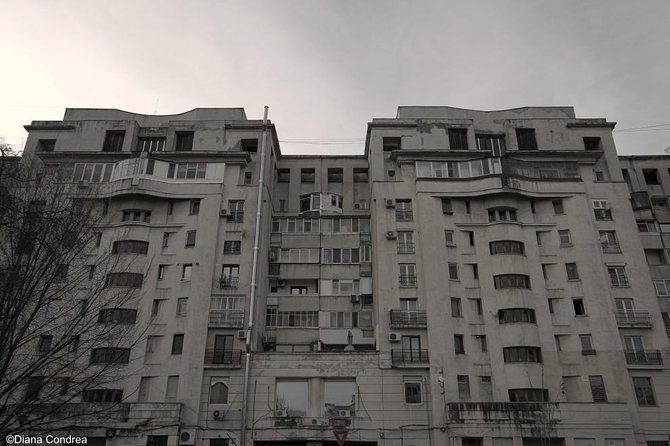
If you like cities that have layers, this is a strong choice. You’ll notice how the city keeps older traces too. At Revolution Square, you see the clash of royal-era Romania with the Communist dictatorship, right in the same area.
Private walking, pickup, and how the day actually runs
This is a private tour, meaning it’s only your group, not a mix with strangers. That matters because Communist Bucharest is not just about photos. It’s about questions, and questions are easier when your guide is working for your pace.
You meet at 8:30 am, and the tour runs about 7 hours. Pickup is offered, and hotel pickup is listed for groups of up to 3 people. The day also uses private vehicle transport on some parts, which helps when the walk would be long or when you’re moving between major areas.
Moderate physical fitness is the requirement. Plan on walking and standing, especially around large plazas and monuments. If you’re the type who likes to take time to read details and ask follow-ups, the private format helps you do that without feeling rushed.
Still standing, block after block
- Bucharest: Communism and History Guided City Walking Tour★ 4.9 · 918 reviews
- The Real tour of Communism★ 5.0 · 666 reviews
- Life under Communism★ 5.0 · 358 reviews
Piata Universitatii and Piata Revolutiei, the Revolution’s pressure points
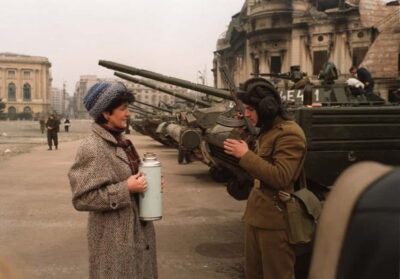
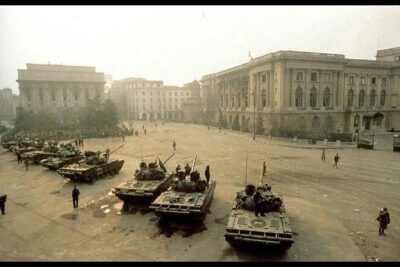
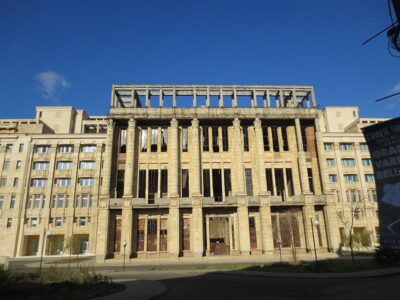
You begin at Piata Universitatii. It sits near Revolution Square and works as a second memorial space for the violent events that brought down Communist rule in December 1989. Even without going inside anywhere, you get the emotional and historical context fast, because this is where the public memory is pinned to real geography.
Next comes Piata Revolutiei. This square is the big stage for the Romanian Revolution from December 1989. But it’s also something else, and your guide will likely help you see it: it’s a place where two parts of Romania’s story are physically close. You can feel the contrast between the royal past and the Communist dictatorship. That clash is part of why Bucharest doesn’t read as simple or linear.
Timing here is about 30 minutes per stop. That’s enough time to understand what you’re looking at and connect it to the broader story of why the next landmarks exist. The drawback is also obvious: you won’t have hours to absorb every detail in these squares. If you want to linger, you’ll want to ask your guide for the best angles and the fastest way to learn what you’re seeing.
Tip: wear comfortable shoes. These are big open spaces. You’ll do more standing than you might expect.
Ateneul Roman, classical music, and the 19th-century counter-story
From Revolution memory, you shift to Ateneul Roman, a 19th-century monument that celebrates Romania’s love for classical music. This is a meaningful contrast. Communist-era Bucharest is about spectacle and state control, but Ateneul Roman represents another idea: culture built around art and public life.
There’s a specific detail that makes this stop more than a quick exterior glance. The concert hall features an impressive fresco listed as 75 meters. Admission here is not included, but you still get the value of the setting and context from the guide.
You’re allotted about 30 minutes. That gives you time to understand why Ateneul matters historically, then decide whether the paid interior is worth your time. If you’re a music fan or you like detailed interiors, consider paying to go in. If you’re more about exterior architecture and city storytelling, you can still get a lot from the outside framing.
Practical note: because it’s not included, you’ll want to factor extra time for entry decisions.
Ceaușescu’s mansion, the private face behind the regime
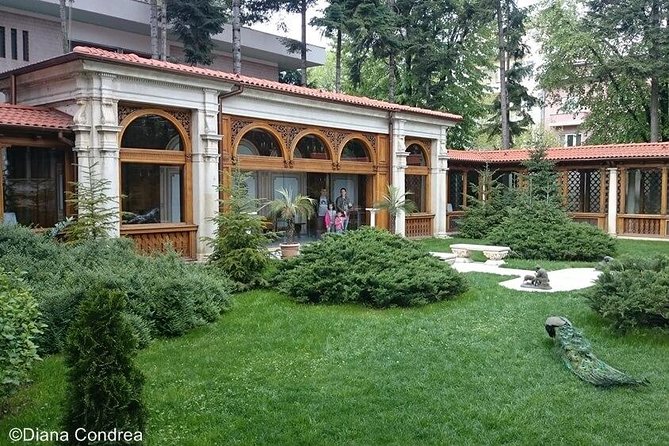
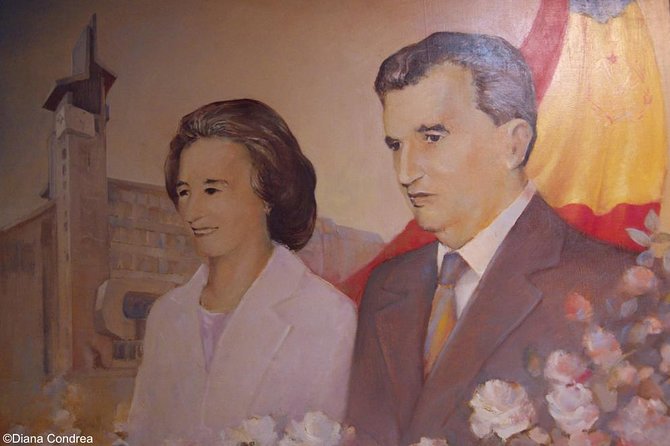
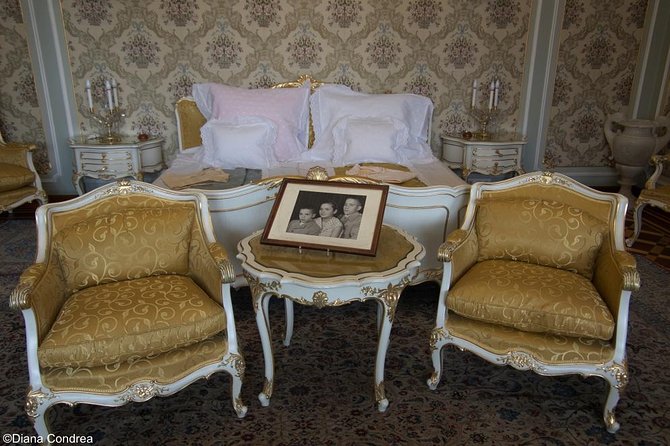
Then you head to the former residence of Communist dictator Nicolae Ceaușescu, often referred to as Ceausescu Mansion. This stop has a different emotional temperature. Revolution squares and massive government buildings can feel distant. A residence brings it down to human scale.
You get about an hour here, and admission is listed as free. That’s a nice setup: you spend time learning without extra ticket friction.
What I like about this stop is the way it balances the day. The Palace of Parliament is all power and scale. The mansion helps you think about how power works behind closed doors too, and your guide can connect the dots from political theory to how leaders lived and acted.
If you prefer your history with strong cause-and-effect, you’ll likely appreciate this. The day isn’t only about facts and dates. It’s about how systems create habits, and habits create consequences.
The Palace of Parliament, where the numbers do the talking
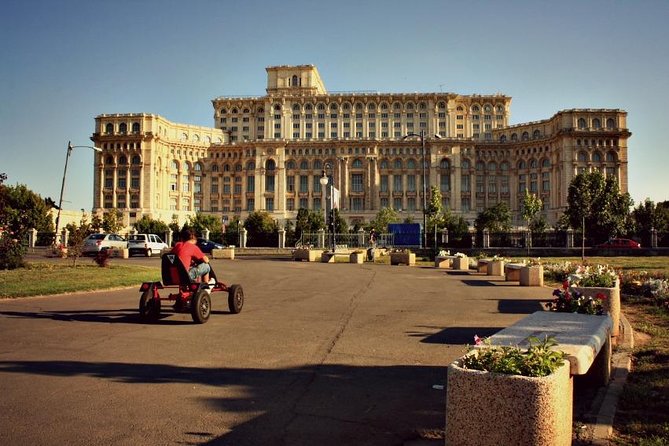
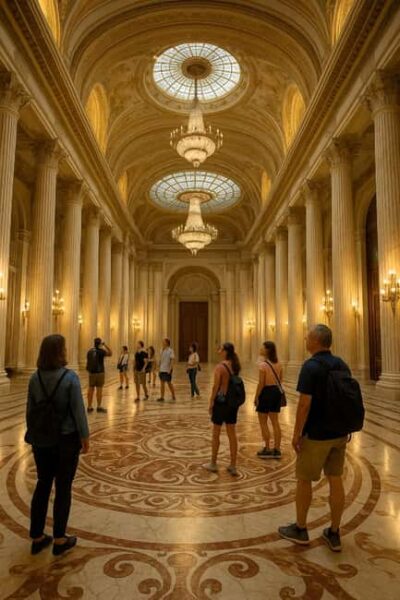
Next is the Palace of Parliament, also known locally as the House of the People. This is the headline landmark of Romania’s Communist period and is listed as the second largest administrative building in the world. When you’re standing in its orbit, it stops being a statistic and starts becoming a feeling.
Construction details are where your guide’s explanations really land, because the scale is hard to grasp without context. The day highlights claims like more than 1,000 rooms, about 1 million cubic meters of marble, and 3.5 tonnes of crystal. Those numbers sound unreal until you see the building’s physical presence.
You spend about 1 hour 30 minutes here, and admission is not included. That means you should decide early whether you want interior time. If you want the full effect, budget for entry. If you’d rather focus on the story and exterior views, you can still walk away understanding why this building became a symbol.
My advice: treat this as an architecture and power stop. Look for details, then connect them to why Communism prized monumental public projects. Ask your guide what the building was meant to communicate, and why that message is read differently today.
Other day trips from Bucharest
- Bucharest: City Highlights Guided Walking Tour
★ 4.9 · 1,482 reviews - Bucharest Highlights Walking Tour
★ 5.0 · 469 reviews - Bucharest: Hidden Markets Walking Tour with Tastings
★ 4.9 · 329 reviews - Bucharest: Ghost Stories & Romanian Mythology Walking Tour
★ 4.9 · 287 reviews - Bucharest: Guided Walking Tour with Romanian Snack
★ 4.9 · 228 reviews
Piata Constitutiei, the Communist civic center in plain sight
After the Palace area, you move to Piata Constitutiei, described as the heart of the Communist civic center. This is where the idea of public space becomes part of political control. The Communist approach to cities often meant shaping where people would gather and how the state would frame civic life.
This stop is shorter, about 20 minutes, and admission is free. That’s enough time to orient yourself and connect what you saw at the Palace with the larger civic layout. If you’re the kind of traveler who likes geography and city design, you’ll likely enjoy this part because it’s about seeing relationships between places, not just looking at a single landmark.
The potential drawback is that 20 minutes can feel fast if you want to take lots of photos or if you’re processing the emotional weight of what you’ve just learned. In that case, ask your guide to point out the key lines of sight worth spending your camera time on.
Antim and Mihai Voda Monasteries, churches saved by relocation
Then the tour does something smart and human. You visit churches that survived Communist demolitions because they were moved. You’ll stop at Manastirea Antim and Mihai Voda Monastery, each listed as a church saved from Communist demolitions after being moved from its original location.
Both stops are about 20 minutes, and both are listed as free. That short time is actually a benefit here, because the takeaway is clear: the regime may have tried to erase parts of the city, but physical landmarks found ways to persist.
What makes these stops valuable, even on a Communist-focused day, is contrast. After massive state buildings, churches remind you that Bucharest wasn’t only about government plans. People and institutions resisted, adapted, and survived.
If you want a break from stone-and-scale history, these monasteries are also calming stops. They give you a slower rhythm and a more personal sense of place.
Lunch break, and how to plan your energy
Midday, you take a break for lunch at a city center restaurant. Food and drinks are not included, so you’ll pay for your meal, but you’re not forced to hunt for something between landmarks while time is ticking.
Because your day is built around fixed stops and travel between them, I’d treat lunch like a recharge rather than a long sit-down. Order something filling and simple. Bring water if you tend to get thirsty, and plan to use the break to rest your feet.
Photo advice: after lunch, you’ll still have more civic and architectural stops. If you’re not careful, you can burn through your battery and your patience right when you want the best shots. Keep your camera charged before you eat.
Price and value, what $92.19 buys you
The price listed is $92.19 per person, and for a full-day private tour it’s a reasonable range, mainly because you’re not just getting walking commentary. You’re getting a guide with formal training, plus private vehicle transport on some segments, plus pickup for small groups.
Here’s how the value breaks down in practical terms:
- You’re paying for the guide’s context. Communist Bucharest can look like random big buildings until someone explains the logic behind them. The guide quality is repeatedly highlighted, including names like Laura and Diana in the guide experiences you might encounter.
- You’re saving time with private transport on parts of the route. That matters in Bucharest, where distances can be misleading.
- You control the pace since it’s private and can be adjusted to your preferences.
Costs that may add up: the Atheneul Roman and the Palace of Parliament have admission not included. Also, lunch and drinks are not included. If you want interior access at both places, your final spend will be higher than the base tour price.
But if your priority is understanding and seeing the main landmarks in sequence, you can still get strong value even with only exterior time at the paid sites.
Who should book this Communist Bucharest tour, and who might not
This works best for you if you want a structured Communist-era day and you like history that’s anchored to real public spaces. It’s also ideal if you enjoy architecture and civic planning, because the landmarks are massive and intentional.
It’s a smart choice for first-time Bucharest visitors who feel overwhelmed by the city. A guided route like this gives you a spine for understanding what you see later on your own.
You might consider a different tour if you want mostly quick stops for photos with minimal walking and minimal thinking. This day rewards curiosity. If you plan to spend the whole time silent and just snap pictures, you might feel like you’re not getting your money’s worth.
Also, because some admissions are not included, it’s best for travelers who are okay with making a couple of pay-at-the-site decisions.
Should you book it?
If your goal is to understand how Communism shaped Bucharest, then this is a good bet. I like the way the day moves from Revolution memory into the dictatorship’s symbols, then into the civic core, and finally into churches that survived by relocation. That mix makes the story feel complete without being scattered.
Book this tour if you:
- want a private guide and a flexible pace
- care about the real meaning behind landmarks like Revolution Square and the House of the People
- are willing to pay for entry if you decide to go into the Atheneul Roman or the Palace of Parliament
Consider passing or swapping to another option if:
- you hate extra ticket decisions during a trip
- you only want a light overview with minimal walking and minimal content
FAQ
How long is the Private Walking Tour of Communist Bucharest?
It runs for about 7 hours.
What is included in the tour price?
You get a professional guide, transport by private vehicle on some parts of the itinerary, and hotel pickup for groups of maximum 3 people.
Is lunch included?
There is a break for lunch at a city center restaurant, but food and drinks are not included.
Do I need tickets to enter Ateneul Roman and the Palace of Parliament?
Admission tickets for Ateneul Roman and the Palace of Parliament are not included.
Is this tour private?
Yes. It is a private tour/activity, so only your group participates.
Do I need a passport for this experience?
Yes. A current valid passport is required on the day of travel.
Just Added: New Tours From Bucharest
- Bear Watching in Transylvania 2-Day Tour
- National Village Museum and Comana Adventure Park
- Half Day Tour in Bucharest
- From Dracula to Ceaușescu- Romanian Terror Stories tour
- Full-Day Private Tour of Brasov City and Peles Castle from Bucharest
- Bucharest: Tour The Wine Road, 2 Boutique Wineries in 1 Day
- Bucharest Ceaușescu House Parliament Palace &Village Museum
- Full-Day Private Tour of Bucharest and Mogosoaia Palace
Communist Bucharest Tours, compared.

Parliament, Ceausescu House & Village Museum Tour
Read our review →
Bucharest Essential Tour: Old Town, Calea Victoriei & Communism
Read our review →
Communism in Bucharest – Landmarks, Museum & Communist Appetizers
Read our review →
Browse the lists this tour appears in