
Reviewed · HISTORICAL TOURS
Highlights & Layers of Bucharest History Tour
Bucharest has layers you can walk through. This 3 hour, 6,000 step style history walk connects Romania’s bigger political swings to real streets, real buildings, and the way locals still talk about them, with Andreea and Andrei guiding the story in clear English. I especially like that it mixes iconic landmarks with smaller, off the main path details you would normally miss.
Two things I really like are how the tour centers on interpretation, not just facts, and how you get local recommendations that feel like something you’d get from someone born and raised there. The downside to note is simple: it is a walking tour and it is not set up for people with mobility impairments.
If you want an efficient, human scale introduction to Bucharest, this works well. You get a real sense of the city’s arc, from older neighborhoods to the Communist era and the years after 1989, and you finish in the place most people want to see, the Romanian Athenaeum.
In This Review
- Key highlights worth your time
- Starting at Hanu’ lui Manuc, and why that matters
- What $34 and 6,000 steps get you
- Old Town and Stavropoleos Monastery: medieval Bucharest starts the clock
- CEC Palace and the National Museum: institutions that shaped behavior
- Macca-Vilacrosse Passage: the small space where big history shows
- Calea Victoriei: the European face of power
- Local café break: refuel like a Bucharest regular
- Revolution Square: the 20th century explained in the open
- Equestrian Statue of Carol I, and the meaning of monuments
- The Romanian Athenaeum finale: classically grand, emotionally loud
- Who this tour fits best
- Should you book this Bucharest history walk?
- FAQ
- How long is the Bucharest history tour?
- What does the tour cost?
- Where do I meet the guide?
- Is the tour in English?
- Are there breaks during the walk?
- What is included in the price?
- Is hotel pick-up or drop-off included?
- Are food and drinks included?
- About how much walking is involved?
- Is it refundable if my plans change?
Key highlights worth your time
- Historian led storytelling with Andreea, who has a master’s thesis on the city’s history
- Andrei’s culture focus, with talk that feels like good conversation, not a script
- A tight route that hits major landmarks plus small lesser known stops
- Old Town to Calea Victoriei, so you see both the “traditional” and the grand European side
- Revolution Square and Carol I, designed to explain why the 20th century changed everything
- A local snack and a café break, so you can keep moving without feeling rushed
Starting at Hanu’ lui Manuc, and why that matters
You begin outside Restaurant Hanu’ lui Manuc in Saint Anthony Square, Piata Sfantul Anton. It is a smart start because this area sits right where people naturally begin exploring the Old Town, so the history feels connected to the place you are actually standing.
From the first steps, the guides set the tone: English storytelling, guided stops, and a focus on how architecture and politics show up in the street scene. If you like tours that explain why a building or square looks the way it does, you’ll appreciate the method here. The guides are born and raised in Bucharest, which shows in the practical direction they give you for the rest of your day.
At $34 per person for a 3 hour walk, it’s also a good value if you are trying to make the first day in town count. You are not just paying to “see things,” you are paying for context plus local food and culture tips. And yes, it is still a walking tour, so bring comfortable shoes and plan for roughly 4 km.
What $34 and 6,000 steps get you
This is priced like a focused neighborhood history experience, not a long bus day. You’re looking at a steady pace through multiple areas, with brief guided time at each stop and a short break for a local café.
Here’s the practical reality: the tour usually involves about 6,000 steps. That is not extreme, but it is enough that you’ll want good walking shoes and water. If you’re used to city strolling, you will feel fine. If you hate walking, you’ll feel it.
Also, this tour is not designed for mobility impairments. The route includes enough on foot that you should plan another option if walking is a challenge for you.
Other day trips from Bucharest
- Bucharest: Communism and History Guided City Walking Tour★ 4.9 · 918 reviews
- Bucharest: 3-Hour Dark History Tour with a Local★ 4.9 · 301 reviews
- Bucharest: Small Group History, Art & Secrets Tour★ 4.7 · 152 reviews
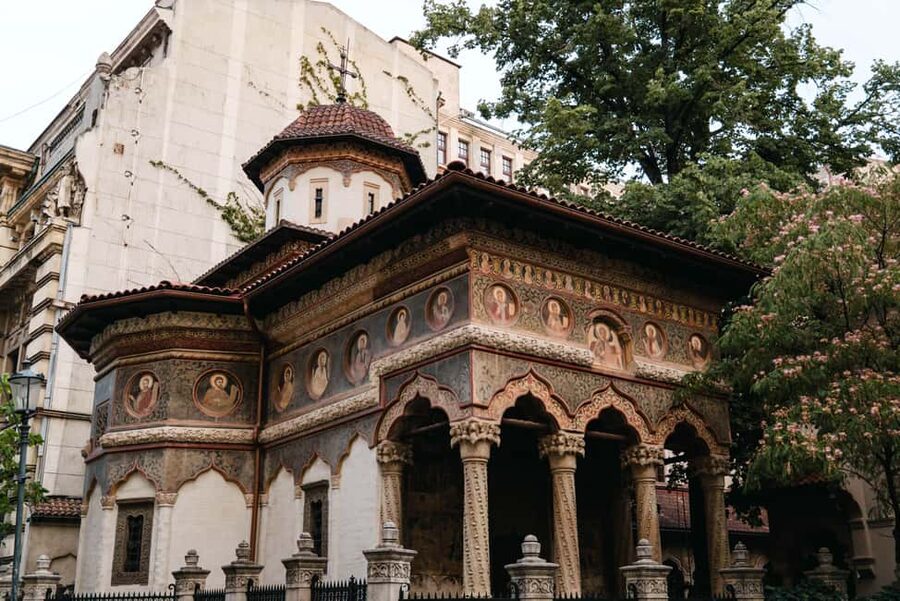
Old Town and Stavropoleos Monastery: medieval Bucharest starts the clock
Old Town is where Bucharest gives you its first emotional impression: uneven streets, historic atmospheres, and the sense that the city has been layered by time. The guided time here is brief but purposeful, just enough to orient you so later contrasts land better.
Then you move to Stavropoleos Monastery, a stop that works well because it slows the pace. Monasteries like this are not only pretty. They help you understand what mattered to people before modern politics took over the headlines.
Why this stop is useful: you get an anchor point for the older city fabric before the tour starts walking you toward the big political and institutional buildings. If your brain likes to connect dots, this is the start of the “cause and effect” story.
CEC Palace and the National Museum: institutions that shaped behavior
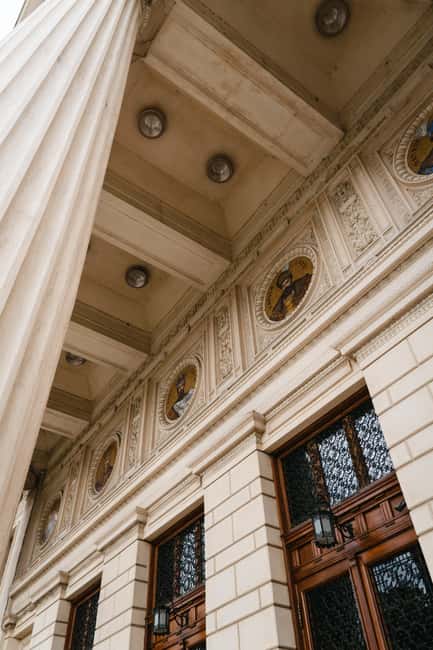
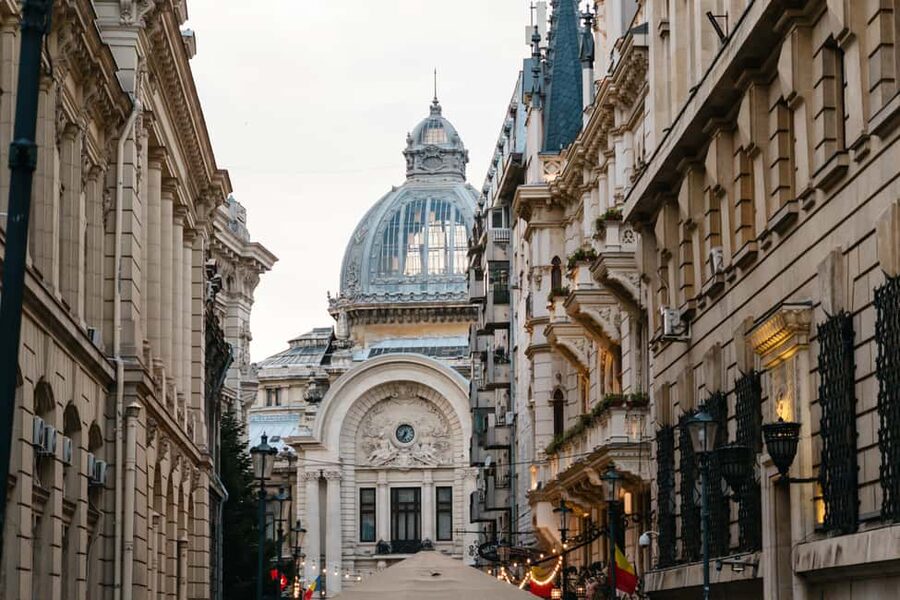
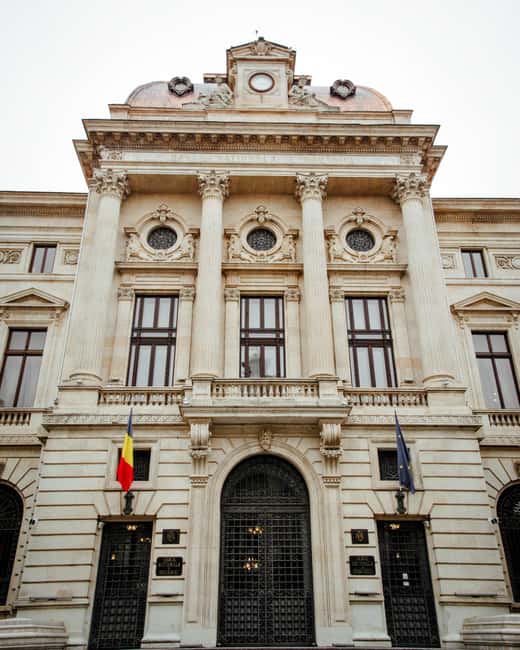
From the monastery, you head toward official structures that feel more modern, even when they belong to earlier eras of national ambition. The CEC Palace is one of those buildings you see from the outside and think, why does a bank building feel like a statement? That is exactly the question the guides tend to answer with their storytelling.
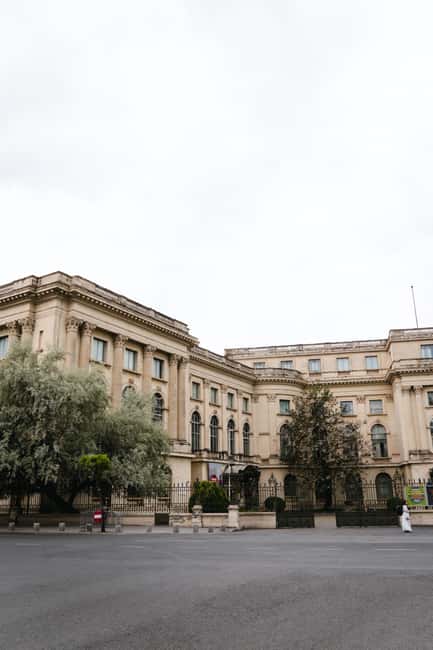
Next comes the National Museum of Romanian History. This is a quick, guided taste rather than a full museum day, but it helps you avoid the common problem: you walk in without knowing what to notice. Even in short time, you get direction about what the museum can help you interpret during the rest of your walk.
My advice to you: treat the museum stop as context building. Don’t expect every detail to land in 10 minutes. Instead, use it to set your mental bookmarks so you recognize themes later when you see how the city staged power.
Macca-Vilacrosse Passage: the small space where big history shows
You then pass through Macca-Vilacrosse Passage, the kind of covered arcade that reminds you how cities used to handle shopping, social life, and day to day movement. It is short, guided time, but the point is clear: Bucharest did not only grow through palaces and squares. It grew through everyday corridors.
This is also where the tour’s “hidden corners” approach becomes real. The guides are not trying to trick you into finding something impossible. They are showing you how to look for details, like passages that connect streets, architectural flourishes, and the way commercial spaces reflect changing tastes.
If you like architecture and human scale design, this stop can be a favorite. If you are more focused on politics, it still helps because it shows how cultural shifts play out in spaces people actually used.
Calea Victoriei: the European face of power
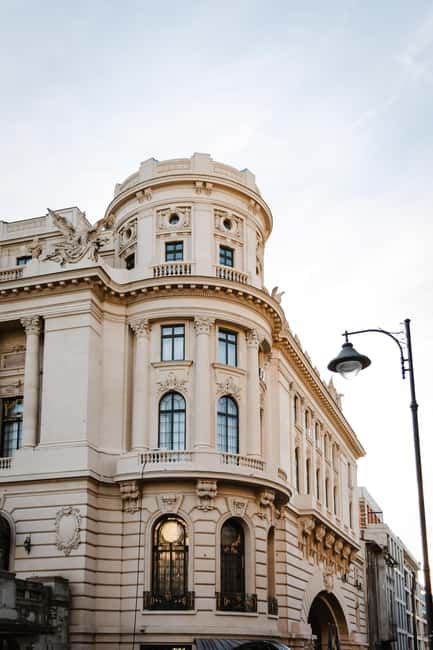
Then comes Calea Victoriei, one of Bucharest’s signature avenues, where you get the elegant, monumental side of the city. You walk along it with a story that ties architecture and ambition to the monarchy era and to the European influences Romania absorbed over time.
This section is longer, with about 30 minutes of guided talk, and it is where the tour often feels like it moves from “what is here” to “what it meant.” The guides help you connect the look of the avenue to Romania’s political identity shifts across centuries, including periods of Ottoman influence and later European pull.
What I like about this part is that it gives you something visual to hold in your head. Later, when you reach Revolution Square and the public symbolism of the Communist era and after 1989, you’ll see how Bucharest uses space to tell stories.
These pair well with the day you just read about.
- Bucharest: Dracula’s Castle, Peles Castle, & Brasov Old Town
★ 4.5 · 17,858 reviews - Bucharest: Dracula Castle, Peles Castle & Brasov Old Town
★ 4.6 · 10,891 reviews - Bucharest: Dracula’s Castle, Peleș Castle & Brașov Day Trip
★ 4.4 · 6,100 reviews - Bucharest: Palace of Parliament Tickets and Guide
★ 4.3 · 3,182 reviews - Bucharest: Day Trip to Dracula Castle, Peles Castle & Brașov
★ 4.4 · 3,049 reviews
Local café break: refuel like a Bucharest regular
After Calea Victoriei, you get a 15 minute break at a local café. You also have a local snack included. This is not a long meal stop, but it is timed well. You can use it to reset your legs and ask the guides a question or two about what to do next.
In tours like this, I find the café break matters because it shifts you from “tour mode” to “city mode.” You’re not just receiving information. You’re learning how to fit the tour into your day. And because the guides are locals, their suggestions tend to be practical, the kind that help you move beyond the obvious checklist.
Revolution Square: the 20th century explained in the open
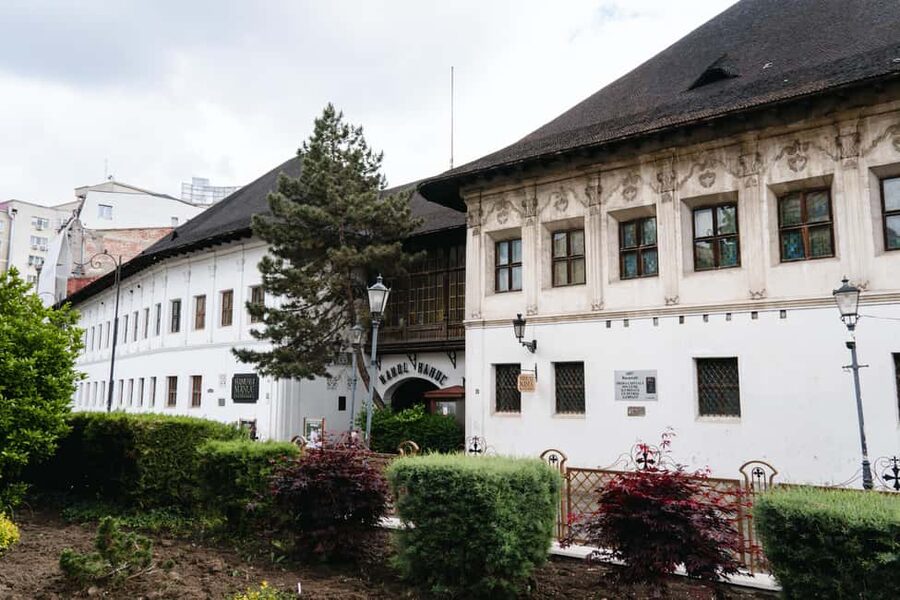
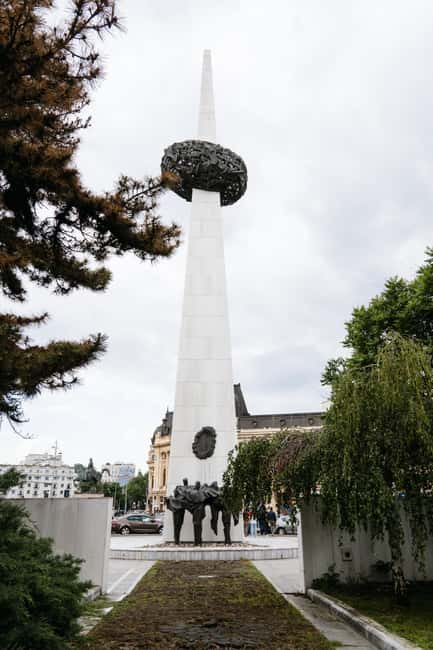
Then you reach Revolution Square, guided for about 25 minutes. This stop is the one that often makes people feel the tour is more than architecture. Here, the guides connect the Communist era story to what you can still see in public space.
One thing I really appreciate is that this part is not vague. The historian guide, Andreea, is known for having strong command of the 1989 Revolution story, and that kind of depth matters. It means you’re not left with generic slogans. You understand why certain events mattered and how the city’s identity shifted afterward.
If you’re wondering whether you should care about Revolution Square as a first timer, I’ll put it this way: this is the moment where Bucharest’s modern political narrative becomes real enough that you start recognizing it in the rest of the city.
Equestrian Statue of Carol I, and the meaning of monuments
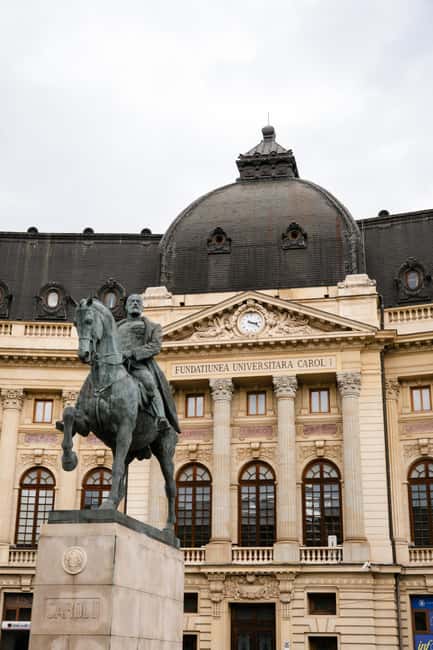
After Revolution Square, you head to the equestrian Statue of Carol I. This is guided for about 20 minutes, and it’s a great follow up because monuments are propaganda in stone. You learn to read them as messaging, not just as a photo spot.
The guides help you place Carol I into the longer story arc, where monarchy and national ambition shaped how Bucharest presented itself. You’ll also understand why monuments matter, especially in a city that later went through major ideological changes.
If you’re the kind of person who likes to look up from your phone and actually study a statue, this stop is worth your attention.
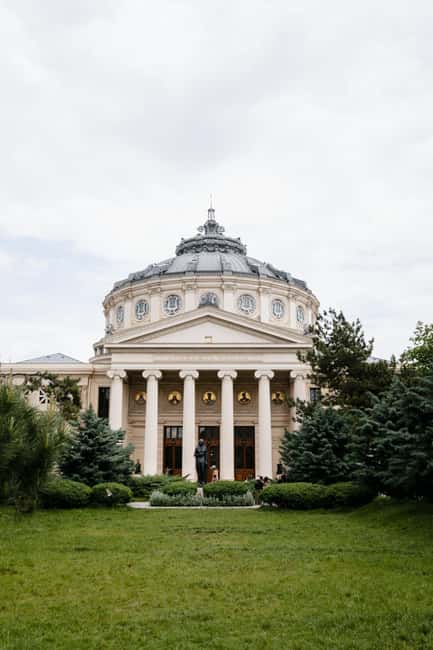
The Romanian Athenaeum finale: classically grand, emotionally loud
Your tour ends at the Romanian Athenaeum, with about 10 minutes of guided talk at the earlier “secret stop” before you arrive. Then you finish at the Athenaeum itself.
The ending is well chosen. The Athenaeum is Bucharest’s signal that culture, public pride, and national identity can be built in stone and sound. Even with limited time, you’ll leave with a stronger sense of what it represents.
This finish also rewards the earlier stops. You see medieval religious space, institutional buildings, commercial corridors, grand European avenue architecture, then the public square of modern revolution. The Athenaeum ties it together by showing how Bucharest wanted to define itself through culture.
Who this tour fits best
You’ll likely enjoy this tour if you want:
- A first day introduction that makes Bucharest feel understandable
- A mix of Old Town charm and big political context
- Clear English storytelling led by locals, not generic sightseeing narration
- A short, efficient format that still covers key landmarks
You might want another option if you:
- Need a tour with very limited walking
- Want a deep museum time commitment, because museum viewing here is brief and guided
Should you book this Bucharest history walk?
Yes, I’d book it if you want a smart, story driven way to connect Bucharest’s visible landmarks to the bigger historical chapters. The value is strong for what you get: a 3 hour guided walk with a historian lead, a cultural guide, a local snack, and stops that cover monarchy, Communist era symbolism, and post 1989 change.
The biggest reason to say go is that you are not stuck with surface level sightseeing. You walk away with an explanation you can use while you keep exploring on your own. And you get practical local recommendations, which often turns into better meals and better next stops than you’d find by guesswork.
FAQ
How long is the Bucharest history tour?
It lasts 3 hours.
What does the tour cost?
The price is $34 per person.
Where do I meet the guide?
Meet in front of Restaurant Hanu’ lui Manuc (Manuc’s Inn) in Saint Anthony Square, Piata Sfantul Anton.
Is the tour in English?
Yes, the tour is conducted in English.
Are there breaks during the walk?
There is a break time at a local café (15 minutes).
What is included in the price?
A 3 hour walking tour, a local snack, and a local guide. You also get local recommendations for food, culture, and things to do.
Is hotel pick-up or drop-off included?
No, hotel pick-up and drop-off are not included.
Are food and drinks included?
Food and drinks are not included.
About how much walking is involved?
The tour typically covers around 6,000 steps (about 4 km).
Is it refundable if my plans change?
Free cancellation is available up to 24 hours in advance for a full refund.
Just Added: New Tours From Bucharest
- Bear Watching in Transylvania 2-Day Tour
- National Village Museum and Comana Adventure Park
- Half Day Tour in Bucharest
- From Dracula to Ceaușescu- Romanian Terror Stories tour
- Full-Day Private Tour of Brasov City and Peles Castle from Bucharest
- Bucharest: Tour The Wine Road, 2 Boutique Wineries in 1 Day
- Bucharest Ceaușescu House Parliament Palace &Village Museum
- Wines of Wallachia – 8 hours
Historical Tours, compared.


Roma Culture, Realities and Slavery History, Walking tour
Read our review →
Bucharest Jewish Heritage | Holocaust Memorial | Private Car Tour
Read our review →
Private Bucharest: History & Food with Traditional Meal
Read our review →
Bucharest Historical Food Tour in Old Center
Read our review →Browse the lists this tour appears in