
Reviewed · FOOD & DRINK
Private Tour – Food, Culture, History & Traditions
Bucharest has a few secret food stories. This private 4 to 5 hour walk ties together Old Town legends with big national history, plus a Romanian lunch. It runs in English with a route that stays focused on culture you can actually see.
I love the clear context for what you’re looking at, from where mici is said to have been invented to the streets tied to the 1989 revolution. I also like the practical setup: free entry at each listed stop, audio support if your group is larger, and an included 2-course meal with starters and a main.
One consideration: you’ll cover about 6 km on foot, so comfy shoes matter, and the guide can be soft spoken at times in busy areas.
In This Review
- Key reasons to consider this Bucharest tour
- Price and what you truly get for $114.14
- Meeting point, pacing, and how the walk really feels
- Bianca’s guiding style and the practical audio setup
- Stop-by-stop: Old Town links, monasteries, and bank palaces
- What to watch for on this first stretch
- Calea Victoriei, BNR Palace, and the passages where people partied
- Revolution Square to the Ateneul Roman: power, culture, and memory
- How to make this section work for you
- Neo-Romanian villas, a girls’ boarding school, and local myth at Gradina Icoanei
- Lunch and the kind of Romanian meal included
- What kind of traveler this fits best
- Tips to get the most out of the 4 to 5 hour loop
- Should you book this Bucharest private food, culture, history, and traditions tour?
- FAQ
- How long is the Private Tour – Food, Culture, History & Traditions in Bucharest?
- What does the tour cost per person?
- Is this tour private?
- What’s included in the lunch?
- Are drinks included with lunch?
- What language is the tour offered in?
- Where do we meet, and where does it end?
- Does the tour require good weather?
- Can I cancel and get a refund?
Key reasons to consider this Bucharest tour
- Private, small-group feel so you can move at your pace and ask real questions
- Romanian lunch included, with a cheese and charcuterie style starter and a main course
- 14 meaningful stops that connect food, architecture, and political turning points
- Free admission at the listed sights, plus all fees and taxes included
- Audio devices if needed when the group is over 4, so you can hear the guide clearly
- A mix of famous and oddly specific places, like passages and neighborhood folklore sites
Price and what you truly get for $114.14
At $114.14 per person, this is not a “cheap bus ride” tour. What you’re paying for is time with an English-speaking guide in a private format, a full walking loop through key Bucharest neighborhoods, and a real sit-down meal at the end.
The value gets better when you look at what is included: a lunch that’s described as a full meal with 2 courses (a platter-style starter and a main course), plus all fees and taxes. Alcoholic drinks and soda are not included, so plan to budget a bit extra if you like beer or wine with lunch.
If your goal is to understand Bucharest in a few hours, not just tick off landmarks, this kind of format usually fits well. You get guided explanations while you’re looking at the exact buildings and streets they refer to, instead of trying to “figure it out later” with a map.
Meeting point, pacing, and how the walk really feels
This tour starts at Bulevardul Ion C. Brătianu 36, 030167 București, Romania. It ends around University Square, Bulevardul Regina Elisabeta, București 030167. The route is described as about 6 km, and the duration is roughly 4 to 5 hours.
That distance is very doable for most people, as long as you don’t plan to treat the day like a casual coffee stroll. You’ll be moving between neighborhoods and stops, and some streets are busy. Bring comfortable shoes and expect a mix of quick looks and slower moments when your guide explains what to notice.
Weather matters. The experience is described as requiring good weather, and if it’s canceled due to poor weather you’ll be offered a different date or a full refund. If you’re traveling in shoulder season or on a day when rain is possible, keep that in mind.
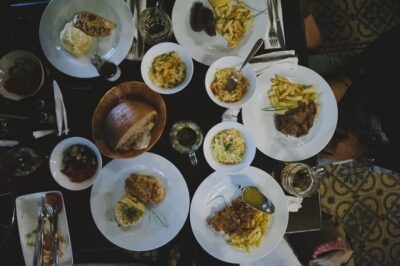
Sarmale, mici, and a lot of dill
- Taste Bucharest: A Food Lover’s Tour of Markets & Neighbourhoods★ 5.0 · 689 reviews
- Street Food’n’Culture Tour★ 5.0 · 209 reviews
- Discover Bucharest: Private Highlights and Traditional Food Tour★ 5.0 · 86 reviews
Bianca’s guiding style and the practical audio setup
The tour is offered in English, and your guide will use audio devices for live guiding if the group exceeds 4 people. That matters more than it sounds. Bucharest streets can be loud, and when you’re walking, it’s easy to lose the thread if you can’t hear.
From what you can expect of this kind of guided approach, the goal is not a lecture. Your guide helps you connect stories to specific places: the kind of detail that makes the city feel like one coherent timeline, not random sights.
Also, if you’re sensitive to audio clarity, note that the guide has been described as soft spoken at times in busier areas. The audio devices are there for a reason, so if you’re in a larger group, make sure you use your device properly.
Stop-by-stop: Old Town links, monasteries, and bank palaces

This walk begins in the Old Town area, where trading goods shaped the neighborhood’s history. It’s also where the dish mici is said to have been invented. Even if you already know the food, you’ll get a better sense of why this street-level cuisine belongs here, not just as a tourist platter.
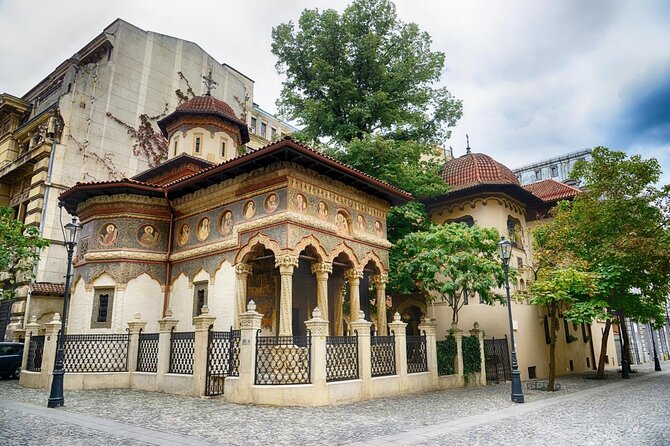
Next comes Stavropoleos Monastery, an 18th-century Romanian Renaissance monastery. In a city that has seen dramatic changes, places like this help you anchor the older layer. The stop is short, but it works because the guide’s explanation frames it as more than a pretty facade.
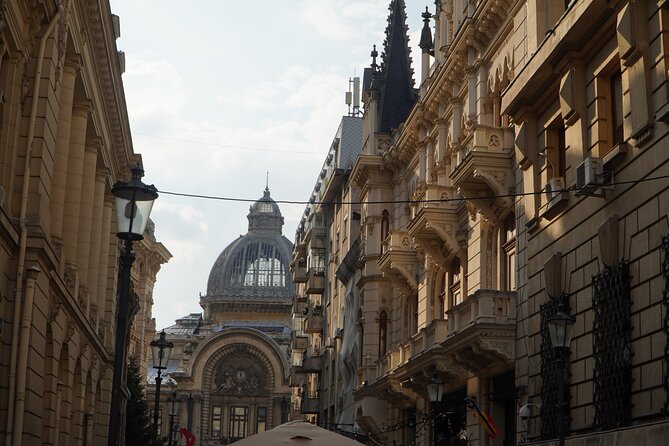
A few minutes later you’ll pause at Palatul CEC, a late-19th century eclectic palace tied to CEC Bank. This is the kind of architecture stop that pays off if you like reading buildings the way you read history. The building style helps you understand Bucharest’s shift into the modern identity of the late 1800s.
Then you’ll step into Macca Villacrosse Passage, described as the most beautiful passage of Bucharest. Passages like this are where the city’s “everyday luxury” becomes visible. They’re not just corridors, they’re architectural statements from a time when city life was changing fast.
What to watch for on this first stretch
- The way the guide points out architectural style transitions, not just names
- How the food story links to the neighborhood’s trading past
- Small places (monastery, passage) that feel quick but add texture to the overall picture
Calea Victoriei, BNR Palace, and the passages where people partied
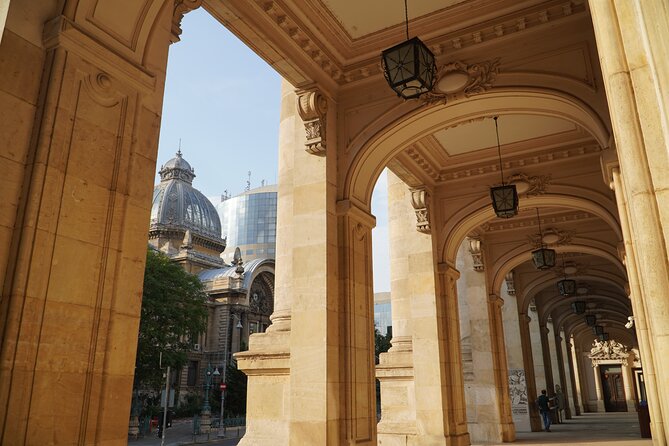
After the passages and palaces, the route moves toward BNR Palace, home to Romania’s national bank. The explanation also connects it to Marmorsch Blank Bank, which is now turned into a hotel. That small detail is useful: it shows how Bucharest reuses grand buildings instead of wiping them away.
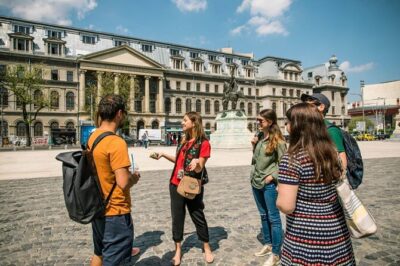
You’ll then walk along Calea Victoriei, often described as the heart of Bucharest since the 19th century. This is where you see the city’s self-image in stone. Expect grand streetscape views, classic central-city architecture, and that sense that Bucharest wanted to look European and modern.
Two closely related stops follow, both focused on the city’s passages:
- Pasajul Victoriei
- Pasajul Englez, described as a former brothel on the main avenue, with a convenient back entrance, where the king and high class used to party.
This is the part of the tour that feels like “Bucharest has seen everything.” It’s also a good reminder to keep your mind open. You’re not only studying politics and churches, you’re studying how the city’s social life operated, behind formal facades.
If you like tours that give you the less sanitized version of history, these passage stops will be a highlight. You’ll probably look at the same walls later and suddenly understand what they were built for.
Other day trips from Bucharest
- Bucharest: Communism and History Guided City Walking Tour
★ 4.9 · 918 reviews - Bucharest: 3-Hour Dark History Tour with a Local
★ 4.9 · 301 reviews - Bucharest: Small Group History, Art & Secrets Tour
★ 4.7 · 152 reviews - Guided Walking Tour of Historical Bucharest
★ 5.0 · 84 reviews - Roma Culture, Realities and Slavery History, Walking tour
★ 4.9 · 52 reviews
Revolution Square to the Ateneul Roman: power, culture, and memory
Next up is Piaka Revolukiei, where the communist leader Ceaușescu held his last speech during the beginning of the bloody 1989 revolution. This is a heavy topic, and the tour keeps it grounded in place. You’re not just hearing about events, you’re standing near a point tied to the turning of modern Romanian history.
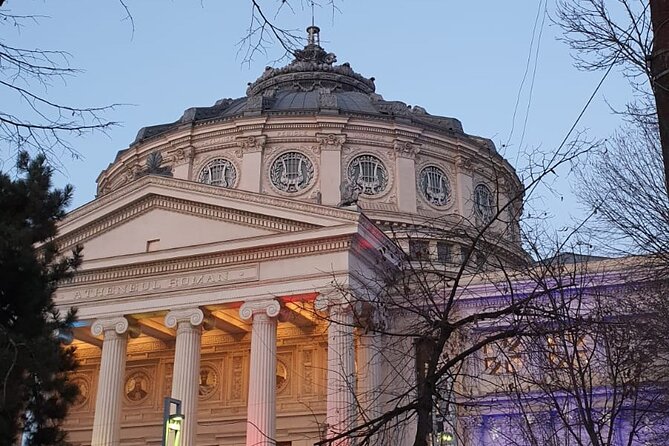
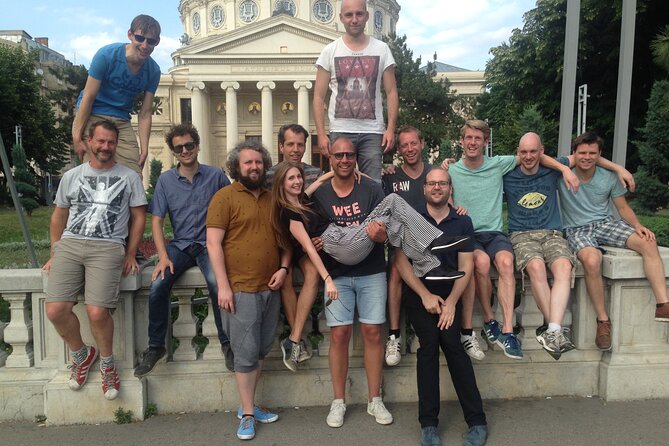
After that, you’ll admire Ateneul Roman (Romanian Athenaeum), described as one of the most beautiful buildings in Bucharest. This is where culture enters the story in a different way than monuments and banks. The focus is on the beauty and the public-facing role of the arts, a counterweight to the political stops you just made.
Finally in this stretch, you’ll reach Palatul Regal / Royal Palace, which now houses the national art museum. This stop ties together two ideas that help a first-time visitor: power structures (royalty, state) can change hands, but the buildings keep shaping how people move through the city.
How to make this section work for you
If you tend to get overwhelmed by dates, use this part like a mental reset. Let the guide do the timeline linking, and then focus your own attention on two things:
- What the building is for (bank, art, palace, public speech site)
- How the architecture matches that purpose
Neo-Romanian villas, a girls’ boarding school, and local myth at Gradina Icoanei

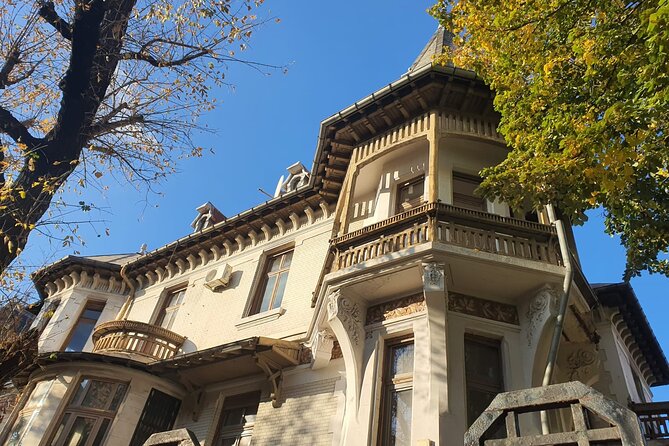
The tour continues to Bulevardul Dacia, where you’ll see magnificent villas and examples of the neo-Romanian architectural style. This stop helps you see a different side of Bucharest than the official monuments. It’s more domestic, more personal, and it gives you a visual vocabulary for styles you might spot on your own later.
Then there’s Colegiul Național “Școala Centrală”, described as a 19th-century boarding school for girls, surrounded by a veil of eerie stories. This kind of stop is short, but it adds a distinctly local flavor: the sense that Bucharest is not only made of grand buildings, it’s made of rumors, legends, and memory layered onto ordinary streets.
After that, you’ll visit Cartierul Armenesc, the Armenian neighborhood. The description emphasizes history, hidden gems, and mystery. Even with a quick stop, it’s a chance to widen your understanding of Bucharest as a city of multiple communities, not just one dominant narrative.
The final stop is Gradina Icoanei, where witches were believed to cast spells, at least not far in the past. Whether you take the folklore literally or not, it’s a fun and atmospheric ending. It reminds you that people tell stories for a reason, especially in cities that have lived through so much change.
Lunch and the kind of Romanian meal included
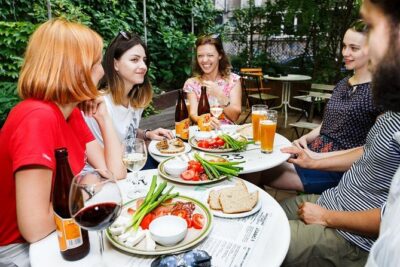
The tour includes a full meal described as lunch or dinner, depending on timing. It’s structured as 2 courses:
- A platter with cheeses and charcuterie and or other Romanian starters
- A main course
Alcoholic beverages and soda are not included. So if you like to order wine with lunch, factor that into your day. Also, if you’re the type who hates surprises, let the guide know about any dietary needs right away. The provided details confirm the format of the meal, but they do not list options.
This meal is part of the tour design, not an add-on. You’re walking through food-related history and urban stories, then you sit down to eat a Romanian starter-style plate, and that sequence makes the whole day feel connected.
What kind of traveler this fits best
This tour is a good match if you want:
- A first orientation to Bucharest with a guided narrative
- Architecture and street-level history, not just museum time
- A food element that is tied to the city’s identity, not tacked on randomly
- A private group experience, so you can ask questions and set a comfortable pace
It’s also a strong choice if you’re traveling with someone who wants both culture and practical sightseeing. The route is manageable, but it does require a basic fitness level due to the 6 km walking.
If you want purely slow and scenic walking with zero “history talk,” this might feel a bit structured. The best way to enjoy it is to treat it like a morning briefing for Bucharest, then go explore on your own afterward.
Tips to get the most out of the 4 to 5 hour loop
Bring a simple game plan so the day feels fun, not like a checklist:
- Wear shoes you can walk in for 6 km without thinking about it.
- Use your audio device if you have one, especially in louder stretches.
- Keep your camera handy in passages and palace exteriors, because those are “blink and you miss it” moments.
- Ask the guide what you should notice next before you turn a corner. The tour works best when you know what to look for.
Also, since this is a walking tour with many quick stop-ins, don’t expect every site to be long and detailed. The power is in the connections, where one story sets up the next.
Should you book this Bucharest private food, culture, history, and traditions tour?
If you’re trying to make the most of limited time in Bucharest, I think this is a solid book. The price makes sense when you factor in the private format, the English guiding, the included 2-course meal, and the fact that the listed stops are free to enter. You also get an efficient sweep of Old Town roots, major public architecture, revolution-era memory, and neighborhood texture.
I would skip it only if you strongly dislike walking 6 km, or if you prefer tours that spend most of their time inside museums rather than on streets and exteriors. If that’s you, you might feel rushed.
For most people who want a well-organized first day that mixes food, architecture, and real political context, this hits the mark. The key names and places are memorable, and the city starts to make sense fast after you’ve seen it this way.
FAQ
How long is the Private Tour – Food, Culture, History & Traditions in Bucharest?
It runs about 4 to 5 hours.
What does the tour cost per person?
The price is $114.14 per person.
Is this tour private?
Yes. It is a private tour/activity, meaning only your group participates.
What’s included in the lunch?
The tour includes a full meal with 2 courses. You’ll get a starter platter with cheeses, charcuterie and/or other Romanian starters, plus a main course.
Are drinks included with lunch?
Alcoholic beverages and soda or pop are not included.
What language is the tour offered in?
The tour is offered in English.
Where do we meet, and where does it end?
The start is Bulevardul Ion C. Brătianu 36, 030167 București. The end is University Square, Bulevardul Regina Elisabeta, București.
Does the tour require good weather?
Yes. The experience requires good weather. If it is canceled due to poor weather, you’ll be offered a different date or a full refund.
Can I cancel and get a refund?
You can cancel for free up to 24 hours in advance for a full refund. If you cancel less than 24 hours before the start time, the amount paid will not be refunded.
More Food & Drink in Bucharest
- Wine Tasting in Bucharest
★ 5.0 · 183 reviews - Bucharest: Romanian Wine Tasting Experience at Corks
★ 4.6 · 84 reviews - Bucharest Beer and Culture Tour with a Local
★ 5.0 · 47 reviews - Bucharest: Private Wine Tasting Experience
★ 5.0 · 44 reviews
Just Added: New Tours From Bucharest
- Bear Watching in Transylvania 2-Day Tour
- National Village Museum and Comana Adventure Park
- Half Day Tour in Bucharest
- From Dracula to Ceaușescu- Romanian Terror Stories tour
- Full-Day Private Tour of Brasov City and Peles Castle from Bucharest
- Bucharest: Tour The Wine Road, 2 Boutique Wineries in 1 Day
- Bucharest Ceaușescu House Parliament Palace &Village Museum
- Full-Day Private Tour of Bucharest and Mogosoaia Palace
Food & Drink, compared.
Taste Bucharest: A Food Lover’s Tour of Markets & Neighbourhoods
Read our review →
Discover Bucharest: Private Highlights and Traditional Food Tour
Read our review →

Bucharest Beer and Culture Tour with a Local
Read our review →
Private Bucharest: History & Food with Traditional Meal
Read our review →Browse the lists this tour appears in