
Reviewed · HISTORICAL TOURS
Private Tour of Bucharest’s Historical and Traditional Highlights
Bucharest clicks faster with a guide. I especially like the convenience of hotel pickup and drop-off, and I love how the Village Museum turns Romanian village life into something you can actually walk through, not just read about. It is a tightly planned route through central Bucharest where architecture and daily culture sit side by side.
One thing to consider: the tour is about 3 hours, so you will see a lot, but you will not linger for hours inside each venue. Also, food and drinks are not included, so plan a meal or snack before or after.
In This Review
- Key things to know before you go
- A 3-hour private route through Bucharest’s old-core landmarks
- Price and value: what $69.79 includes (and why it matters)
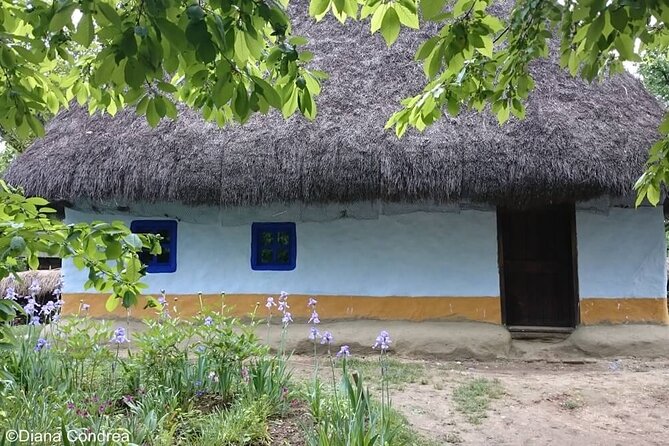
- Stop 1 in King Michael I Park: Dimitrie Gusti Village Museum
- Romanian Peasant Museum: Neo-Romanian style with award-winning presentation
- Kretzulescu Church on Calea Victoriei: Brâncovenesc architecture and documented layers
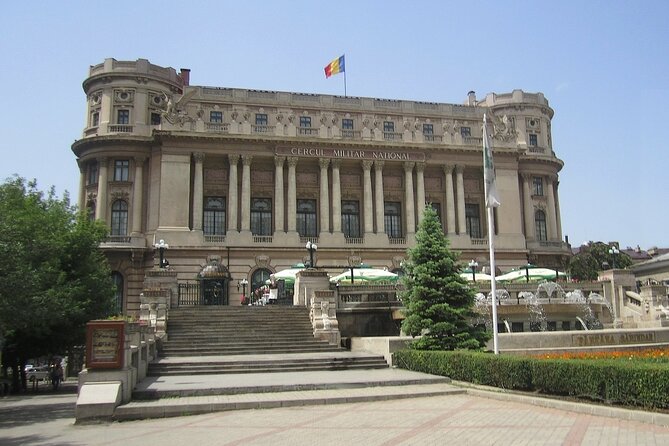
- National Military Circle: a French neoclassical building with a Romanian public role
- The Royal Palace turning into the Palace of the Republic
- How the route stays practical, not just scenic
- Who this private tour is best for
- Should you book this Private Tour of Bucharest’s Historical and Traditional Highlights?
- FAQ
- What is the duration of the Bucharest historical and traditional private tour?
- How much does the private tour cost per person?
- Is hotel pickup and drop-off included?
- Is this tour private?
- What entrance costs are covered?
- Where is the tour meeting point and where does it end?
- How soon will I get confirmation after booking?
- Are there any requirements for children?
- What is the cancellation policy?
Key things to know before you go
- Private group, max 8 people means you get more back-and-forth than on a big bus tour.
- Entrance fees are included, so you avoid the usual add-ons that quietly change your budget.
- King Michael I Park setting for Dimitrie Gusti lets you swap city streets for an open-air museum layout.
- Kretzulescu Church details include Brâncovenesc design and clearly documented restoration history.
- National Military Circle and its Marble Hall bring a French neoclassical building into the cultural story.
- Royal Palace to Palace of the Republic shows how the same grand space got rebranded across regimes.
A 3-hour private route through Bucharest’s old-core landmarks
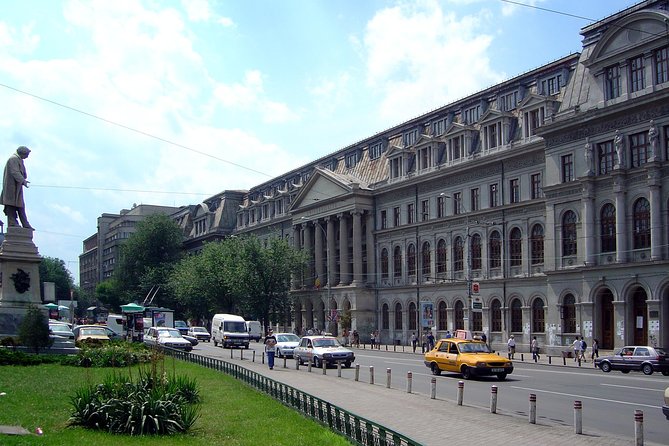
This tour is built for people who want Bucharest to make sense quickly. Without a guide, you can stare at impressive facades all day and still miss why they matter. Here, the stops connect with a simple theme: what Bucharest looked like, what it represented, and how everyday Romanian life and major institutions shaped the city.
You start with pickup and you end back where you began. That means you spend your time looking, not solving meeting-point puzzles. The small-group limit (up to 8) also changes the feel. You can ask questions, and the guide can keep the pace from dragging, while still giving you enough context to notice details.
It is also a practical mix. You get both traditional culture and big political architecture, so the tour does not feel like a set of random photos. If your main goal is to understand Bucharest beyond its skyline, this is the right format.
Price and value: what $69.79 includes (and why it matters)
At $69.79 per person for a private tour, value depends on what you would otherwise pay to get the same access. In this case, you are not just buying a vehicle and a guide. You are also getting hotel pickup and drop-off plus a private transport vehicle, and the tour description says entrance fees are included so you avoid surprise charges.
That matters in Bucharest because popular museums and heritage sites often have separate tickets. When entrance fees are included up front, you can focus on enjoying the route instead of doing quick math every time you reach a gate.
The tour runs about 3 hours, which keeps costs contained compared with longer multi-day patterns. It is also a strong choice if you have limited time and want the highest impact places in the center.
Other day trips from Bucharest
- Bucharest: Communism and History Guided City Walking Tour★ 4.9 · 918 reviews
- Bucharest: 3-Hour Dark History Tour with a Local★ 4.9 · 301 reviews
- Bucharest: Small Group History, Art & Secrets Tour★ 4.7 · 152 reviews
Stop 1 in King Michael I Park: Dimitrie Gusti Village Museum
The Muzeul National al Satului Dimitrie Gusti is an open-air ethnographic museum in King Michael I Park, and it is one of those places where Bucharest’s scale changes. Instead of rushing between streets, you slow down and move through a landscape of authentic Romanian peasant homes and farmsteads.
What makes it special is the scope. The museum covers over 100,000 m2 and includes 272 authentic peasant farms and houses gathered from across Romania. That is not a small display. It is an entire world built from real structures.
The tour time on this stop is listed as about 30 minutes, with admission included. That is a great reminder that you should choose what to prioritize. In half an hour, you cannot cover everything, so I recommend you focus on your first impressions and then pick a few structures to study closely.
How to get the most out of the short visit:
- Start by looking at the layout, how buildings relate to each other, and how the museum recreates village life.
- Spend a little extra time on exterior details, since the open-air nature makes features easier to spot than inside a crowded gallery.
- Use the guide’s interpretation to connect the buildings to everyday Romanian rural culture.
If you like folk traditions and practical history, this is often the stop people remember most.
Romanian Peasant Museum: Neo-Romanian style with award-winning presentation
After the open-air village setting, the mood shifts to an indoor museum experience with its own identity. The Romanian Peasant Museum sits in a Neo-Romanian style historical monument-building, and it is designed to tell stories through how the exhibits are arranged, not just what is inside.
The museum’s collection is described as especially rich, and the building and layout are part of the show. It has a highly original approach to museography, and it received the European Museum of the Year Award (EMYA) in 1996. That detail is not just an award badge. It points to a museum built to communicate ideas in a distinctive way.
You also get a sense of how the museum functions beyond standard gallery hours. The information provided highlights activities like a Village School and concerts, plus a missionary museum element and events such as conferences and exhibition openings. So even if your time inside is limited, you are still getting a feel for the museum as a living cultural institution, not only a static collection.
Possible drawback: because the focus is on storytelling through the museum’s original setup, you might want more than a quick look if you are the type who reads every placard. Still, on a 3-hour tour, the goal is to give you a guided overview and help you know what you would want to return to later.
Kretzulescu Church on Calea Victoriei: Brâncovenesc architecture and documented layers
Next comes one of central Bucharest’s most instructive church stops: Kretzulescu Church (Biserica Kretzulescu), located on Calea Victoriei, number 45A, near Revolution Square and by the former Royal Palace. This position alone helps you understand Bucharest’s geography. The city’s major roads and political landmarks sit right next to spiritual heritage.
The church is built in the Brâncovenesc style, commissioned between 1720 and 1722 by boyar Iordache Crețulescu and his wife Safta, who is named as a daughter of prince Constantin Brâncoveanu. Those names matter because they anchor the church to the ruling families and patronage networks of the era.
There is also clear evidence of change over time. The exterior was originally painted, but restoration work in 1935 to 1936, overseen by architect Ștefan Balș, means the facade is now brick. In other words, you can see the outcome of restoration choices, not just the original design.
Inside, fresco history is split across periods:
- Frescoes on the porch date from the original structure.
- Interior frescoes were painted by Gheorghe Tattarescu in 1859 to 1860.
This stop is a strong example of why guided history helps. Without someone pointing it out, you might just see an attractive church. With the context, you notice how time left fingerprints on the building.
National Military Circle: a French neoclassical building with a Romanian public role
From spiritual heritage, the tour shifts into a civic building that ties culture to institutions. The National Military Circle was designed by Romanian architects D. Maimarolu, V. Ștefănescu, and E. Doneaud, and built in 1912 in French neoclassical style. That blend matters because it shows how Bucharest borrowed European architectural language while still using the building for Romanian purposes.
Originally, it hosted social, cultural, and educational needs of the Romanian army. Now it serves as a venue for art exhibitions and even book launches. The tour information also notes it contains reception halls and meeting rooms, a theater, a bookshop, and art galleries, and that the Marble Hall is known as one of the successful achievements of Romanian architecture.
Why this stop is useful, even if you are not into military history: it explains how power, culture, and public life intersect in Bucharest. This is a building where you can sense that the city was designed not only for politics and monuments, but also for public events.
If you enjoy architecture that has a job, not just a pretty facade, you will likely appreciate how the space has shifted from army-related functions to cultural programming.
These pair well with the day you just read about.
- Bucharest: Dracula’s Castle, Peles Castle, & Brasov Old Town
★ 4.5 · 17,858 reviews - Bucharest: Dracula Castle, Peles Castle & Brasov Old Town
★ 4.6 · 10,891 reviews - Bucharest: Dracula’s Castle, Peleș Castle & Brașov Day Trip
★ 4.4 · 6,100 reviews - Bucharest: Palace of Parliament Tickets and Guide
★ 4.3 · 3,182 reviews - Bucharest: Day Trip to Dracula Castle, Peles Castle & Brașov
★ 4.4 · 3,049 reviews
The Royal Palace turning into the Palace of the Republic
The final major landmark in this route is the Royal Palace of Bucharest, also known as the Palace of the Republic between 1948 and 1990. It is a monumental building on Calea Victoriei, and its changing names are not cosmetic. They track real regime changes.
It served as the official residence for the kings of Romania until 1947, when the communist regime followed the forced abdication of Michael I of Romania. After that political shift, the palace’s identity was rewritten. Since 1950, it has hosted the National Museum of Art of Romania.
For a modern visitor, this stop can feel slightly unsettling and also very educational. The building shows how the same walls can be used to symbolize different ideals. A guide helps you connect the timeline so the architecture becomes a kind of historical document.
One more detail that adds clarity: the former Romanian royal family uses Elisabeta Palace as its official residence in Bucharest today. That gives you a sense that Bucharest’s royal story did not vanish. It moved.
How the route stays practical, not just scenic
What I like about this experience is that it respects your time. You are not stuck in a slow-moving group, and you get transport by private vehicle. The information provided also notes the car is air conditioned, which is a real comfort factor on warmer days.
The stops are arranged so you can move between different Bucharest moods without mental whiplash. Traditional Romanian village life comes first, then an indoor museum with award-winning presentation, then church architecture, then institutional architecture, and finally a palace that summarizes 20th-century shifts.
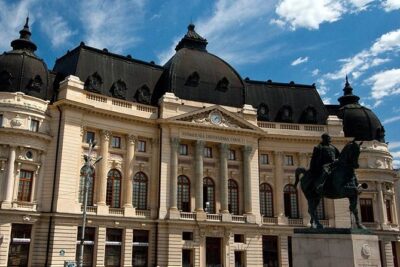
You may also cover major central sights like the Central Library and Stavropoleos Monastery as part of the overall route. Even if those moments are shorter than the headline museum stops, having them woven into the day helps you see the city as one connected system rather than disconnected highlights.
Who this private tour is best for
This tour works especially well if you:
- Want a guided start in Bucharest that gives you context fast.
- Prefer a small group with flexibility over a long bus route.
- Care about cultural heritage, not only big monuments.
- Like architectural and museum details, including specific dates, patrons, and restoration notes.
It might be less ideal if you want deep reading time at one museum, or if you are planning a museum marathon. The tour is designed for breadth and smart interpretation, not for a slow all-day museum crawl.
Because food and drinks are not included, it is also a good idea to plan your timing around a proper meal. You will be glad you did if you get hungry after visiting places that invite you to linger.
Should you book this Private Tour of Bucharest’s Historical and Traditional Highlights?
If your goal is to understand Bucharest quickly and see a mix of traditional culture and major central landmarks, I think this is a strong booking. The included entrance fees remove a lot of budget uncertainty, the hotel pickup and drop-off save time, and the private format means the guide can keep things engaging within a tight schedule.
Book it if you want a guided route that helps you notice what matters, from open-air village structures to Brâncovenesc church details and a palace that changed identity across decades. Skip it only if you need long unbroken time in museums, or if you want a food stop built into the plan.
FAQ
What is the duration of the Bucharest historical and traditional private tour?
The tour lasts approximately 3 hours.
How much does the private tour cost per person?
The price is $69.79 per person.
Is hotel pickup and drop-off included?
Yes. The tour includes hotel pickup and drop-off.
Is this tour private?
Yes, it is a private tour, with a maximum group size of 8 travelers.
What entrance costs are covered?
The tour description indicates that entrance fees are included, helping you avoid hidden costs. Food and drinks are not included.
Where is the tour meeting point and where does it end?
It starts in Bucharest, Bucharest, and ends back at the meeting point.
How soon will I get confirmation after booking?
Confirmation is received within 48 hours of booking, subject to availability.
Are there any requirements for children?
Yes. Children must be accompanied by an adult.
What is the cancellation policy?
Free cancellation is available. You can cancel up to 24 hours in advance for a full refund. If you cancel less than 24 hours before the start time, the amount paid is not refunded.
Just Added: New Tours From Bucharest
- Bear Watching in Transylvania 2-Day Tour
- National Village Museum and Comana Adventure Park
- Half Day Tour in Bucharest
- From Dracula to Ceaușescu- Romanian Terror Stories tour
- Full-Day Private Tour of Brasov City and Peles Castle from Bucharest
- Bucharest: Tour The Wine Road, 2 Boutique Wineries in 1 Day
- Bucharest Ceaușescu House Parliament Palace &Village Museum
- Full-Day Private Tour of Bucharest and Mogosoaia Palace
Historical Tours, compared.
Roma Culture, Realities and Slavery History, Walking tour
Read our review →
Bucharest Jewish Heritage | Holocaust Memorial | Private Car Tour
Read our review →
Private Bucharest: History & Food with Traditional Meal
Read our review →
Bucharest Historical Food Tour in Old Center
Read our review →Browse the lists this tour appears in