
Reviewed · HISTORICAL TOURS
The Jewish heritage of Bucharest – half day walking tour
Bucharest holds Jewish stories in plain sight. This half-day walking tour tracks what’s left of the old Jewish quarter while you pass communist-era apartment blocks and still find major places of worship and memory. I like that it’s not just sightseeing, it’s a guided route that connects architecture to real lives.
I also love having the tour guide, Razvan Trancu, bring the past to life with practical context and photos used for explanation, plus a warm, funny tone that keeps heavy material from feeling like a lecture. One drawback to plan for: key stops can be closed on weekends and major Jewish holidays, and opening hours can shift with weather or safety concerns.
In This Review
- Jewish Bucharest at a Glance: What Makes This Tour Special
- A 3-hour Jewish heritage walk that doesn’t feel rushed
- Meet at Starbucks, then start with the streets themselves
- Where the Jewish quarter used to be, and what’s left today
- Jewish Museum Bucharest in an ex-temple: how to read the story
- Great Synagogue: architecture plus Romanian Holocaust memory
- Teatrul Evreiesc de Stat and Laude-Reut: culture beyond worship
- Avraham Kosher break: quick snacks, not a food tour
- Coral Temple: Neo-Mudejar style and the importance of timing
- Holocaust Memorial as the ending point, and why that matters
- Price and value: $318 per group plus pay-as-you-go entry
- What makes Razvan Trancu’s guiding style effective
- Before you go: opening hours, holidays, and the safest plan
- Who should book this Jewish heritage tour, and who should think twice
- Should you book this Jewish heritage tour?
- FAQ
- How long is the Jewish heritage of Bucharest half day walking tour?
- Where does the tour start?
- What group size is this tour?
- What main places do we visit?
- Are entrance fees included in the tour price?
- What should I bring with me?
- When are the Great Synagogue and Coral Temple closed?
- What languages are the guides?
Jewish Bucharest at a Glance: What Makes This Tour Special
- Former-temple Jewish Museum where community life is explained through what you can still see
- Great Synagogue with Romanian Holocaust history built into the visit
- Coral Temple Neo-Mudejar style, recently restored, and a major spiritual landmark
- Bucharest Holocaust Memorial as the emotional landing point of the walk
- Small group size that keeps the pace human (and questions welcome)
A 3-hour Jewish heritage walk that doesn’t feel rushed
This is a short, focused route, built for people who want depth without spending an entire day in lineups and transit. The total time is about 3 hours, and the pace is set for a comfortable walking rhythm through central neighborhoods.
The group is small, limited to 7 participants, which matters more than you might think. With a smaller group, you can actually ask why something was built where it was, or what changed after the war and during Communist rule.
Meet at Starbucks, then start with the streets themselves
You begin at the entrance door of Starbucks, which is easy to find and gives you a straightforward start point. From there, the tour moves into the Old Town area with a short guided orientation so you get your bearings fast.
What I like about this setup is that it teaches you to read the city. You’re not only looking at buildings. You’re learning how different eras of Bucharest sit side by side, especially in the places where the Jewish quarter once concentrated.
Other day trips from Bucharest
- Bucharest: Communism and History Guided City Walking Tour★ 4.9 · 918 reviews
- Bucharest: 3-Hour Dark History Tour with a Local★ 4.9 · 301 reviews
- Bucharest: Small Group History, Art & Secrets Tour★ 4.7 · 152 reviews
Where the Jewish quarter used to be, and what’s left today
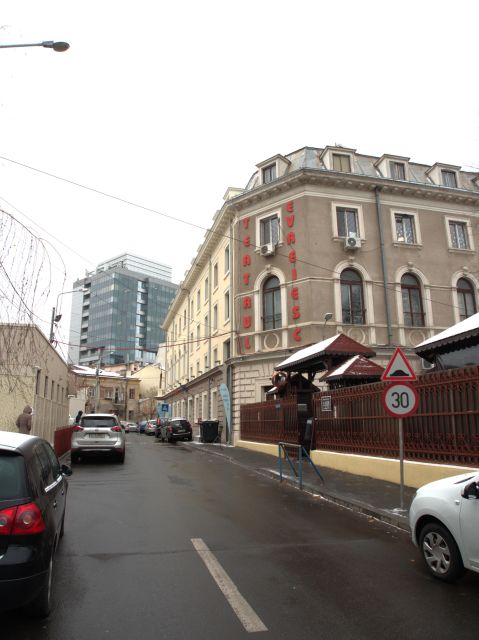
The heart of the tour is a guided walk through narrow streets that once defined the Jewish neighborhood. Today, parts of the area are framed by communist apartment blocs, so you immediately see how political history reshaped urban life.
Expect your guide to point out the architectural elements that remain, even when the surrounding streets look like a different decade. The goal is not nostalgia. It’s understanding continuity, and how a community’s imprint can persist even after forced change.
Jewish Museum Bucharest in an ex-temple: how to read the story
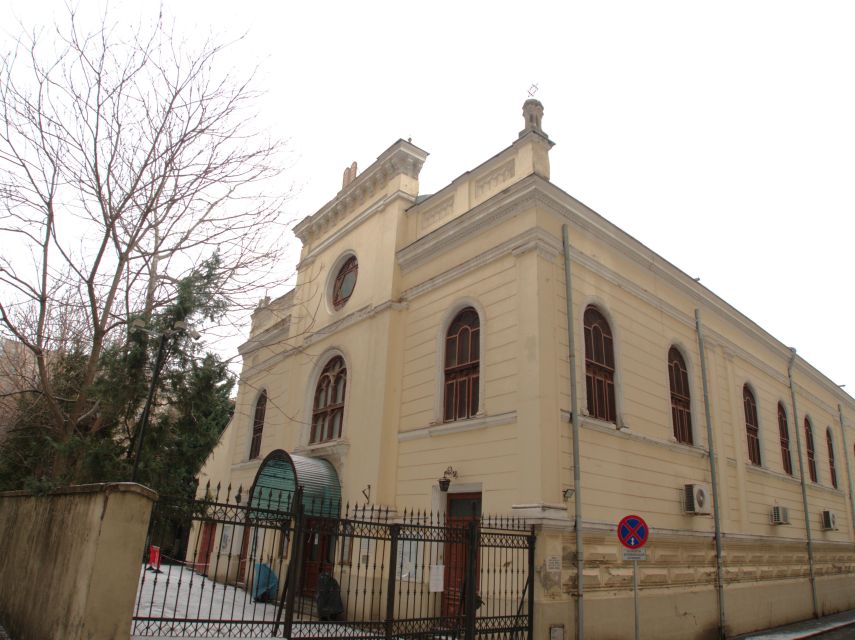
Next you visit the Jewish Museum Bucharest, hosted in an ex-temple. This stop is one of the most important because it helps you place everything else into a timeline you can actually hold in your head.
During the museum visit, you’ll spend about 30 minutes with a guided explanation. The theme centers on the Jewish community in Bucharest, including its flourishing years, what happened during the Holocaust era, and how Jewish life continued under the Communist regime.
This museum stop is especially valuable if you want more than a list of sites. You get context for why the synagogue buildings and cultural institutions you see later mattered so much in daily life.
Great Synagogue: architecture plus Romanian Holocaust memory
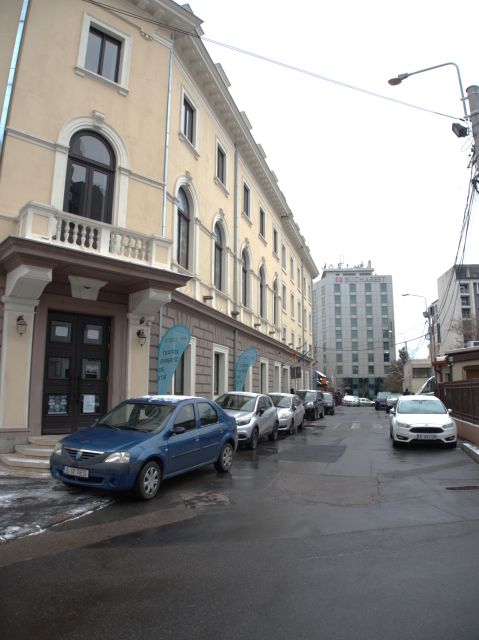
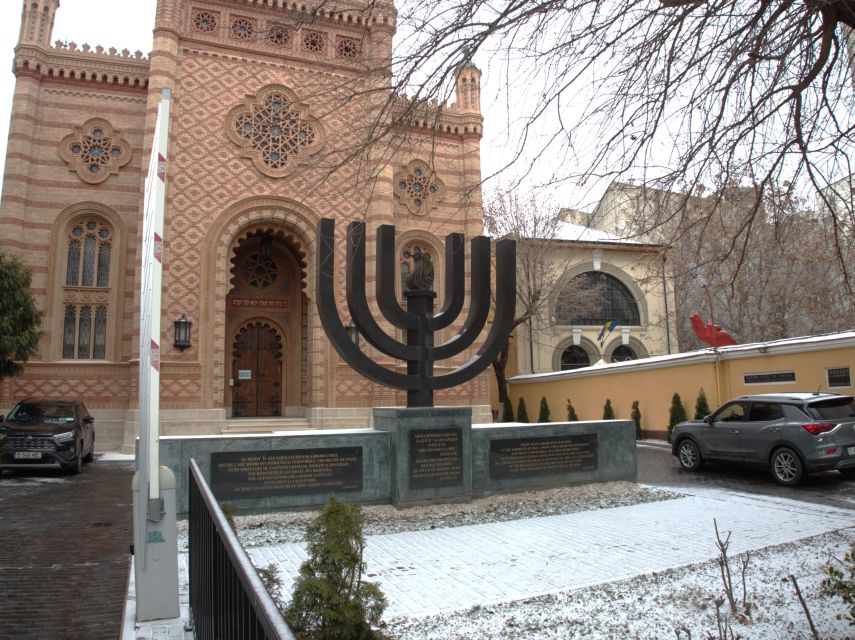
The tour then heads to the Great Synagogue, one of the big anchors of Jewish Bucharest. The visit time is about 30 minutes, which is usually enough to see the space, understand its historical significance, and connect it to the Romanian Holocaust story.
This is not framed as a separate topic. It’s presented as part of one connected history. That matters because you start to see how memory is built into physical spaces, not only into books and dates.
Practical note: there’s an entrance fee of 30 lei per person at each location when open, so plan on paying in cash. You’ll also want to factor in closing schedules, since some of the major sites can shut during religious holidays.
Teatrul Evreiesc de Stat and Laude-Reut: culture beyond worship
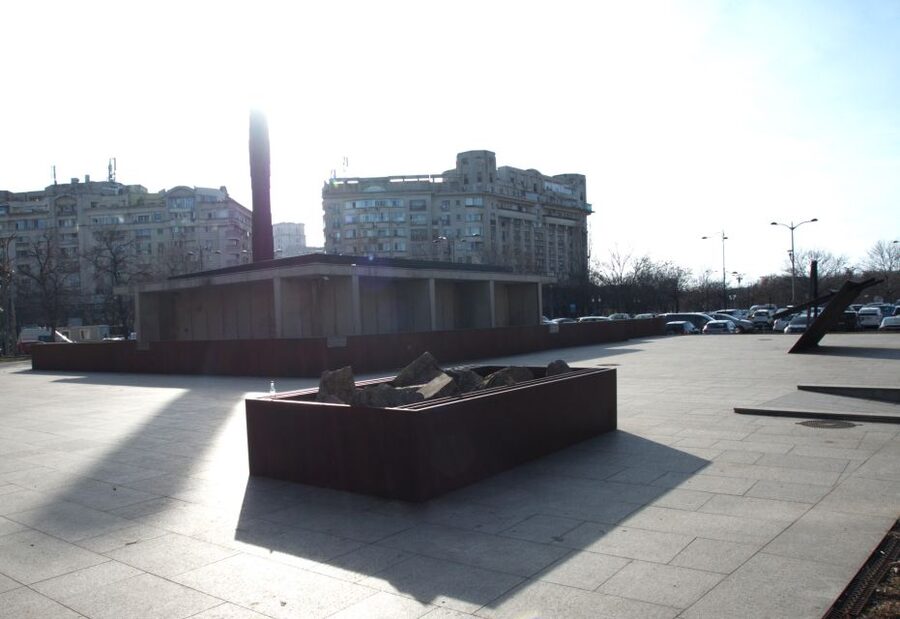
From the synagogue area, you pass by the Teatrul Evreiesc de Stat, the Jewish State Theater. You’ll have about 30 minutes here for the visit, which is a refreshing change of pace from buildings of prayer and memorial.
Why it matters: theaters show how a community lived. They point to arts, public life, and the everyday meaning of cultural institutions. It’s a different angle on heritage, and it helps the story feel less distant.
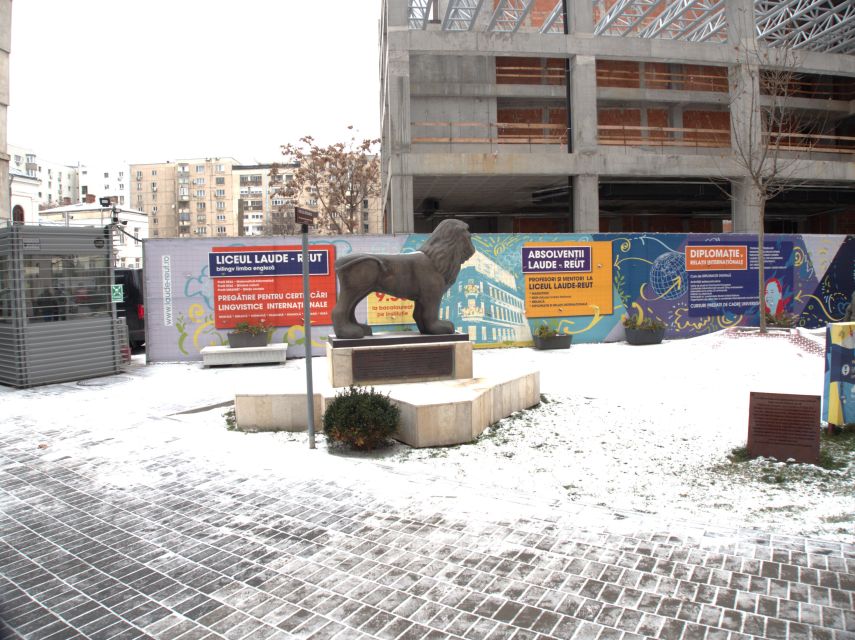
The route also includes passing by the Laude-Reut educational complex, plus a quick pass by Jerusalem Lion Square. These are shorter segments, but they help map the neighborhood as more than a religious district. It was also a place for education and social life.
These pair well with the day you just read about.
- Bucharest: Dracula’s Castle, Peles Castle, & Brasov Old Town
★ 4.5 · 17,858 reviews - Bucharest: Dracula Castle, Peles Castle & Brasov Old Town
★ 4.6 · 10,891 reviews - Bucharest: Dracula’s Castle, Peleș Castle & Brașov Day Trip
★ 4.4 · 6,100 reviews - Bucharest: Palace of Parliament Tickets and Guide
★ 4.3 · 3,182 reviews - Bucharest: Day Trip to Dracula Castle, Peles Castle & Brașov
★ 4.4 · 3,049 reviews
Avraham Kosher break: quick snacks, not a food tour
You get a 30-minute break time at Avraham Kosher, where you can buy local snacks. Snacks are not included in the tour price, so treat this as a convenient stop to recharge without turning the walk into a full meal.
I like that the break is timed for real use. After several major sites, you’ll want a moment to sit, drink water, and give your feet a reset.
Coral Temple: Neo-Mudejar style and the importance of timing
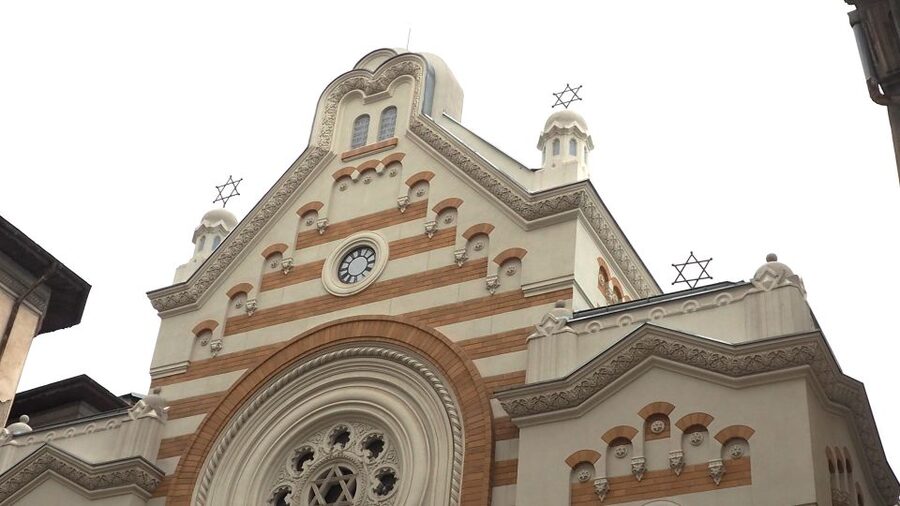
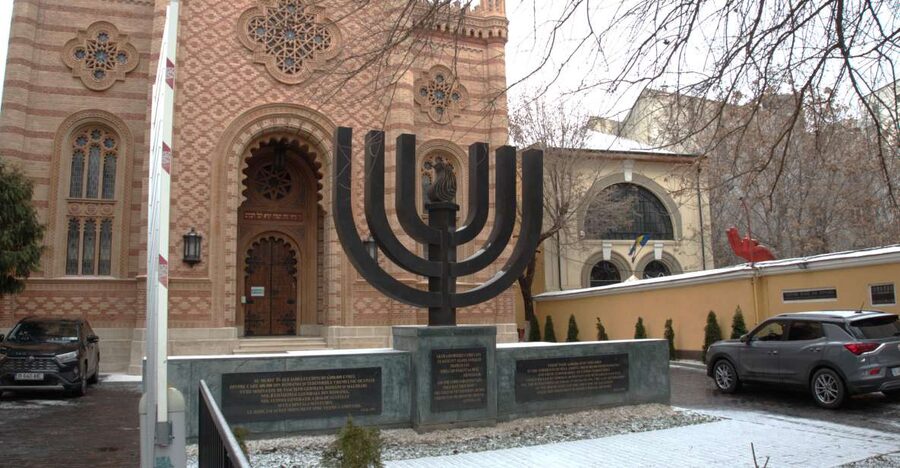
The Coral Temple is one of the highlights you should plan around carefully. It’s described as Neo-Mudejar in style and noted as recently restored, with 150+ years of history.
Your visit here is about 20 minutes, so you’ll want to look while you can still hear the guide’s explanation. This is the kind of place where details pay off, especially when you’re learning the historical meaning behind the architecture.
There’s also a big schedule warning you need to take seriously. During Rosh Hashana, Pesach, Shavuot, Yom Kippur, and Sukkot, the Coral Temple and the Great Synagogue are closed. Add to that the usual weekend closures mentioned for major objectives, and you should double-check dates before you commit.
Another practical detail: synagogues and temples have stated visiting hours, Mon to Thu from 9:00 to 14:00, and Fri from 9:00 to 12:00. If your tour happens to land near a closure window, your best move is to ask ahead.
Holocaust Memorial as the ending point, and why that matters
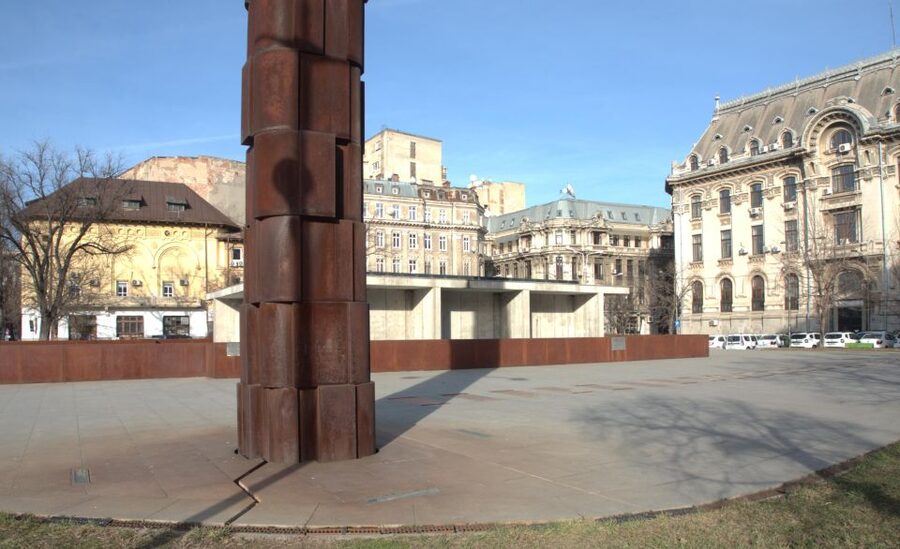
The tour ends at the Holocaust Memorial in Bucharest, with about 20 minutes for the visit. Ending here is not just logistical. It creates an emotional and historical close that ties together the morning’s mixture of places: museum, synagogue, theater, and community memory.
By the time you reach the memorial, you’ve already had help placing what you saw into a broader story. That makes the final stop hit harder in the right way, not in a rushed way.
If you’re someone who prefers time to stand and think, this last segment gives you at least a brief window before the walk closes.
Price and value: $318 per group plus pay-as-you-go entry
The price is listed as $318 per group up to 12, while the tour itself is limited to 7 participants. That means your cost per person depends on how many people are in your exact group, not just the headline number.
What makes it feel like good value is that the tour includes a guided route through multiple major sites in a single compact walk. You’re paying for interpretation, not just transportation between stops, and interpretation is what turns “I saw a building” into “I understand why it matters.”
Do plan for extra spending: entrance fees of 30 lei per person at each location when open, plus anything you buy for snacks. The good news is that the tour also tells you to bring cash, so you can avoid last-minute scrambling.
What makes Razvan Trancu’s guiding style effective
The tour provider listed is Razvan Trancu, and multiple accounts highlight his approach. The repeated themes are practical historical context, a sense of humor, and the habit of using visual aids like photos on an iPad to support explanations.
That combination matters because Jewish heritage in Bucharest includes multiple layers: pre-war community life, the Holocaust years, and later Communist-era realities. A guide who can connect those layers without making it feel like a timeline dump helps you keep the story straight.
You’ll also feel it in the pacing. There’s an emphasis on wellbeing, and the tour notes that high temperatures can affect schedules. If the weather is extreme, don’t treat the itinerary like a rigid checklist.
Before you go: opening hours, holidays, and the safest plan
This tour comes with real-world scheduling reality, and you should plan accordingly. The Museum of the Jewish community is closed on Fridays, and there are closure rules for major religious holidays.
Also note the safety and schedule variability language: given events in Israel, some locations may close for safety reasons, and high temperatures might affect opening schedules. The most sensible strategy is simple: ask directly before booking, especially if you are traveling during a holiday period.
Who should book this Jewish heritage tour, and who should think twice
This is a strong fit if you want:
- A structured walking route that covers major Jewish sites in Bucharest
- A guide who can connect architecture to history, including Communist-era context
- A small group experience with time for questions
You might think twice if:
- Your dates fall on a major Jewish holiday, since Coral Temple and the Great Synagogue close during key feast periods
- You dislike walking in heat, since temperatures may affect opening schedules and you may want more flexibility
- You have strict timing for specific indoor sites, since museum and synagogue hours vary
Should you book this Jewish heritage tour?
Yes, if your main goal is understanding how Jewish life, tragedy, and memory are written into Bucharest’s real spaces. The route gives you a rare mix: a former-temple museum, landmark synagogues, a theater stop that shows culture, and a final pause at the Holocaust Memorial.
If your travel dates line up with the closure windows, you may end up with fewer working sites. That’s the only thing that could drain the experience. If you can schedule carefully and keep cash and flexibility in mind, this tour is a solid way to learn Bucharest with meaning.
FAQ
How long is the Jewish heritage of Bucharest half day walking tour?
It lasts about 3 hours.
Where does the tour start?
You meet at the entrance door of Starbucks.
What group size is this tour?
It is a small group limited to 7 participants.
What main places do we visit?
You visit the Jewish Museum Bucharest, the Great Synagogue, the Jewish State Theater, the Coral Temple, and you finish at the Holocaust Memorial. You also pass by Laude-Reut and Jerusalem Lion Square, with a snack break at Avraham Kosher.
Are entrance fees included in the tour price?
No. There is an entrance fee of 30 lei per person in each location when open. Snacks are also not included.
What should I bring with me?
The tour asks you to bring cash.
When are the Great Synagogue and Coral Temple closed?
They are closed during Rosh Hashana, Pesach, Shavuot, Yom Kippur, and Sukkot.
What languages are the guides?
The live guide offers Italian and English.
Just Added: New Tours From Bucharest
- Bear Watching in Transylvania 2-Day Tour
- National Village Museum and Comana Adventure Park
- Half Day Tour in Bucharest
- From Dracula to Ceaușescu- Romanian Terror Stories tour
- Full-Day Private Tour of Brasov City and Peles Castle from Bucharest
- Bucharest: Tour The Wine Road, 2 Boutique Wineries in 1 Day
- Bucharest Ceaușescu House Parliament Palace &Village Museum
- Full-Day Private Tour of Bucharest and Mogosoaia Palace
Historical Tours, compared.

Roma Culture, Realities and Slavery History, Walking tour
Read our review →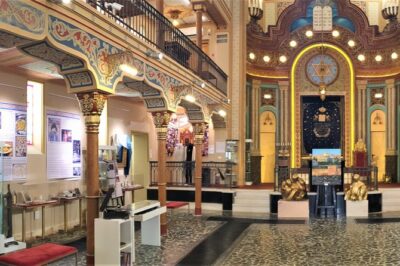
Bucharest Jewish Heritage | Holocaust Memorial | Private Car Tour
Read our review →
Private Bucharest: History & Food with Traditional Meal
Read our review →
Bucharest Historical Food Tour in Old Center
Read our review →Browse the lists this tour appears in